








Introduction
As organizations accelerate their cloud adoption, the complexity of managing cloud environments grows exponentially. Amid this complexity, cloud misconfigurations remain a leading cause of security breaches. Misconfigured cloud resources can expose sensitive data, open backdoors for attackers, and cause compliance failures. This guide provides an expert walkthrough on how to identify and fix common cloud misconfigurations before attackers do, focusing on essential tools and techniques to enhance your AWS security scanning and reduce cloud vulnerabilities.
Understanding Cloud Misconfiguration and Its Impact
Cloud misconfiguration occurs when cloud resources and permissions are set up insecurely or incorrectly, creating unintended access or exposure. Common misconfigurations include publicly accessible storage buckets, excessive user privileges, misconfigured network settings, and weak identity management. The impact of these errors can be catastrophic—ranging from data leaks to full infrastructure compromises.
Given the dynamic nature of cloud environments, misconfigurations often go unnoticed and persist for long periods, increasing the risk. Therefore, continuous scanning and remediation are critical to maintain a secure posture.
Why Continuous Cloud Misconfiguration Scanning Matters
Static security reviews are no longer sufficient. Cloud environments change rapidly with frequent deployments, infrastructure as code updates, and user access modifications. This constant flux means vulnerabilities can be introduced at any stage.
- Proactive Identification: Detect and remediate risks before attackers exploit them.
- Compliance Assurance: Ensure your cloud resources meet regulatory and organizational policies.
- Operational Efficiency: Automate checks to reduce manual audits and human errors.
- Enhanced Visibility: Gain detailed insights into cloud asset configurations and security status.
Key Types of Cloud Misconfigurations to Monitor
Before diving into tools and techniques, it’s vital to understand the most prevalent misconfiguration types that pose significant threats:
- Publicly Exposed Storage Buckets: Cloud storage services like Amazon S3 often get configured to allow public access, exposing sensitive data.
- Excessive IAM Permissions: Overly permissive Identity and Access Management policies that grant users or applications more rights than necessary.
- Open Security Groups and Firewalls: Unrestricted inbound or outbound network traffic which can serve as attack vectors.
- Unencrypted Data at Rest or Transit: Failure to enable encryption mechanisms, risking data leakage.
- Misconfigured Logging and Monitoring: Lack of proper logging impeding incident detection and response.
Top Cloud Misconfiguration Scanning Tools
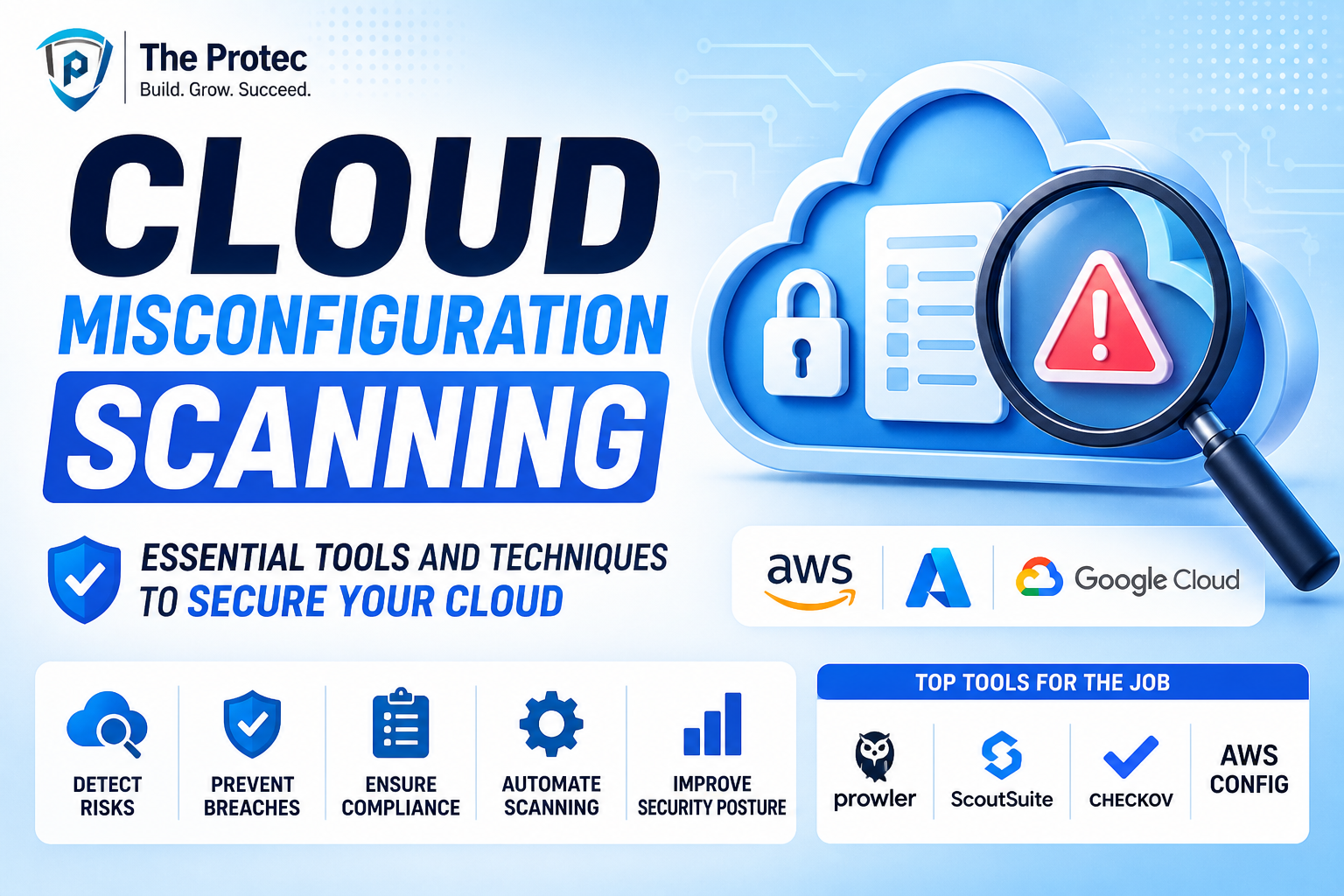
Several advanced tools have emerged to assist security teams in detecting cloud misconfigurations efficiently. Below are some of the most effective options with emphasis on AWS security scanning capabilities:
1. AWS Security Hub
AWS Security Hub aggregates, organizes, and prioritizes security findings across AWS accounts and services. It integrates with AWS Config and GuardDuty to automatically detect misconfiguration and suspicious activities.
- Benefits: Native to AWS, broad service integration, centralized dashboard, automated compliance checks.
- Use Case: Monitor security posture continuously and receive consolidated alerts on configuration issues.
2. AWS Config
AWS Config provides continuous assessment, audit, and evaluation of AWS resource configurations. It tracks configuration changes and allows the creation of rule-based compliance checks.
- Benefits: Detailed resource history, compliance monitoring, automated remediation actions via Lambda.
- Use Case: Automate detection of drift from defined security policies and compliance standards.
3. Prisma Cloud (by Palo Alto Networks)
Prisma Cloud offers comprehensive cloud security posture management (CSPM) including deep scanning of misconfigurations for AWS and other cloud providers.
- Benefits: Multi-cloud support, risk prioritization, automated remediation, infrastructure as code scanning.
- Use Case: Enterprise-grade platform for continuous visibility and remediation across hybrid cloud landscapes.
4. CloudSploit (now part of Aqua Security)
CloudSploit provides open-source scanning tools focusing on detecting misconfigurations and vulnerabilities across various AWS services.
- Benefits: Easy integration into CI/CD pipelines, fast scanning, detailed reports.
- Use Case: Automated security checks during deployment cycles for early vulnerability discovery.
5. tfsec
tfsec is an open-source scanner for Infrastructure as Code (IaC), particularly Terraform templates. It helps catch misconfigurations before infrastructure is deployed.
- Benefits: Early detection of configuration flaws, integration with code repos and pipelines.
- Use Case: Prevent cloud misconfigurations by enforcing best practices in IaC development.
Proven Techniques to Detect and Remediate Cloud Misconfigurations
Alongside tools, incorporating best practices and structured techniques into your security workflows ensures comprehensive defense against cloud vulnerabilities.
1. Implement Continuous Cloud Security Posture Management (CSPM)
CSPM solutions automatically audit your cloud environment, flagging misconfigurations in real-time. These tools often use predefined policies aligned with industry standards such as CIS Benchmarks and NIST to validate your setup.
2. Adopt Infrastructure as Code (IaC) with Security Testing
Managing cloud resources via IaC (e.g., Terraform, CloudFormation) lets you apply systematic security controls. Integrate static analysis tools like tfsec or Checkov into your CI/CD pipelines to catch misconfigurations before deployment.
3. Automate Remediation and Alerting
To minimize response times, automate remediation actions wherever possible. AWS Config rules combined with Lambda functions can automatically revert risky changes or quarantine compromised components.
4. Enforce Least Privilege Access Principles
Regularly audit AWS IAM roles and permissions to ensure users/applications only have the necessary rights. Utilize AWS Identity Access Analyzer or third-party tools for continuous access review.
5. Enable Comprehensive Logging and Monitoring
Implement CloudTrail, VPC Flow Logs, and GuardDuty monitoring to gain visibility into activity and detect anomalous behavior potentially caused by misconfiguration exploitation.
6. Conduct Regular Penetration Testing and Red Team Assessments
Simulating attacker behavior helps validate your scanning tools and identify misconfigurations that automated systems may miss.
Case Study: Avoiding Data Exposure from Public S3 Buckets
One of the most notorious risks is an S3 bucket configured with public read or write access. Such misconfigurations have led to massive data leaks in the past.
To prevent, use AWS Config to enforce rules like “S3 buckets should not allow public read access”. Complement this with automated scanning tools like CloudSploit or AWS Security Hub alerts. Periodically, run manual reviews and red team exercises targeting S3 permissions to validate configurations.
FAQ
What are the most common cloud misconfigurations?
Common misconfigurations include open storage buckets, excessive IAM permissions, unsecured network security groups, lack of encryption, and disabled logging/monitoring.
How often should cloud misconfiguration scanning be performed?
Scanning should be continuous or at minimum integrated into every deployment cycle. Continuous monitoring offers real-time detection, enabling faster remediation.
Can automated tools replace manual security audits?
While automated scanning improves efficiency and coverage, manual audits, penetration testing, and expert reviews remain essential for detecting complex or emerging misconfigurations.
Conclusion
Cloud misconfigurations represent an ongoing security challenge, but with the right tools and strategies, organizations can effectively identify and remediate vulnerabilities before attackers exploit them. Leveraging native AWS security services alongside specialized CSPM and IaC scanning tools provides a strong foundation. Combined with disciplined security governance, continuous monitoring, and proactive remediation, your cloud infrastructure can remain resilient against the evolving threat landscape.
For more insights and tools on securing your cloud environment, consider exploring resources from AWS Security and Palo Alto Networks’ Prisma Cloud.