






Introduction
Quality assurance (QA) plays a pivotal role in delivering reliable software products, and automated testing frameworks have become indispensable in this pursuit. For years, Selenium has been the cornerstone of automated QA, enabling teams to script and execute tests across multiple browsers efficiently. However, the advent of AI testing tools is reshaping the landscape of software testing automation, pushing the boundaries of what is possible beyond conventional frameworks.
This article dives deep into how AI-powered testing tools compare with traditional frameworks like Selenium, highlighting the remarkable advancements they bring. As software systems grow increasingly complex and the demand for faster release cycles intensifies, leveraging automated QA AI solutions is emerging as the future-proof strategy for superior test coverage, reduced manual effort, and accelerated delivery.
Traditional Frameworks: The Selenium Legacy
Selenium revolutionized test automation since its inception by providing an open-source platform capable of automating browser actions for web applications. It enables testers to write scripts that simulate user interactions, facilitating functional, regression, and integration testing across various environments.
Strengths of Selenium
- Broad Browser Support: Compatibility with all major browsers including Chrome, Firefox, Safari, and Edge.
- Flexible Programming Languages: Supports a variety of languages such as Java, C#, Python, and Ruby.
- Open Source and Community-Driven: Continuous improvements and a rich ecosystem of plugins and integrations.
Limitations and Challenges
- Maintenance Overhead: Tests require manual scripting and frequent updates to keep pace with UI changes.
- Flaky Tests: UI element locator failures lead to unreliable test runs and false negatives.
- Lack of Smart Test Generation: Test cases must be manually designed, limiting test coverage and missing corner cases.
- Static Execution: Selenium scripts follow explicit instructions without adaptability or self-healing capabilities.
While Selenium remains a powerful tool, its reliance on scripts crafted and maintained by human testers imposes a ceiling on scalability and effectiveness in the face of modern, agile development requirements.
The Rise of AI-Powered Testing Tools
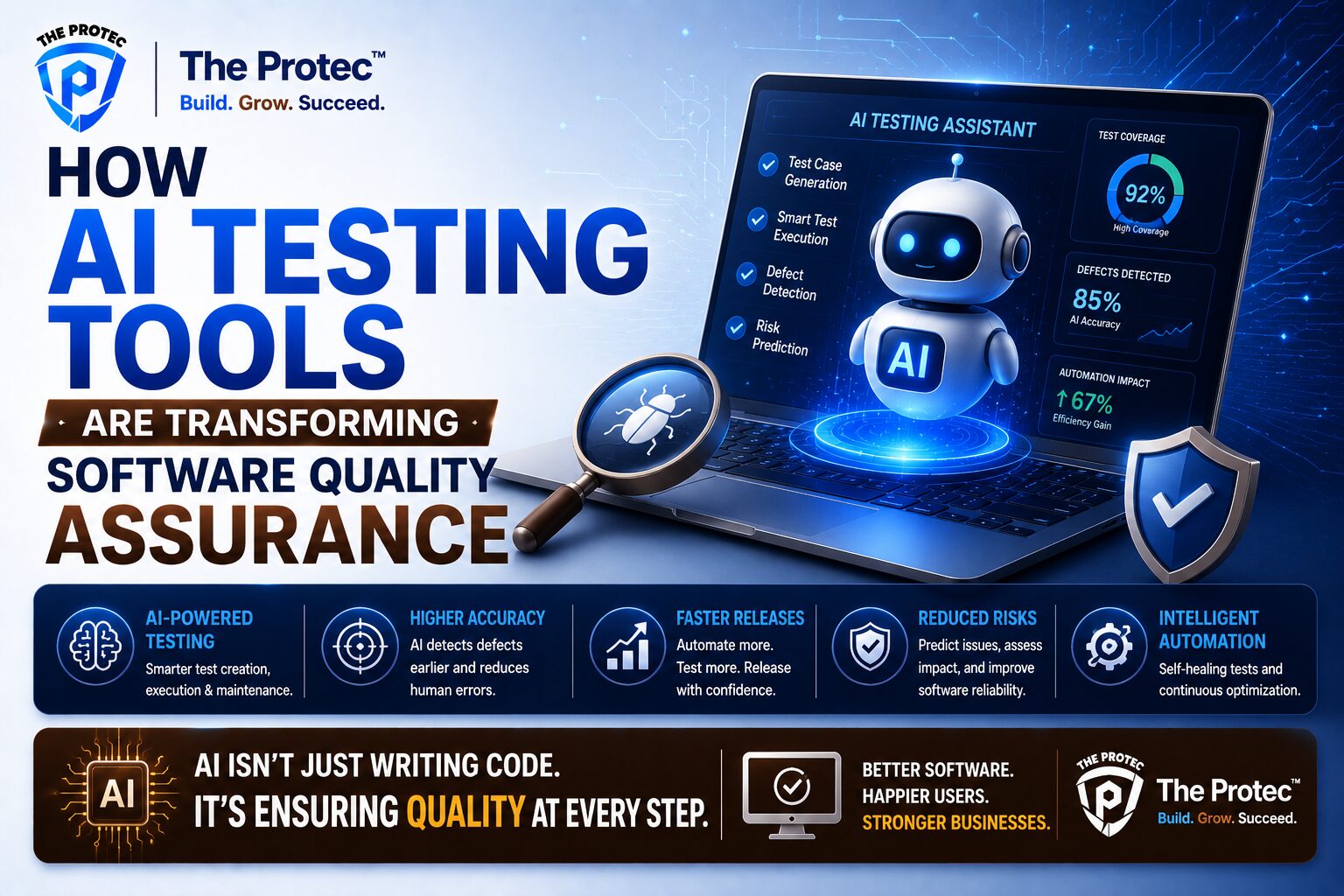
Artificial Intelligence integrated into QA tools is ushering in a new era of software testing automation. These AI-enabled platforms leverage machine learning, natural language processing, and computer vision to reduce human involvement in test creation, execution, and maintenance.
Core Capabilities of AI Testing Tools
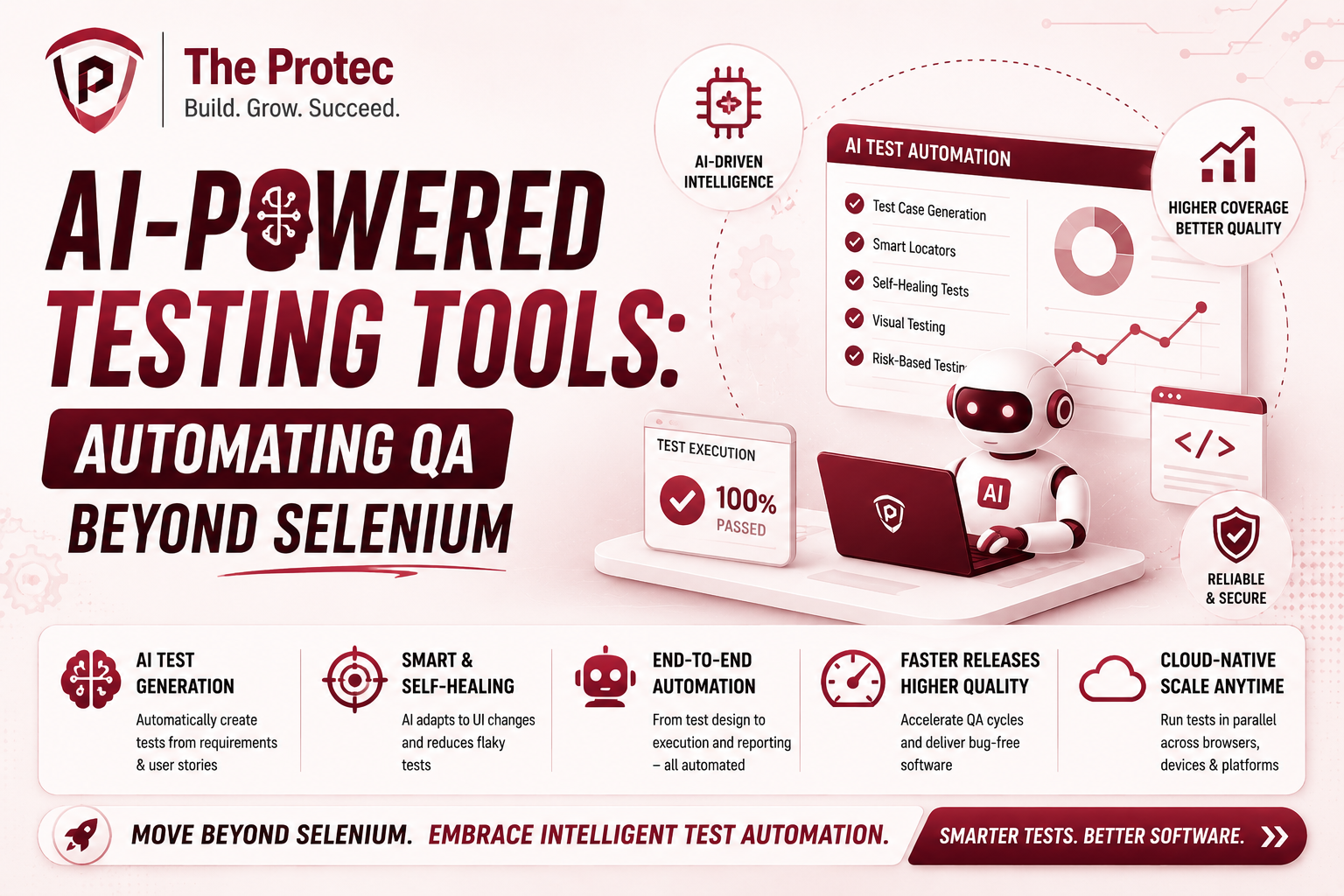
- Test Case Generation: Automatically creating test scripts from application flows or user stories.
- Self-Healing Tests: Tools that identify UI changes and dynamically adjust locators, reducing test failures.
- Visual Validation: Using computer vision to detect UI anomalies beyond simple DOM checking.
- Predictive Analytics: Anticipating potential defect hotspots by analyzing historical test data.
- Natural Language Processing: Enabling testers to write test cases in plain English, making scripting more accessible.
Companies like Applitools and Mabl exemplify AI-powered testing by blending traditional automation with intelligent adaptability, drastically improving testing throughput and accuracy.
Comparing AI Testing Tools with Traditional Frameworks
1. Test Creation and Maintenance
Traditional Frameworks: Test cases require manual design and scripting. Maintenance becomes cumbersome with frequent UI changes, leading to time-consuming updates.
AI-Powered Tools: Utilize AI algorithms to generate comprehensive test suites automatically based on user behavior and application flows. Self-healing features adapt tests in response to UI changes, drastically reducing the maintenance burden.
2. Test Execution and Reliability
Traditional Frameworks: Script executions are rigid and prone to failures from minor UI alterations or timing issues.
AI-Powered Tools: Incorporate machine learning to recognize elements intelligently and apply dynamic wait conditions, enhancing execution stability. Visual AI improves detection of UI regressions that simple selectors might miss.
3. Test Coverage and Depth
Traditional Frameworks: Testers must anticipate scenarios and encode them explicitly, potentially overlooking edge cases and lowering coverage.
AI-Powered Tools: AI algorithms analyze user data and interaction patterns to prioritize and generate tests that cover critical paths and hidden scenarios, maximizing the effectiveness of automated QA.
4. Skill Requirements
Traditional Frameworks: Require proficiency in coding, testing frameworks, and scripting languages.
AI-Powered Tools: Lower the barrier to entry through intuitive, natural language based testing commands and automated test generation, allowing subject matter experts to contribute even without deep coding skills.
Benefits of Embracing AI Testing Tools for Automated QA AI
- Accelerated Test Cycles: Automated generation and adaptation enable faster test execution, helping meet shorter development sprints.
- Improved Test Accuracy: AI aids in reducing false positives and negatives by intelligently recognizing application state and user interface nuances.
- Resource Optimization: By automating repetitive tasks and minimizing manual intervention, QA teams can focus on exploratory and high-value testing activities.
- Scalability: AI-driven automation scales easily with complex applications, handling more extensive test suites without proportionate human effort.
- Enhanced Continuous Integration and Delivery (CI/CD) Support: AI tools seamlessly integrate with pipelines, providing real-time insights to accelerate delivery cycles.
Challenges and Considerations When Transitioning to AI-Powered Testing
Despite compelling advantages, organizations should thoughtfully approach adopting AI testing tools.
- Initial Training Data Requirements: AI models often need sufficient historical data or annotated inputs for effective learning and accuracy.
- Integration Complexity: Ensuring compatibility with existing development and CI/CD environments can require upfront effort.
- Change Management: Teams might need upskilling to fully leverage AI capabilities and trust automated assessments.
- Cost Considerations: Some AI tools operate on subscription models or require licensing, impacting budgets.
However, these challenges are outweighed by long-term gains in efficiency and quality, making AI testing tools a worthwhile investment for forward-looking software teams.
Real-World Examples of AI Testing Tools Transforming QA
Mabl: This AI-driven platform automates end-to-end tests with predictive ML models that optimize test coverage and reduce flaky test failures.
Testim: Utilizing machine learning, Testim creates self-healing tests and integrates seamlessly with CI/CD workflows to ensure accuracy and speed.
Applitools: Specializes in visual testing that leverages AI-based image comparison to detect UI regressions across multiple device platforms.
Frequently Asked Questions (FAQ)
What makes AI testing tools better than Selenium?
AI testing tools enhance Selenium’s foundation by automating test generation, enabling self-healing of tests, improving reliability through intelligent element detection, and expanding test coverage. This reduces manual effort, minimizes flaky tests, and accelerates testing cycles.
Can AI testing tools fully replace traditional frameworks?
While AI testing tools dramatically improve automation capabilities, many organizations use them alongside traditional frameworks. Combining both allows teams to benefit from Selenium’s flexibility and the adaptability of AI-powered solutions, creating a more robust testing strategy.
Are AI testing tools suitable for all types of applications?
AI testing tools excel with complex, dynamic web applications but may have limitations with very niche or legacy systems. It’s essential to evaluate the specific tool capabilities against your application’s architecture and technology stack.
Conclusion
The evolution from traditional test automation frameworks like Selenium to AI-powered testing tools marks a significant leap forward in software testing automation. By harnessing AI’s power, QA teams transcend the constraints of manual scripting and fragile tests, unlocking enhanced accuracy, scalability, and faster delivery with automated QA AI solutions.
As the demand for higher-quality software products under accelerated timelines grows, investing in AI testing tools is a strategic move to maintain competitive advantage and streamline quality assurance workflows. Embracing these innovations enables teams to focus their expertise where it matters most continuous innovation and delivering exceptional user experiences.