







Why Cloud Monitoring Matters More Than Ever
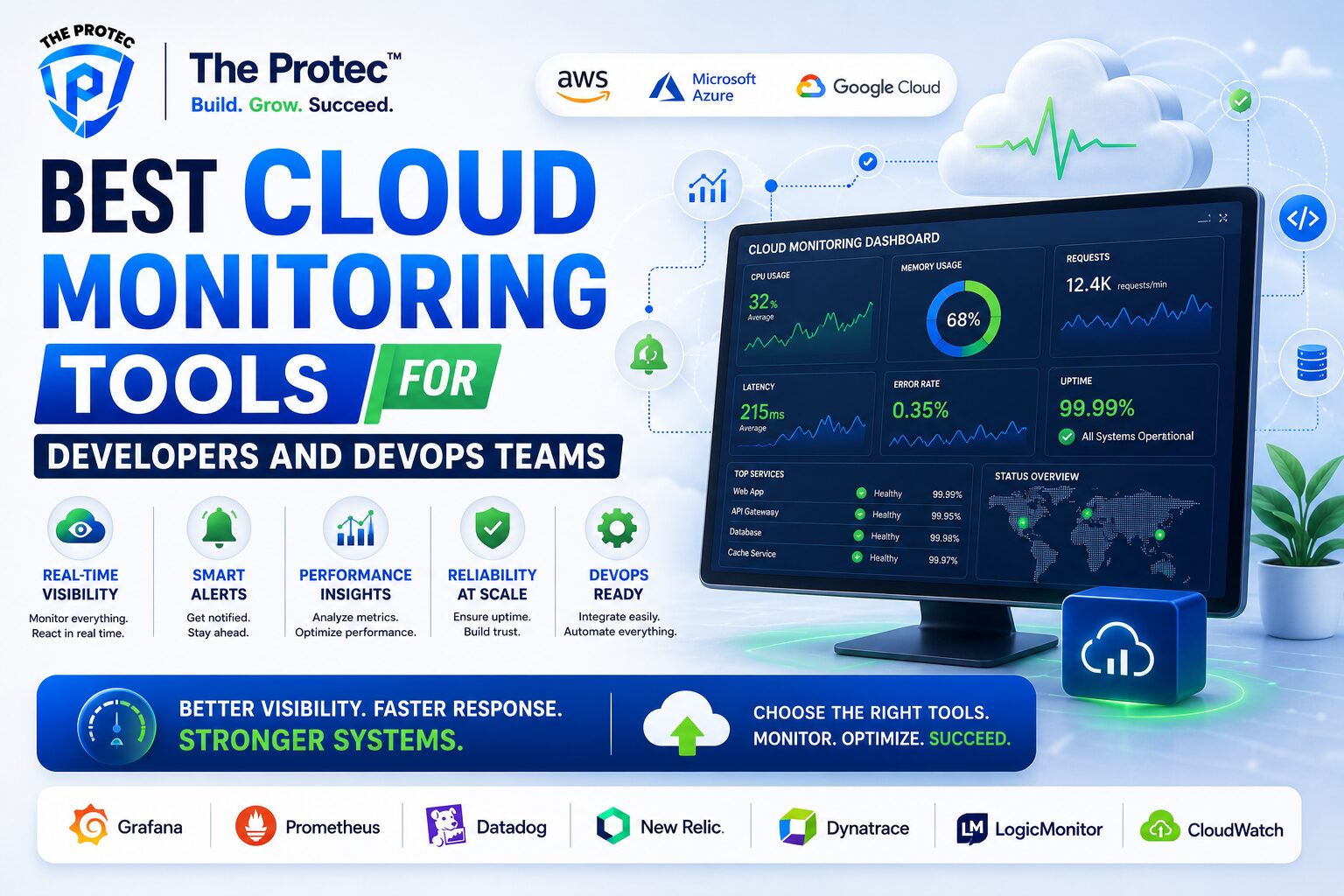
Cloud monitoring is no longer a side function reserved for ops specialists. For developers and DevOps teams, it is now a core part of shipping reliable software, controlling infrastructure spend, and keeping customer experience stable as systems scale across containers, serverless functions, managed databases, and multi-cloud environments. As architectures become more distributed, traditional uptime checks are not enough. Teams need cloud monitoring tools that can connect infrastructure health, application performance, logs, traces, and business impact in one place.
That shift is why the market for cloud monitoring tools continues to grow rapidly. Modern DevOps monitoring software does more than alert on CPU spikes or memory pressure. It helps teams answer deeper questions: Which service is slowing down checkout? Which deployment caused the error-rate jump? Is the issue in the app, the network, the database, or the third-party dependency? Good application monitoring shortens that path from symptom to cause, which is the difference between a fast recovery and a long incident.
In this guide, we compare the best cloud monitoring tools for developers and DevOps teams, focusing on capabilities that matter most today: full-stack visibility, OpenTelemetry support, AI-assisted analysis, Kubernetes and container insights, log management, synthetic testing, cost awareness, and ease of use.
What to Look for in Cloud Monitoring Tools
Before comparing platforms, it helps to define what modern cloud monitoring should cover. The best platforms combine several layers of visibility into a single workflow.
- Infrastructure monitoring: CPU, memory, disk, network, hosts, VMs, containers, and cloud services.
- Application monitoring: Request latency, error rates, transaction tracing, dependencies, and service maps.
- Logs and traces: Fast correlation between events, traces, and logs to reduce mean time to resolution.
- Kubernetes support: Cluster, node, pod, namespace, and workload-level health.
- Alerting and incident workflows: Smart thresholds, anomaly detection, routing, and integrations with on-call tools.
- Dashboards and reporting: Custom views for engineering, platform, SRE, and leadership teams.
- Cost and usage visibility: Helpful for FinOps-minded teams trying to balance performance and cloud spend.
In 2026, the strongest DevOps monitoring software also supports OpenTelemetry natively, offers automated service discovery, and uses AI to reduce alert noise. That matters because cloud environments change too quickly for manually maintained monitoring setups to keep up.
Best Cloud Monitoring Tools for Developers and DevOps Teams
1. Datadog
Datadog remains one of the most complete cloud monitoring tools for teams that want broad coverage across infrastructure, logs, application performance, security signals, and user experience. It is especially strong for organizations running hybrid or multi-cloud environments because it centralizes data from Kubernetes, serverless, containers, databases, and third-party services.
Its biggest advantage is breadth. Teams can move from infrastructure metrics to traces to logs without switching tools, which makes it easier to troubleshoot distributed systems. Datadog’s application monitoring is mature, with deep APM, service maps, profiling, and synthetic monitoring. It also continues to improve its AI-assisted triage and anomaly detection, helping teams reduce alert fatigue.
Best for: Large DevOps teams, platform engineering groups, and businesses that need a full observability suite.
Pros:
- Excellent all-in-one observability coverage
- Strong Kubernetes and container visibility
- Deep application monitoring and distributed tracing
- Large integration ecosystem
Cons:
- Can become expensive at scale
- Pricing complexity may require careful planning
2. Dynatrace
Dynatrace is a top-tier choice for enterprises that want automated root-cause analysis and strong AI-driven observability. It is one of the most advanced DevOps monitoring software platforms when it comes to reducing manual configuration. Its automatic dependency mapping, intelligent baselining, and causal analysis make it especially useful for teams with large, complex cloud estates.
One of Dynatrace’s strengths is how quickly it can identify the source of performance degradation across apps, infrastructure, and services. For application monitoring, it offers deep visibility into transactions and dependencies, while its infrastructure monitoring covers cloud services and Kubernetes environments with minimal setup. Dynatrace is also widely used in regulated and large-scale environments because of its governance and enterprise controls.
Best for: Enterprises, SRE teams, and organizations with highly complex cloud environments.
Pros:
- Excellent automation and AI-driven analysis
- Strong root-cause detection
- Low manual instrumentation overhead
- Good support for large-scale environments
Cons:
- Premium pricing
- Can feel heavy for smaller teams
3. New Relic
New Relic is a flexible and developer-friendly monitoring platform that balances observability depth with usability. It has long been a favorite for application monitoring because it makes it easy to instrument services, view traces, and analyze performance across multiple layers of the stack. For teams that want strong visibility without the operational complexity of some enterprise platforms, New Relic is a compelling option.
Its query interface, dashboards, and telemetry model are useful for engineering teams that want to build custom workflows. New Relic also supports logs, metrics, traces, synthetics, browser monitoring, and infrastructure monitoring in a single platform. For many teams, the appeal is simplicity: you can centralize observability without needing to stitch together multiple tools.
Best for: Product engineering teams, startups, and DevOps groups that want a strong developer experience.
Pros:
- Easy to adopt for application monitoring
- Unified telemetry across the stack
- Good dashboards and querying tools
- Useful for both developers and operations
Cons:
- Costs can rise with volume
- Some advanced features require familiarity with the platform
4. Grafana Cloud
Grafana Cloud is ideal for teams that value flexibility and open standards. Built around the Grafana ecosystem, it is especially attractive to organizations using Prometheus, Loki, Tempo, and OpenTelemetry. If your team prefers a composable observability stack, Grafana Cloud offers a strong balance between managed services and open-source compatibility.
It shines in visualization and dashboards, but it has grown into much more than a dashboarding layer. With managed metrics, logs, traces, and alerting, it can serve as a full cloud monitoring solution. For DevOps teams already invested in Prometheus or OpenTelemetry, this can be a natural upgrade path without forcing a complete platform change.
Best for: Teams with an open-source observability strategy and engineers who want dashboard flexibility.
Pros:
- Excellent visualization and dashboarding
- Strong OpenTelemetry and Prometheus support
- Composable, open standards-friendly approach
- Good fit for Kubernetes-heavy environments
Cons:
- More assembly required than all-in-one platforms
- Advanced setup can be technical
5. Splunk Observability Cloud
Splunk Observability Cloud is a strong option for organizations that need high-scale analytics and tight integration between metrics, traces, and logs. It is particularly appealing to teams already using Splunk for log management and security analytics. The platform focuses on fast troubleshooting and broad visibility into cloud-native services, infrastructure, and application performance.
Its real strength is helping teams move from signal to insight quickly. For application monitoring, Splunk provides detailed service insights, real-user monitoring, and tracing capabilities. It is also a solid choice for enterprises looking to unify operations and security data under a broader observability strategy.
Best for: Enterprise teams and organizations already invested in the Splunk ecosystem.
Pros:
- Strong analytics and search capabilities
- Good for large-scale cloud environments
- Useful cross-team visibility
- Strong integration potential with security and logs
Cons:
- Can be costly
- May be more platform than some smaller teams need
6. Amazon CloudWatch
Amazon CloudWatch is the most natural choice for teams heavily invested in AWS. As one of the core cloud monitoring tools in the AWS ecosystem, it provides metrics, logs, alarms, dashboards, and service-specific visibility across EC2, ECS, EKS, Lambda, RDS, and more. While it may not be as polished as some dedicated observability platforms, its native integration and tight AWS alignment make it indispensable for many teams.
CloudWatch is especially valuable for teams that want native monitoring without adding another vendor to the stack. For AWS-centric DevOps monitoring software needs, it is often the first layer of visibility. When paired with OpenTelemetry, third-party APM, or additional analytics tools, it can become part of a more complete observability strategy.
Best for: AWS-first teams, startups, and infrastructure groups that want native cloud visibility.
Pros:
- Native AWS integration
- Useful for logs, metrics, and alarms
- No separate platform required to start
- Good foundation for AWS-based operations
Cons:
- Less intuitive than specialized tools
- Advanced observability often needs add-ons
7. Google Cloud Operations Suite
Google Cloud Operations Suite, formerly Stackdriver, is the default monitoring and observability stack for teams building on Google Cloud. It offers strong integration with GKE, Compute Engine, Cloud Run, Cloud SQL, and other GCP services. For teams committed to Google Cloud, it delivers practical infrastructure monitoring and application monitoring without forcing a third-party layer.
The suite is especially useful for Kubernetes and cloud-native workloads. It provides logging, metrics, traces, and alerting with a design that fits Google Cloud-native workflows. While some teams prefer more advanced dedicated observability platforms, Google Cloud Operations Suite is often sufficient for teams that want native visibility and a relatively straightforward setup.
Best for: GCP-centric teams and organizations running workloads on Cloud Run or GKE.
Pros:
- Strong Google Cloud integration
- Good fit for Kubernetes and serverless workloads
- Native logs, metrics, traces, and alerts
- Useful for cloud-native operations
Cons:
- Best experience is within Google Cloud
- Less comprehensive than leading dedicated platforms
8. Azure Monitor
Azure Monitor is the primary monitoring platform for Microsoft Azure environments and remains a strong choice for enterprises using Azure, AKS, App Service, Functions, and SQL services. It provides a broad set of monitoring capabilities, including metrics, logs, alerts, and application insights, which make it a credible application monitoring and infrastructure monitoring solution inside the Microsoft ecosystem.
For teams already standardized on Azure, it is hard to ignore the convenience of a native tool with deep service integration. Azure Monitor works well when paired with Application Insights and Log Analytics, giving DevOps teams a more complete picture of application health and operational behavior.
Best for: Azure-centric organizations and Microsoft-heavy enterprise environments.
Pros:
- Strong Azure-native support
- Good integration with Application Insights
- Works well for enterprise governance
- Useful for cloud and app-level monitoring
Cons:
- Can feel fragmented across services
- Usability varies depending on configuration
Comparison Snapshot: Which Tool Fits Which Team?
If you are choosing among cloud monitoring tools, the right answer usually depends on your stack, team size, and operational maturity. There is no single best platform for every use case, but some patterns stand out.
- Best all-in-one platform: Datadog
- Best AI-driven root cause analysis: Dynatrace
- Best developer-friendly observability: New Relic
- Best open-source-friendly option: Grafana Cloud
- Best for AWS-native monitoring: Amazon CloudWatch
- Best for Google Cloud: Google Cloud Operations Suite
- Best for Azure: Azure Monitor
- Best for enterprise analytics and scale: Splunk Observability Cloud
For many DevOps teams, the decision comes down to whether they want a managed observability platform or a cloud-native stack that stays close to the provider. Dedicated observability vendors often deliver better cross-cloud visibility and application monitoring depth, while native tools reduce friction inside a single cloud ecosystem.
Current Trends Shaping Cloud Monitoring
As of mid-2026, several trends are shaping how developers and DevOps teams evaluate monitoring software.
- OpenTelemetry-first strategies: More teams want portable instrumentation that avoids lock-in.
- AI-assisted operations: Platforms are increasingly using machine learning to detect anomalies, summarize incidents, and suggest root causes.
- Kubernetes-native visibility: Monitoring must now understand dynamic workloads, autoscaling, and ephemeral services.
- Cost-aware observability: Teams want performance insights without runaway telemetry bills.
- Convergence of security and observability: Some platforms now blend runtime, infrastructure, and security signals for faster incident response.
These trends matter because they change how teams buy and use cloud monitoring tools. The best platforms are no longer judged only by uptime dashboards. They are evaluated by how well they help teams debug distributed systems, reduce noise, and support release velocity.
How to Choose the Right DevOps Monitoring Software
Start by mapping your environment. If you run mostly on a single cloud provider, a native tool may be enough for baseline monitoring. If you operate across multiple clouds, use containers heavily, or need rich application monitoring, a dedicated observability platform will usually deliver better results.
Then think about your team’s pain points. If alerts are noisy, prioritize anomaly detection and smart routing. If incidents take too long to diagnose, focus on distributed tracing and log correlation. If cloud bills are rising, choose a platform that helps identify expensive services and telemetry waste. If engineering adoption is the challenge, prioritize a tool with a better developer experience and easier instrumentation.
Finally, test the platform against a real workload. A monitoring tool can look impressive in a demo but fail when asked to track a real deployment pipeline, a Kubernetes rollout, or a latency issue in a microservice chain. The best choice is the one your team will actually use during a live incident.
Conclusion
The best cloud monitoring tools for developers and DevOps teams are the ones that make complexity easier to manage. Whether you choose a full observability platform like Datadog, Dynatrace, or New Relic, or a cloud-native solution like CloudWatch, Azure Monitor, or Google Cloud Operations Suite, the goal is the same: faster troubleshooting, fewer blind spots, and better control over cloud infrastructure.
For teams building modern applications, application monitoring is no longer optional. It is the operational layer that connects performance, reliability, and user experience. The right DevOps monitoring software will help your team ship with confidence, respond faster to incidents, and make smarter infrastructure decisions as your cloud footprint grows.
For a deeper look at cloud observability concepts, the OpenTelemetry project is a useful reference, and the Google Cloud Operations Suite documentation offers a good example of native cloud monitoring in practice.
FAQ
What are cloud monitoring tools used for?
Cloud monitoring tools track infrastructure health, application performance, logs, traces, and alerts so teams can detect issues quickly and fix them before they affect users.
What is the difference between cloud monitoring and application monitoring?
Cloud monitoring focuses on the health of infrastructure and cloud services, while application monitoring focuses on how software behaves, including latency, errors, transactions, and dependencies. Many modern platforms combine both.
Which cloud monitoring tool is best for DevOps teams?
Datadog is often the strongest all-around choice for DevOps teams, but the best option depends on your environment. Dynatrace is excellent for automation, New Relic is developer-friendly, and Grafana Cloud is a strong open-source-friendly choice.
Are native cloud monitoring tools enough?
Native tools like CloudWatch, Azure Monitor, and Google Cloud Operations Suite are often enough for single-cloud environments. For multi-cloud or advanced application monitoring, dedicated observability platforms usually provide deeper visibility and better correlation.