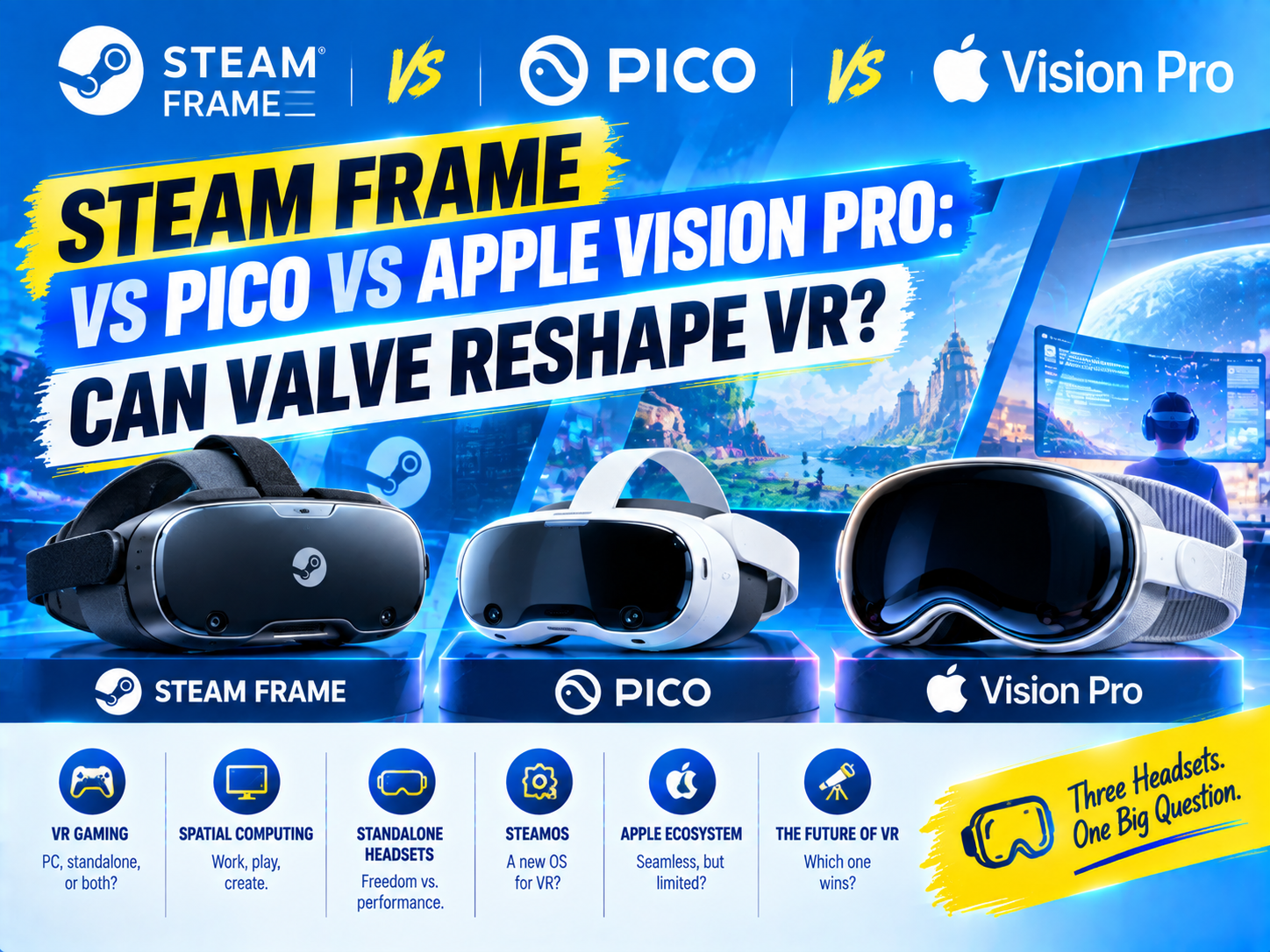









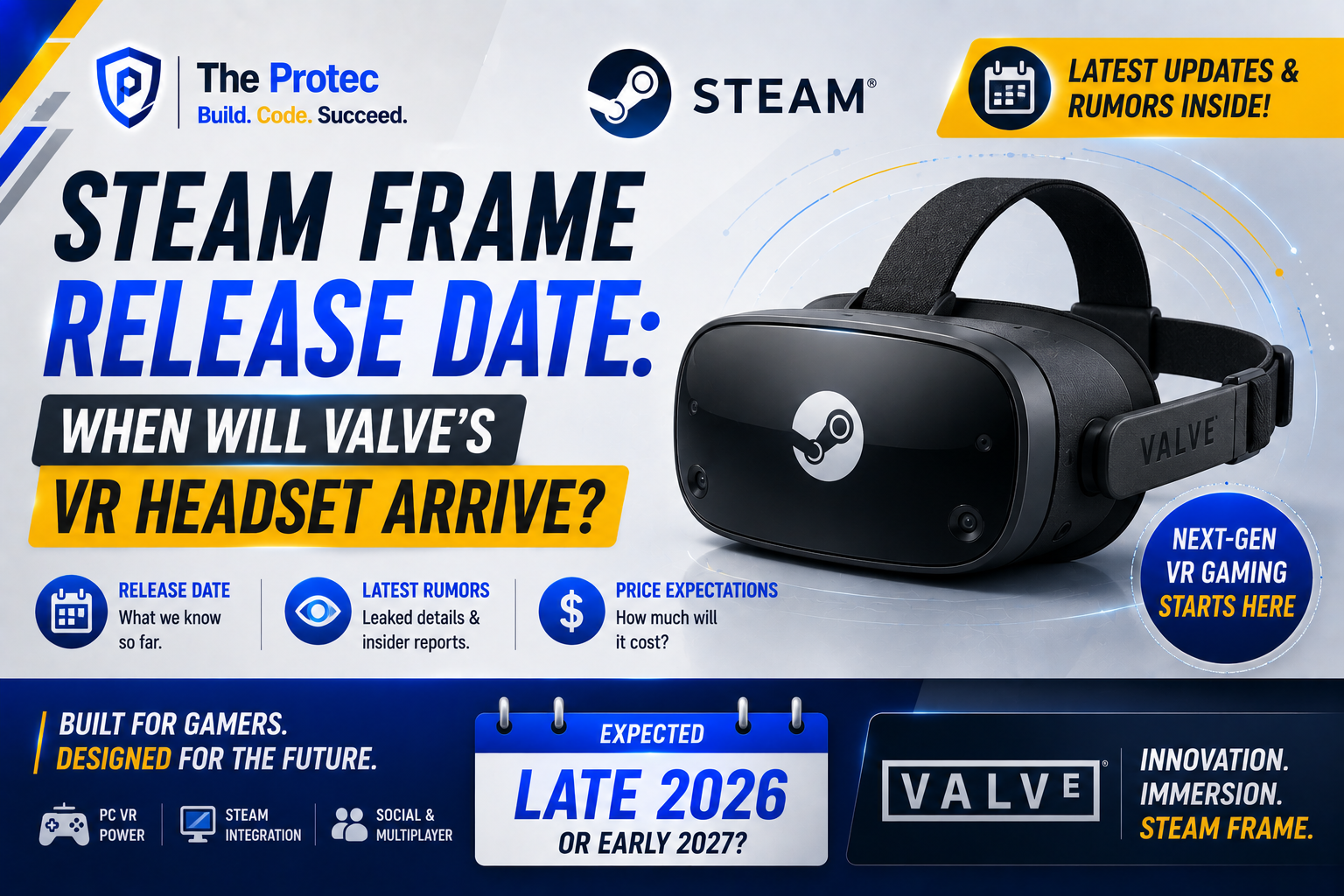
Valve has spent years quietly developing technology that could become its next major virtual reality product. Commonly known through reports, trademark activity, software references, and leaks as the Valve Steam Frame, the anticipated headset is expected to combine standalone operation with access to the broader SteamVR ecosystem. The remaining question is the one prospective buyers care about most: what’s Steam Frame Release Date?
Valve’s 30th anniversary on August 24 offers a timely opportunity to revisit the Steam Frame release date. An anniversary reveal would be fitting for the company behind Steam, Half-Life, the Steam Deck, and the Valve Index, but anniversaries do not create production-ready hardware. Valve has not tied a new headset launch to the milestone, and there is still no publicly confirmed release date, final specification sheet, or Steam Frame price.
Even so, the available evidence points to an active hardware project rather than a purely experimental prototype. Here is what the latest credible information suggests about Valve’s new VR headset, the technology it may use, and the launch timeline buyers should realistically expect.
What Is the Steam Frame Release Date?
Valve has not announced an official Steam Frame release date. With no conventional product reveal, preorder page, regulatory launch campaign, or finalized pricing announcement available as of August 2026, any specific date circulating online should be treated as speculation.
A late-2026 announcement remains possible, particularly around Valve’s anniversary or the holiday gaming news cycle. However, a full consumer launch before the end of the year would require an unusually short gap between announcement and availability. Early 2027 is therefore an equally plausible, and arguably safer, estimate if Valve intends to release the headset globally with sufficient inventory and polished software.
Valve does not follow a predictable annual hardware schedule. It has historically revealed products when the company believes the experience is ready, and it is willing to delay hardware when manufacturing, software, or supply constraints intervene. That makes development signals more useful than anonymous claims about a specific launch day.
Could Valve’s 30th Anniversary Bring a Steam Frame Announcement?
Valve was founded on August 24, 1996, making its 30th anniversary an obvious focus for speculation. A Steam Frame announcement would connect the company’s history in PC gaming with its current push toward Linux-based gaming devices, custom hardware, and more accessible computing platforms.
There are several ways Valve could use the occasion without immediately releasing the headset. It could confirm the Steam Frame name, show an early hardware design, introduce a new SteamOS interface for VR, or provide developers with technical guidance ahead of a later launch. A small announcement followed by a detailed presentation would be consistent with Valve’s preference for letting software and hands-on demonstrations explain its hardware.
Still, the anniversary should be viewed as an opportunity rather than evidence. Valve has not promised a commemorative hardware event. If August passes without a reveal, that would not necessarily mean the headset has been canceled; it may simply indicate that the product, manufacturing plan, or software platform is not ready for public commitments.
How Strong Is the Evidence for the Valve Steam Frame?
The headset has often been associated with the internal codename “Deckard,” which has appeared in reporting and SteamVR-related discoveries for several years. More recent references to Steam Frame have strengthened the belief that Valve is moving toward a consumer-facing identity for a new hardware platform.
Trademark activity is meaningful because companies generally protect names before launching products or services. It is not definitive proof of a release, however. Technology companies routinely register marks for projects that change names, take new forms, or never reach consumers.
Software discoveries are another important part of the story. Datamined references have reportedly pointed toward standalone processing, wireless connectivity, tracked controllers, and a VR-focused operating environment. These clues support the broad direction of the project, but internal labels can describe prototypes rather than final retail features.
Valve’s continued maintenance of SteamVR also matters. The company publishes platform updates through the official SteamVR news hub, demonstrating that its VR work did not end with the Index. Steam Frame could become the hardware that brings those software efforts together, especially if Valve wants to reduce the complexity traditionally associated with PC VR.
Expected Steam Frame VR Headset Hardware
The strongest expectation is that Steam Frame will be a standalone or hybrid headset rather than a direct copy of the original Index. A hybrid design could run selected experiences locally while connecting wirelessly to a gaming PC for demanding SteamVR titles. This would remove the permanent display cable without abandoning the performance available from desktop GPUs.
Standalone processing
Reports have repeatedly suggested an ARM-based system-on-chip similar in concept to the processors used in modern standalone headsets. The exact processor, memory capacity, and storage options remain unconfirmed. An efficient mobile chip would provide lower heat and better battery life, while local storage could support SteamOS applications and VR software designed specifically for the device.
Inside-out tracking
Camera-based inside-out tracking is highly likely. It would allow the Steam Frame VR headset and its controllers to track movement without the external base stations used by the Index. Valve could still preserve optional support for Lighthouse accessories, but requiring base stations would undermine the convenience expected from a new standalone product.
Wireless PC VR
Low-latency wireless streaming may be one of Steam Frame’s defining features. Valve has already gained experience optimizing game streaming through Steam Link and managing constrained hardware through Steam Deck. A dedicated wireless system, possibly using separate radios for internet traffic and headset streaming, could make high-quality PC VR easier to configure.
Displays, optics, and eye tracking
Pancake lenses are a reasonable expectation because they enable thinner headsets and clearer edge-to-edge visuals than older Fresnel designs. High-resolution displays, improved passthrough cameras, and eye tracking are also frequently discussed. Eye tracking could support foveated rendering, which concentrates processing power where the user is looking, but Valve has not confirmed that it will be included in the retail model.
New motion controllers
Leaks have associated the project with redesigned tracked controllers sometimes referred to as “Roy.” The final controllers may combine conventional buttons and analog sticks with capacitive sensing and precise hand positioning. Valve will need to balance the experimental input ideas of the Index controllers with layouts that work reliably across the enormous SteamVR library.
How SteamOS Could Shape Valve’s New VR Headset
SteamOS integration may be more significant than any single hardware specification. The Steam Deck demonstrated that Valve can turn a Linux-based operating system into a console-like experience while retaining access to advanced PC settings. Steam Frame could apply the same philosophy to VR: sign in, download compatible software, connect controllers, and start playing without managing a Windows desktop inside a headset.
A dedicated SteamOS interface could manage room boundaries, passthrough, wireless PC discovery, software updates, power settings, and the user’s library. It could also identify whether a title runs locally, streams from another computer, or requires a traditional PC VR connection.
The central technical challenge is compatibility. Most PC games and many SteamVR applications were built for x86 processors, while a standalone headset would likely use ARM architecture. Valve could address this through native ARM applications, translation technology, cloud or local PC streaming, or a mixture of all three. Buyers should not assume that every Steam game will run directly on the headset merely because SteamOS is installed.
This hybrid model could nevertheless give Steam Frame a major advantage. Lightweight applications could run on-device, while graphically intensive games use a nearby PC. The result would be a headset that feels standalone for everyday use without limiting enthusiasts to mobile-class graphics.
What Could the Steam Frame Price Be?
There is no official Steam Frame price. A realistic estimate is between $799 and $1,199, depending on whether controllers are included and whether Valve positions the headset as mainstream gaming hardware or a premium successor to the Index.
The original Valve Index established Valve as a premium VR manufacturer, with its complete kit launching at a price far above mass-market standalone headsets. Steam Frame could cost less if inside-out tracking eliminates external base stations, but advanced optics, custom silicon, eye tracking, high-speed wireless hardware, and ergonomic engineering would push the price upward.
Valve may also use multiple configurations. A lower-storage model could attract users who mainly stream from a PC, while a higher-capacity version could target buyers who want a larger local library. Controllers are likely to be bundled, although optional accessories or compatibility with existing SteamVR equipment could create additional packages.
Claims that the headset will be dramatically subsidized should be treated cautiously. Valve benefits when customers purchase software through Steam, but advanced VR hardware remains expensive to manufacture. A competitive price near $999 appears more believable than either a budget price or an ultra-premium figure, though that remains an informed estimate rather than leaked retail information.
What Needs to Happen Before Steam Frame Launches?
Several public signals would indicate that the Steam Frame release date is approaching:
- An official Valve announcement: The company must confirm the product name, design, and intended market.
- Developer documentation: Studios need performance targets, input specifications, and guidance for native or streamed software.
- Regulatory filings: Wireless consumer hardware normally appears in certification databases before shipping.
- Steam store changes: Compatibility labels, hardware support pages, or a dedicated storefront would help users understand which games work locally.
- Hands-on demonstrations: Valve will need to prove tracking quality, visual clarity, comfort, battery life, and wireless latency.
- Pricing and regional availability: A credible launch requires package details, supported countries, warranty terms, and order dates.
The absence of several of these signals is why a precise near-term release prediction remains risky. Once they begin appearing together, the gap between announcement and shipment could be relatively short.
Should You Wait for Steam Frame?
PC VR enthusiasts who already own a capable headset should wait for official specifications before upgrading. Steam Frame’s potential benefits—wireless SteamVR, standalone SteamOS functionality, modern optics, and simplified tracking—are compelling, but none should be treated as guaranteed until Valve presents the final device.
Waiting makes more sense for Index owners seeking a direct Valve upgrade or buyers who prioritize their existing Steam library. Someone who needs a headset immediately should compare currently available products rather than plan around an unannounced date. Steam Frame may be transformative, but Valve has not yet provided a purchasing timeline.
Steam Frame Release Date FAQ
Has Valve officially announced the Steam Frame?
Valve has not provided a complete consumer announcement with final specifications, price, preorders, and a release date. The Steam Frame name and the earlier Deckard codename are associated with trademark reports, software discoveries, and credible development rumors, but those clues are not a substitute for a formal reveal.
When is the Valve Steam Frame expected to launch?
A late-2026 announcement followed by a late-2026 or early-2027 release is plausible. Early 2027 becomes more likely if Valve needs additional time for developer support, manufacturing, regulatory approval, or SteamOS integration. No exact date has been confirmed.
Will Steam Frame work without a gaming PC?
The available evidence points toward some form of standalone operation. However, the most demanding SteamVR games may still require wireless or wired access to a gaming PC. Local compatibility will depend on the processor, operating system, and developer support.
How much will the Steam Frame cost?
Valve has not announced pricing. Current expectations generally place it in premium-headset territory, with an estimated range of $799 to $1,199. Features, storage capacity, included controllers, and optional accessories will determine the final cost.
Will Steam Frame replace the Valve Index?
Steam Frame is widely expected to become Valve’s next major VR platform, but it may not be a conventional Index replacement. A standalone, wireless design would target a broader use case while potentially retaining compatibility with SteamVR PCs and selected existing accessories.
The Bottom Line
The Steam Frame release date remains unconfirmed, and Valve’s 30th anniversary should not be mistaken for a guaranteed launch event. Yet the broader evidence suggests that Valve is developing a serious new VR platform built around standalone hardware, wireless PC connectivity, modern tracking, and deep SteamOS integration.
The most believable timeline is an official reveal followed by availability in late 2026 or early 2027, with pricing likely near the premium end of the consumer VR market. Until Valve publishes final details, specifications and dates should be viewed as informed expectations. If the company succeeds in making a Steam library feel natural inside a comfortable, cable-free headset, Steam Frame could become Valve’s most important VR product yet.