








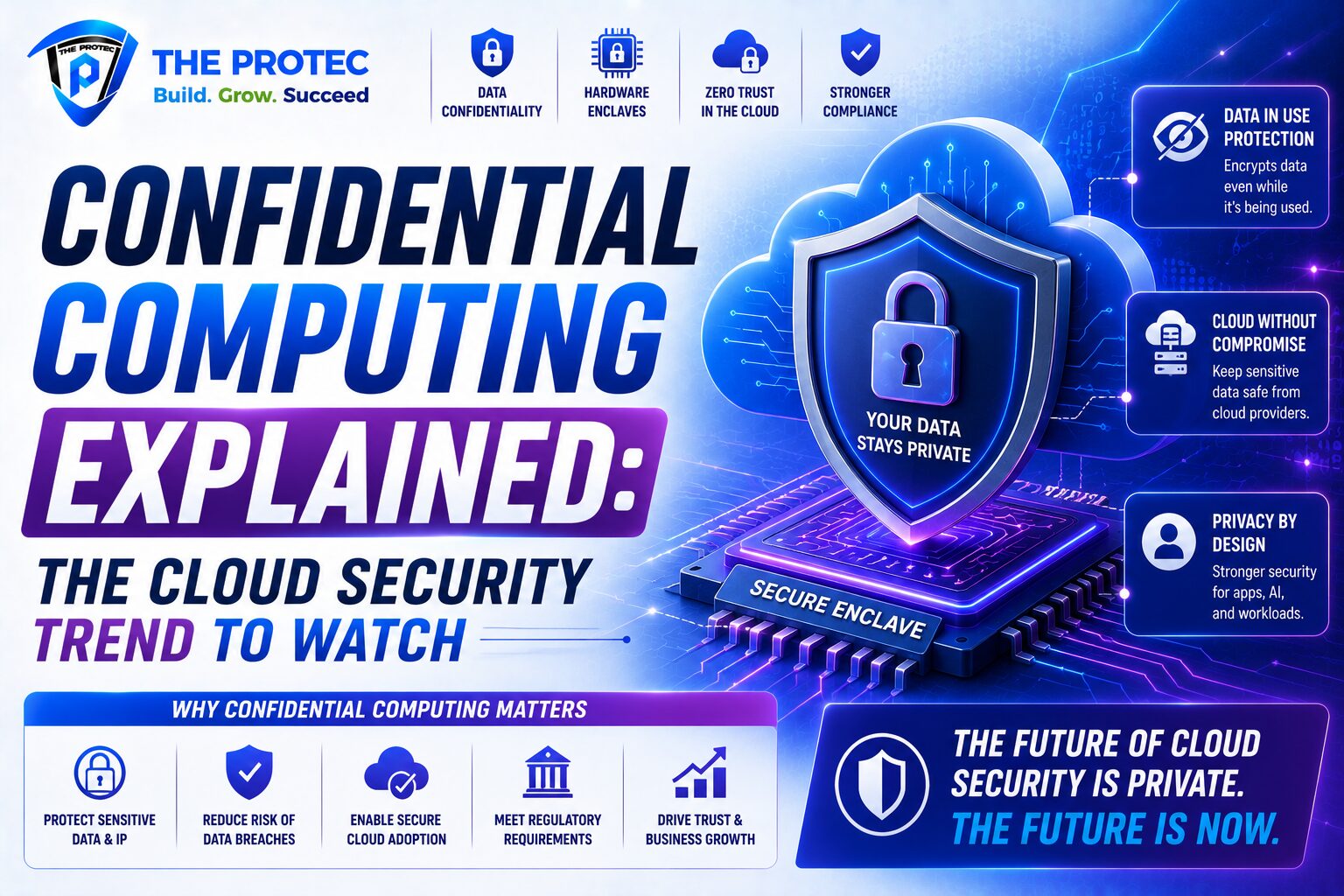
What Is Confidential Computing?
Confidential computing is a cloud security approach designed to protect data while it is being processed, not just when it is stored or transmitted. That distinction matters. Traditional security controls are strong at rest and in transit, but data becomes exposed during computation, when applications, infrastructure operators, or attackers with privileged access may be able to inspect memory and runtime activity. Confidential computing closes that gap by using hardware-backed isolation to keep sensitive workloads protected even while they are active.
At the center of this model is the trusted execution environment, often shortened to TEE. A TEE is a secure area inside a processor that isolates code and data from the rest of the system. Workloads running inside a TEE can decrypt data, perform computations, and produce results without exposing the underlying information to the host operating system, hypervisor, or cloud provider. In practical terms, this gives organizations a stronger way to handle regulated data, proprietary algorithms, and high-value workloads in the cloud.
Confidential computing has moved from an emerging concept to a strategic cloud security trend because it addresses a problem that many organizations have struggled to solve: how to trust cloud environments with highly sensitive data without giving up control. As enterprises migrate analytics, AI, financial services, healthcare, and cross-border workloads to the cloud, the need to reduce exposure during processing has become much more urgent.
Why Confidential Computing Matters for Cloud Security
Cloud security has traditionally focused on perimeter controls, identity management, encryption, and segmentation. Those protections still matter, but they do not eliminate one of the biggest risks in modern infrastructure: privileged access. Cloud administrators, compromised management tools, malicious insiders, and advanced attackers can sometimes gain visibility into workloads through memory inspection, debugging interfaces, or runtime compromise. Even highly mature environments can still have blind spots.
Confidential computing changes the trust model. Instead of assuming the entire cloud stack is safe, it minimizes the surface that must be trusted. Sensitive data can remain encrypted until it is loaded into a trusted execution environment, where it is protected from the rest of the system. That means organizations can process confidential records, proprietary models, and mission-critical transactions with fewer concerns about infrastructure-level exposure.
This is especially important in industries where data sensitivity, regulatory obligations, and intellectual property protection intersect. Financial institutions want to protect transaction data and risk models. Healthcare providers need to safeguard patient records and genomic workloads. Software vendors want to protect source code, licensing logic, and embedded secrets. AI teams increasingly need to secure model weights, prompts, and inference data. Confidential computing helps all of these use cases share a common security foundation.
How a Trusted Execution Environment Works
A trusted execution environment is not a single product; it is a hardware-backed isolation capability built into modern processors and supported by cloud platforms and application frameworks. While implementations differ by vendor, the basic workflow is similar.
- Attestation: Before workload data is released, the system proves that the code is running inside a genuine TEE with the expected security properties.
- Isolation: Data and code are protected from the host OS, hypervisor, firmware layers, and other workloads on the same machine.
- Secure key release: Encryption keys are only provided after attestation succeeds, ensuring that only trusted code can decrypt the data.
- Protected execution: Sensitive processing occurs inside the enclave or confidential VM, reducing exposure during runtime.
The attestation step is crucial. It lets a remote party verify that the environment is trustworthy before sending sensitive information. In other words, confidential computing is not just about locking data away; it is about proving that the environment meets the required security posture before processing begins.
In modern cloud deployments, TEEs may take several forms, including enclaves, secure virtual machines, and confidential containers. Each has different performance, operational, and compatibility trade-offs. The right choice depends on the workload, the required level of isolation, and the organization’s security architecture.
Why Major Cloud Providers Are Investing in Confidential Computing
Major cloud providers are investing heavily in confidential computing because it aligns with the future of enterprise cloud adoption. Organizations want the scale and flexibility of public cloud without surrendering control over data during processing. Providers that can offer stronger in-use protection gain a competitive advantage in regulated markets and advanced workload classes.
There are several reasons this investment is accelerating:
- Customer demand for stronger data protection: Enterprises want to move more sensitive workloads to cloud environments without broadening their trust boundary.
- Regulatory pressure: Privacy, data residency, and sector-specific compliance requirements are pushing organizations toward stronger technical safeguards.
- AI and analytics growth: Generative AI, machine learning, and real-time analytics often rely on highly sensitive datasets and models that benefit from protection in use.
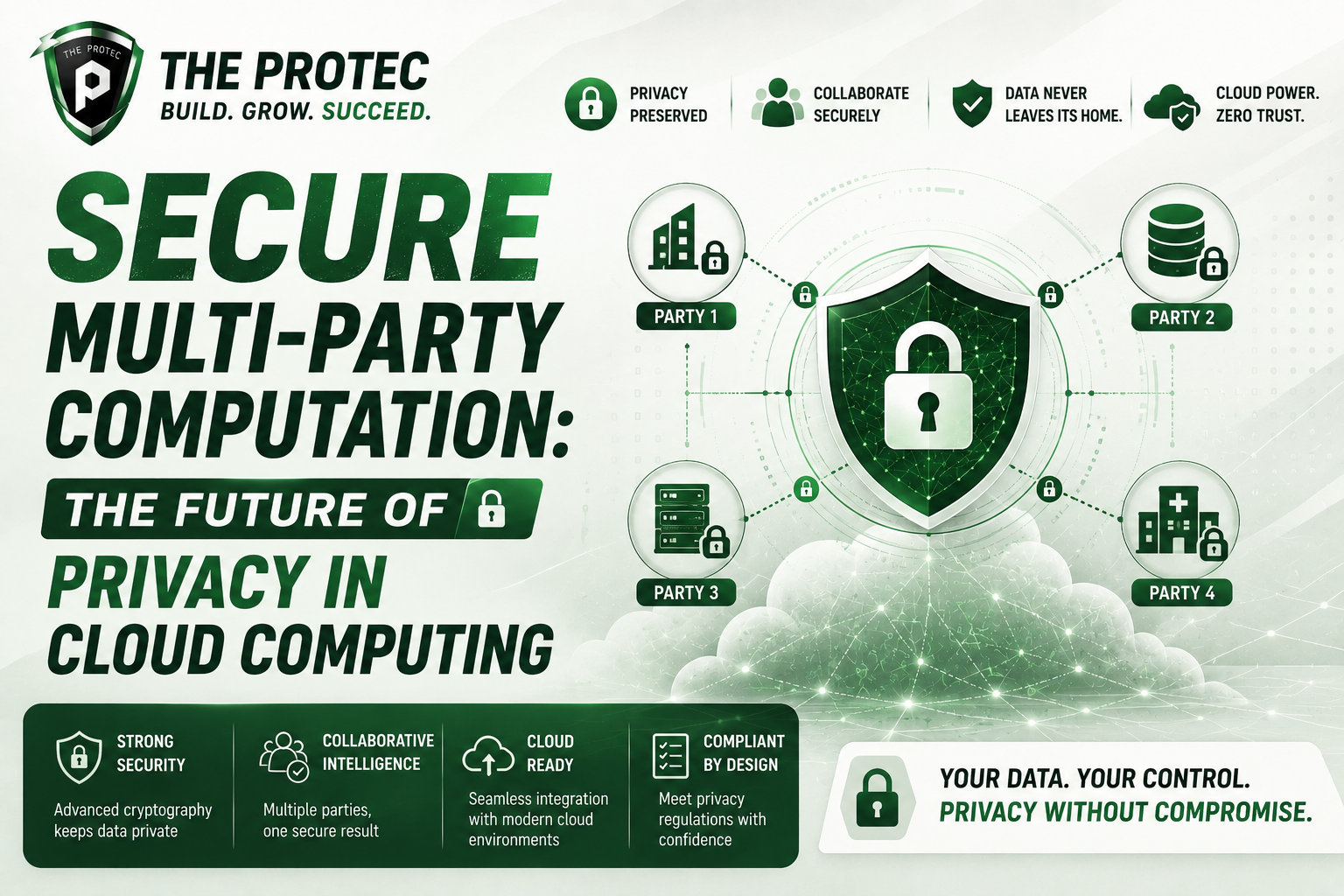
- Multi-party collaboration: Businesses increasingly need to share and process sensitive data with partners, vendors, and customers while limiting exposure.
- Platform differentiation: Confidential computing creates a premium security capability that cloud providers can integrate into their compute, database, and AI services.
That investment is also helping the ecosystem mature. The more cloud-native confidential computing becomes, the easier it is for developers to adopt it without redesigning entire applications. As support grows across virtual machines, containers, databases, and analytics platforms, confidential computing shifts from a niche security option to a mainstream cloud architecture pattern.
Key Use Cases for Confidential Computing
Confidential computing is not just a theoretical upgrade to cloud security. It is already solving practical problems for organizations handling sensitive workloads.
Financial Services and Payments
Banks, fintechs, and payment processors can use trusted execution environments to protect transaction data, fraud analytics, and credit decisioning logic. This is especially useful when workloads involve third-party processing or shared cloud infrastructure. Confidential computing can help reduce the risk of data exposure without sacrificing the scalability of cloud services.
Healthcare and Life Sciences
Healthcare organizations deal with patient records, clinical data, and research datasets that require strong safeguards. Confidential computing enables secure processing of electronic health records, medical imaging, and genomic analysis while limiting visibility to infrastructure operators. That makes it easier to collaborate across research partners and cloud environments.
Artificial Intelligence
AI is becoming one of the most important drivers of confidential computing adoption. Enterprises want to protect training data, model parameters, and inference requests. For organizations deploying proprietary models or using sensitive data in large language model workflows, TEEs can help keep valuable inputs and outputs protected during execution. This matters not only for privacy, but also for protecting intellectual property.
Cross-Organization Data Collaboration
Many industries need to collaborate on shared datasets without fully exposing them to all parties. Confidential computing supports secure analytics and federated workflows where each participant can contribute data or logic while maintaining confidentiality. This is a major advantage in sectors like insurance, supply chain, and public sector digital services.
Software and SaaS Protection
Software vendors can use confidential computing to protect proprietary algorithms, license enforcement logic, and sensitive customer data in multi-tenant environments. It gives SaaS providers another tool for building trust with enterprise customers who are increasingly asking how their data is protected during processing, not just when it is stored.
How Confidential Computing Compares to Traditional Cloud Security
Confidential computing should be viewed as an additional layer in cloud security, not a replacement for existing controls. Encryption at rest, encryption in transit, identity and access management, secure software development, and continuous monitoring remain essential. What confidential computing adds is protection for data in use.
That difference is significant because data in use has historically been one of the hardest states to secure. Once data is loaded into memory for processing, traditional controls have less visibility into what happens next. A trusted execution environment makes it possible to keep that memory isolated, reducing the risk of privileged access and lateral movement inside the host system.
For many organizations, the ideal architecture combines confidential computing with:
- Strong key management and hardware security modules
- Zero trust identity controls
- Network segmentation and microsegmentation
- Secure software supply chain practices
- Continuous logging, detection, and response
In other words, confidential computing is most effective when integrated into a broader cloud security strategy. It raises the bar by shrinking the trusted computing base and making sensitive workloads far less exposed during active processing.
Challenges and Trade-Offs to Consider
Like any security innovation, confidential computing comes with trade-offs. Organizations evaluating it should understand the operational and architectural implications.
Performance overhead: Depending on the workload and implementation, isolation can introduce latency or resource constraints. While hardware advances are reducing this impact, performance testing remains important.
Application compatibility: Some legacy applications need modification to run effectively in TEEs or confidential environments. Not every workload is an immediate fit.
Operational complexity: Attestation, key management, and secure deployment pipelines can add complexity if teams are not prepared for them.
Visibility constraints: Because the environment is designed to limit access, traditional debugging and observability tools may need to be adapted.
Vendor and platform differences: Not all confidential computing implementations are identical. Organizations should evaluate support across processors, hypervisors, orchestration layers, and cloud services.
These challenges do not diminish the value of confidential computing. Instead, they highlight the need for a thoughtful rollout strategy. The best results usually come from prioritizing workloads that are highly sensitive, high value, and technically suitable for isolated execution.
What’s Driving the Rapid Growth of Confidential Computing
Confidential computing has become one of the fastest-growing enterprise security technologies because it sits at the intersection of cloud adoption, data privacy, and AI transformation. Several trends are converging at once.
First, organizations are moving more workloads to cloud platforms, including workloads that were once considered too sensitive for shared infrastructure. Second, data privacy expectations are rising, both from regulators and from customers. Third, AI systems are creating new categories of sensitive data that need protection during training and inference. And fourth, cloud infrastructure has matured enough to make hardware-backed isolation practical at scale.
Industry momentum is also visible in the broader ecosystem. Cloud providers, chip manufacturers, open-source communities, and software vendors are working to standardize confidential computing concepts and improve tooling. A helpful overview of the ecosystem can be found through the Confidential Computing Consortium, which tracks adoption and technical development across the industry. Cloud providers such as Microsoft, Google Cloud, and AWS have also expanded confidential computing offerings across compute and related services, reflecting the strategic importance of this technology.
As support broadens, the question for many businesses is no longer whether confidential computing will matter, but which workloads should be protected first.
How Businesses Should Approach Adoption
Businesses should treat confidential computing as a targeted capability with clear use cases rather than an all-or-nothing migration. The most effective adoption strategy usually begins with a workload assessment.
- Identify sensitive data flows: Determine which applications process regulated, proprietary, or high-risk data.
- Map trust boundaries: Understand where data is exposed today and which teams or systems can access it during runtime.
- Prioritize high-value workloads: Start with applications where a security breach would be especially damaging.
- Test performance and compatibility: Validate how the workload behaves inside a trusted execution environment.
- Design for attestation and key control: Ensure that only verified workloads can access decrypted data.
- Align with governance: Connect the deployment to compliance, audit, and incident response processes.
For many organizations, a phased adoption approach works best. Begin with a pilot project, validate security and performance, and expand to adjacent workloads once the operational model is proven. This helps teams build confidence while keeping risk manageable.
The Future of Confidential Computing in Cloud Security
Confidential computing is likely to become a standard expectation for sensitive cloud workloads, much like encryption and identity controls are today. As hardware support improves and cloud platforms expose more managed services with built-in confidential capabilities, adoption should continue to accelerate.
The next wave will likely include tighter integration with AI platforms, more seamless support for containerized environments, and easier policy-driven attestation workflows. We can also expect broader use in distributed computing, cross-organization data sharing, and privacy-preserving analytics. For enterprises, this means confidential computing will increasingly move from a specialized security feature to a core part of cloud architecture planning.
What makes this trend especially important is that it addresses a real trust problem in cloud computing: how to process sensitive information without exposing it to the underlying infrastructure. That is a foundational challenge, and confidential computing is one of the most promising answers available today.
FAQ: Confidential Computing
What is the main purpose of confidential computing?
The main purpose of confidential computing is to protect data while it is being processed. It uses hardware-backed isolation, often through a trusted execution environment, to reduce the risk of exposure during runtime.
Is confidential computing the same as encryption?
No. Encryption protects data at rest and in transit, while confidential computing protects data in use. It complements encryption by keeping sensitive workloads isolated during active processing.
What is a trusted execution environment?
A trusted execution environment is a secure processing area inside a processor that isolates code and data from the rest of the system. It helps ensure that sensitive workloads can run without being exposed to the host operating system or hypervisor.
Why are cloud providers investing in confidential computing?
Cloud providers are investing in confidential computing because customers want stronger protection for sensitive workloads, especially in regulated industries and AI use cases. It also helps providers differentiate their platforms with advanced cloud security capabilities.
Which workloads benefit most from confidential computing?
Workloads that process highly sensitive, regulated, or proprietary data benefit most. Common examples include financial analytics, healthcare data processing, AI model inference, secure collaboration, and SaaS applications that handle enterprise customer information.
Conclusion
Confidential computing is quickly becoming one of the most important cloud security trends for businesses to understand. By protecting data while it is in use, it fills a long-standing gap in traditional security models and makes it safer to run sensitive workloads in shared cloud environments. As trusted execution environments become more widely available across major cloud platforms, enterprises will have new options for balancing security, scalability, and collaboration.
For businesses handling regulated data, proprietary models, or mission-critical applications, confidential computing is no longer a niche idea. It is a practical strategy for reducing risk in a cloud-first world.