









Contents
- 1 Introduction
- 2 Understanding API-First Development
- 3 How API-First Enables Scalability
- 4 The Role of REST API in API-First Development
- 5 GraphQL: Complementing REST in Modern API-First Strategies
- 6 API-First as the Integration Enabler
- 7 Best Practices for Effective API-First Development
- 8 FAQ
- 9 Conclusion
Introduction
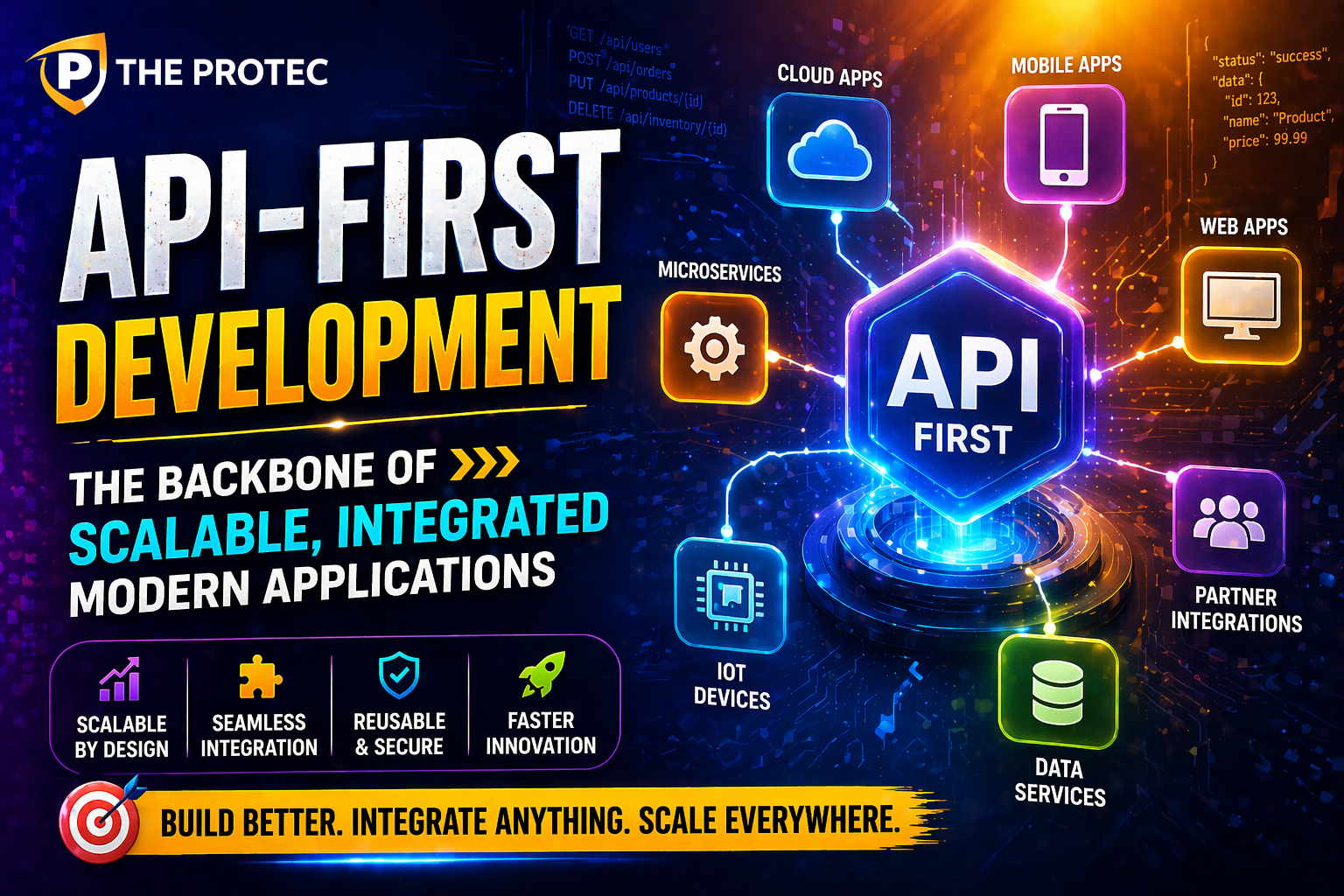
In today’s interconnected digital landscape, applications must be scalable, flexible, and integrable to keep pace with evolving business demands. The API-first development approach has emerged as the cornerstone of modern software architecture, enabling organizations to build resilient applications that seamlessly communicate across diverse platforms and services. By prioritizing API design before implementation, businesses create streamlined development workflows and ensure robust, adaptable integrations. This article dives deep into the essence of API-first development, illustrating why it’s the backbone of modern applications and how technologies like REST API and GraphQL drive scalability and integration.
Understanding API-First Development
API-first is a development methodology that emphasizes designing and building APIs as the primary interface to the software application before developing the actual application logic or user experience. Unlike traditional approaches where APIs are retrofitted or developed post hoc to accommodate integrations, API-first treats the API as a foundational product.
By designing APIs upfront, teams establish clear and standardized contracts between different application components and external systems. This strategy reduces ambiguity, facilitates parallel development, and ensures consistency across the software ecosystem.
Core Principles of API-First Development
- Design Before Code: APIs are carefully designed, documented, and mocked out prior to implementation, enabling stakeholder validation and early feedback.
- Consumer-Centric Approach: APIs are created with consumers in mind, ensuring they are intuitive, consistent, and easy to use.
- Standardization and Reusability: Reusable API patterns and conventions promote uniformity and reduce duplication across multiple services and products.
- Automation Ready: API specifications support automated testing, documentation generation, and continuous integration pipelines.
How API-First Enables Scalability
Scalability is fundamental in modern applications, especially with growing user bases and increasing interaction volumes. API-first development fosters scalability in several key ways:
1. Decoupled Architecture
APIs act as explicit boundaries between different components or microservices within an application. This decoupling allows each service to evolve independently, scale horizontally, or be replaced without impacting others. Such modularity is essential for managing complexity and scaling efficiently.
2. Parallel Development Streams
By providing mock APIs and well-documented interfaces early, front-end and back-end teams can work simultaneously. This speeds up delivery and reduces development bottlenecks, ensuring faster adaptation to market needs.
3. Performance Optimization
API interfaces can be optimized independently, including caching strategies, rate limiting, and load balancing, enhancing overall performance and responsiveness under load. This fine-grained control facilitates scaling tailored to specific usage patterns.
4. Evolution Without Disruption
Versioning APIs and using backward-compatible changes allows new features and services to be rolled out without breaking existing consumers. This promotes continuous growth and scaling without major disruptions.
The Role of REST API in API-First Development
REST API remains one of the most widely adopted paradigms in API-first development due to its simplicity, statelessness, and resource-oriented design. It establishes a consistent way to expose application data and functionality over HTTP, making it highly accessible and interoperable.
REST API’s Features Supporting Scalability and Integration
- Statelessness: Each request contains all the information needed, enabling easy horizontal scaling.
- Uniform Interface: Standardized HTTP methods (GET, POST, PUT, DELETE) simplify integration across clients and services.
- Cacheability: Responses can be cached to reduce server load and improve performance.
- Layered System: Supports load balancers, proxies, and gateways that aid scalability and security.
API-first driven by REST API encourages designing resource-centric interfaces that clearly define the operations and data format upfront. This clarity eliminates guesswork for clients and streamlines integration efforts.
GraphQL: Complementing REST in Modern API-First Strategies
GraphQL, introduced by Facebook and rapidly embraced across the tech industry, offers a flexible alternative or complement to REST APIs within API-first frameworks. Unlike REST, which exposes multiple endpoints for different resources, GraphQL provides a single endpoint with a powerful query language allowing clients to request exactly the data they need.
GraphQL’s Benefits for Scalability and Integration
- Efficient Data Retrieval: Minimizes over-fetching and under-fetching by supporting fine-grained data queries, leading to optimized channel usage and faster responses.
- Strong Typing and Introspection: The schema-centric approach provides auto-generated documentation and validation, enhancing developer experience and reducing errors.
- Real-time Capabilities: Subscriptions enable push updates to clients, supporting dynamic interactive apps.
- Flexible Evolution: Adding new fields and types without impacting existing queries allows seamless API growth without breaking changes.
In many API-first development environments, GraphQL is employed alongside REST to address complex data-fetching requirements while maintaining scalability and integration simplicity.
API-First as the Integration Enabler
Modern applications often exist within ecosystems of diverse services, third-party platforms, and devices. API-first development establishes clear, consistent interfaces that unlock powerful integrations driving innovation and value.
Enabling Cross-Team Collaboration
Well designed APIs act as contracts between teams, enabling independent yet coordinated development of front-end apps, back-end services, mobile clients, and external partner systems. This reduces communication overhead and accelerates delivery.
Fostering Ecosystem Partnerships
Open APIs facilitate robust integrations with external tools, enabling businesses to expand their platform capabilities and foster partner ecosystems. API-first ensures these interfaces are reliable, versioned, and scalable.
Supporting Multi-Channel Experiences
API-first frameworks enable applications to serve a variety of channels — web, mobile, IoT devices, voice assistants — without duplicating business logic. This unified approach simplifies maintenance and ensures consistent user experiences.
Best Practices for Effective API-First Development
- Invest in API Design: Use design-first tools like OpenAPI or GraphQL schema definitions early and involve stakeholders from multiple teams.
- Automate Documentation and Testing: Generate real-time API documentation and automate contract testing to maintain quality and transparency.
- Version Thoughtfully: Adopt semantic versioning strategies and maintain backward compatibility to support continuous evolution.
- Embrace Security: Implement authentication, authorization, and rate limiting as part of the API design to ensure safe integrations.
- Monitor and Iterate: Use API analytics to understand usage patterns and iteratively improve performance and developer experience.
FAQ
What distinguishes API-first development from traditional API development?
API-first development prioritizes designing APIs upfront as core products, establishing clear contracts before coding the application logic, unlike traditional methods where APIs are often added after development. This approach ensures better consistency, scalability, and parallel workflows.
Can REST API and GraphQL coexist in an API-first strategy?
Yes, many organizations adopt a hybrid approach where REST APIs handle simpler resource-based interactions and GraphQL manages complex data queries. Utilizing both allows flexibility in serving diverse client needs while maintaining scalability and integration standards.
How does API-first development impact application scalability?
API-first encourages decoupled, modular architectures enabling independent scaling of services. It supports parallel development, versioned evolution, and performance optimizations like caching and load balancing, all of which contribute to scalable and resilient applications.
Conclusion
API-first development is no longer just a trend; it’s a fundamental paradigm shaping the architecture of modern, scalable applications. By embracing API-first principles, organizations unlock rapid development cycles, robust integrations, and sustainable scalability. REST API and GraphQL play pivotal roles in this transformation, each bringing unique strengths to API design and consumption. As digital ecosystems grow increasingly complex, API-first approaches provide a future-proof foundation for seamless connectivity, innovation, and growth.
For developers and organizations aiming to stay ahead, adopting API-first development is indispensable in delivering flexible, efficient, and integrated application experiences.