








Contents
- 1 Why privacy smartphones matter more than ever
- 2 What makes a smartphone privacy-focused?
- 3 The best privacy-focused smartphones right now
- 4 How to choose the right anti tracking phone
- 5 Privacy features to look for before you buy
- 6 Best practices for reducing tracking on any smartphone
- 7 The bottom line: which privacy smartphone is best?
- 8 FAQ
Why privacy smartphones matter more than ever
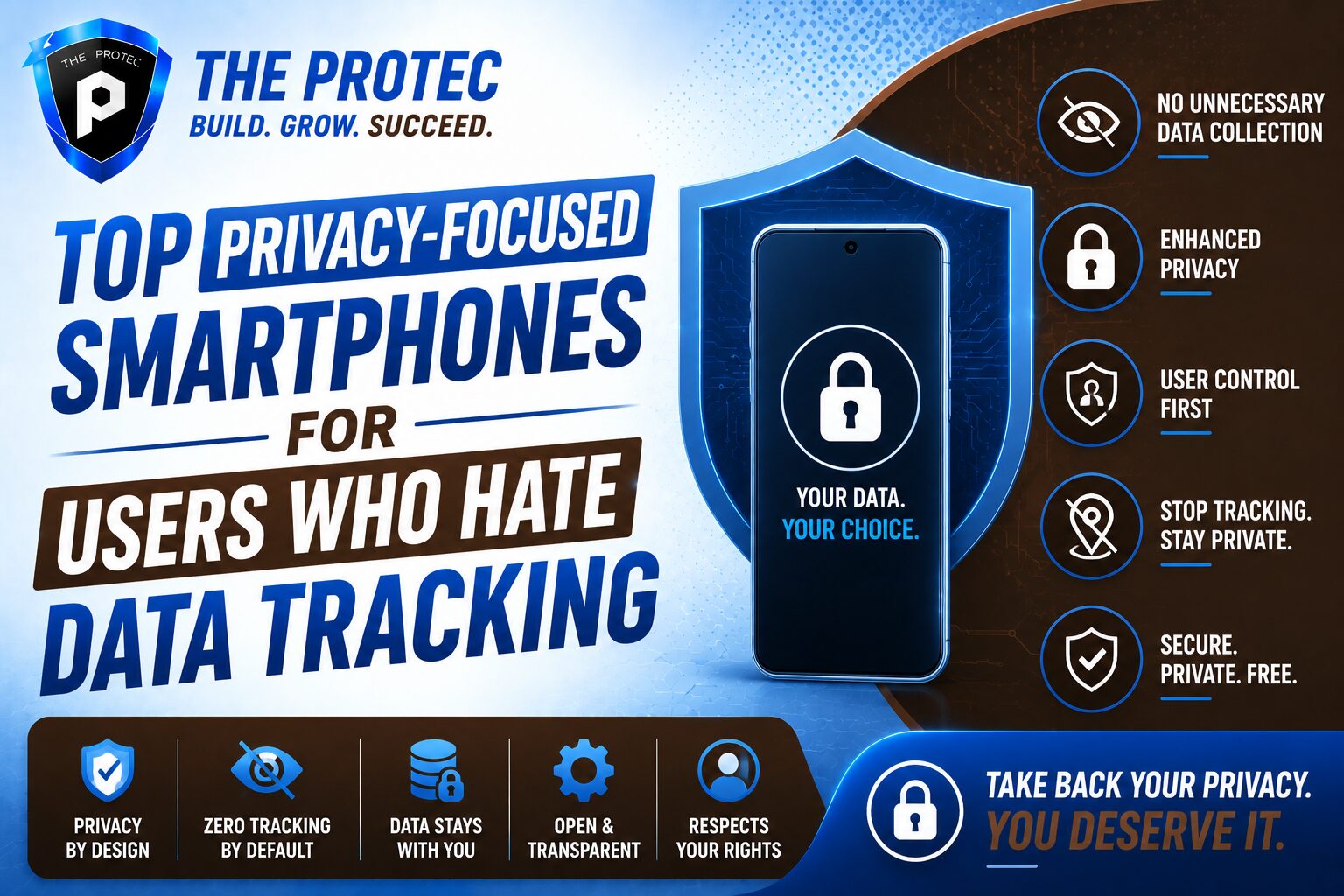
Smartphones have become the most powerful tracking devices many people carry every day. They reveal where you go, who you talk to, what you buy, how long you stay awake, and even which apps you open first. For privacy-conscious users, that reality has made the search for privacy smartphones more urgent than ever. The good news is that the market now includes secure mobile phones and anti tracking phones designed to reduce data collection, limit telemetry, and give users more control over what gets shared.
The privacy conversation has changed a lot over the last few years. Mobile operating systems now include more permission prompts, app tracking controls, and safety protections than before, but mainstream devices still depend on ecosystems built around advertising, cloud sync, and behavioral profiling. At the same time, a new wave of privacy-focused hardware and software has emerged. Some options are designed to minimize data exposure right out of the box. Others rely on hardened operating systems, de-Googled software, or enterprise-grade controls that let users decide what to install and what to block.
If you hate data tracking, this guide will help you compare the best privacy smartphones available now, understand what actually makes a phone private, and choose the right device based on your threat model, daily habits, and comfort level.
What makes a smartphone privacy-focused?
Not all secure mobile phones are built the same. A phone can be marketed as “private” while still collecting usage data, syncing contacts to the cloud, or depending on services that profile your behavior. Real privacy smartphones share a few important traits.
- Minimal data collection: The device and operating system should avoid unnecessary telemetry and analytics.
- Strong permission controls: You should be able to limit microphone, camera, location, and background access easily.
- Security updates: Frequent patches matter because privacy is impossible if the phone is vulnerable to compromise.
- App control: The best anti tracking phones let you decide which apps can run, connect, or access identifiers.
- Hardware protections: Secure enclaves, verified boot, and physical camera or microphone controls improve trust.
- Alternative app sourcing: Privacy-friendly app stores and sandboxing reduce dependency on invasive default ecosystems.
For many users, the biggest privacy win is not “perfect anonymity.” It is reducing the amount of personal data a company can gather from everyday use. That means choosing a phone that limits tracking by default, not one that asks you to disable a dozen services after setup.
The best privacy-focused smartphones right now
Below are the strongest options for users who want more control, less tracking, and better privacy hygiene. Each one serves a different kind of user, from power users who want maximum control to people who simply want fewer data-hungry defaults.
1. Google Pixel with GrapheneOS
For many privacy advocates, a Pixel running GrapheneOS remains the gold standard among privacy smartphones. The reason is simple: Google Pixel hardware offers excellent security support, while GrapheneOS strips out the tracking-heavy parts of a typical consumer Android setup and replaces them with a hardened, privacy-first approach.
GrapheneOS focuses on strong memory protection, tighter app sandboxing, improved exploit resistance, and granular permission management. It also reduces dependency on Google services while still allowing users to install apps that require them through controlled compatibility layers. That balance matters. You get a system that is far more private than stock Android without turning the phone into a frustrating niche device.
Best for: Advanced users, journalists, activists, professionals handling sensitive data, and anyone who wants one of the most secure mobile phones available without switching to a new ecosystem.
Why it stands out:
- Excellent hardware security on supported Pixels
- Hardened OS with strong anti-exploitation features
- Fine-grained control over network, sensors, and app permissions
- Regular updates from an active privacy-focused project
For more technical details, the project documentation at GrapheneOS is worth reviewing.
2. Purism Librem 5
The Librem 5 is one of the most ambitious anti tracking phones ever built. Rather than simply layering privacy settings on top of a mainstream platform, it is designed from the ground up around user control. Physical hardware kill switches let you disable the camera, microphone, Wi-Fi, Bluetooth, and cellular modem. That is a major advantage for people who want true offline assurance.
The Librem 5 runs PureOS, a Linux-based operating system that emphasizes software freedom and user transparency. It is not as polished or as app-rich as Android or iOS, and that tradeoff matters. But for users who value visibility over convenience, it is a compelling choice. The phone is especially attractive to those who prefer open-source software and want to limit the kinds of background data sharing common on mainstream platforms.
Best for: Privacy purists, open-source advocates, and users who want physical disconnect controls.
Why it stands out:
- Physical kill switches for critical components
- Open-source operating system and software stack
- Strong separation between user control and vendor control
- Useful for highly sensitive environments
Learn more at Purism.
3. Apple iPhone with advanced privacy settings
Apple is not the first brand many people think of when they hear “privacy smartphones,” but the iPhone remains a strong option for users who want a secure, well-supported device with robust built-in protections. Apple’s privacy positioning is clear: the company limits third-party tracking, gives users transparency on app permissions, and includes features such as App Tracking Transparency, Mail Privacy Protection, Safety Check, and Lockdown Mode for higher-risk users.
While iPhones are still part of a large commercial ecosystem, Apple has made it harder for ad networks and apps to follow users across the web and across apps. The latest iPhone models also benefit from fast, long-term security updates and strong hardware-based protections. For many users, that combination of usability and security makes iPhone one of the most practical secure mobile phones available.
Best for: Users who want strong security with minimal setup and a polished experience.
Why it stands out:
- Excellent update support and hardware security
- Strong anti-tracking features in iOS
- Good default privacy controls for mainstream users
- Lockdown Mode for high-risk scenarios
Apple’s privacy overview is available at Apple Privacy.
4. Samsung Galaxy phones with Knox and privacy controls
Samsung Galaxy devices are not usually classified as hardcore anti tracking phones, but recent Galaxy models deserve attention because they combine strong hardware, long update support on newer flagships, and a mature security layer in Samsung Knox. For users who want a mainstream device with better-than-average privacy tools, Galaxy phones can be a solid middle-ground option.
Samsung has expanded privacy dashboards, permission managers, and data-sharing controls in One UI. Many newer devices also offer secure folder features, biometric safeguards, and improved enterprise security management. While Samsung still operates within the Android ecosystem and may include some preinstalled services, careful users can reduce a lot of unnecessary tracking through settings, app selection, and network controls.
Best for: Users who want a premium smartphone with strong security features and a familiar interface.
Why it stands out:
- Knox security platform
- Good device management and privacy tools
- Strong hardware and display quality
- Flexible for users who want privacy without custom ROMs
5. Fairphone with privacy-oriented software
Fairphone has earned a loyal following among users who care about sustainability, repairability, and ethical hardware. While it is not a privacy-first platform in the strictest sense, it becomes much more compelling when paired with privacy-focused Android builds and minimal app usage. The appeal is simple: a device that is easier to repair, maintain, and keep in service for a longer time reduces the pressure to replace phones frequently and helps users stay in control.
For privacy-conscious users, Fairphone can be a smart foundation if you want a balanced device that supports alternative software choices. The modular design also helps users who dislike throwaway electronics and prefer a phone they can actually maintain. In a world where data tracking often comes bundled with planned obsolescence, that is a meaningful privacy-adjacent advantage.
Best for: Users who want ethical hardware, repairability, and software flexibility.
Why it stands out:
- Repairable and modular design
- Longer device lifespan
- Good candidate for privacy-respecting software setups
- Supports a more sustainable ownership model
How to choose the right anti tracking phone
Choosing among privacy smartphones is not just about picking the “most private” device on a list. It depends on how much convenience you are willing to give up and what kind of tracking you are trying to avoid.
If you want the strongest privacy
Go with a Pixel running GrapheneOS or a Librem 5 if you are comfortable with fewer mainstream apps. These options are best when your priority is minimizing data exposure, hardening the device, and reducing dependence on platform-level tracking.
If you want strong privacy without a steep learning curve
Choose an iPhone. Apple’s ecosystem still collects data, but the privacy controls are understandable, the security updates are reliable, and the device is easy to use. For most people who want to reduce tracking without becoming system administrators, this is the simplest path.
If you want a familiar Android experience
Pick a Samsung Galaxy phone and harden it yourself. Disable ad personalization, review app permissions, limit background activity, and avoid unnecessary vendor services. This is not the most private route, but it is often the most practical for users who want a standard Android device.
If you care about repairability and long-term ownership
Fairphone is a strong option. It is not the most aggressive anti tracking phone, but the ability to keep a device longer and control its software choices can be a major privacy advantage over time.
Privacy features to look for before you buy
When comparing secure mobile phones, check for the features below before making a decision.
- Bootloader and OS control: Can the phone be unlocked or replaced with a privacy-focused operating system?
- Update policy: How long will the manufacturer provide security patches?
- Permission granularity: Can you restrict sensors, location, and clipboard access?
- Physical controls: Are there kill switches or at least strong software-level toggles?
- App ecosystem: Can you avoid invasive app stores or unwanted cloud dependencies?
- Network controls: Does the phone let you block background activity and limit connectivity?
- Default services: How much telemetry is enabled out of the box?
A phone with a reputation for privacy is only as private as the settings and software stack you actually use. A secure device plus disciplined app choices will always beat a “private” phone used carelessly.
Best practices for reducing tracking on any smartphone
Even the best privacy smartphones can leak data if you use them like a normal tracking device. These habits make a major difference:
- Install only the apps you truly need.
- Review location permissions regularly and use approximate location where possible.
- Turn off ad personalization and limit app tracking prompts.
- Prefer browsers with strong tracking protection.
- Avoid signing into every app with the same identity provider.
- Use a password manager and multi-factor authentication.
- Keep your OS updated immediately after security patches are released.
- Disable Bluetooth, NFC, and Wi-Fi scanning when not needed.
For users who want a broader privacy baseline, the Electronic Frontier Foundation offers useful guidance on mobile privacy and tracking reduction.
The bottom line: which privacy smartphone is best?
There is no single winner for every user, but there is a clear pattern. If you want the best balance of security, privacy, and usability, a Google Pixel with GrapheneOS is extremely hard to beat. If you want straightforward security and strong anti-tracking protections with minimal hassle, an iPhone is the easiest mainstream choice. If you want the highest level of user control and physical disconnect options, the Librem 5 is the most privacy-pure option on this list. Samsung and Fairphone fill important middle-ground roles for users who want flexibility, repairability, or familiarity.
The real goal is not to find a magical device that makes you invisible. It is to choose a phone that collects less, reveals less, and gives you more control over your digital life. In a market built on behavioral data, that is a meaningful upgrade.
FAQ
What is the most private smartphone available?
For most privacy-focused users, a Google Pixel running GrapheneOS offers the best mix of strong security, reduced tracking, and practical usability. If you want physical kill switches and open-source software, the Librem 5 is another strong contender.
Are iPhones good for privacy?
Yes. iPhones offer strong security, reliable updates, and several built-in anti-tracking features. They are not fully tracking-free, but they are among the best mainstream options for users who want privacy without custom software.
Can I make a regular Android phone more private?
Yes. You can significantly improve privacy by limiting app permissions, disabling ad personalization, using privacy-respecting apps, and reducing background connectivity. For stronger protection, consider a privacy-focused operating system on supported hardware.
Do privacy smartphones stop all tracking?
No smartphone can eliminate all tracking. The goal is to reduce unnecessary data collection, block third-party profiling, and give you better control over what is shared.
Which anti tracking phone is best for beginners?
An iPhone is usually the easiest for beginners because the privacy tools are built in and simple to manage. If you are more technical, a Pixel with GrapheneOS offers deeper privacy control.