








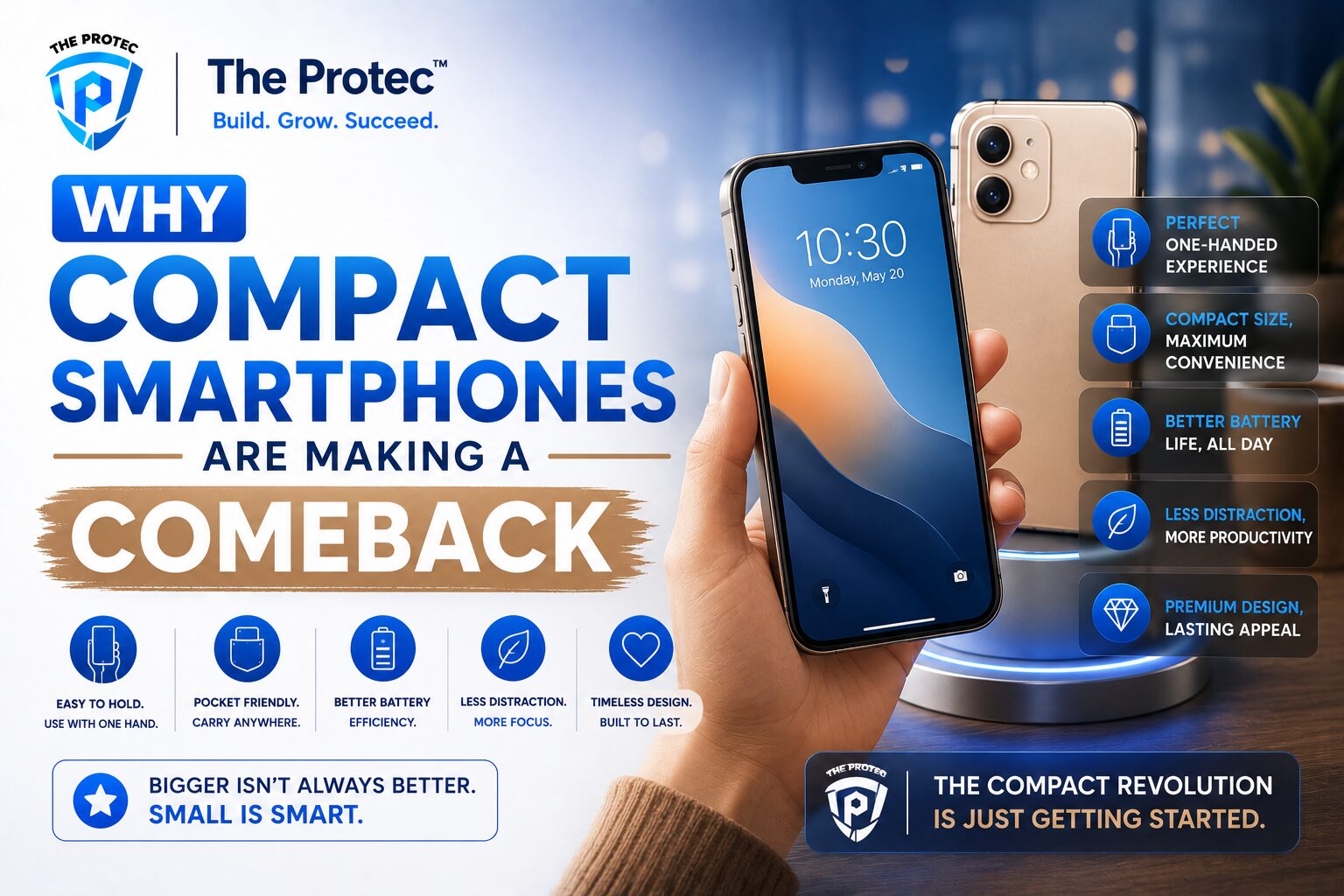
The return of compact smartphones is more than nostalgia
For years, the smartphone industry seemed locked in a race toward ever-larger displays. Bigger screens promised better video, more immersive gaming, and more room for multitasking. Yet a noticeable shift is underway. Buyers are once again looking at compact smartphones with real interest, and manufacturers are responding with devices that prioritize comfort, portability, and one-handed usability without giving up speed or premium features.
This comeback is not about recreating old tiny phones with outdated specs. It is about a new class of small phones that can still compete with flagship models on performance, cameras, battery efficiency, and display quality. As smartphone trends evolve, the demand for powerful but pocket-friendly devices is becoming impossible to ignore. Many users are realizing that a phone does not need to be huge to feel modern. In fact, for a growing segment of the market, smaller is starting to feel smarter.
The renewed interest in compact smartphones is driven by practical needs, changing lifestyles, and the limits of how large a phone can become before it stops being comfortable. With better chip efficiency, smarter software, and more advanced battery management, today’s smaller devices can do far more than the compact phones of the past. That combination is making small phones 2026 one of the most interesting stories in mobile technology.
Why bigger was not always better
The era of oversized phones was fueled by understandable demand. Consumers wanted more screen space for streaming, social media, mobile productivity, and gaming. As bezel sizes shrank and display technology improved, manufacturers saw an opportunity to market larger devices as more premium. But at a certain point, the benefits of a larger screen started to run into the realities of daily use.
Large phones can be awkward in pockets, difficult to use with one hand, and tiring to hold for long periods. They are also more likely to slip from a hand or require two-handed operation for simple tasks like typing, taking a quick photo, or answering a call. For many users, the tradeoff between screen size and comfort became less appealing over time.
That frustration has helped reshape smartphone trends. People are increasingly asking whether they truly need a giant device just to browse, message, and take photos. For many, the answer is no. They want a phone that disappears into a pocket, feels secure in the hand, and still delivers the performance of a high-end device. Compact smartphones fit that brief better than most larger models.
What is driving the comeback of small phones
Several forces are pushing compact smartphones back into the conversation. Some are technological, while others are rooted in changing consumer behavior. Together, they explain why small phones 2026 are gaining attention from both buyers and product teams.
1. Portability matters again
Modern life is more mobile than ever. People carry phones everywhere, often alongside earbuds, wearables, keys, and a slim wallet. In that context, a smaller phone feels less like a compromise and more like a convenience. Compact smartphones are easier to stash in smaller pockets, use while commuting, and hold during long stretches of messaging or scrolling.
2. One-handed use is a real advantage
As app interfaces become denser, one-handed usability is often overlooked. A smaller device can still offer a large-enough display while making it much easier to reach the top of the screen, swipe through notifications, and type without constantly adjusting grip. That matters for parents, commuters, professionals, and anyone who uses a phone while walking, carrying bags, or juggling other tasks.
3. Efficiency has improved dramatically
Smaller phones used to be punished by limited battery capacity and weaker thermal performance. That is no longer as true as it once was. Chipmakers now produce highly efficient processors that deliver more power per watt, while modern OLED displays and adaptive refresh rates reduce unnecessary energy use. This allows compact smartphones to feel fast and responsive without requiring the biggest batteries on the market.
4. Consumers are more selective
Buyers are increasingly focused on what they actually use every day. Many people no longer want a phone that tries to do everything with maximum size. They want a device that nails the essentials: performance, camera quality, battery life, build quality, and convenience. That mindset is well suited to compact smartphones, which can offer a premium experience without excess bulk.
The technology that makes compact smartphones viable
The real reason the compact phone comeback is possible now is that mobile technology has caught up. Smaller devices are no longer defined by major compromises. They can be powerful, polished, and durable enough to satisfy demanding users.
Advanced chipsets deliver flagship performance
Modern processors are far more efficient than older generations. That matters especially in smaller chassis where heat management is tighter. Better chip fabrication and smarter thermal design allow compact smartphones to run demanding apps, capture high-resolution photos, and handle gaming with less throttling than in the past. In practice, many compact devices now feel every bit as quick as their larger counterparts.
Battery optimization offsets smaller bodies
It is true that smaller phones usually have less physical space for batteries. But the conversation is not just about battery size anymore. Software optimization, display power management, and more efficient components can make a meaningful difference. A well-tuned compact smartphone can easily last a full day for many users, especially those who are not constantly recording video or gaming for hours.
Cameras are shrinking, but quality is not
Camera modules have become more sophisticated and compact. Computational photography, improved sensors, and AI-assisted image processing help smaller phones punch above their weight. While a compact device may not always match the absolute best zoom systems on the market, it can still deliver excellent photos in everyday situations. For many buyers, that is enough.
Displays are better suited to smaller form factors
High-resolution OLED panels, thinner bezels, and faster refresh rates have made smaller screens feel more premium than ever. A compact smartphone no longer has to look cramped or dated. It can deliver sharp text, rich colors, and smooth motion in a body that remains easy to handle. That balance is central to why compact smartphones are gaining ground again.
Who wants compact smartphones most
The appeal of smaller phones is broad, but certain groups are especially likely to prefer them.
- People who prioritize convenience: Users who want a phone that fits easily in a pocket or small bag.
- One-handed users: Anyone who prefers natural, single-hand operation for texting, calling, and browsing.
- Professionals on the move: People who need quick access to email, calendars, and communication without carrying a large slab device.
- Minimalist buyers: Consumers who want a premium phone without the bulk of oversized hardware.
- Users frustrated by hand fatigue: Anyone who finds larger phones cumbersome during long daily use.
There is also a growing segment of buyers who simply want balance. They are not asking for a watered-down device. They want a phone that feels thoughtful and comfortable. The rise of compact smartphones suggests that many consumers are ready to trade a little screen real estate for a lot more usability.
How compact phones fit into current smartphone trends
One of the most important smartphone trends is the move toward personal fit over raw size. Hardware is becoming less about chasing maximum dimensions and more about matching specific user priorities. That shift opens the door for compact smartphones to thrive alongside foldables, ultra-premium camera phones, and large-screen productivity devices.
At the same time, the market is fragmenting. Some users want large displays for entertainment, while others want a smaller phone that feels effortless to carry. This is not a contradiction; it is a sign of maturity. The smartphone category is diversifying to serve different needs rather than forcing every buyer into one design philosophy.
Compact smartphones also align with a broader interest in products that feel intentional. In a market filled with oversized, feature-heavy devices, a smaller phone can stand out by being easier to live with. That does not make it less advanced. It simply means design is being judged by day-to-day utility, not just spec sheet size.
What buyers should look for in a modern compact smartphone
Not every small phone is automatically a good one. The best compact smartphones combine thoughtful design with real-world usability. If you are considering one, these are the features that matter most.
Performance without compromise
A compact phone should still feel fast in everyday use. Look for a capable processor, enough RAM for smooth multitasking, and storage that does not fill up too quickly. A smaller body should not mean slower app launches or poor responsiveness.
Battery life that matches daily needs
Battery size is important, but so is efficiency. The ideal compact smartphone should last through a normal day of messaging, browsing, photos, and navigation without constant anxiety about charging. Fast charging can help, but battery optimization should be the first priority.
Comfortable ergonomics
A phone is something you hold hundreds of times a day. Rounded edges, balanced weight, and a manageable width can make a huge difference. A compact device should feel secure and natural, not merely shorter than a large phone.
Good camera software
Small phones often rely heavily on software to extract the best possible image quality. That makes camera processing especially important. A good compact smartphone should handle portraits, low light, and quick snapshots with consistency.
Premium build quality
Because smaller phones are often chosen for their design and convenience, materials matter. Solid construction, water resistance, and a durable display help ensure that a compact device feels like a true flagship rather than a budget compromise.
Are compact smartphones the future of the market
Compact smartphones are unlikely to replace large phones entirely, and that is fine. The more realistic future is one where both form factors coexist. Large devices will continue to appeal to users who value expansive displays, while compact phones will serve those who want portability and ease of use. The key change is that smaller phones are no longer treated as a niche afterthought.
Manufacturers are watching buying behavior closely. When a product category starts to receive positive attention from users who previously defaulted to large phones, it signals broader market demand. That is especially true when the demand is tied to a durable need rather than a short-lived fad. Comfort, portability, and simplicity are not passing trends. They are ongoing preferences that can support a stable segment of the market.
In the coming product cycles, expect compact smartphones to become more polished. Better battery chemistry, more efficient silicon, and improved display engineering should keep narrowing the gap between small and large devices. The result may be a stronger and more confident segment of phones that feel intentionally designed for real life.
External perspective on the small-phone revival
Industry watchers have already noted that consumers are reevaluating what makes a phone truly useful. Coverage from The Verge regularly highlights how device design and usability are evolving as buyers seek more practical hardware. Likewise, Counterpoint Research has tracked shifting consumer preferences across smartphone segments, underscoring the importance of form factor in purchase decisions. These broader signals help explain why compact smartphones are gaining renewed attention.
FAQ: Compact smartphones and the small-phone revival
Are compact smartphones less powerful than larger phones?
Not necessarily. Many modern compact smartphones use the same flagship chipsets, fast storage, and advanced software found in larger models. The main difference is the physical size of the device, not always the performance tier.
Do small phones 2026 have enough battery life for daily use?
For most users, yes. While compact phones often have smaller batteries than large devices, better chip efficiency and smarter software help them last through a full day of moderate use. Heavy users should still pay close attention to battery optimization.
Why are compact smartphones becoming popular again?
People are rediscovering the value of portability, one-handed use, and pocket-friendly design. As smartphone trends shift toward practical everyday convenience, compact phones are appealing to buyers who want power without bulk.
Are compact smartphones good for gaming and video?
They can be, especially if they include a strong processor and a high-quality display. However, users who prioritize the largest possible screen for gaming or entertainment may still prefer larger phones.
Will compact smartphones replace big-screen phones?
Probably not. The market is becoming more diverse, not more uniform. Compact smartphones are carving out a stronger role, but large phones still have clear advantages for media consumption and multitasking.
Conclusion: smaller phones are back because they make sense
The return of smaller phones is not a throwback to the past. It is a response to what many users want now: a phone that is powerful, comfortable, and easy to live with. Compact smartphones have become viable again because the technology has improved enough to reduce old tradeoffs, and because consumers are increasingly unwilling to accept bulk as the price of premium features.
As smartphone trends continue to evolve, small phones 2026 are showing that practical design still matters. People do not just want the fastest or biggest device. They want the right device. For a growing number of buyers, that means a phone that fits better in the hand, the pocket, and everyday life. The comeback of compact smartphones suggests that the industry is finally listening.