









Contents
- 1 The Rise of AI Laptops: A New Era in Everyday Computing
- 2 Understanding Neural Engines and Their Role in AI Laptops
- 3 Optimizing Performance: How AI Laptops Get Smarter
- 4 Battery Efficiency Revolutionized: AI Laptops That Last Longer
- 5 Streamlining Workflows with AI-Driven Features
- 6 Challenges and Considerations in AI Laptop Adoption
- 7 Looking Ahead: The Future of AI-Powered Laptops
- 8 Frequently Asked Questions
- 9 Conclusion
The Rise of AI Laptops: A New Era in Everyday Computing
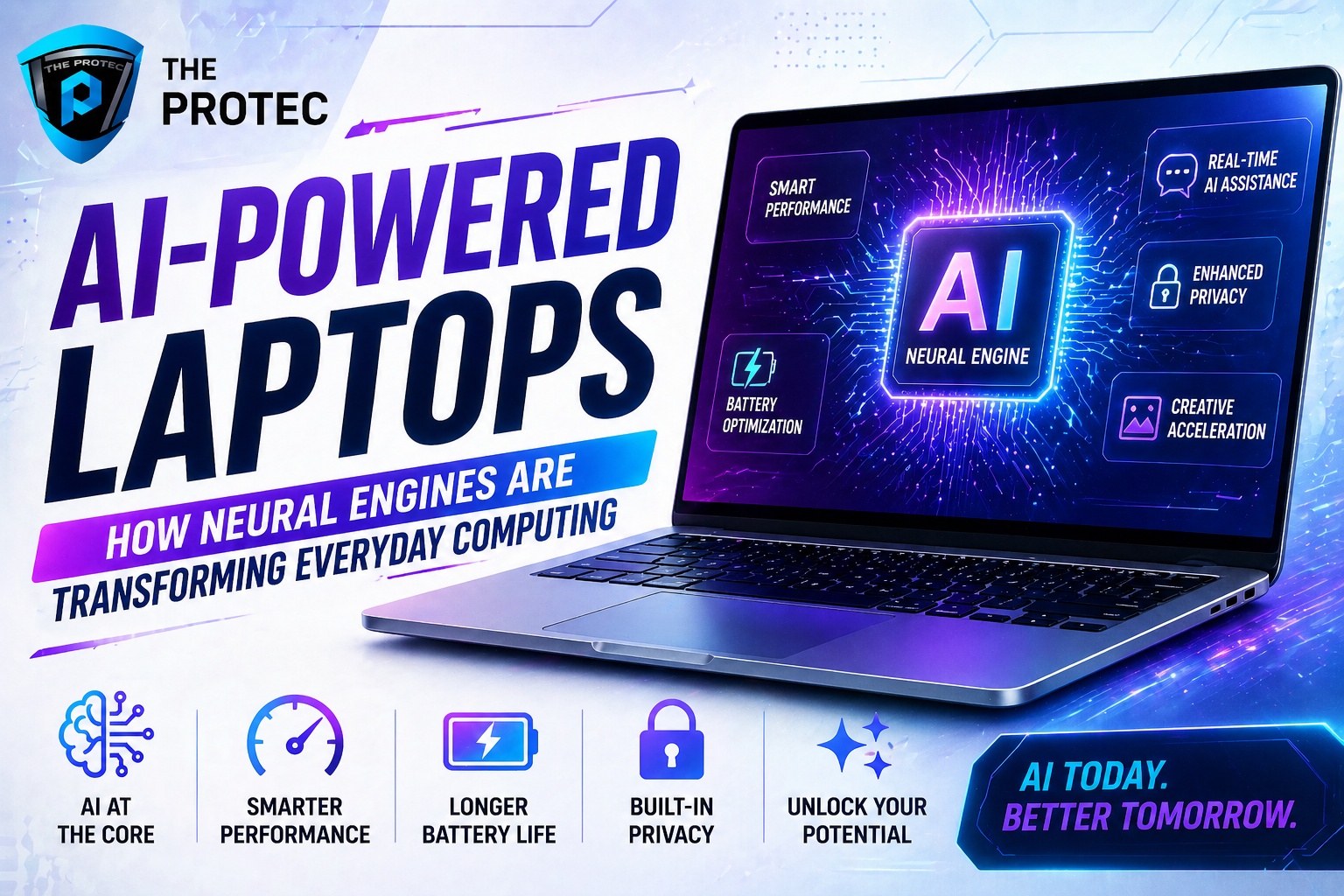
Artificial intelligence is no longer confined to cloud servers or niche applications; it is increasingly embedded in consumer technology, notably laptops. The emergence of AI laptops equipped with specialized neural engines signifies a major shift in how personal computers operate. These advanced processors do more than accelerate AI tasks they fundamentally optimize overall system functionality, balancing performance and battery life while streamlining workflows across diverse use cases.
As more users demand intelligent, efficient, and responsive devices, AI PCs are evolving from experimental ideas to practical tools that enhance daily productivity and creativity. In this article, we explore how neural engines embedded within laptops are transforming computing experiences, the concrete benefits they deliver, and what future developments might bring.
Understanding Neural Engines and Their Role in AI Laptops
Neural engines, also known as neural processing units (NPUs), are hardware components designed specifically to accelerate AI and machine learning workloads. Unlike traditional CPUs or even GPUs, neural engines focus on fast and energy-efficient execution of deep learning algorithms, enabling on-device AI computations that would otherwise be limited or slower.
Modern laptops integrate neural engines either as dedicated silicon or embedded within the system-on-chip (SoC) architecture. They efficiently handle tasks such as natural language processing, image recognition, real-time video analysis, and adaptive system performance tuning. This allows laptops to deliver smoother, smarter experiences without constantly relying on cloud connectivity.
Key characteristics of neural engines in laptops include:
- Parallel Processing Power: Designed to run multiple AI operations simultaneously.
- Low Power Consumption: Optimized for minimal energy use, extending battery life.
- Real-Time Inference: Ability to process AI models instantly, critical for interactive applications.
- Integration with Other Hardware: Works seamlessly alongside CPUs and GPUs for balanced workloads.
Optimizing Performance: How AI Laptops Get Smarter
One of the most tangible benefits of neural engines inside AI laptops is their ability to enhance system performance dynamically. Traditional PCs often run all applications and processes uniformly, resulting in inefficiencies and lag during demanding tasks.
Neural engines change this by providing dedicated resources for AI computations, enabling several smart optimizations:
- Adaptive Resource Allocation: The neural engine monitors usage patterns and intelligently distributes compute power. For example, heavier AI workloads like video rendering or complex photo editing tasks receive priority processing without compromising other active tasks.
- Localized AI Computations: Tasks that previously required cloud processing such as voice recognition and translation now execute on-device, reducing latency and improving responsiveness.
- Enhanced Multitasking: Neural engines help the system manage simultaneous low-level AI functions in the background, such as predictive text suggestions and ambient noise cancellation, without overburdening the CPU or GPU.
Ultimately, these factors contribute to a smoother, more intuitive user experience that feels faster and more responsive than conventional laptops.
Battery Efficiency Revolutionized: AI Laptops That Last Longer
Battery life is a perennial concern for laptop users, particularly professionals and creatives on the go. Neural engines contribute significantly to extending battery endurance by managing power-hungry processes more efficiently.
Here’s how neural engines help optimize battery usage in AI PCs:
- Task Offloading: By offloading AI workloads from the CPU and GPU, neural engines reduce the overall energy consumption of the system.
- Predictive Power Management: AI algorithms monitor user habits and automatically adjust power modes, screen brightness, and background app activity to conserve energy.
- Efficient Data Processing: Neural engines execute AI tasks with fewer cycles and less heat generation, minimizing the need for active cooling, which also contributes to battery savings.
Thanks to these capabilities, AI-powered laptops can offer longer unplugged sessions, making them ideal for mobile workflows and remote work environments.
Streamlining Workflows with AI-Driven Features
Beyond hardware improvements, the software ecosystem around AI laptops leverages neural engines to elevate productivity and creativity. These devices enable smarter tools and adaptive interfaces that reduce friction and accelerate common tasks.
Examples of AI-Powered Workflow Enhancements
- Intelligent Content Creation: Neural engines accelerate GPU-intensive AI features, such as upscaling images, real-time background removal in video calls, and AI-assisted coding suggestions, allowing professionals to create faster with less manual effort.
- Contextual Assistance: AI laptops can anticipate user needs by analyzing behavior patterns. For example, email clients might prioritize urgent messages or automatically suggest replies, while calendar apps propose optimal scheduling based on habits and workload.
- Enhanced Accessibility: On-device speech recognition and transcription powered by neural engines enable hands-free computing and accessibility tools that operate smoothly without Internet dependency.
- Smarter Security: Neural engines contribute to facial recognition accuracy, anomaly detection, and encryption acceleration, thus safeguarding sensitive workflows.
Together, these innovations allow users to accomplish more with less cognitive load, fundamentally shifting the workflow paradigm.
Challenges and Considerations in AI Laptop Adoption
While AI laptops present considerable advantages, there are challenges inherent in this emerging technology:
- Software Compatibility: For best results, applications must be optimized to leverage neural engines, and the software ecosystem is still maturing.
- Privacy Concerns: AI computations on device mitigate cloud risks, but local data processing still requires vigilance to maintain user privacy and security.
- Cost Premium: Integrating advanced neural engines into laptops currently increases manufacturing costs, which can impact pricing.
Despite these considerations, ongoing developments are rapidly addressing these issues, with broad industry support from chipset makers like Apple, Intel, and Qualcomm pushing the boundaries of AI integration in PCs.
Looking Ahead: The Future of AI-Powered Laptops
The trajectory of AI PCs suggests a future where neural engines will be indispensable to laptop architecture. Advances in AI model efficiency and specialized silicon will drive even deeper integration, enabling new categories of applications like real-time language translation during conversations, highly personalized learning environments, and radically enhanced creative suites.
As AI laptops become more mainstream, expect significant shifts in how we think about computing performance, power management, and user experience. These developments will redefine not just how laptops operate, but how we interact with technology daily.
Frequently Asked Questions
What distinguishes AI laptops from traditional laptops?
AI laptops feature dedicated neural engines designed to accelerate artificial intelligence tasks directly on the device. This enables faster, more efficient processing of AI workloads like voice recognition, image processing, and predictive computing, unlike traditional laptops which rely mostly on CPU or GPU alone.
How do neural engines improve battery life in laptops?
Neural engines handle AI computations more efficiently by using fewer cycles and consuming less energy than general-purpose processors. This task offloading and intelligent power management reduce the overall load on the system, extending battery runtime significantly.
Are AI laptops suitable for gaming and creative professionals?
Absolutely. While neural engines primarily accelerate AI and machine learning tasks, they complement GPUs and CPUs to speed up creative processes like video editing, image enhancement, and real-time effects. Gamers may also benefit from AI-driven optimizations such as frame rate enhancement and latency reduction.
Can AI laptops operate effectively without an internet connection?
Yes. Many AI functions powered by neural engines run locally on the laptop, ensuring real-time responsiveness and privacy without needing constant internet access. This is a key advantage over cloud-dependent AI services.
Conclusion
AI-powered laptops with integrated neural engines are setting new standards for what personal computing can achieve. By optimizing performance, extending battery life, and streamlining workflows, neural engines transform everyday tasks into smarter, faster, and more efficient experiences. As this technology matures, AI PCs are poised to become an essential tool for professionals, creatives, and general users alike, marking a definitive step forward in the evolution of personal computing.
For those interested in exploring cutting-edge AI laptop options and the latest processor advancements, chip manufacturers like Apple’s M-series and Intel AI technologies offer great insights into current innovations.