







Contents
- 1 Introduction
- 2 1. AI-Assisted Development Will Become a Default Workflow
- 3 2. Platform Engineering Will Replace Friction With Self-Service
- 4 3. Memory-Safe Languages Will Gain Real Enterprise Momentum
- 5 4. WebAssembly Will Expand Beyond the Browser
- 6 5. Cloud-Native Development Will Shift Toward Better Abstractions
- 7 6. Secure-by-Design Will Become a Baseline Expectation
- 8 7. Edge Computing Will Influence How Applications Are Architected
- 9 8. Type Safety and Developer Productivity Will Matter More Together
- 10 9. Developer Tooling Will Become More Context-Aware
- 11 10. Multi-Language Architectures Will Become More Intentional
- 12 What These Programming Trends Mean for 2027
- 13 FAQ
Introduction
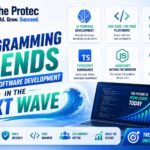
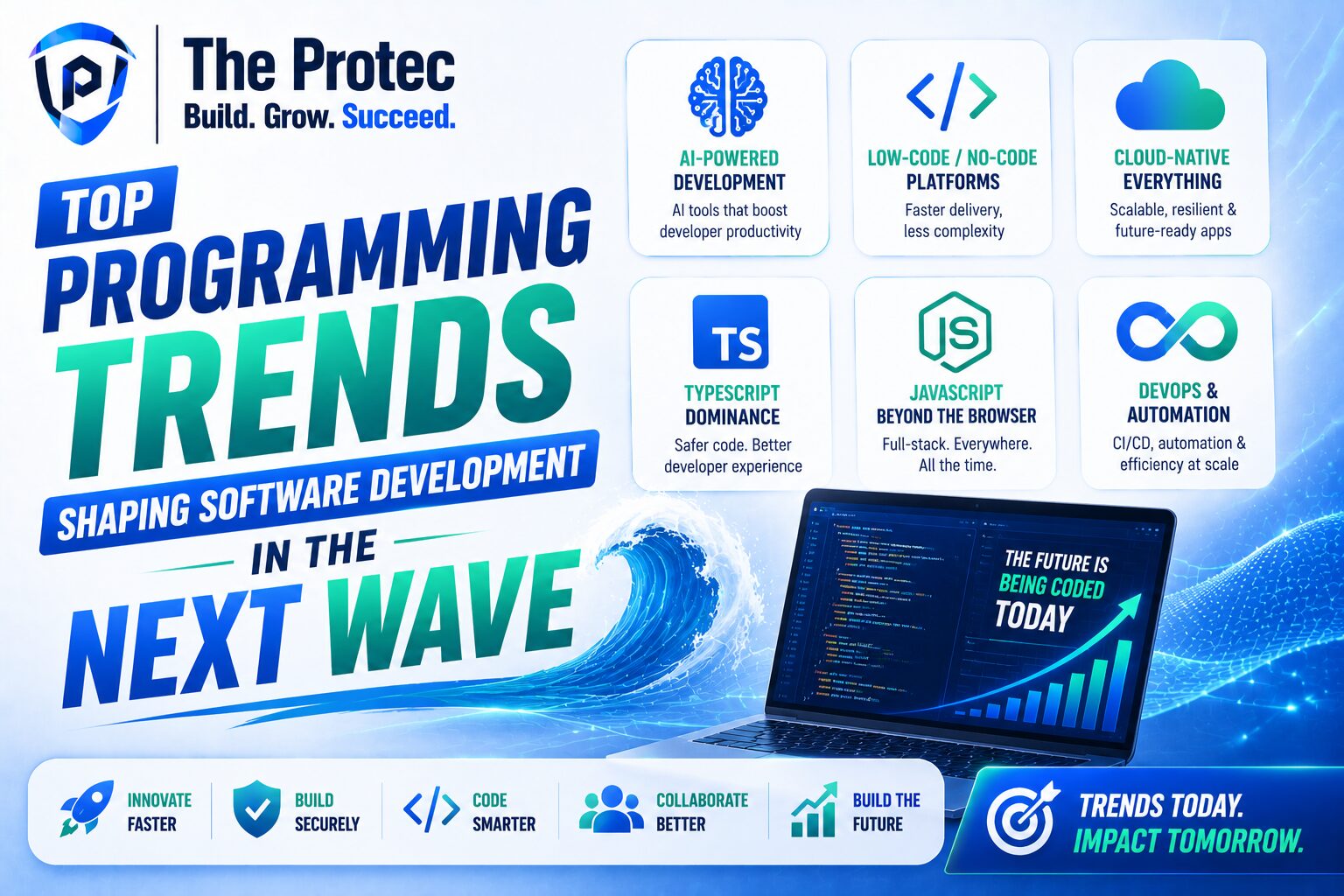
Software development is entering a new era defined by speed, intelligence, security, and adaptability. The tools developers use today are already changing the shape of tomorrow’s products, and the biggest programming trends 2027 will not be isolated language shifts or one-off tooling upgrades. They will be ecosystem-wide changes that affect how teams build, test, deploy, and maintain software at scale.
By June 2026, several forces are already converging: AI is becoming a daily coding partner, platform engineering is reducing friction for developers, memory-safe languages are gaining momentum, and modern runtimes are pushing applications closer to the edge. At the same time, organizations are demanding stronger supply-chain security, faster delivery cycles, and more resilient architectures. The result is a future software development landscape where productivity matters, but so does trust, interoperability, and long-term maintainability.
This article breaks down the developer technologies and programming shifts most likely to define software development in 2027. Rather than focusing on hype, it looks at practical trends with real adoption signals, clear business value, and enough momentum to shape the next generation of software.
1. AI-Assisted Development Will Become a Default Workflow
AI coding tools are moving from experimental helpers to everyday development infrastructure. In the near future, the question will not be whether teams use AI-assisted development, but how deeply it is integrated into planning, coding, testing, and documentation workflows. This is one of the strongest programming trends 2027 because it changes developer output at every stage of the lifecycle.
Modern AI tools are already capable of generating boilerplate, explaining legacy code, creating test cases, summarizing pull requests, and suggesting fixes for common defects. As models improve and organizations connect them to internal codebases, developers will rely on them not only for autocomplete but also for architectural guidance and operational awareness.
What this means for teams
- Faster delivery of routine features and scaffolding
- More time for design, review, and problem-solving
- Improved onboarding through AI-generated explanations
- Greater need for code review discipline and testing standards
The key shift is not replacement but augmentation. Teams that succeed will treat AI as a productivity layer, while still enforcing engineering rigor. Expect stronger governance around model usage, data privacy, prompt safety, and review practices. For a broader view of where the industry is headed, the Thoughtworks Technology Radar remains a useful signal for tracking what is moving into practical adoption.
2. Platform Engineering Will Replace Friction With Self-Service
As software systems grow more complex, developer experience becomes a strategic priority. Platform engineering is one of the clearest answers to that challenge. Instead of forcing every product team to manage infrastructure details independently, organizations are building internal platforms that provide standardized, self-service capabilities for deployment, observability, secrets, environments, and policy enforcement.
This trend is especially important for future software development because it improves consistency without slowing teams down. A strong internal developer platform can reduce cognitive load, shorten release cycles, and help new developers become productive much faster. In 2027, platform engineering will likely be a core operating model for companies that want both scale and speed.
Why platform engineering matters
- Reduces repetitive setup and infrastructure decisions
- Improves compliance through built-in guardrails
- Creates a better developer experience across teams
- Makes cloud-native systems easier to operate at scale
The most effective platforms will be opinionated but flexible. They will expose golden paths for common tasks while still allowing advanced teams to customize when needed. As organizations mature, the best internal platforms will feel less like a bureaucratic layer and more like a force multiplier for engineering velocity.
3. Memory-Safe Languages Will Gain Real Enterprise Momentum
Security, reliability, and performance are pushing memory-safe languages into the mainstream. Rust is the most visible example, but it is part of a larger movement toward eliminating entire classes of vulnerabilities caused by unsafe memory handling. In practical terms, this means fewer crashes, fewer exploitable bugs, and more confidence in systems that handle sensitive or mission-critical workloads.
While C and C++ will remain relevant for a long time, especially in embedded systems and performance-sensitive software, more organizations are evaluating alternatives for new work. Memory-safe languages are increasingly attractive for networking, infrastructure, browser components, and high-assurance backend services. The stronger the industry focus on secure-by-design development, the more important this trend becomes.
Where adoption is likely to expand
- Cloud infrastructure and service runtimes
- Security-sensitive backend services
- Performance-critical command-line tools
- Embedded and systems programming
The rise of Rust is also influencing how developers think about API design, concurrency, and correctness. Even teams not using Rust directly are adopting safer patterns inspired by its ecosystem. That makes memory safety one of the most important developer technologies shaping the next generation of software.
4. WebAssembly Will Expand Beyond the Browser
WebAssembly has already proven itself in browser-based performance optimization, but its future is much broader. In 2027, WebAssembly is likely to matter even more as a portable execution layer for server-side applications, plugins, edge workloads, and language-agnostic software components. Its core value is simple: write once, run securely and efficiently across different environments.
This matters because software stacks are becoming more distributed. Teams want smaller deployment artifacts, faster startup times, and safer sandboxing. WebAssembly fits those goals well. It allows developers to package logic in a compact format that can run close to the user, at the edge, or inside specialized plugin systems without depending on a full traditional runtime.
Why WebAssembly is important for future software development
- Portable execution across cloud, edge, and browser environments
- Fast startup and low runtime overhead
- Safer sandboxing for untrusted code
- Flexible use with multiple programming languages
WebAssembly is not a replacement for every runtime, but it is becoming a strong option for modular systems and performance-sensitive workloads. As the ecosystem grows, it will likely play a larger role in how developer technologies are packaged and deployed.
5. Cloud-Native Development Will Shift Toward Better Abstractions
Cloud-native architecture is not going away, but the way teams interact with it is changing. Container orchestration, service meshes, and distributed systems are still important, yet many developers no longer want to spend all day managing low-level complexity. In response, the industry is moving toward higher-level abstractions that preserve the benefits of cloud-native systems while hiding unnecessary operational burden.
In practical terms, this means more use of managed services, serverless components, workflow engines, and opinionated application platforms. Teams want to deploy faster without having to become experts in every layer of the stack. That preference is likely to shape programming trends 2027 as organizations seek balance between control and developer productivity.
What developers will prioritize
- Reduced infrastructure overhead
- More portable deployment patterns
- Clear separation between product logic and platform concerns
- Lower operational complexity for small and medium teams
Expect a continued move away from assembling infrastructure from scratch and toward using curated building blocks. The strongest teams will still understand the underlying systems, but they will increasingly choose abstractions that improve delivery speed and resilience.
6. Secure-by-Design Will Become a Baseline Expectation
Security is no longer something to add at the end of development. As software supply chains become more complex and attackers focus on dependencies, build systems, and CI/CD pipelines, secure-by-design thinking is becoming a default expectation. This shift affects everything from language choice to dependency management to release processes.
Future software development will place more emphasis on software composition analysis, signed artifacts, least-privilege access, secret management, and policy enforcement in pipelines. Teams that ignore these areas will face increasing risk, higher remediation costs, and more regulatory pressure.
Security practices likely to matter more
- Dependency scanning and continuous vulnerability monitoring
- Signed builds and provenance verification
- Least-privilege access for automated systems
- Policy-as-code for deployment controls
Security is also becoming more closely tied to developer experience. The more security controls feel like friction, the more likely teams are to bypass them. The best developer technologies will embed protection directly into workflows so that secure actions are also the easiest actions. That is one of the defining characteristics of mature future software development.
7. Edge Computing Will Influence How Applications Are Architected
As latency-sensitive applications expand, edge computing is becoming more relevant to mainstream software design. Whether the use case is real-time personalization, industrial systems, retail experiences, or globally distributed APIs, developers are increasingly expected to move computation closer to users and devices.
This trend changes programming priorities. Applications must be smaller, more modular, and more event-driven. They also need better synchronization strategies because edge nodes may operate with intermittent connectivity or partial local state. In 2027, the best architectures will be the ones that can intelligently distribute work between cloud, edge, and client environments.
Architectural implications
- More emphasis on stateless services and event processing
- Greater use of lightweight runtimes and compact binaries
- Need for synchronization and conflict resolution strategies
- Stronger focus on observability across distributed locations
Edge-friendly systems will not replace centralized architectures, but they will reshape expectations for responsiveness and resilience. Developers who understand where execution should happen will have a major advantage.
8. Type Safety and Developer Productivity Will Matter More Together
As codebases grow and release cycles shorten, teams are looking for ways to catch errors earlier without slowing delivery. That is why type safety continues to gain importance across frontend, backend, and full-stack systems. The rise of typed JavaScript variants, strongly typed APIs, and schema-driven development shows that productivity and correctness are no longer competing goals.
In the coming years, more teams will adopt tools and languages that improve refactoring confidence, reduce runtime surprises, and make large-scale collaboration easier. This trend is not just about preventing bugs. It is about enabling teams to move quickly with less risk.
What this trend looks like in practice
- Typed interfaces between services and clients
- Generated code from schemas and contracts
- Stronger compiler support for application logic
- More reliable large-scale refactors
Type safety will continue to influence language selection, API design, and framework adoption. For organizations focused on long-term maintainability, it is becoming one of the most practical investments in engineering quality.
9. Developer Tooling Will Become More Context-Aware
The next generation of developer technologies will not just automate tasks; it will understand context. IDEs, linters, CI pipelines, and observability tools are evolving to surface insights based on code history, runtime behavior, architecture patterns, and team conventions. That means less time searching for information and more time solving the right problem.
Context-aware tooling can already suggest fixes based on observed failures, highlight risky changes, and connect code changes to operational impact. By 2027, these capabilities will likely become much more common. The result will be a workflow where tools act more like intelligent collaborators and less like passive utilities.
Expected benefits
- Better debugging through runtime-aware suggestions
- Faster incident response and root-cause analysis
- Smarter code review support
- Improved alignment between development and operations
For engineering leaders, this is an important signal: the value of tooling will increasingly depend on how well it understands the system, the team, and the product context. Generic automation will matter less than deeply integrated intelligence.
10. Multi-Language Architectures Will Become More Intentional
The future is not one language to rule them all. Instead, more organizations are deliberately choosing the best tool for each layer of the stack. That does create complexity, but it also allows teams to optimize for performance, maintainability, hiring, and ecosystem maturity. In 2027, successful software teams will be more intentional about polyglot architectures rather than avoiding them entirely.
This trend is being accelerated by cross-language interoperability, containerization, shared APIs, and portable runtimes. With the right structure, teams can use one language for user interfaces, another for data processing, and another for infrastructure or system-level components. The challenge is governance: without clear standards, multi-language environments can become fragmented quickly.
How to make multi-language systems work
- Standardize API contracts and data formats
- Define clear ownership boundaries
- Use shared tooling for testing and observability
- Limit language sprawl to where it adds real value
When handled well, multi-language architecture gives teams more flexibility and resilience. When handled poorly, it creates maintenance debt. The difference will come down to engineering discipline and platform support.
What These Programming Trends Mean for 2027
Looking across these shifts, the biggest pattern is clear: software development is becoming more assisted, more secure, more portable, and more standardized at the infrastructure layer. Developers will spend less time on repetitive setup and more time on system design, product logic, and reliability. Organizations that embrace these changes early will likely gain a durable advantage in speed and quality.
The most important takeaway is that programming trends 2027 are not just about learning new syntax or adopting the latest framework. They are about understanding how future software development is changing at a structural level. AI will accelerate output, platform engineering will reduce friction, memory-safe languages will raise the security baseline, and modern runtimes like WebAssembly will expand where software can run.
For teams that want to stay competitive, the priority should be building adaptable engineering practices. That means investing in strong platforms, safer code, better tooling, and architectures that can evolve with the market. The companies that thrive will be the ones that treat developer technologies as strategic assets rather than short-term conveniences.
FAQ
What are the most important programming trends 2027?
The most important trends include AI-assisted development, platform engineering, memory-safe languages like Rust, WebAssembly expansion, secure-by-design practices, edge computing, and more context-aware developer tooling.
Will AI replace software developers?
No. AI is more likely to change the shape of development work than replace developers. It will automate repetitive tasks, speed up coding, and support debugging, but human judgment will remain essential for architecture, review, security, and product decisions.
Why is Rust often mentioned in future software development?
Rust is frequently mentioned because it offers strong memory safety, high performance, and good concurrency support. Those traits make it a strong option for systems where security and reliability are critical.
Is WebAssembly only useful for browsers?
No. WebAssembly is increasingly relevant outside the browser, including server-side plugins, edge workloads, sandboxed execution, and portable application components.
How can teams prepare for these future software development trends?
Teams can prepare by improving platform tooling, adopting secure development practices, evaluating safer language options, integrating AI responsibly, and designing systems with portability and maintainability in mind.