








Why Smartphone RAM and Storage Technology Is Changing
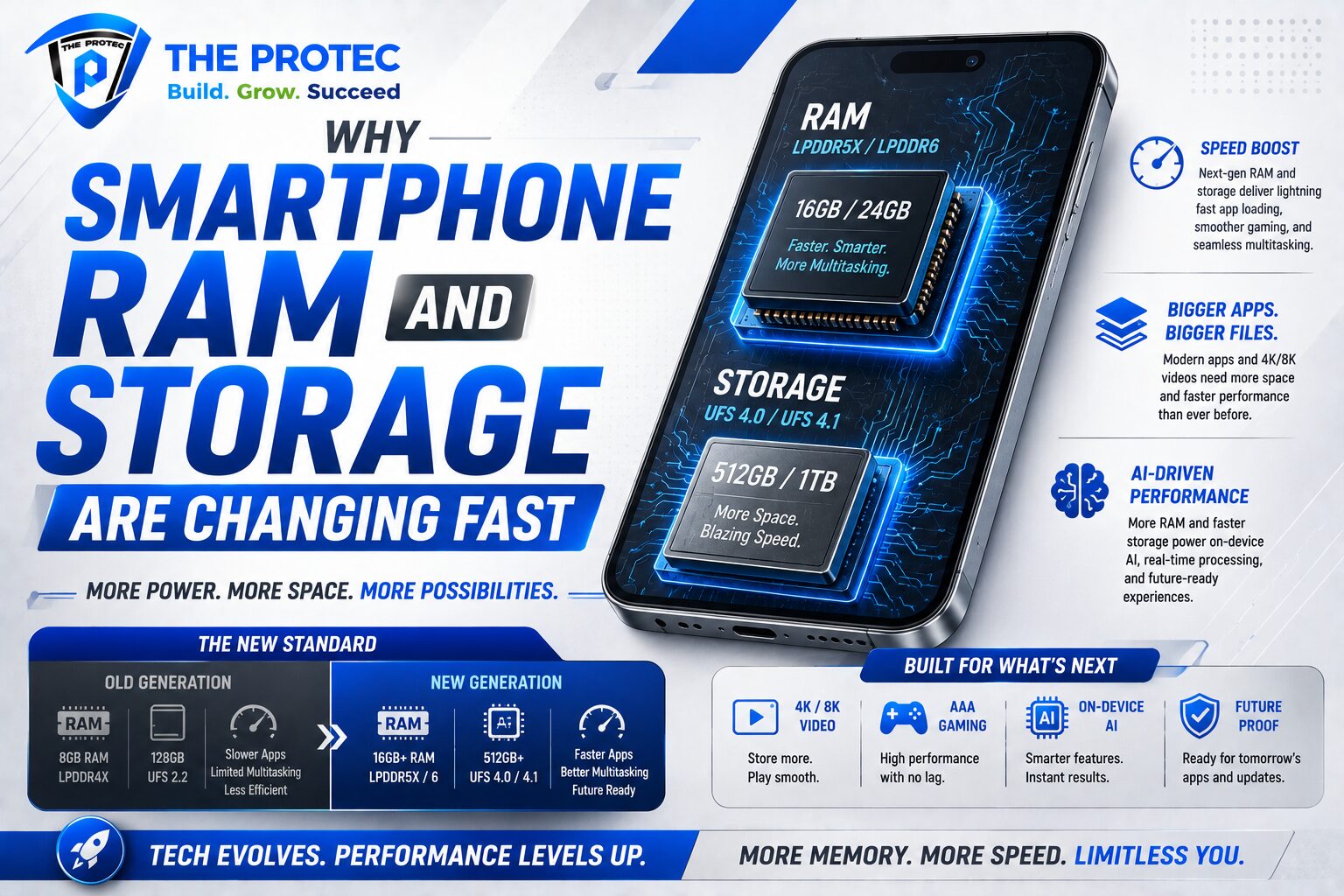
Smartphone memory is entering a new phase. The old rule of thumb that “more RAM is always better” is no longer enough, and storage is no longer just about how many photos or videos a phone can hold. Today, smartphone RAM technology and mobile storage trends are being shaped by on-device AI, higher-resolution media, advanced mobile gaming, faster app loading, and a growing expectation that phones should behave more like pocket computers than simple communication tools.
What is changing most is not just the size of memory, but the way it is designed, packaged, and used. Manufacturers are rethinking memory bandwidth, power efficiency, thermal behavior, storage speed, and how much of a phone’s everyday performance depends on local memory rather than cloud services. For future smartphones, RAM and storage are becoming strategic components that directly affect responsiveness, battery life, camera processing, multitasking, and the longevity of the device.
As of mid-2026, several trends are pushing the market forward at once: AI features running directly on the handset, larger app footprints, more demanding games, higher camera file sizes, and user expectations that premium phones should stay fast for years. The result is a major shift in how memory and storage are engineered.
Smartphone RAM Is Moving Beyond Simple Capacity Growth
For years, the RAM conversation was easy. Midrange phones had modest memory, flagships added more, and buyers compared numbers on spec sheets. That approach is fading. The focus is now moving from raw capacity to memory architecture, bandwidth, and efficiency. In other words, the question is no longer just “How much RAM does the phone have?” It is “How well can the phone use that RAM under heavy workloads?”
Modern smartphone RAM technology is increasingly optimized for multitasking, AI inference, and graphics-heavy workloads. With more phones running large language models, image generation features, real-time translation, and advanced camera pipelines locally, memory must support more simultaneous tasks without bottlenecks. This has encouraged wider use of high-speed LPDDR variants, improved memory controllers, and tighter integration with the chipset.
Why bandwidth matters more than ever
Bandwidth is the rate at which data can move in and out of RAM. Even if a phone has a large amount of memory, performance can still feel sluggish if that memory cannot feed the processor quickly enough. This is especially important for future smartphones that run AI features alongside gaming, video editing, or camera processing. Faster bandwidth reduces waiting time and helps the device stay smooth under pressure.
In practical use, this means smoother switching between apps, less frame drop in games, and more responsive generative AI tools. It also helps reduce the need for aggressive app reloading, which is often a hidden reason phones feel slow over time.
Efficiency is becoming a top priority
Memory power consumption matters more than many buyers realize. RAM is always active to some degree, and as phones get thinner while handling more compute-heavy tasks, efficiency becomes essential. New memory designs are focusing on lowering power draw without sacrificing speed. That is especially important for phones with always-on AI assistants, constant background processing, and advanced camera features that wake up memory frequently.
For users, the benefit is straightforward: better performance without as much battery drain. This is one of the reasons manufacturers are shifting toward smarter memory strategies rather than simply increasing capacity every generation.
Mobile Storage Trends Are Being Driven by AI and Media
Storage is changing even faster than RAM in some parts of the market. Not long ago, 128GB seemed comfortable for many users. That is no longer true for a large share of buyers. Mobile storage trends are now shaped by three major forces: local AI models, bigger media files, and longer device lifespans.
Phones now capture high-resolution photos and videos with larger file sizes, often using advanced computational photography and multiple-frame processing. At the same time, apps continue to expand in size because they include more assets, offline content, and embedded machine-learning features. Add downloadable AI models, offline maps, and game assets, and storage fills up faster than before.
UFS and faster real-world responsiveness
Storage speed is just as important as capacity. Modern phones increasingly rely on faster flash storage standards, with a strong focus on low latency and high sequential performance. This affects everyday tasks such as launching apps, opening large photo libraries, and installing updates. It also influences system responsiveness when memory pressure forces data to move between RAM and storage.
The user experience becomes noticeably better when storage can keep up with the processor and memory subsystem. A fast chipset paired with slow storage creates a bottleneck, while fast storage helps the entire device feel more premium and durable over time.
Why larger storage tiers are becoming normal
As apps, photos, and AI features become more storage-hungry, base storage tiers are slowly rising in importance. Entry-level flagship models are increasingly expected to start at higher capacities than they did in the past. This is not just a marketing move. It reflects genuine usage patterns. Users want to keep 4K and even higher-resolution video locally, store offline media, and use AI features without constantly deleting files.
For future smartphones, storage capacity is becoming part of the device’s identity. A phone with insufficient storage does not just feel cramped; it can limit the features users are buying the phone for in the first place.
On-Device AI Is Reshaping Memory Requirements
One of the biggest reasons smartphone RAM technology is changing is the rise of on-device AI. Phones are no longer only running traditional apps. They are increasingly hosting models that summarize text, edit images, enhance calls, personalize suggestions, and process language locally. These tasks need memory, and they need it quickly.
AI workloads often require rapid movement of data between storage, RAM, and the processor. They also need headroom so that AI features can run while the user is doing something else. This pushes manufacturers to design memory systems with more breathing room, more bandwidth, and better thermal stability.
AI changes the definition of “enough RAM”
In the past, RAM mainly determined how many apps could remain open. Now it influences whether AI features can run smoothly in the background without slowing down the phone. A device may have enough RAM for multitasking, yet still struggle if the memory subsystem is not tuned for sustained AI workloads.
This is why future smartphones may prioritize smarter memory allocation, better cache handling, and software-level optimization that keeps critical tasks active while reducing unnecessary reloads. The memory conversation is becoming more holistic: hardware, software, and AI all work together.
Gaming, Cameras, and Video Are Pushing Memory Higher
Another major driver is the increasing intensity of smartphone use. Mobile gaming now includes console-like graphics, larger open worlds, and more demanding asset streaming. Camera systems use more complex computational pipelines than ever before. Video recording and editing on phones also continue to grow in sophistication, especially as creators expect studio-like flexibility from handheld devices.
Each of these use cases places pressure on both RAM and storage. Games need fast access to textures and assets. Cameras need memory for real-time image stacking and processing. Video workflows need high-speed storage for recording, editing, and exporting large files. When memory is too limited or too slow, the phone feels less capable than its hardware should suggest.
Why camera features depend on memory architecture
Smartphone photography now uses a chain of real-time processes: sensor capture, noise reduction, sharpening, HDR blending, subject detection, and AI enhancement. These tasks often happen in milliseconds. RAM helps the device manage these operations without stutter, while storage speed affects how quickly large files are written and accessed later.
As camera systems become more advanced, memory becomes part of the camera specification, even if it is not listed that way in marketing materials. This is one reason flagship phones increasingly pair top-tier imaging hardware with equally strong memory subsystems.
Future Smartphones Will Focus on Balance, Not Just Bigger Numbers
It is tempting to think the future of phone memory is just about more RAM and more storage. In reality, balance matters more. A well-designed phone with slightly less memory can outperform a poorly optimized phone with bigger numbers on the box. That is why manufacturers are paying closer attention to memory speed, controller design, compression methods, and software optimization.
Future smartphones are likely to emphasize the following:
Faster memory bandwidth for AI and gaming workloads
Better power efficiency to preserve battery life
Higher base storage tiers to support larger app ecosystems
Improved storage speed to reduce app launch delays
Smarter memory management in the operating system
Longer performance consistency over the phone’s lifespan
These changes matter because users are keeping phones longer. A device that feels fast on day one must still handle modern app demands years later. That is only possible when memory is designed for endurance, not just benchmark wins.
Why Storage Capacity Alone Is No Longer the Main Story
There was a time when “more storage” was the simplest upgrade a buyer could understand. That is still relevant, but it is no longer the full picture. Storage technology now needs to be judged on speed, endurance, and how well it supports the rest of the system.
For example, a large storage capacity with slower write speeds can still limit camera performance, app installation time, and system responsiveness. Likewise, high-speed storage with too little capacity will become frustrating quickly. The best future smartphones will combine both: enough space for modern usage and fast enough performance to keep the phone feeling instant.
Consumers are also becoming more aware of how storage affects long-term value. If a phone has generous RAM but limited storage, the user may encounter performance issues sooner because the device is forced to manage space constantly. That makes storage strategy just as important as memory size.
What Buyers Should Look for in the Next Wave of Phones
For shoppers comparing upcoming devices, the best approach is to look beyond headline specs. Instead of focusing only on the largest RAM number or the biggest storage option, consider how the entire memory system is built.
Check whether the phone uses a modern high-speed memory standard
Look for storage capacity that matches your video, gaming, and AI usage
Pay attention to chipset and memory pairing, not just RAM size
Consider whether the phone supports your long-term storage needs
Evaluate software optimization and update support
For many users, 256GB is becoming a more comfortable baseline, especially if they shoot lots of video or use AI features frequently. Heavy creators and gamers may prefer even more. Meanwhile, RAM needs vary by platform and usage, but the trend is clear: future smartphones are increasingly designed to keep more data active at once.
How the Memory Shift Will Shape the Smartphone Market
The changing memory landscape will affect everything from pricing to product positioning. Premium phones will likely continue to lead in RAM technology and storage speed, but midrange devices are also improving rapidly. As memory components become more efficient and better integrated, more phones will offer smoother performance at lower price points.
At the same time, brands will use memory more strategically to differentiate products. Some devices will emphasize AI readiness, others camera performance, and others gaming. Behind each of those claims, however, will be a shared truth: memory and storage are becoming core pillars of the smartphone experience, not background components.
To see how the broader industry is moving, it helps to follow component-level developments from sources such as JEDEC and performance trends discussed by major storage vendors like Samsung Semiconductor.
Conclusion
Smartphone RAM technology and mobile storage trends are changing because phones are doing more than ever before. They are AI devices, gaming devices, cameras, editors, assistants, and productivity tools all in one. That shift demands faster memory, smarter storage, better efficiency, and stronger system balance.
For future smartphones, the winners will not simply have the biggest memory numbers. They will use RAM and storage in a way that supports real-world performance, longer battery life, and lasting responsiveness. As the market evolves, memory will remain one of the clearest signs of how serious a phone is about speed, intelligence, and long-term value.
Frequently Asked Questions
Why is smartphone RAM technology changing so quickly?
Because phones now run AI features, heavy games, advanced cameras, and more background processes than before. That requires faster, more efficient memory with higher bandwidth and better thermal behavior.
What are the biggest mobile storage trends right now?
The biggest trends are higher base capacities, faster storage standards, and more emphasis on how well storage supports AI, video, and gaming workloads. Capacity still matters, but speed and responsiveness matter more than before.
How much RAM will future smartphones need?
There is no single answer, but future smartphones will likely need more memory headroom than older models because AI and multitasking use more resources. The best choice depends on your usage, but memory efficiency is becoming just as important as size.
Is storage speed more important than storage size?
Both matter, but speed is increasingly important for app launches, camera capture, and system smoothness. A phone with plenty of storage can still feel slow if the storage is outdated or poorly optimized.
Will cloud services reduce the need for phone storage?
Not entirely. Even with cloud integration, users still need local space for apps, offline files, photos, videos, and AI models. In fact, as phones become more capable, local storage demands continue to rise.