








Contents
- 1 The AI Chip Race Is No Longer a One-Company Story
- 2 Why NVIDIA’s Lead Is Being Challenged
- 3 The New Design Philosophy Behind AI Accelerator Chips
- 4 AI Hardware Startups to Watch
- 5 Why Specialized AI Processors Are Gaining Momentum
- 6 The Software Challenge Is Still the Hardest Part
- 7 Data Center Demand Is Creating Room for New Vendors
- 8 Geopolitics and Supply Chain Diversification Are Also Helping
- 9 What NVIDIA Is Likely to Do Next
- 10 What This Means for Buyers and Builders
- 11 Key Trends Shaping the Next Wave of AI Hardware
- 12 FAQ
- 13 The Bottom Line
The AI Chip Race Is No Longer a One-Company Story
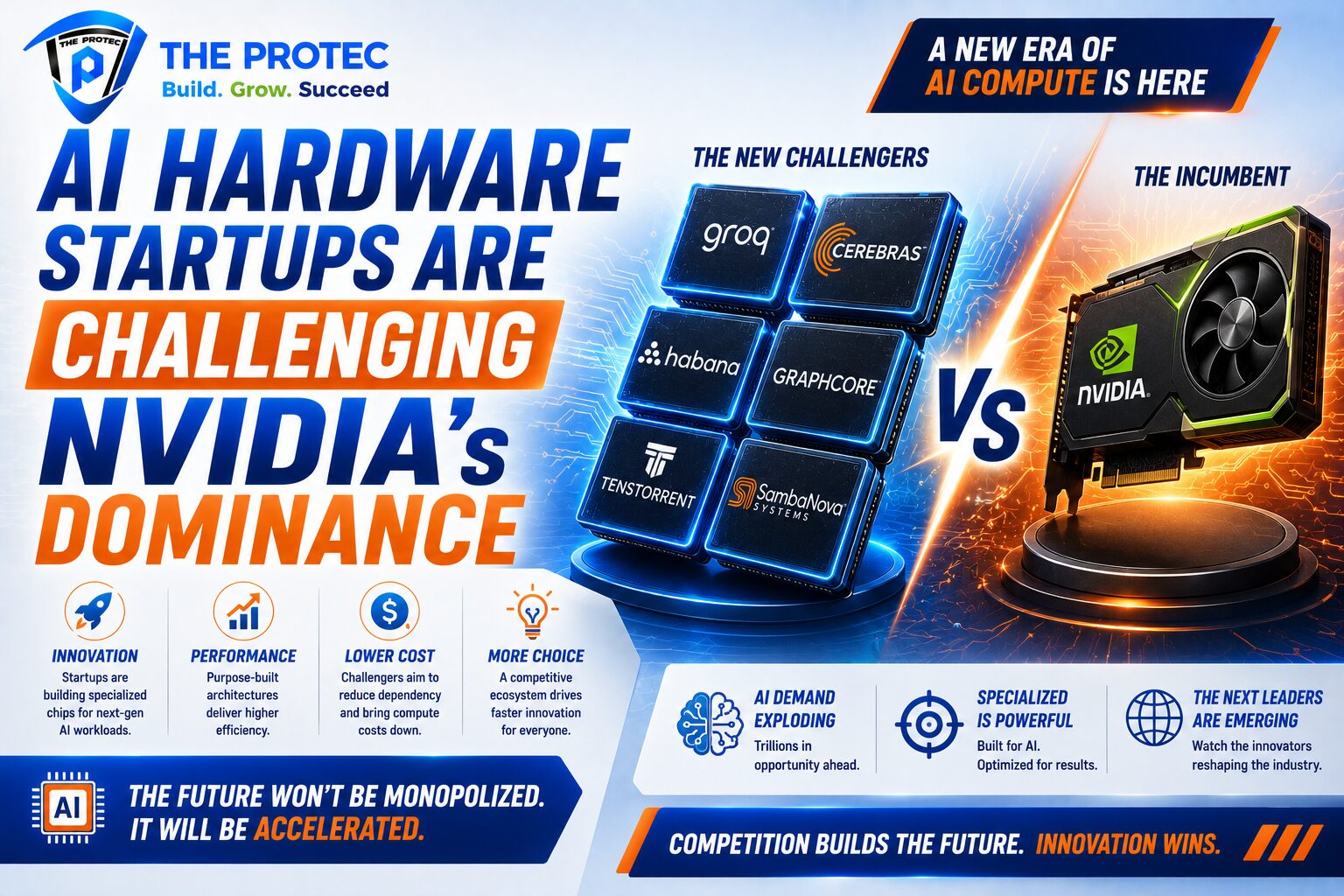
For years, NVIDIA has set the pace in AI computing. Its GPUs became the default engine for training large models, running inference at scale, and powering the data centers behind the current AI boom. But the market is changing fast. A new generation of AI hardware startups is attacking the problem from every angle: lower power consumption, better memory efficiency, tighter integration with software, and chips designed specifically for workloads that GPUs were never meant to handle perfectly.
This shift matters because the demand curve for AI is changing. Early AI deployments were dominated by model training, where raw parallel compute ruled. Now, enterprises want faster inference, lower latency, cheaper token generation, on-device AI, and specialized systems that can run continuously without massive energy bills. That has created room for NVIDIA competitors to emerge with a different pitch: not just more compute, but better compute for specific AI jobs.
Several startups are now building AI accelerator chips aimed at hyperscalers, cloud providers, defense customers, robotics companies, and edge-device manufacturers. Some are focused on wafer-scale architectures. Others are betting on dataflow processors, in-memory compute, optical interconnects, or tightly coupled CPU-GPU alternatives. The common thread is simple: they are challenging the idea that one architecture should dominate every AI workload.
In this article, we’ll look at why the market is opening up, what kinds of specialized AI processors these startups are building, and which trends are shaping the next phase of AI infrastructure.
Why NVIDIA’s Lead Is Being Challenged
NVIDIA still has major advantages. It has deep software support, a strong developer ecosystem, mature tooling, and a product line that spans data center, workstation, and edge use cases. CUDA remains a powerful moat. But as AI has moved from experimentation to industrial deployment, buyers have started asking harder questions about cost, power, supply, and specialization.
That has created pressure in several directions:
- Inference costs are exploding as large language models serve millions of requests.
- Power density is becoming a constraint in modern data centers.
- Memory bandwidth limits are increasingly important for large models.
- Model diversity means not every workload needs a general-purpose GPU.
- Supply chain concentration creates risk for large buyers.
These realities are fueling interest in AI hardware startups that can offer better economics for specific deployments. Instead of trying to outperform NVIDIA everywhere, many startups are targeting narrow but valuable slices of the market.
The New Design Philosophy Behind AI Accelerator Chips
The most important change in the market is architectural. Traditional GPUs are incredibly flexible, which made them ideal for the first wave of deep learning. But flexibility comes at a cost. Many startups are now designing AI accelerator chips that sacrifice generality in exchange for efficiency.
Some of the most common approaches include:
Dataflow architectures
These chips move data through the compute graph with minimal overhead, reducing memory bottlenecks and improving throughput for AI inference and training. Dataflow designs can be highly efficient when the workload is predictable.
Wafer-scale integration
Instead of splitting compute across many separate dies, wafer-scale chips pack massive amounts of silicon into a single device. This can reduce communication overhead and simplify scaling for large model workloads.
In-memory and near-memory compute
Because moving data is expensive, some startups are placing compute closer to memory or even inside memory structures. This can significantly reduce latency and energy consumption.
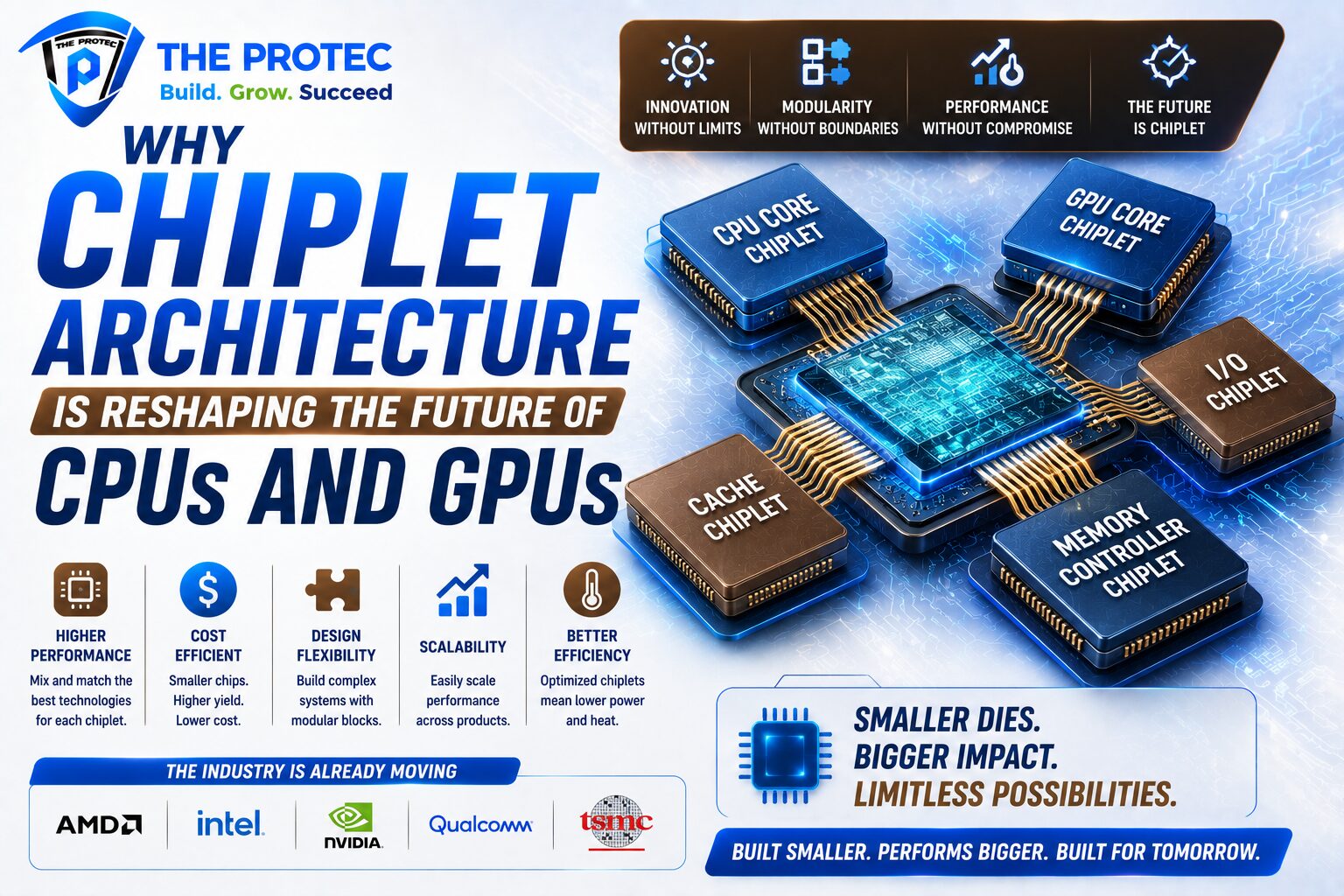
Chiplet-based systems
Rather than building one giant monolithic processor, chiplet designs combine modular blocks for compute, I/O, and memory. This improves manufacturing flexibility and can lower cost.
Optical and advanced interconnects
As AI models grow, connecting chips efficiently becomes as important as the chips themselves. New startups are exploring faster interconnect fabrics to scale clusters more effectively.
These approaches are not just technical experiments. They reflect a broader industry recognition that the next wave of AI infrastructure will be judged on total system efficiency, not raw FLOPS alone.
AI Hardware Startups to Watch
A number of emerging companies are becoming serious NVIDIA competitors by focusing on different parts of the stack. Some are still early-stage, while others have shipped systems, raised substantial funding, or landed strategic partnerships.
Cerebras
Cerebras is one of the best-known names in specialized AI processors. Its wafer-scale engines are designed to handle large model training with extremely high memory bandwidth and reduced communication overhead. The company has continued to position itself as a serious alternative for workloads where large-scale data movement is a bottleneck. Its systems appeal to organizations looking for a different scaling model than GPU clusters.
More information is available on the company’s site: Cerebras.
Groq
Groq has focused heavily on ultra-low-latency inference. Its language processing units are built for deterministic performance, which makes them attractive for applications where response time matters more than raw flexibility. In a market increasingly dominated by real-time AI assistants and inference-heavy workloads, that positioning is powerful.
Tenstorrent
Tenstorrent is building AI accelerator chips and systems with an emphasis on scalable compute, open software, and flexible deployment. The company has attracted attention for its engineering talent and its willingness to challenge conventional assumptions about AI chip design. Its architecture is especially interesting for teams looking beyond the traditional GPU software stack.
Rebellions
Based in South Korea, Rebellions has emerged as one of the more prominent regional players in the AI silicon market. The company is targeting data center inference with chips designed to balance performance and efficiency. Its rise reflects a broader trend: AI hardware innovation is no longer concentrated only in the United States.
Hailo
Hailo specializes in edge AI processors, especially for devices that need strong performance with minimal power draw. This makes it relevant for cameras, industrial systems, retail analytics, and autonomous devices. While it is not trying to replace NVIDIA in the high-end training market, it is absolutely competing in the fast-growing edge segment where specialized hardware can deliver clear advantages.
Etched
Etched is pursuing a highly focused strategy around transformer inference, arguing that specialized silicon can outperform general-purpose hardware when the workload is well understood. This sort of workload-specific chip design is one of the clearest examples of how AI accelerator chips are evolving. Rather than building for every possible AI model, the company is optimizing for the dominant architecture of modern generative AI.
Lightmatter
Lightmatter has become a key name in photonic and advanced interconnect-based computing. Its work reflects growing interest in overcoming the limits of electrical signaling as clusters scale. As AI systems become more distributed, hardware companies that can improve communication efficiency may play a major role in the market.
Why Specialized AI Processors Are Gaining Momentum
The appeal of specialized AI processors comes down to economics. Enterprises do not want to overpay for unused flexibility. If a chip can run a model faster, cheaper, or with less energy, it can create a real business advantage even if it does not match the universal compatibility of NVIDIA’s stack.
There are several reasons this momentum is accelerating now:
- Inference is becoming the dominant cost center for many AI applications.
- AI is moving closer to the edge, where power and thermal budgets are tight.
- Model serving is becoming more specialized, with different workloads for chat, search, agents, vision, and robotics.
- Cloud buyers want leverage in negotiations with dominant suppliers.
- New software layers are making non-GPU hardware more practical to deploy.
In other words, the market is finally mature enough to support alternatives. A startup does not need to replace NVIDIA across the entire AI ecosystem to succeed. It only needs to solve a meaningful bottleneck better than the incumbent.
The Software Challenge Is Still the Hardest Part
Hardware alone does not win the AI market. NVIDIA’s real strength is not just silicon; it is the software ecosystem around it. CUDA, libraries, frameworks, developer tools, and optimization support all make it easier for teams to adopt NVIDIA products and stay within that ecosystem.
This is where many AI hardware startups face the toughest obstacle. A better chip is not enough if developers cannot easily compile, deploy, monitor, and scale workloads on it. That is why the most successful NVIDIA competitors are investing heavily in software abstractions, compiler stacks, runtime systems, and developer experience.
Some are building compatibility layers to reduce friction. Others are focusing on narrow workloads where software complexity is lower. A few are trying to build entirely new programming models around their chips. The winners will likely be the companies that make adoption feel less like a hardware migration and more like a performance upgrade.
Data Center Demand Is Creating Room for New Vendors
The surge in AI infrastructure spending has opened the door for multiple chip vendors. Hyperscalers, cloud providers, and model developers are all trying to secure enough compute to meet demand. That creates an environment where even a modestly differentiated chip can find a market.
Large buyers care about more than peak performance. They also care about:
- Power efficiency per token
- Rack density
- Cooling requirements
- Deployment flexibility
- Supply availability
- Total cost of ownership
Startups that can improve one or more of these metrics may win contracts even if they do not match NVIDIA across every benchmark. This is especially true for inference and cloud-native serving, where predictable economics can matter more than benchmark headlines.
Geopolitics and Supply Chain Diversification Are Also Helping
Another reason AI hardware startups are gaining attention is the growing desire to diversify supply chains. Buyers in cloud, telecom, industrial automation, and government sectors increasingly want access to alternative sources of advanced compute. That does not mean abandoning NVIDIA, but it does mean reducing dependence on a single vendor.
This dynamic is also encouraging regional innovation. Companies in Europe, Israel, South Korea, and other markets are receiving more attention as governments and enterprises look for strategic resilience in AI infrastructure. For some customers, choosing a startup is not just about performance; it is about control, availability, and long-term independence.
What NVIDIA Is Likely to Do Next
NVIDIA is not standing still. It continues to improve its architecture, expand its networking capabilities, and strengthen its software offerings. The company also understands that it cannot ignore the rise of specialized AI processors. Expect it to respond in several ways:
- More efficient inference platforms aimed at reducing operating cost.
- Broader systems integration across networking, memory, and compute.
- Deeper software lock-in through developer tooling and platform services.
- Expanded partnerships with cloud vendors and enterprise customers.
- New product segmentation for edge, inference, and training workloads.
The likely future is not a sudden collapse of NVIDIA dominance. Instead, the market may evolve into a more pluralistic ecosystem where NVIDIA remains the default for many workloads, but not the only serious option.
What This Means for Buyers and Builders
For technology buyers, the rise of AI hardware startups is a positive development. More competition usually means better pricing, more innovation, and better fit for specific workloads. Organizations evaluating AI infrastructure should now think carefully about whether they need a general-purpose platform or a specialized processor optimized for a narrow job.
For builders, the message is equally important. AI system design is becoming more modular. The best choice may not be the fastest chip on paper, but the chip that gives the best combination of throughput, latency, memory efficiency, and deployment simplicity.
For startups themselves, the opportunity is enormous but unforgiving. The winners will need more than clever chip design. They will need strong software, manufacturing discipline, strategic partnerships, and a clear understanding of which workloads they can own.
Key Trends Shaping the Next Wave of AI Hardware
The current wave of innovation is being shaped by a few clear trends that will likely define competition over the next several product cycles.
- Inference-first design: More chips are being built to optimize model serving rather than only training.
- Energy efficiency: Power per token is becoming a headline metric.
- Specialized workloads: Vision, language, robotics, and edge analytics each have different hardware needs.
- Software portability: Easier migration is essential for non-GPU ecosystems.
- Distributed scaling: Interconnect and memory architecture are becoming strategic differentiators.
These trends suggest that AI accelerator chips will continue to diversify. Instead of one winner-take-all market, the industry is moving toward a layered stack of purpose-built hardware platforms.
FAQ
Are AI hardware startups really able to compete with NVIDIA?
Yes, but usually in specific areas rather than across the entire market. Many AI hardware startups are focusing on inference, edge AI, or narrow workloads where efficiency and cost matter more than broad compatibility.
What makes AI accelerator chips different from GPUs?
AI accelerator chips are often designed around particular workloads, such as transformer inference or low-power edge processing. GPUs are more general-purpose and flexible, while specialized chips aim for better efficiency in targeted use cases.
Why are companies looking for NVIDIA competitors now?
Demand for AI compute has grown so quickly that buyers want alternatives for cost, supply, and energy reasons. Many organizations are also looking for hardware that is better optimized for serving models at scale.
Will specialized AI processors replace GPUs?
Not completely. GPUs will remain important, especially for training and general-purpose workloads. But specialized AI processors are likely to take more share in inference, edge deployments, and other use cases where efficiency is critical.
The Bottom Line
The rise of AI hardware startups challenging NVIDIA’s dominance is one of the most important shifts in the AI infrastructure market. These companies are not just building faster chips; they are rethinking what AI compute should look like in an era defined by massive inference demand, tighter energy budgets, and increasingly specialized workloads.
Some will fail. Some will be acquired. A few may become long-term platform companies. But the broader trend is already clear: the AI hardware market is opening up, and NVIDIA competitors are no longer hypothetical. They are shipping silicon, winning customers, and forcing the industry to think differently about what performance really means.
For enterprises, investors, and technical teams, that creates both opportunity and complexity. The next few years will likely determine which AI accelerator chips become durable infrastructure and which remain niche experiments. Either way, the era of unquestioned GPU monopoly is giving way to a more competitive and more innovative landscape.