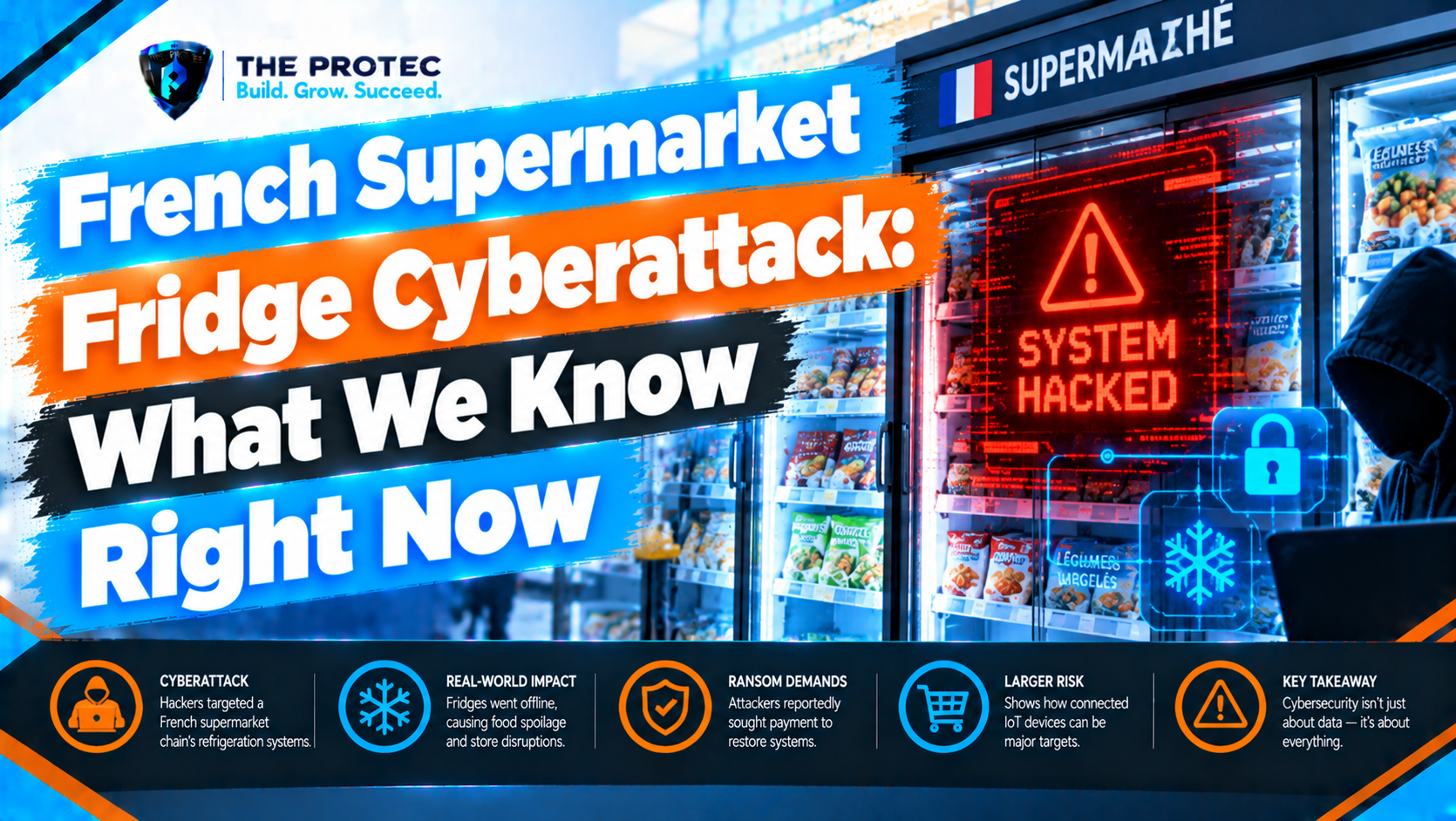








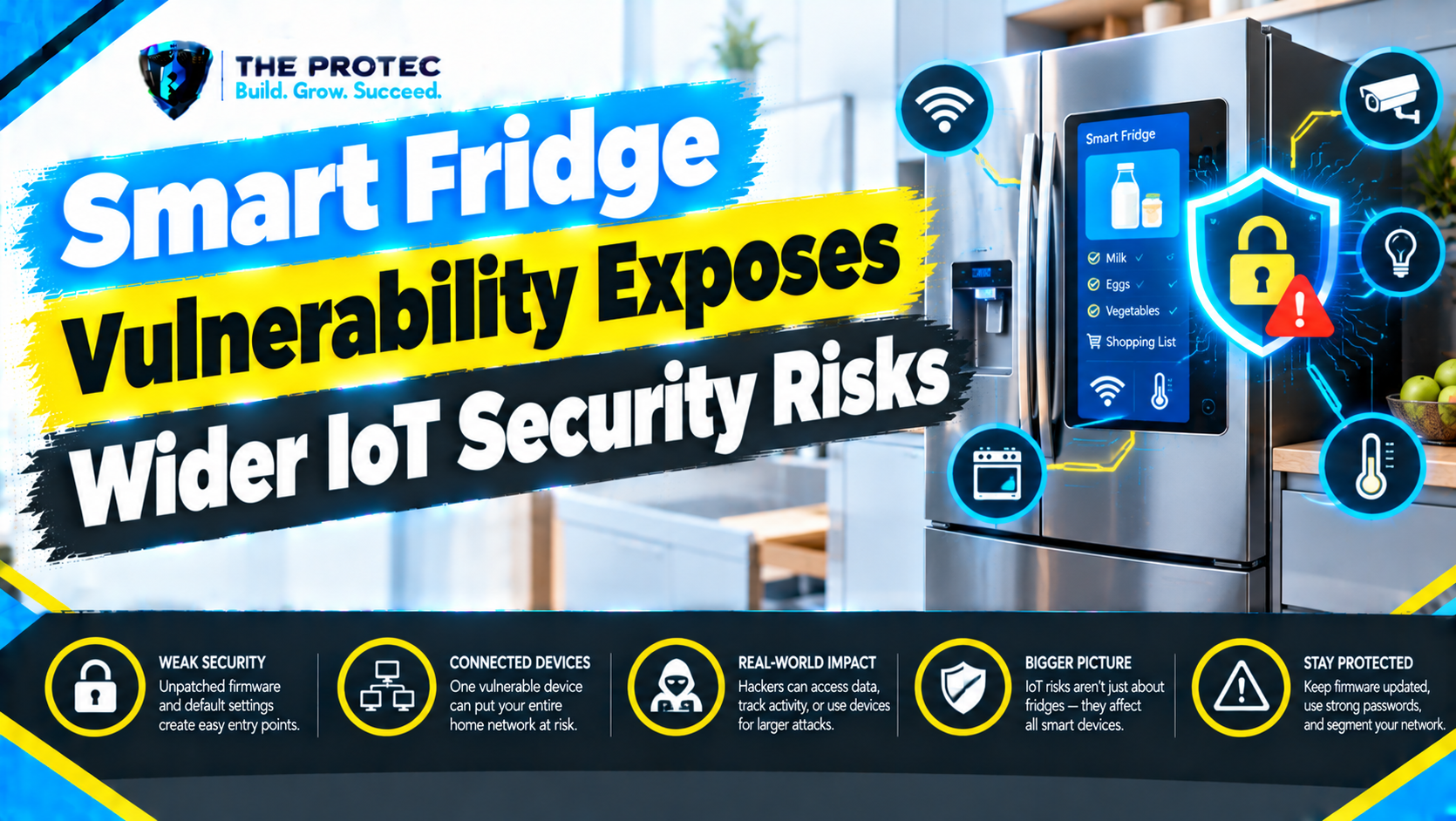
A refrigerator was once an isolated appliance with one essential job. Today, some models contain cameras, microphones, touchscreens, shopping apps, voice assistants and cloud-connected operating systems. They may display family calendars, monitor groceries, send mobile alerts or integrate with other smart home services. That convenience also creates a new security question: what happens when the refrigerator behaves more like an inadequately maintained computer?
A widely reported smart fridge security vulnerability provides a useful answer. Security researchers found that a connected refrigerator failed to validate digital certificates correctly when communicating with an online service. Under the tested conditions, an attacker positioned between the appliance and the service could impersonate a trusted server and potentially intercept account information. The finding did not prove that refrigerators everywhere were being remotely hijacked. It did, however, expose a design weakness with implications far beyond one model.
As artificial intelligence, cameras and cloud accounts become standard features in premium appliances, smart appliance security flaws deserve the same attention as weaknesses in laptops and phones. A single poorly protected device can affect consumer privacy, home network security and trust in the wider connected-home ecosystem.
What the Reported Smart Refrigerator Vulnerability Involved
The best-known refrigerator case involved a Samsung Family Hub predecessor that synchronized with Google Calendar. Researchers at Pen Test Partners reported that the appliance used encrypted connections but did not properly validate the server’s SSL certificate. Certificate validation is what helps a device confirm that it is communicating with the real online service rather than an impostor.
This weakness created an opportunity for a man-in-the-middle attack. If an attacker could control or interfere with the refrigerator’s network connection, the attacker could present a fraudulent certificate, impersonate the intended service and inspect information passing through that connection. The research demonstrated a credible path to obtaining Google account credentials or calendar data under those conditions.
The distinction between encryption and authentication is important. A connection can be encrypted while still being unsafe if the device does not verify who is at the other end. In that situation, data may be encrypted between the refrigerator and the attacker rather than between the refrigerator and the legitimate cloud platform.
Verified Findings Versus Hypothetical Attack Scenarios
The verified technical finding was a certificate-validation weakness that enabled interception in a controlled test where the attacker had the necessary network position. It showed a real failure in the appliance’s handling of trusted communications.
It did not establish that attackers could compromise every smart refrigerator directly from the internet. Nor did it prove widespread exploitation, automatic access to every device on a victim’s network or the ability to alter cooling temperatures. Those outcomes are hypothetical unless a separate vulnerability provides the required privileges and attack path.
That context matters because security reporting can turn a conditional flaw into an exaggerated claim of universal remote control. Current refrigerator models should not automatically be assumed to contain the same defect. The lasting lesson is that certificate checking, authentication and secure update mechanisms are fundamental requirements for all internet-connected appliances.
Why Connected Refrigerator Risks Are Growing
Modern smart refrigerators collect and process more information than earlier connected models. Depending on the product and enabled features, that information can include account identifiers, shopping lists, calendar entries, voice commands, usage patterns, diagnostic records and images from internal cameras. Mobile applications may also reveal whether a device is online and how frequently household members interact with it.
Each feature introduces software components, permissions and external dependencies. A refrigerator may communicate with the manufacturer’s cloud, analytics providers, voice-assistant platforms, grocery services and a companion application. If any part of that chain uses weak authentication or insecure software, the attack surface expands.
These connected refrigerator risks are particularly significant because appliances have long replacement cycles. Consumers may keep a refrigerator for a decade or longer, while its operating system, third-party libraries or cloud integrations can become obsolete much sooner. A mechanically reliable appliance can therefore outlive its guaranteed software support.
Common Causes of Smart Appliance Security Flaws
Weak or Reused Authentication
Default passwords, short PINs and reused cloud credentials remain common sources of IoT device hacking. If a refrigerator account shares a password with another service, a credential-stuffing attack against the manufacturer’s portal could expose appliance controls or household information without exploiting the refrigerator itself.
Firmware Security Vulnerabilities
Firmware controls the appliance’s connected functions. Programming errors, vulnerable open-source components and insecure update processes can create exploitable weaknesses. Signed updates and secure boot controls help prevent malicious firmware, but their value depends on manufacturers continuing to issue fixes.
Improper Certificate Validation
The reported refrigerator flaw demonstrates why devices must validate certificate chains, hostnames and expiration status correctly. Developers may disable checks during testing or implement them inconsistently in production. The result can undermine otherwise strong encryption.
Excessive Cloud and App Permissions
A companion application may request access to location data, contacts, microphones, cameras or other smart devices. Broad permissions increase potential harm if the app, account or cloud platform is compromised. Secure consumer device cybersecurity requires collecting only the data needed to provide a feature.
Unsafe Network Configuration
Universal Plug and Play, unnecessary open ports, exposed administrative interfaces and automatic connections to untrusted networks can increase smart fridge hacking risks. An appliance should not require direct inbound internet access for routine functions such as sending an alert.
How One Appliance Could Affect Home Network Security
A vulnerable refrigerator does not automatically compromise an entire home. Network segmentation, router firewalls and device-level protections can restrict what an attacker can reach. However, a compromised appliance may provide a foothold inside a trusted network if it can communicate freely with computers, storage devices and other IoT products.
An attacker could hypothetically use that foothold for network reconnaissance, attempts against poorly secured local services or malicious traffic sent through the victim’s internet connection. A compromised appliance could also be recruited into a botnet for distributed denial-of-service attacks. Whether those actions are possible depends on the flaw, the appliance’s privileges and the network architecture.
Privacy consequences may be more immediate. Calendar data can reveal appointments and travel plans. Camera images can disclose household routines or purchasing habits. Device telemetry can indicate when an appliance is in use. These IoT privacy concerns become more serious when data is retained indefinitely, shared with third parties or protected by a single cloud password.
Why Internet of Things Security Remains Difficult
IoT products sit at the intersection of hardware, embedded software, mobile applications and cloud infrastructure. Responsibility may be divided among the appliance brand, a chipset supplier, an app developer and several service providers. Coordinating patches across that supply chain is difficult, particularly after a component reaches the end of support.
Consumers also receive limited information about support periods. Product packaging may advertise smart features without stating how long security updates will continue. Update notifications can be vague, and some devices silently stop receiving firmware. Owners may not know whether a discontinued cloud service has made a feature insecure or unusable.
Regulators are responding. The European Union’s Cyber Resilience Act establishes lifecycle cybersecurity obligations for products with digital elements, with vulnerability-reporting provisions applying from September 2026 and broader requirements following later. The European Commission’s Cyber Resilience Act overview explains the framework. Consumer IoT guidance is also increasingly focused on unique credentials, data protection, secure updates and vulnerability disclosure rather than optional security promises.
IoT Security Best Practices for Smart Fridge Owners
Change default credentials immediately. Use a unique, long password for the appliance account and enable multifactor authentication when the manufacturer offers it.
Install firmware and application updates. Enable automatic security updates if available. Periodically check the appliance settings and the manufacturer’s support page rather than relying solely on mobile alerts.
Create a separate IoT network. Place the refrigerator, cameras, speakers and similar devices on a guest network or dedicated VLAN. Prevent them from initiating connections to personal computers and network storage unless required.
Disable unnecessary features. Turn off remote access, microphones, cameras, calendar synchronization and third-party integrations that the household does not use. Fewer active services mean fewer opportunities for abuse.
Secure the router. Update router firmware, replace default administrator credentials, use WPA2 or WPA3 encryption and disable remote administration and WPS when they are unnecessary.
Review privacy settings. Check what information the appliance and companion app collect, how long it is retained and whether it is shared for advertising or analytics.
Remove access before disposal. Sign out of accounts, perform a factory reset and remove the device from cloud dashboards before selling, recycling or replacing the refrigerator.
The NIST Cybersecurity for IoT Program offers additional guidance on capabilities manufacturers and organizations should expect from connected products.
Consumers can reduce exposure, but they cannot correct defective certificate validation, patch unsupported code or inspect proprietary firmware. Manufacturers must treat connected home device security as a product-safety and lifecycle obligation rather than an optional feature.
Every device should ship with unique credentials or require secure setup. Sensitive communications must use modern encryption with correct certificate validation. Updates should be authenticated, easy to install and available for a clearly stated support period that reflects the appliance’s expected lifespan. Companies also need coordinated vulnerability-disclosure programs so researchers can report flaws without navigating an opaque customer-service process.
Data minimization is equally important. A refrigerator does not need to retain every interaction indefinitely. Cloud features should use narrowly scoped permissions, and essential refrigeration functions should continue safely if an online service closes. A lapse in cloud authentication should never interfere with basic cooling or make an appliance unusable.
Security labels and regulatory requirements may improve transparency, but meaningful progress depends on secure engineering. Buyers should be able to compare update commitments and end-of-support dates as easily as energy ratings and warranty terms.
A Warning for the Entire Connected-Home Ecosystem
The smart refrigerator vulnerability remains relevant because the underlying mistake is not unique to refrigerators. The same failures can appear in televisions, doorbells, thermostats, ovens, speakers and robotic vacuums. All are computers with sensors, network connections and software dependencies, even when they do not look like traditional computers.
The latest cybersecurity news increasingly reflects this convergence of physical products and digital risk. As appliances gain generative AI interfaces, richer sensors and deeper cloud integrations, smart appliance data protection must be designed into the product from the beginning. Adding connectivity without a realistic update strategy creates a liability that can remain in a home for years.
A refrigerator flaw should not cause panic, but it should change expectations. Consumers need practical network hygiene and informed purchasing decisions. Manufacturers need secure defaults, transparent support periods and rapid remediation. Both sides have a role, but only manufacturers can eliminate flaws embedded in device software and cloud architecture.
Frequently Asked Questions
Can a smart fridge be hacked remotely?
It is possible if a model has an exploitable internet-facing service, compromised cloud account or vulnerable remote-access feature. The reported certificate flaw required an attacker to obtain a suitable position between the refrigerator and an online service; it did not demonstrate universal remote access to all smart fridges.
Can a compromised refrigerator infect other home devices?
Potentially, but not automatically. An attacker would need code execution or similar control and a route to other vulnerable systems. A separate IoT network and firewall rules can greatly limit this lateral movement.
How do I know whether my refrigerator receives security updates?
Check the model’s support page, companion app and firmware settings. If the manufacturer does not publish an update policy or end-of-support date, ask customer support directly. Lack of clear information should be considered when enabling optional connected features.
Is disconnecting a smart refrigerator from the internet enough?
Disconnecting it removes many remote and cloud-based risks while preserving normal cooling on properly designed models. However, locally accessible services may remain active, so unused Wi-Fi settings and accounts should also be disabled or removed where possible.
What should buyers look for in a secure smart appliance?
Look for multifactor authentication, automatic signed updates, a published support period, clear privacy controls, a vulnerability-disclosure policy and continued operation without cloud access. Avoid products that require permanent remote access for basic appliance functions.