








Contents
- 1 Introduction
- 2 Advancements in Mobile GPU Architecture
- 3 Smartphone Gaming Performance: The Catalyst for Evolution
- 4 Beyond Gaming: AI Graphics and Acceleration
- 5 Real-Time Rendering: A New Standard for Mobile Experiences
- 6 Challenges and Opportunities in Mobile GPU Evolution
- 7 Future Outlook: Converging AI and Graphics on Mobile GPUs
- 8 FAQs About the Future of Mobile GPUs
- 9 Conclusion
Introduction
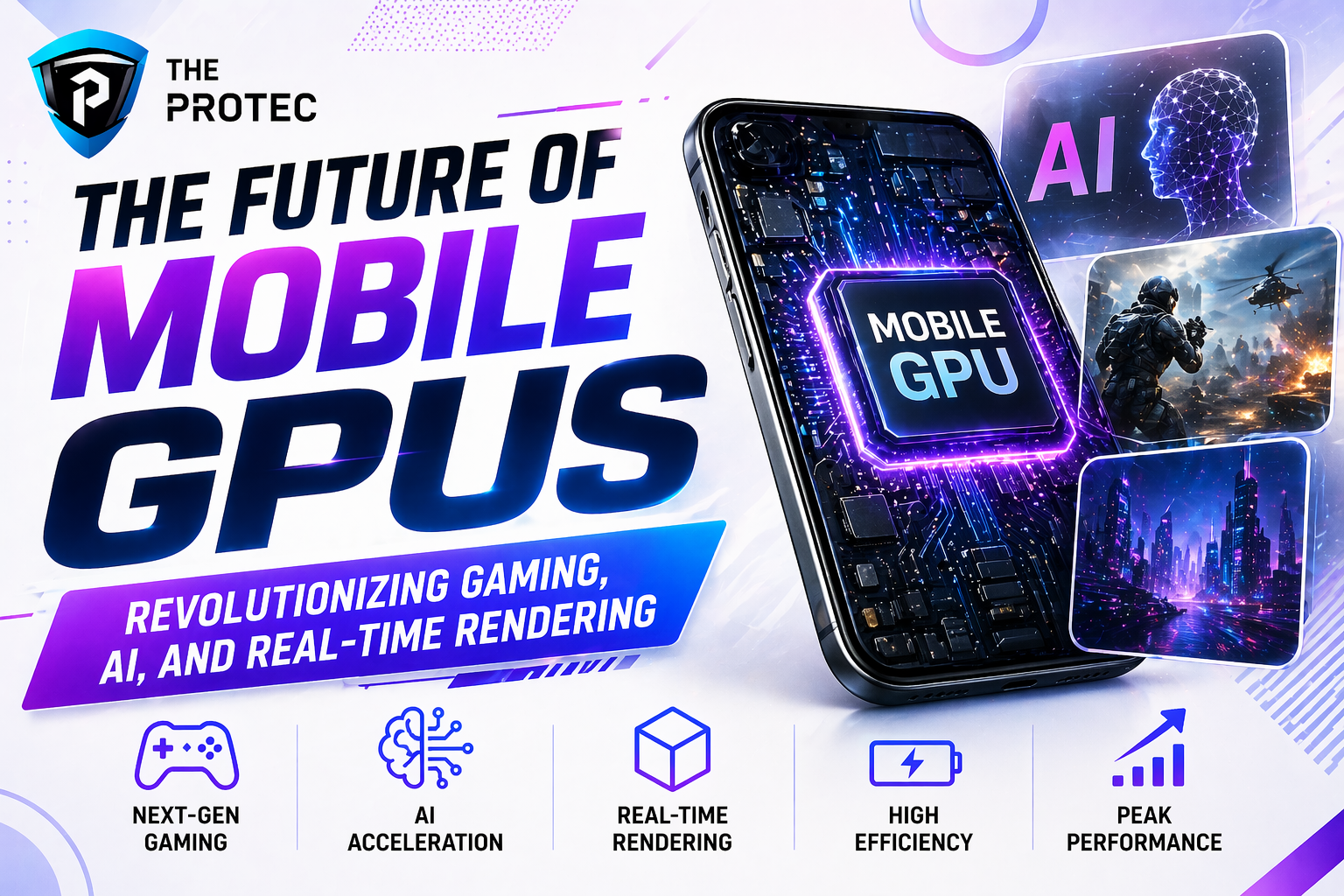
The era of mobile GPUs has shifted dramatically over the last few years. What once primarily served to boost smartphone gaming performance is now at the forefront of multiple transformative technologies, including artificial intelligence acceleration and real-time rendering. These advancements are redefining how we interact with our devices, paving the way for richer graphics, smarter applications, and immersive experiences directly on mobile platforms.
As the demand for high-fidelity gaming and AI-driven features grows, mobile GPUs stand as critical enablers of this evolution. This article delves deep into the future of mobile GPUs, exploring their expanding role beyond traditional gaming and how they are shaping the future of AI graphics and real-time rendering.
Advancements in Mobile GPU Architecture
Mobile GPU design has evolved rapidly to meet the needs of increasingly complex workloads. Manufacturers have shifted toward heterogeneous compute architectures integrating powerful cores dedicated not only to graphics but also to AI and compute tasks. These architectures are built around efficiency and scalability, balancing performance with limited power constraints.
One notable trend is the integration of dedicated AI accelerators within mobile GPUs. Rather than relying solely on CPU or separate NPUs, modern mobile GPUs have incorporated tensor cores and matrix multipliers that enable faster and more efficient AI graphics processing. This integration reduces latency and power consumption, which are critical for smooth smartphone gaming and real-time AI workloads.
Additionally, ray tracing capabilities have started to penetrate mobile GPUs, bringing photorealistic lighting and reflections to handheld devices. While ray tracing was once exclusive to desktop GPUs, advancements in silicon manufacturing and algorithm optimization have made this feature more accessible for mobile platforms.
Smartphone Gaming Performance: The Catalyst for Evolution
Gaming remains a primary driver behind mobile GPU performance improvements. Games today deliver console-quality graphics at impressive frame rates, demanding advanced GPU features like variable rate shading, scalable geometry engines, and enhanced texture compression.
But smartphone gaming performance improvements aren’t solely about raw frames per second. Developers and hardware vendors focus on delivering consistent performance under thermal and power constraints typical of mobile devices. Techniques such as dynamic voltage/frequency scaling, intelligent workload distribution, and machine learning-based frame pacing have become standard to maintain smooth gameplay without draining the battery.
Further, APIs optimized for mobile platforms such as Vulkan and Metal allow developers to harness GPU power more efficiently, unlocking effects and physics calculations that previously were impossible on smartphones. The collaborative evolution between hardware capabilities and software optimization is crucial for pushing the boundaries of mobile gaming.
Beyond Gaming: AI Graphics and Acceleration
While gaming drove early mobile GPU advancements, artificial intelligence is now a dominant force shaping their future. AI graphics leveraging deep neural networks enable features like upscaling, real-time image enhancement, and intelligent scene reconstruction all performed directly on mobile devices.
Mobile GPUs now accelerate AI-driven graphics tasks such as Super Resolution, which reconstructs higher-resolution images from lower-resolution inputs, significantly improving visual fidelity without taxing bandwidth. Additionally, techniques like AI-enabled denoising enhance real-time rendering quality, smoothing out noise and artifacts that arise in complex scenes.
Moreover, AI embedded in mobile GPUs powers augmented reality (AR) and virtual reality (VR) applications by efficiently processing sensor data and rendering lifelike environments in real-time. This leads to an immersive experience that is responsive and visually convincing, essential for applications ranging from gaming to industrial training.
Real-Time Rendering: A New Standard for Mobile Experiences
The demand for real-time rendering capabilities on mobile has prompted significant breakthroughs. Traditionally reserved for high-end desktops, real-time rendering allows scenes to be dynamically computed and displayed instantaneously, delivering interactive and immersive graphics.
Mobile GPUs now support advanced rendering techniques like dynamic global illumination, volumetric effects, and hardware-accelerated ray tracing. This has opened doors to mobile games and applications featuring realistic lighting, shadows, and reflections that heighten user engagement.
Important too is mobile GPUs’ role in content creation tools. Real-time rendering enables creatives to visualize edits and adjustments on the fly, directly from their mobile devices, streamlining workflows that typically required high-end workstations.
Challenges and Opportunities in Mobile GPU Evolution
Despite impressive progress, developing mobile GPUs to balance performance, power, thermal, and size constraints remains challenging. As GPUs grow more capable, efficient cooling solutions and power management techniques become essential to maintain device safety and user comfort.
Another challenge lies in the complexity of AI frameworks and software support. To fully exploit mobile GPU features, developers need robust SDKs, middleware, and a scalable ecosystem. Collaboration between hardware vendors and software developers is critical to ensure that AI graphics workloads are optimized across devices.
Conversely, these challenges are also opportunities. The rise of foldable and dual-screen smartphones creates fresh demand for flexible rendering techniques optimized for varying screen sizes and orientations. Meanwhile, the proliferation of 5G and Wi-Fi 6E networks supports cloud-assisted rendering and AI inference, allowing mobile GPUs to offload select tasks, reducing energy consumption locally.
Future Outlook: Converging AI and Graphics on Mobile GPUs
The future of mobile GPUs is inextricably linked to the convergence of AI and graphics workloads. We anticipate continued integration of AI acceleration cores alongside traditional GPU pipelines, facilitating seamless switching between rendering, physics simulations, and AI inference.
Innovations like federated learning and edge AI inference will leverage mobile GPUs to deliver personalized experiences without compromising privacy, all while maintaining high responsiveness. Additionally, AI-driven predictive rendering may anticipate user inputs or scene changes, optimizing GPU workload and further enhancing responsiveness.
This convergence will not only uplift smartphone gaming but transform diverse sectors such as healthcare, automotive, and education by enabling intelligent visualizations and interactive AI-powered applications on mobile devices.
FAQs About the Future of Mobile GPUs
1. How do mobile GPUs improve smartphone gaming performance?
Mobile GPUs enhance smartphone gaming by providing dedicated graphics processing power, enabling higher frame rates, detailed textures, and complex effects. They also support APIs tailored for mobile gaming, implement power-saving features, and use AI optimizations such as dynamic frame pacing to maintain smooth gameplay.
2. What role do mobile GPUs play in AI graphics?
Mobile GPUs accelerate AI graphics by running neural networks that perform tasks like image upscaling, denoising, and real-time scene analysis directly on the device. This enables improved visual fidelity, real-time enhancements, and supports augmented and virtual reality applications with low latency.
3. Can mobile GPUs handle real-time ray tracing and complex rendering?
Yes, recent mobile GPUs incorporate ray tracing cores and advanced rendering techniques that enable real-time lighting, shadows, and reflections. While limited compared to desktops, these capabilities have advanced enough to support visually rich experiences on smartphones and tablets.
4. What challenges do mobile GPUs face in future developments?
Key challenges include managing power consumption and heat dissipation, ensuring compatibility with evolving AI and graphics software, and optimizing performance across diverse device form factors. Innovations in cooling, power management, and developer tools are critical to overcoming these issues.
Conclusion
The future of mobile GPUs is dynamic and exciting. No longer confined to enhancing smartphone gaming performance, these chips are becoming multifunctional accelerators driving AI graphics and real-time rendering innovations. This evolution promises richer visuals, smarter applications, and immersive experiences that were once inconceivable on mobile devices.
As hardware and software continue to advance hand in hand, mobile GPUs will remain central to unlocking new capabilities and redefining what handheld technology can deliver both for gamers and the growing spectrum of AI-powered applications.
For further reading on the latest mobile GPU architectures and AI integration, visit the NVIDIA Developer site and GlobalFoundries Mobile Graphics.