








Contents
- 1 Introduction to Autonomous DevOps
- 2 What is Autonomous DevOps?
- 3 AI Infrastructure Automation: The Backbone of Autonomous DevOps
- 4 Self-Healing Systems: The Heart of Autonomous Infrastructure Management
- 5 How Autonomous DevOps Manages Alerts and Incident Response
- 6 Key Technologies Driving Autonomous DevOps
- 7 Real-World Examples of Autonomous DevOps
- 8 Benefits of Autonomous DevOps in Modern IT Operations
- 9 Challenges and Considerations When Implementing Autonomous DevOps
- 10 Future Trends in Autonomous DevOps
- 11 FAQs About Autonomous DevOps
- 12 Conclusion
Introduction to Autonomous DevOps
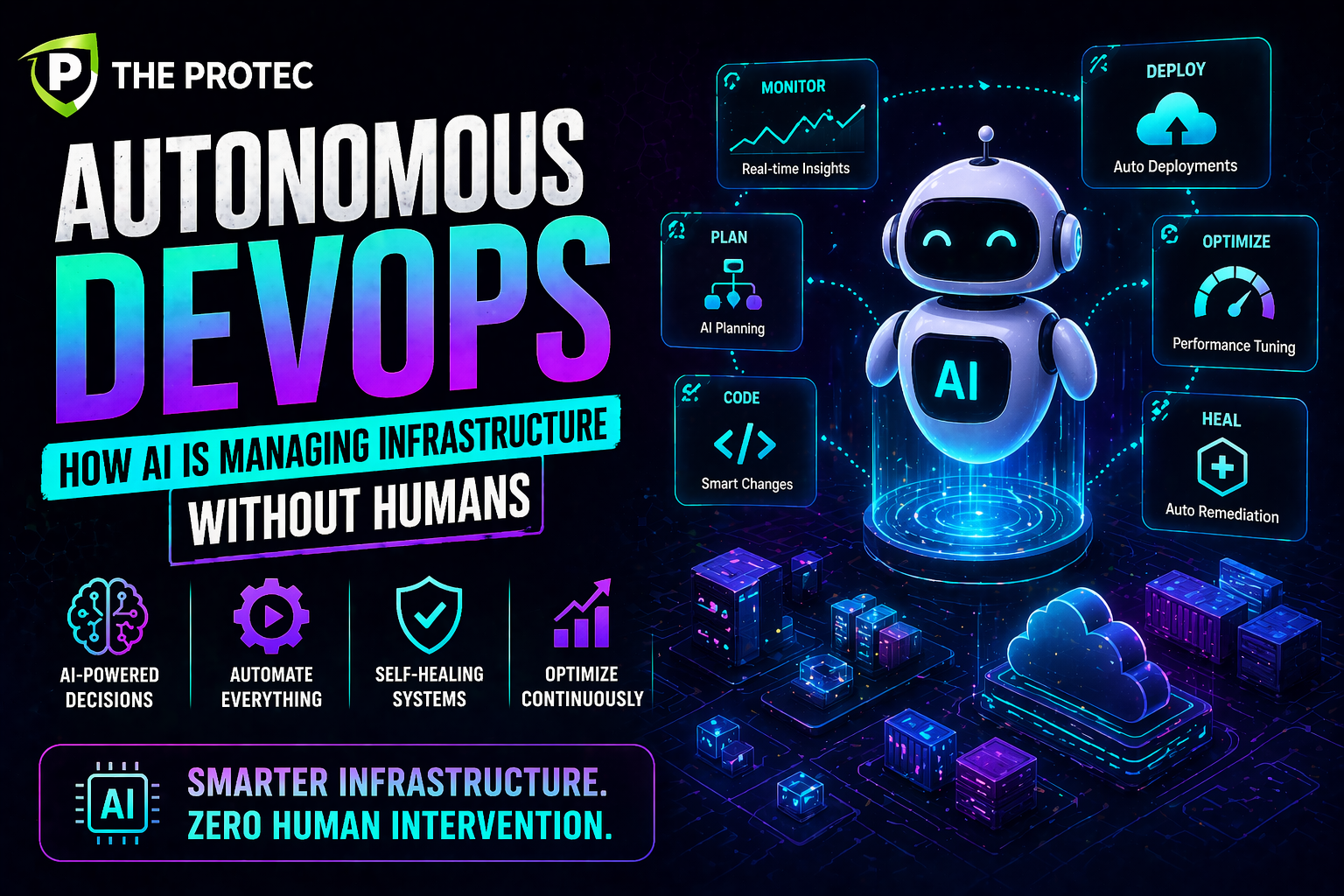
In the rapidly evolving technology landscape, organizations face mounting pressure to accelerate deployment cycles while ensuring infrastructure reliability and stability. Autonomous DevOps, powered by advanced AI infrastructure automation, represents a significant paradigm shift in IT operations. It aims to minimize human involvement by automating infrastructure management, monitoring, and remediation through intelligent, self-healing systems.
This article explores how AI drives autonomous DevOps, the mechanics of AI-led infrastructure management, proactive alerting, and automated remediation. It highlights the benefits, challenges, and real-world trends shaping infrastructure’s future with AI at its core.
What is Autonomous DevOps?
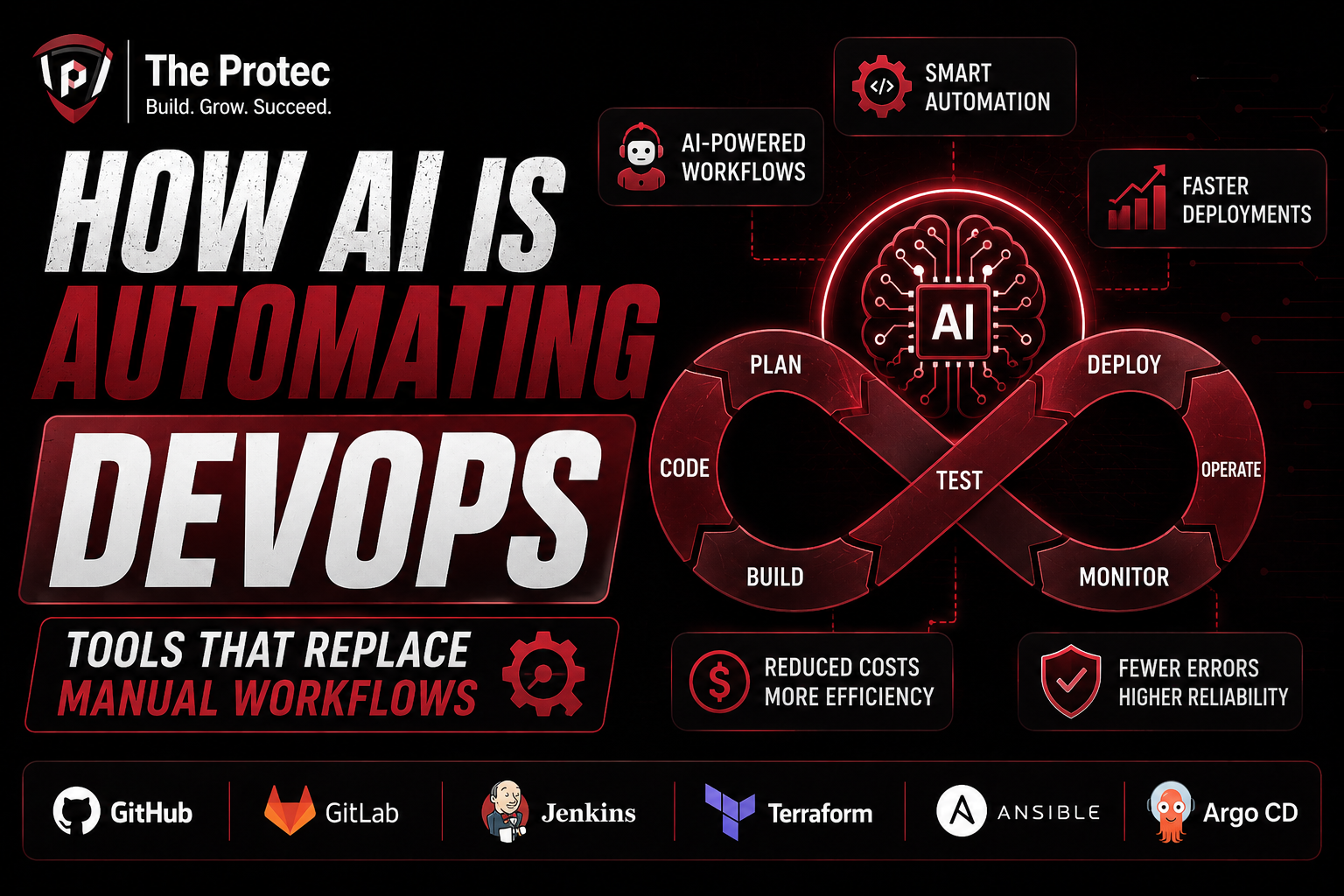
Autonomous DevOps refers to the use of artificial intelligence and machine learning technologies to automate end-to-end DevOps processes, focusing heavily on infrastructure management. Unlike traditional DevOps, which requires continuous human oversight and intervention, autonomous DevOps systems are designed to self-manage cloud and on-premise infrastructures by understanding, predicting, and resolving issues independently.
By integrating AI infrastructure automation, these systems can monitor performance metrics, analyze logs, and detect anomalies in real-time, enabling faster incident response and optimized resource allocation. The ultimate goal is to reduce manual efforts, human errors, and latency in IT operations, resulting in greater stability and efficiency.
AI Infrastructure Automation: The Backbone of Autonomous DevOps
AI infrastructure automation leverages intelligent algorithms to manage the lifecycle of infrastructure components such as servers, networks, containers, and cloud resources. This automation includes configuration management, provisioning, scaling, and continuous monitoring all driven by AI models trained on diverse operational data.
- Predictive Analytics: AI anticipates potential failures by identifying subtle patterns and anomalies that human operators might miss, allowing preemptive action.
- Automated Provisioning and Scaling: AI dynamically adjusts infrastructure resources to application demand, ensuring optimal performance and cost efficiency without human involvement.
- Configuration Drift Prevention: Machine learning models detect and correct deviations in system configurations that could lead to security vulnerabilities or failures.
Leading cloud providers and enterprises increasingly embed AI-driven automation to handle complex infrastructures that are difficult to manage manually, particularly at scale.
Self-Healing Systems: The Heart of Autonomous Infrastructure Management
Self-healing systems are designed to detect operational issues, diagnose root causes, and autonomously initiate remediation steps to restore normal functions often before users even notice a problem.
These systems employ a combination of AI technologies:
- Monitoring and Detection: Constantly collecting metrics, logs, and telemetry data across the infrastructure to identify deviations.
- Root Cause Analysis: Using machine learning algorithms to analyze incident triggers and isolate the source of the problem swiftly.
- Automated Remediation: Executing predefined or AI-generated recovery actions such as rebooting servers, reconfiguring services, or redirecting traffic.
The benefits of self-healing systems are profound. They drastically reduce downtime, maximize system availability, and free up engineering teams to focus on innovation rather than firefighting.
How Autonomous DevOps Manages Alerts and Incident Response
Traditional alerting systems often result in alert fatigue due to excessive false positives or unclear prioritization. Autonomous DevOps leverages AI to improve alert quality and incident management through:
- Intelligent Noise Reduction: Machine learning filters out low-priority or redundant alerts, highlighting only actionable incidents.
- Context-Aware Alerting: By correlating data from multiple sources, AI understands the broader impact, grouping related alerts into cohesive incidents.
- Automated Incident Triage: AI-driven workflows categorize, prioritize, and assign issues to appropriate teams or start automated remediation instantly.
This AI-enhanced approach accelerates resolution times, improves engineer productivity, and enhances overall system resilience.
Key Technologies Driving Autonomous DevOps
The rise of autonomous DevOps has been fueled by advances in several AI and supporting technologies:
- Machine Learning and Deep Learning: These enable pattern recognition in complex datasets to predict failures and recommend solutions.
- Natural Language Processing (NLP): NLP interfaces allow AI to interpret human-readable logs, documentation, and operator commands for improved automation.
- Reinforcement Learning: This allows autonomous systems to learn optimal remediation strategies by interacting with environments and receiving feedback.
- Robotic Process Automation (RPA): RPA executes repetitive operational tasks based on AI-driven decision-making, automating routine infrastructure maintenance.
Real-World Examples of Autonomous DevOps
Some organizations have adopted autonomous DevOps to unprecedented effect:
- Netflix: Utilizes “Chaos Engineering” combined with AI automation to stress-test systems and automatically recover from failures with little human intervention.
- Google: Employs AI for predictive failure detection and auto-remediation within its cloud infrastructure, enhancing uptime and scalability.
- Amazon Web Services (AWS): Provides AI-driven monitoring and self-healing capabilities for cloud resources through services like AWS Systems Manager and AI Ops.
The results have included cost savings, improved service reliability, and reduced manual toil for operations teams.
Benefits of Autonomous DevOps in Modern IT Operations
As enterprises continue their digital transformation journeys, autonomous DevOps offers several compelling advantages:
- Increased Agility: Automatic scaling and provisioning enable faster deployment of applications and services.
- Higher Reliability: Self-healing reduces unplanned downtime and improves system availability.
- Cost Optimization: Intelligent resource management avoids over-provisioning and reduces waste.
- Reduced Human Error: Automation prevents mistakes caused by manual configuration and complex operational procedures.
- Continuous Learning: AI systems evolve by learning from new incidents, continuously improving operations.
Challenges and Considerations When Implementing Autonomous DevOps
Despite its promise, transitioning to autonomous DevOps involves several challenges:
- Data Quality and Availability: AI depends on high-quality, comprehensive data for training and operation, which is not always easy to gather.
- Trust and Transparency: Engineers may hesitate to trust fully autonomous systems without clear visibility into AI decision processes.
- Complexity Management: Large, distributed infrastructures require robust AI models capable of handling diverse environments and failure modes.
- Security Risks: Automated remediation scripts and AI-driven actions must be carefully controlled to prevent unintended consequences or exploitation.
Organizations should adopt a phased approach, combining AI-driven automation with human supervision during the initial stages to build confidence and ensure effectiveness.
Future Trends in Autonomous DevOps
Looking ahead, several trends are poised to shape the autonomous DevOps landscape further:
- Integration of Generative AI: Models like GPT can assist in generating infrastructure-as-code scripts and suggesting remediation steps dynamically.
- Edge Computing Autonomy: Autonomous DevOps will expand to manage increasingly decentralized infrastructure at the edge autonomously.
- Cross-Domain AI Collaboration: Combining AI-driven DevOps with security (DevSecOps) and application performance monitoring for holistic autonomous operations.
- AI Governance Frameworks: Establishing standards and policies to ensure ethical, reliable, and secure AI operation within DevOps.
FAQs About Autonomous DevOps
What distinguishes autonomous DevOps from traditional DevOps?
Autonomous DevOps significantly reduces human intervention by using AI to automate infrastructure monitoring, management, and remediation, while traditional DevOps relies heavily on manual oversight and intervention alongside automation tools.
How do self-healing systems improve infrastructure reliability?
Self-healing systems continuously monitor infrastructure health, detect anomalies early, and autonomously execute corrective actions, preventing outages and minimizing downtime without waiting for human response.
Is autonomous DevOps suitable for all types of organizations?
While beneficial for many, autonomous DevOps requires a certain level of infrastructure maturity and data availability. Organizations with complex, large-scale deployments or high reliability requirements are ideal candidates, but smaller teams may adopt parts of the approach incrementally.
Conclusion
The rise of autonomous DevOps marks a transformational shift in infrastructure management. By harnessing AI infrastructure automation and self-healing systems, organizations can achieve unprecedented levels of agility, reliability, and efficiency while reducing human toil. Although challenges remain, ongoing advances in AI and automation technologies promise to make fully autonomous, self-managing infrastructures the new standard in IT operations.
Embracing autonomous DevOps today sets the foundation for future-ready infrastructure equipped to handle the complexities and demands of tomorrow’s digital environment.
For deeper insights on AI-driven IT automation and best practices, explore resources like Gartner AI Operations.