







Why AI-Powered CRM Software Is Reshaping Sales
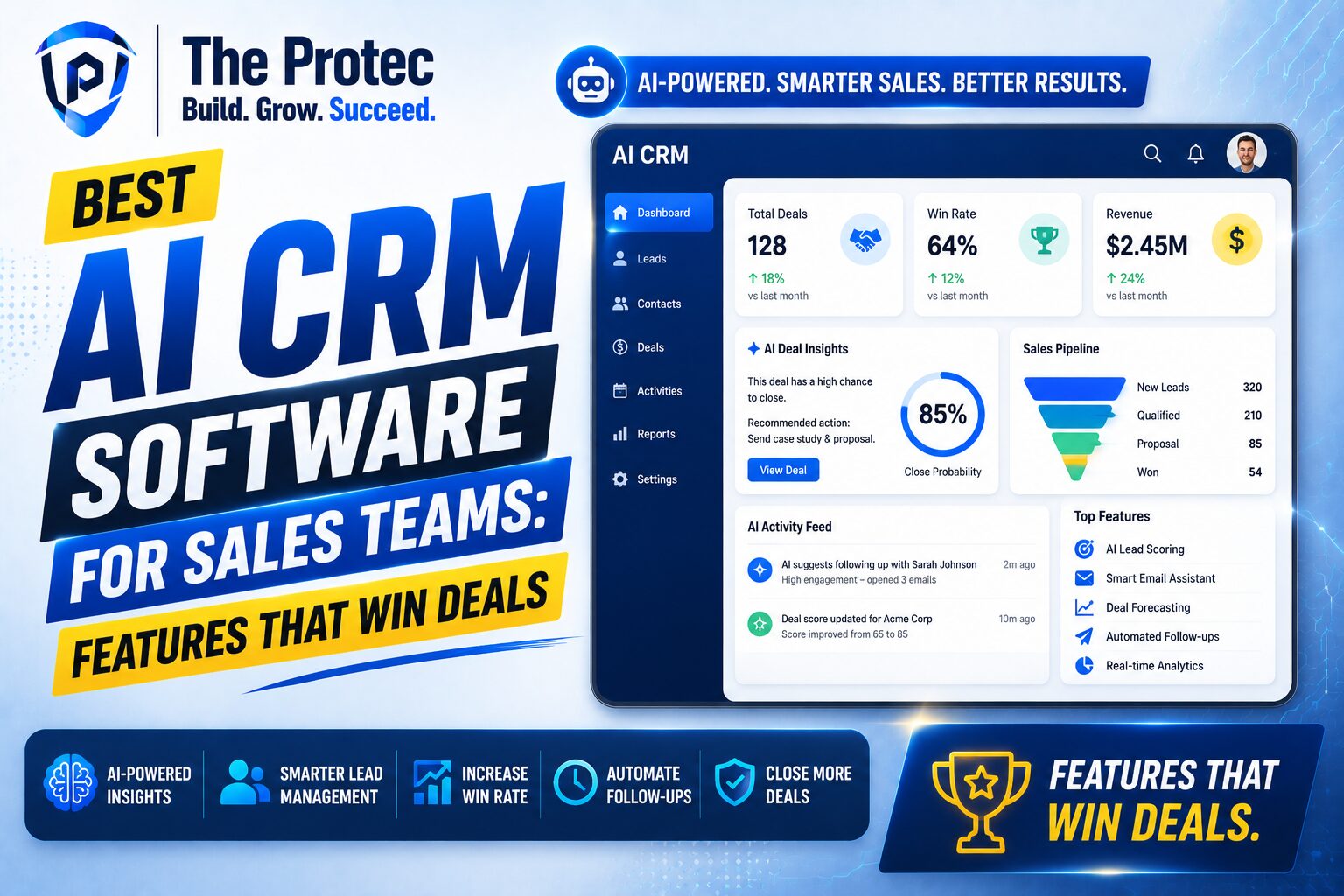
Sales teams are under more pressure than ever to move faster, prioritize better, and close with confidence. That is exactly why AI CRM software has become a core part of modern revenue operations. Instead of forcing reps to manually sort leads, chase updates, and guess which deals are likely to close, the best CRM with AI helps teams identify high-value opportunities, automate repetitive work, and make better decisions at every stage of the pipeline.
As of June 2026, AI in CRM is no longer a novelty. It is a competitive advantage. The strongest platforms now combine predictive analytics, natural language assistants, workflow automation, and deep personalization features that help sales teams act on the right data at the right time. For organizations comparing AI sales automation tools, the difference between a standard CRM and an AI-powered one can be measured in response times, pipeline velocity, and revenue accuracy.
This guide breaks down what makes the best AI-powered CRM software for sales teams, which features matter most, and how to evaluate solutions based on real sales outcomes rather than marketing claims.
What Makes the Best CRM with AI?
The best CRM with AI does more than store contacts and track deals. It actively helps sales professionals prioritize, predict, and personalize. That means the platform should reduce manual work while improving decision-making across the entire customer journey.
Core capabilities to look for
- Lead scoring: AI should rank leads based on fit, engagement, buying signals, and historical conversion patterns.
- Forecasting: Predictive models should estimate deal outcomes, revenue timing, and pipeline health with measurable accuracy.
- Email automation: AI should draft, personalize, schedule, and optimize sales emails at scale.
- Activity capture: The CRM should automatically log calls, meetings, messages, and notes without burdening reps.
- Next-best action recommendations: The system should suggest who to contact, when to follow up, and what action is most likely to move a deal forward.
- Conversation intelligence: Sales calls and email threads should be analyzed for objections, sentiment, intent, and risk signals.
These features are now expected in top-tier AI CRM software. If a platform still relies heavily on manual data entry or static dashboards, it may not be the right fit for a fast-moving sales organization.
AI Lead Scoring: Prioritize the Right Opportunities
Lead scoring is one of the most valuable uses of AI sales automation because it removes guesswork from prospect prioritization. Traditional scoring models often rely on simplistic rules such as job title, company size, or website visits. AI-based scoring goes much deeper by learning from historical wins, losses, and engagement behavior.
A strong AI CRM software platform can analyze hundreds of signals, including email engagement, form submissions, website behavior, content consumption, response timing, and product usage. It then compares those signals with past conversions to determine which leads are most likely to become customers.
This matters because sales reps can waste hours on leads that look good on paper but have little intent to buy. AI lead scoring helps teams focus on prospects that are truly ready for outreach. It also improves handoffs between marketing and sales by clarifying which leads deserve immediate attention and which need nurturing.
What good AI lead scoring should deliver
- Real-time score updates as new engagement data comes in
- Separate scores for fit, intent, and engagement
- Clear explanations for why a lead received a high or low score
- Automatic alerts when a lead becomes sales-ready
- Continuous learning based on closed-won and closed-lost outcomes
Vendors that hide their scoring logic completely may create trust issues. The best CRM with AI should be transparent enough that managers and reps can understand why a lead is ranked highly. Explainability is especially important when teams depend on AI to guide daily prospecting decisions.
AI Forecasting: Predict Revenue with More Confidence
Forecasting is where many sales teams struggle most. Even experienced managers can miss pipeline slippage, stage inflation, or hidden risk inside seemingly healthy deals. AI forecasting addresses these problems by combining historical data, rep behavior, deal progression patterns, and buyer signals into a more accurate prediction model.
Modern AI CRM software can forecast at multiple levels: by rep, team, region, product line, and customer segment. It can flag deals that have stalled, identify opportunities likely to close late, and show which parts of the pipeline are underperforming. This gives sales leaders a more realistic view of future revenue and helps them intervene early when targets are at risk.
Unlike static spreadsheets, AI forecasting updates continuously. If a key decision-maker goes dark, a champion leaves the company, or engagement suddenly drops, the system can adjust the probability of close. That makes forecasting more dynamic and useful for weekly pipeline reviews, board reporting, and resource planning.
Forecasting features worth demanding
- Predictive close probability based on real behavioral data
- Deal risk alerts with specific reasons attached
- Pipeline trend analysis over time
- Scenario planning for optimistic, realistic, and conservative outcomes
- Forecast roll-ups that reflect both rep input and AI confidence
For organizations with complex sales cycles, AI forecasting can significantly improve visibility. It helps teams spend less time debating numbers and more time working the deals that matter most.
Email Automation: Personalize Outreach Without Slowing Down
Email remains one of the most important sales channels, but it also consumes a huge amount of time. Reps must research accounts, tailor messaging, follow up at the right moment, and keep sequences consistent. AI sales automation changes that workflow by making email more efficient and more relevant.
The best AI-powered CRM software can generate draft emails, recommend subject lines, personalize messaging based on prospect behavior, and determine the best send time. Some systems also summarize prior interactions so reps can quickly pick up a conversation without rereading a long thread. That reduces friction and improves consistency across the team.
AI email automation is especially useful for outbound prospecting, follow-up sequences, meeting recaps, and re-engagement campaigns. Instead of sending identical templates to every contact, the CRM can adjust tone, content, and timing based on persona, industry, funnel stage, or prior engagement.
Where AI email automation helps most
- First-touch outreach with personalized context
- Follow-up emails after demos or discovery calls
- Re-engagement campaigns for cold or inactive leads
- Sequence optimization based on open and reply behavior
- Meeting recap and next-step emails generated from call notes
Good automation should still leave room for human judgment. The best CRM with AI supports reps, but does not make them sound robotic. The goal is to scale personalization, not replace it with generic text.
Other AI CRM Features That Sales Teams Should Value
Although lead scoring, forecasting, and email automation are the headline features, the strongest AI CRM software platforms offer much more. These capabilities often determine whether teams adopt the system consistently or abandon it after setup.
Conversation intelligence
AI can analyze calls and meetings to identify objections, competitor mentions, pricing concerns, and buying signals. This helps managers coach more effectively and gives reps feedback they can act on immediately. Conversation intelligence also makes it easier to standardize discovery quality across the team.
Automated data entry
One of the biggest drains on rep productivity is manual CRM updates. AI can capture notes, log activities, populate fields, and sync interaction history across channels. That means less admin work and cleaner data for forecasting and reporting.
Next-best action guidance
Rather than leaving reps to interpret dashboards, AI CRM software can recommend the next move. For example, it may suggest calling a prospect who just opened a proposal, notifying a manager about a stalled deal, or sending a follow-up after a webinar attendance spike.
Account insights
AI can summarize account changes such as leadership turnover, funding events, expansion signals, or competitive activity. These insights help reps stay relevant and tailor their outreach to what is happening inside the customer’s business.
Pipeline hygiene tools
CRM data quality remains a major issue for many teams. AI can flag missing fields, outdated stages, duplicate records, and stale opportunities so managers can keep the pipeline clean without relying on constant manual audits.
How to Evaluate AI CRM Software for Your Sales Team
Choosing the best CRM with AI is not about selecting the platform with the most features. It is about finding the one that fits your team’s process, data maturity, and sales motion. A solution that works well for high-volume inside sales may not be ideal for enterprise account executives or hybrid revenue teams.
Start with your sales workflow
Map out the daily actions your reps and managers perform most often. If they spend too much time qualifying leads, prioritize AI lead scoring. If forecasting is your biggest pain point, focus on predictive analytics. If reps struggle with follow-up consistency, evaluate email automation and sequence intelligence first.
Assess data quality and integrations
AI is only as good as the data it learns from. If your CRM data is incomplete or fragmented across tools, predictive features will underperform. Look for platforms that integrate well with marketing automation, customer support, calendar systems, email platforms, and call recording tools. That connected data layer is what makes AI sales automation truly useful.
Check for explainability and control
Sales leaders should be able to understand how AI arrived at a recommendation. Look for systems that explain scoring logic, forecast adjustments, and risk flags. Also make sure admins can tune rules, thresholds, and permissions without needing engineering support.
Evaluate ease of adoption
The most advanced AI CRM software is still a poor choice if reps refuse to use it. Prioritize usability, mobile access, workflow simplicity, and low-friction automation. The best platforms reduce work instead of adding more steps.
Consider scalability and governance
As AI adoption grows, governance matters more. You need clear permission settings, audit trails, secure data handling, and compliance support. For teams operating in regulated industries or handling sensitive account data, these capabilities are not optional.
Best Use Cases for AI Sales Automation
AI sales automation delivers the most value when it solves specific operational problems. Here are some of the most common use cases where sales teams see a real return:
- Outbound prospecting: Score leads, personalize outreach, and automate sequence follow-up.
- Inbound qualification: Route and prioritize leads based on engagement and intent.
- Pipeline management: Detect stalled deals and recommend actions to move them forward.
- Forecast review: Improve accuracy with predictive close data and risk detection.
- Rep coaching: Use call analysis and deal patterns to improve performance.
- Account expansion: Identify upsell and cross-sell opportunities using AI-driven account signals.
When these workflows are handled well, sales teams spend more time selling and less time managing admin tasks. That is the promise of a truly effective AI CRM software platform.
Common Mistakes When Choosing the Best CRM with AI
Many teams get excited about AI features but make avoidable mistakes during selection. One common issue is buying a platform because of flashy demos rather than real workflow fit. Another is underestimating the importance of data quality. If your CRM has inconsistent records, your AI outputs will be unreliable.
Teams also sometimes assume more automation is always better. In practice, too much automation can reduce personalization and frustrate reps. AI should assist humans, not create more noise. A well-designed system balances automation with control so users can trust the output and override it when needed.
Finally, some companies fail to measure adoption. If reps are not using lead scores, forecast insights, or email automation features, the platform will not deliver value. Success depends on training, change management, and clear performance metrics.
External Resources Worth Reviewing
For deeper context on AI and CRM trends, these resources provide useful background:
FAQ: AI-Powered CRM Software for Sales Teams
What is AI CRM software?
AI CRM software is customer relationship management software that uses artificial intelligence to automate tasks, score leads, forecast revenue, analyze interactions, and recommend next actions for sales teams.
What features should I look for in the best CRM with AI?
The most important features are AI lead scoring, forecasting, email automation, activity capture, conversation intelligence, and next-best action recommendations. Strong integrations and explainability are also important.
How does AI sales automation improve productivity?
AI sales automation reduces repetitive work such as data entry, lead sorting, email drafting, and pipeline updates. That gives reps more time to focus on live selling and relationship building.
Can AI CRM software improve forecast accuracy?
Yes. Predictive forecasting can analyze historical results, deal behavior, and engagement signals to create more accurate revenue projections and identify risk earlier than manual forecasting methods.
Is AI CRM software suitable for small sales teams?
Absolutely. Smaller teams often benefit even more because AI can replace time-consuming manual work and help limited headcount focus on the best opportunities.
Final Thoughts
The best AI-powered CRM software for sales teams is not just a database with a few smart features. It is a revenue system that helps teams prioritize leads, forecast accurately, automate outreach, and act on timely insights. In a market where speed and precision matter, AI CRM software can be the difference between a crowded pipeline and a predictable sales engine.
If you are evaluating the best CRM with AI, focus on practical value: better lead scoring, stronger forecasting, more relevant email automation, and cleaner data across the board. The platforms that deliver those outcomes consistently are the ones most likely to improve sales performance long term.