




Carrying two iPhones usually means managing two wireless lines, two phone numbers, or a messy combination of call forwarding and app-based workarounds. Apple’s new iPhone Handoff feature in iOS 27 is designed to simplify that arrangement: a second iPhone can operate as a companion device while sharing the cellular identity of a primary iPhone.
For T-Mobile customers, that convenience reportedly comes with a $5 monthly charge. The headline may make the T-Mobile iPhone Handoff fee sound like a charge for an Apple software setting, but the service is more involved than ordinary device syncing. T-Mobile must recognize, authenticate, and route service to an additional iPhone without assigning it a conventional second phone number.
That creates a potentially valuable option for people who want two iPhones under one phone number—perhaps a large everyday model and a compact backup, or separate personal and travel devices. It also raises important questions about eSIM activation, data access, messaging, device compatibility, and whether the recurring fee is justified.
What Is the iOS 27 iPhone Handoff Feature?
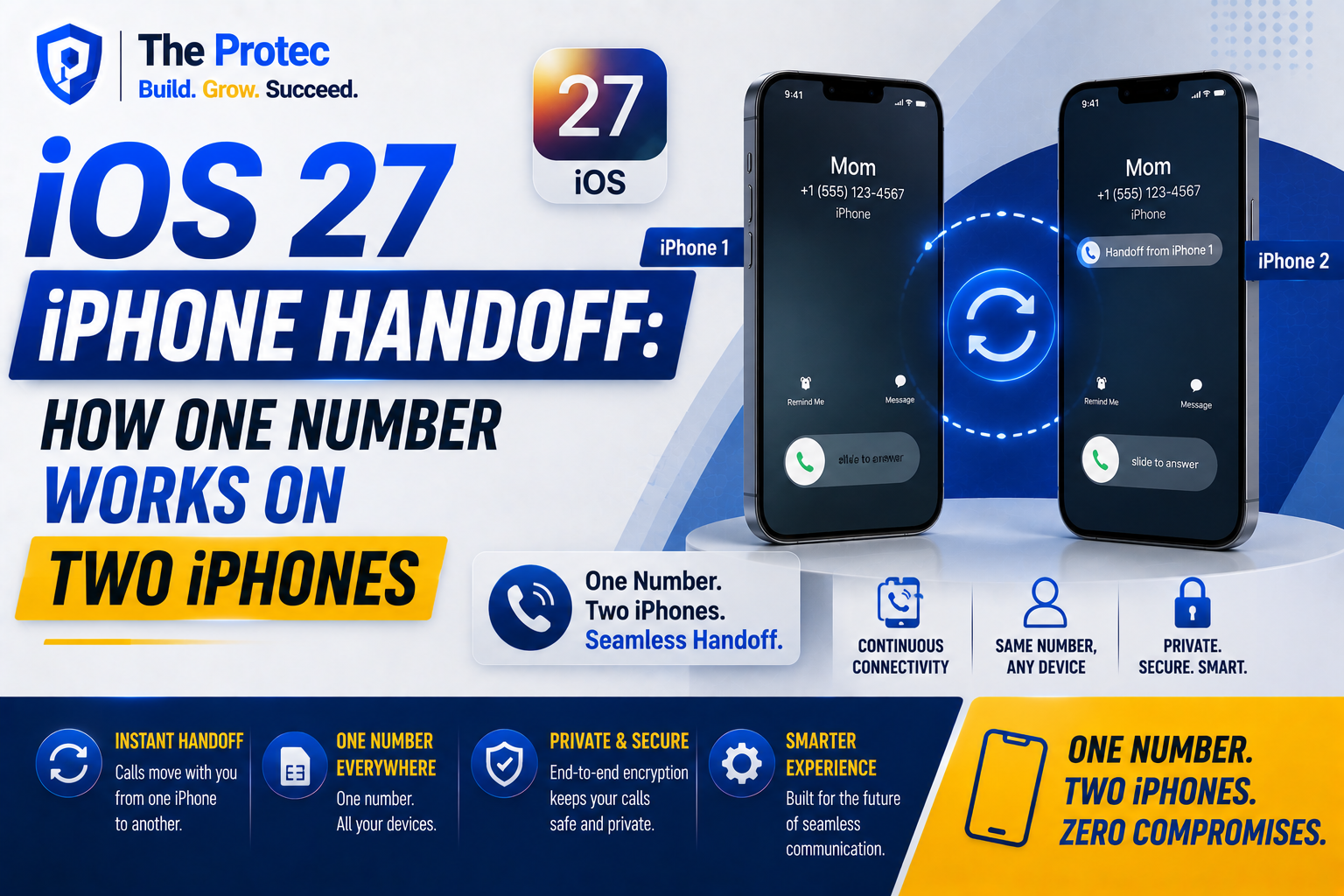
Apple iPhone Handoff allows an eligible second iPhone to be paired with a primary iPhone as a cellular companion. Instead of maintaining two unrelated lines, the user keeps one public phone number and extends that identity to the companion device through participating carriers.
The idea resembles cellular companion service for a smartwatch, but both endpoints are full iPhones. When the carrier provisions the arrangement correctly, incoming calls can reach both devices, while supported outgoing calls from the companion iPhone can display the primary number. The second phone can also receive an authorized cellular connection when it is away from the primary device, subject to the carrier’s plan terms.
This is different from Apple’s long-standing Handoff technology for moving an activity between a Mac, iPad, and iPhone. It is also more capable than using Wi-Fi Calling on an old phone signed into the same Apple Account. The iOS 27 iPhone Handoff implementation depends on network-level provisioning, not merely proximity, Bluetooth, or a shared Apple login.
It is best understood as a controlled extension of a mobile line rather than a literal duplicate SIM. The carrier knows that two separate devices are associated with the service and can apply security, network, billing, and emergency-service rules to each one.
How T-Mobile iPhone Handoff Works
The precise activation screens can vary by device and account, but the underlying process is expected to follow several key steps:
- Choose a primary iPhone: This device remains the anchor for the customer’s existing T-Mobile phone number and wireless plan.
- Pair a compatible companion: The second iPhone is linked through iOS 27 using the same authorized Apple Account and T-Mobile account credentials.
- Verify both devices: Apple and T-Mobile validate hardware identifiers, account ownership, security settings, and compatibility.
- Download an iPhone eSIM: T-Mobile sends a separate carrier profile to the companion device. It is linked to the primary service rather than functioning as an ordinary independent voice line.
- Enable shared-number routing: T-Mobile’s network determines how incoming calls, caller ID, cellular data, and supported messages behave across the two iPhones.
After setup, the companion should be able to perform core phone functions without remaining physically close to the primary iPhone. That distinction matters. A Bluetooth accessory depends on a nearby host, whereas a cellular iPhone companion device has its own authenticated connection to T-Mobile’s network.
The phrase “same phone number two iPhones” is convenient, but it does not mean every service will be perfectly mirrored. iMessage already synchronizes through an Apple Account, while carrier-based SMS and MMS depend on network implementation. Voicemail state, Wi-Fi Calling, international roaming, premium messaging, and emergency location may also have carrier-specific behavior.
Customers should therefore treat the primary iPhone as the account’s main device unless T-Mobile explicitly documents that a function is fully interchangeable. The companion is intended to extend the line, not necessarily replace the primary phone in every account-management scenario.
Why eSIM and Carrier Support Matter
An iPhone eSIM is central to the feature because T-Mobile needs a secure way to identify the second phone. Each device has unique hardware identifiers, and the carrier cannot safely activate two iPhones by copying the same physical SIM credentials. That would create security, fraud, and network-registration problems.
Instead, T-Mobile can issue a distinct eSIM profile associated with the customer’s main line and companion-service entitlement. The network recognizes the secondary hardware while preserving one customer-facing number. Apple provides the pairing and device-management experience, but T-Mobile controls cellular authentication and routing.
This division explains why installing iOS 27 alone is not enough. The carrier must support Apple’s framework, certify eligible models, integrate billing, and decide which network features are available. Customers can review Apple’s general eSIM guidance and T-Mobile’s device support resources, although final iPhone Handoff requirements may be published separately.
Carrier participation also means an unlocked iPhone is not automatically guaranteed to work. Its model, region, eSIM capability, account type, and T-Mobile certification can all affect activation. Business, prepaid, government, and legacy plans may have different eligibility rules.
What Does T-Mobile’s $5 Handoff Fee Cover?
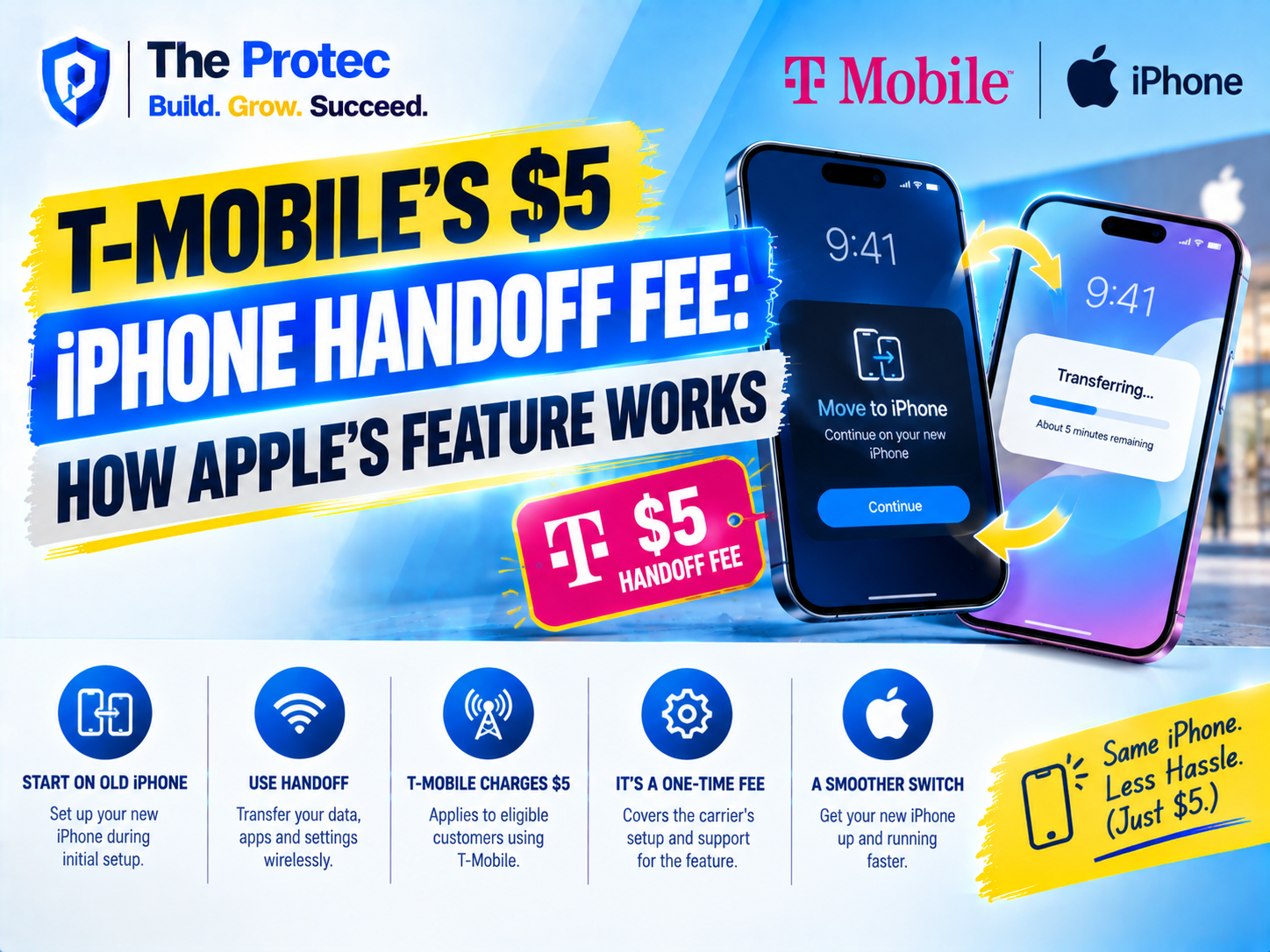
The reported T-Mobile iPhone Handoff $5 charge is expected to be a monthly companion-service fee, not a one-time payment to unlock an iOS feature. Apple supplies the operating-system capability, while T-Mobile provides ongoing access for the additional device.
That fee can cover several carrier functions:
- Provisioning and maintaining a second eSIM profile
- Authenticating another iPhone on the cellular network
- Routing calls through the shared phone number
- Managing caller ID and supported messaging behavior
- Providing a cellular data entitlement for the companion
- Handling fraud prevention, account security, emergency-service records, and technical support
The critical detail is how much data T-Mobile includes and whether restrictions apply. A $5 service with useful high-speed data would be significantly more attractive than one limited primarily to calling and messaging. Customers should also check for activation fees, taxes, autopay requirements, hotspot limitations, roaming exclusions, or reduced speeds after a usage threshold.
In other words, the T-Mobile Handoff fee pays for network participation. Apple is not simply charging users to pair two devices, and the second iPhone is not receiving a full conventional line for $5.
Where iPhone Duo Fits Into the Experience
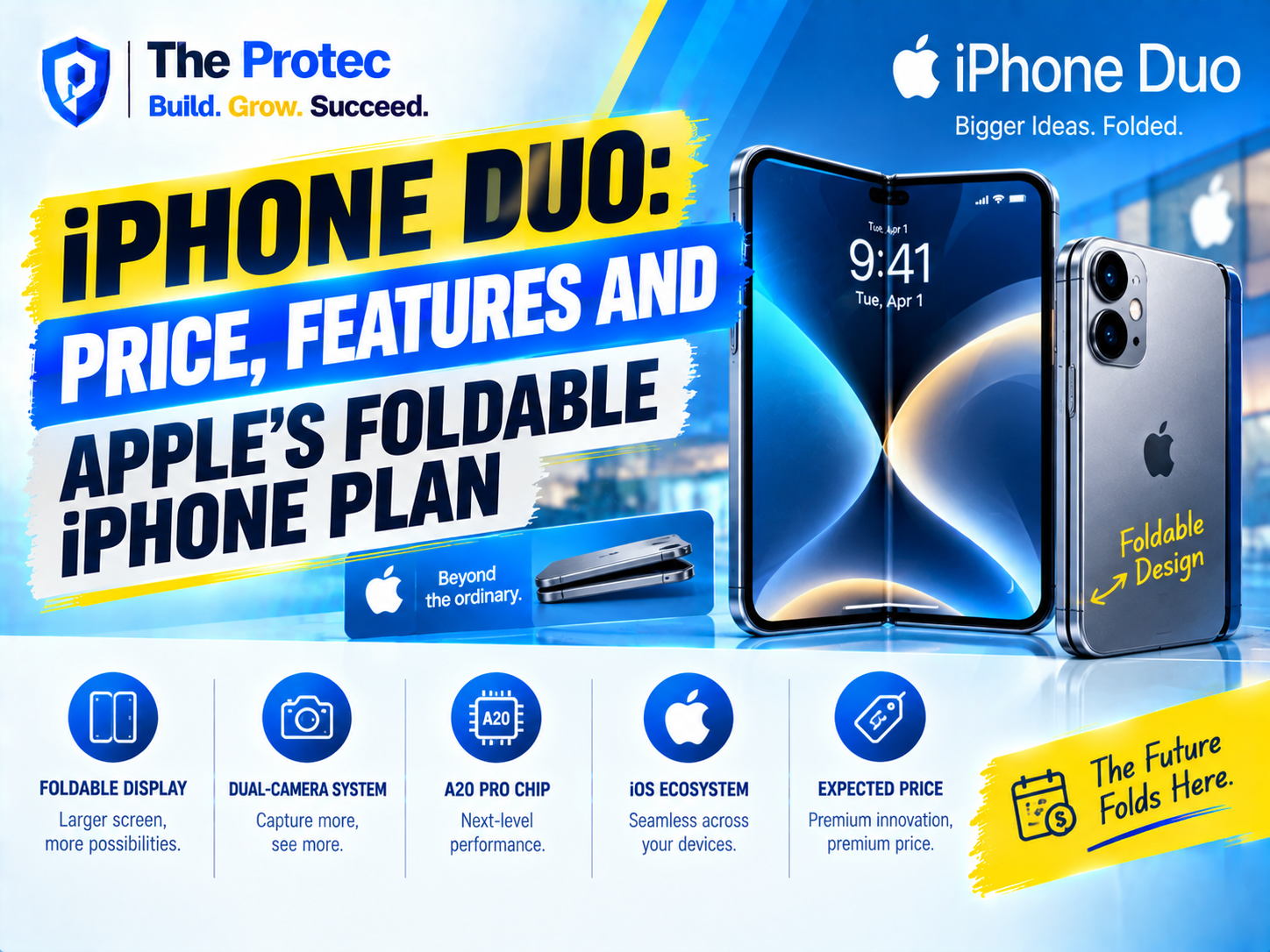
“iPhone Duo” is the name associated with the paired-device experience in reporting around iPhone Handoff. It describes the relationship between the primary iPhone and its companion rather than necessarily identifying a separate iPhone model.
Within that arrangement, iOS can help users identify which phone is primary, manage the connected companion, review cellular status, and remove a lost or retired device. Apple’s role is to make two complex network registrations feel like one coherent setup. T-Mobile’s role is to keep both devices authorized under the shared cellular identity.
The Duo concept may also help prevent confusion with traditional Dual SIM. Dual SIM puts two lines on one iPhone; iPhone Duo effectively extends one line across two iPhones. Those are opposite configurations and serve different needs.
Which iPhone Models May Support Handoff?
The iPhone 18 family is expected to be the showcase hardware for iOS 27 iPhone Handoff, particularly because Apple can optimize new devices around current eSIM and security requirements. However, support should not be assumed to be exclusive to iPhone 18.
Older models may qualify if they can run the required iOS 27 release, support the necessary eSIM configuration, and pass carrier certification. Recent U.S. iPhones are strong technical candidates because Apple has already moved its domestic lineup toward eSIM-only activation. Even so, software eligibility does not guarantee T-Mobile Handoff eligibility.
Apple and T-Mobile may require a newer device as the primary while allowing a broader set of companion models, or they may impose the same requirements on both. Regional variants could also differ. Before buying a second phone specifically for this feature, customers should confirm the exact model number—not just the marketing name—against T-Mobile’s compatibility list.
Is Paying $5 for Two iPhones on One Number Worth It?
For the right user, the T-Mobile $5 iPhone feature could be an inexpensive alternative to maintaining another full voice line. It is especially compelling when both devices need independent cellular access but a second public number would create unnecessary complexity.
It may be worthwhile if you:
- Want a smaller backup iPhone without changing how contacts reach you
- Use separate workday and weekend devices but retain one personal number
- Carry a rugged or older companion phone during outdoor activities
- Frequently test, review, or develop for multiple iPhones
- Want a travel device that can remain cellular-capable when separated from your main phone
It may not be worthwhile if you:
- Only use the second iPhone at home on Wi-Fi
- Need truly separate business and personal identities
- Require independent voicemail, billing, or account ownership
- Expect unlimited high-speed data without verifying the companion plan
- Rarely carry the two devices separately
The annual iPhone Handoff cost would be roughly $60 before any applicable taxes or additional charges. That is modest compared with many standalone lines, but it still adds up if the companion spends most of its time in a drawer. Existing Apple features—including iMessage syncing, FaceTime, and calls on nearby devices—may already be sufficient for Wi-Fi-based use.
Security should factor into the decision as well. With two phones able to access one cellular identity, losing the companion could expose calls or messages until it is suspended. Users should enable a strong passcode, Find My, Stolen Device Protection, and Apple Account two-factor authentication on both iPhones.
What to Check Before Activating iPhone Handoff T-Mobile Service
Before agreeing to the monthly charge, confirm that both iPhones are eligible, the account supports companion activation, and the quoted price applies to your specific plan. Ask how much cellular data is included, whether both devices can place and receive calls independently, and how SMS, voicemail, hotspot use, roaming, and emergency calling work.
It is also wise to ask what happens when the primary phone is turned off, lost, replaced, or transferred to another carrier. A genuine network-based companion service should offer more independence than simple call relaying, but the carrier’s final terms determine its practical value.
Frequently Asked Questions
Can two iPhones really use the same T-Mobile phone number?
Yes, iPhone Handoff is designed to associate a primary iPhone and a companion iPhone with the same customer-facing number. T-Mobile still provisions each device separately through eSIM, so the network can identify and secure both phones. Some services may behave differently on the companion.
Is T-Mobile’s $5 charge an Apple subscription?
No. The reported $5 monthly fee is a T-Mobile companion-service charge. Apple provides the iOS 27 feature and pairing interface, while T-Mobile supplies cellular provisioning, network routing, and ongoing service for the second iPhone.
Will iPhone Handoff work when the primary iPhone is not nearby?
That is the major advantage expected from carrier-supported Handoff. Because the companion receives its own authorized eSIM connection, it should support eligible functions over T-Mobile’s network without staying near the primary phone. Exact calling, messaging, data, and roaming capabilities depend on T-Mobile’s final implementation.
Does iPhone Handoff give the second phone unlimited data?
Not necessarily. Shared-number access and data allowances are separate plan details. T-Mobile may include a defined amount of high-speed data, impose speed limits, or restrict hotspot and international use. Customers should verify the complete terms before activation.
Is iPhone Duo the same as Dual SIM?
No. Dual SIM lets one iPhone use two cellular lines. iPhone Duo refers to pairing two iPhones around one primary cellular identity. One consolidates multiple numbers on a device; the other extends one number to an additional device.
The Bottom Line
T-Mobile iPhone Handoff could turn a formerly awkward two-phone setup into a straightforward companion arrangement. Apple’s iOS 27 software handles pairing and device management, eSIM securely identifies the second phone, and T-Mobile provides the network service required to keep one number active across both devices.
The reported $5 monthly price is low enough to make the feature attractive, especially for users who already own a second compatible iPhone. Its real value, however, depends on data allowances, messaging behavior, roaming support, model eligibility, and how independently the companion can operate. Check T-Mobile’s final terms before purchasing an iPhone 18—or any second iPhone—solely for Handoff.