








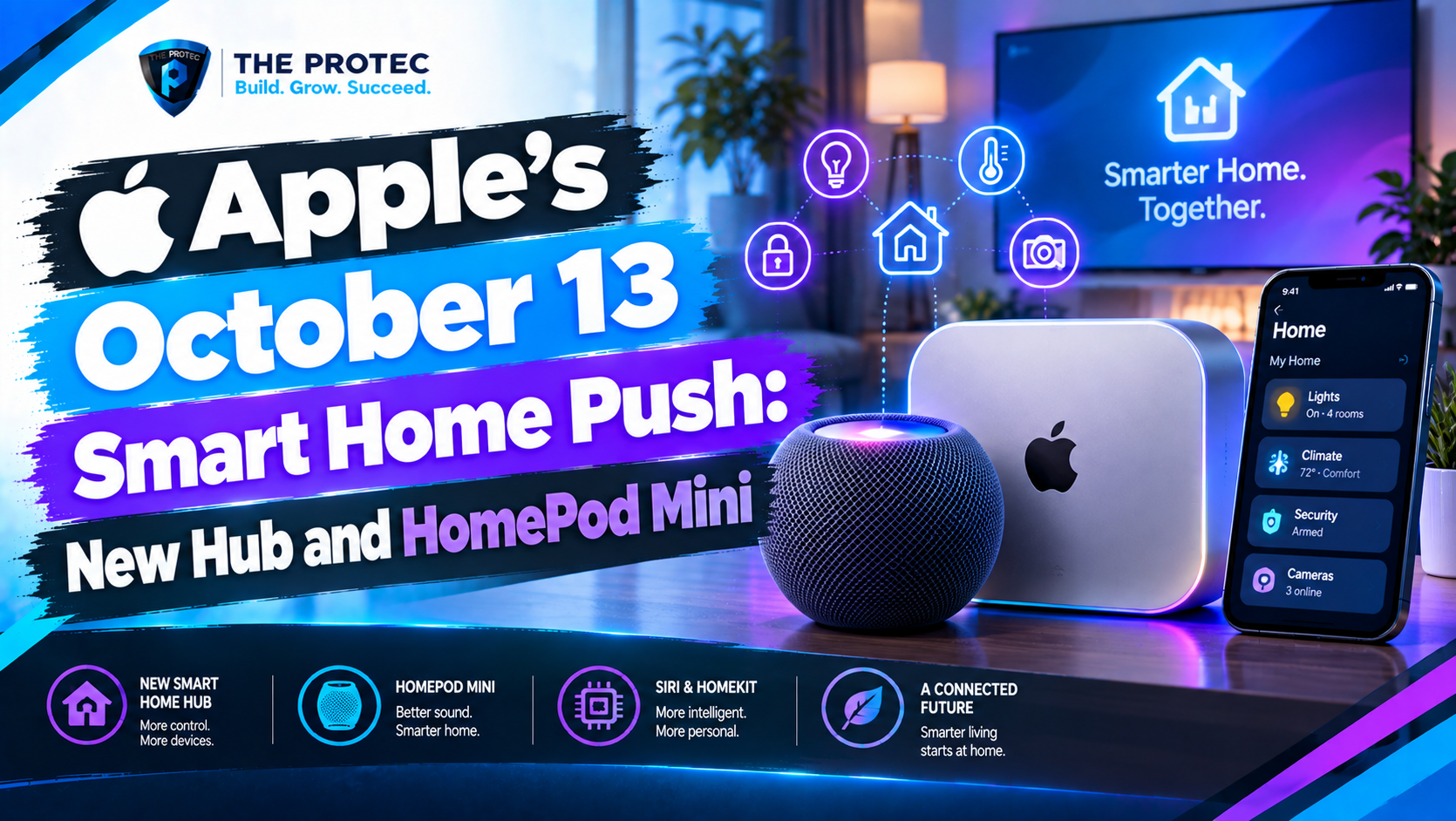
Apple may be preparing one of its most consequential smart-home moves yet. Industry and supply-chain reports point to an Apple smart home launch on October 13, centered on a new 6-inch home hub and an updated Apple HomePod mini. If the reporting proves accurate, the two products could give Apple’s connected-home platform something it has long lacked: a dedicated visual command center supported by a more affordable smart speaker.
The timing is significant. Amazon and Google have spent years placing smart displays, speakers and ambient assistants throughout the home, while Apple has relied primarily on the Home app, Apple TV and HomePod line. A purpose-built Apple smart home display would create a more visible interface for controlling accessories, viewing cameras, speaking with Siri and managing media without reaching for an iPhone or iPad.
However, the distinction between established facts and speculation matters. As of late September, Apple has not publicly confirmed an October 13 event, a 6-inch smart display or the specifications of a new HomePod mini. The date, hardware details and possible features remain reported or rumored. What Apple has confirmed is its continued investment in the Home platform, Siri, Apple Intelligence, Matter compatibility and interoperability across its devices.
What Is Reported for Apple’s October 13 Smart-Home Push?
Current reporting describes two connected Apple home products: a compact hub with an approximately 6-inch screen and a refreshed HomePod mini. The rumored Apple 6-inch smart home hub is expected to serve as a centralized interface rather than simply another tablet. Reports have variously suggested home controls, widgets, video communication, media functions and Siri access, but Apple has not announced a final feature list.
The updated Apple HomePod mini is expected to preserve the small speaker’s familiar role while improving some combination of performance, connectivity and audio. Exact changes are uncertain. Claims about processors, wireless chips, colors or sound upgrades should therefore be treated as possibilities rather than confirmed product specifications.
October 13 itself is also a reported launch date, not an official commitment. Apple could announce products through a streamed event, newsroom release or staggered rollout, and plans can change before unannounced hardware reaches consumers. Until Apple publishes invitations, product pages or a press release, searches for “Apple smart home October 13” should be understood as referring to an anticipated event.
How an Apple 6-Inch Smart Home Hub Could Work
The clearest purpose for an Apple smart home hub would be to make home automation accessible to everyone in a household. Today, many Apple users control devices through the Apple Home app on an iPhone, iPad, Mac, Apple Watch or Apple TV. That approach is powerful, but each person generally needs an appropriate device, account access and familiarity with the interface.
A shared display could remain in a kitchen, entryway or living room, providing an immediate view of connected lights, locks, thermostats, blinds, sensors and cameras. Instead of opening an app and navigating through rooms, a user could tap a persistent control or ask Siri to perform an action. At-a-glance panels might show temperature, security status, upcoming events, timers or currently playing media, although the final interface is unknown.
The hub could also become a natural surface for viewing a doorbell feed or checking a camera notification. Apple already supports camera viewing and Home notifications on existing devices, so a stationary screen would extend established capabilities into a shared location. Whether the rumored Apple smart home device includes its own camera, advanced sensors or video-calling functions has not been confirmed.
Importantly, “hub” can have two meanings. HomePod and Apple TV models can already act as home hubs in Apple’s architecture, coordinating automations and remote accessory access. The reported device would add a visible user interface. Its value would come from combining infrastructure with direct control rather than merely replacing the background hub functions Apple already offers.
Apple Smart Display Versus a Traditional Smart Speaker
A dedicated Apple smart display would differ from HomePod because it could communicate visually as well as audibly. A HomePod is designed around music, voice requests and unobtrusive home control. Users can ask Siri to turn off a lamp, set a scene or adjust the temperature, but they cannot browse a room dashboard or inspect multiple camera feeds on the speaker itself.
A screen changes the interaction model. It can present controls when voice commands would be inconvenient, confirm which accessory is responding and expose functions that are difficult to express conversationally. It could also make the Apple Home app more approachable for guests, children or family members who do not carry an Apple device.
The rumored 6-inch size suggests a compact appliance rather than a full-size iPad replacement. Apple would need to optimize information for quick interactions and viewing from several feet away. That means large controls, glanceable status cards and contextual suggestions would likely matter more than traditional app multitasking. These are logical design expectations, not announced features.
Apple must also explain why buyers need another screen. The strongest answer would be that an Apple home hub is communal, always available and purpose-built. An iPad remains personal and portable; a smart display can become part of the room.
Where the Updated Apple HomePod Mini Fits
The Apple HomePod mini remains the company’s most accessible dedicated home product. It provides compact audio, Siri access, intercom features and integration with Apple Music and the Home app. Compatible HomePod models can also support home-hub duties and help connect supported accessories, including Thread-based products.
An Apple HomePod Mini update would complement a display rather than compete with it. The display could occupy a central location, while several mini speakers extend voice control, audio and intercom access into bedrooms, offices and hallways. This hub-and-satellite approach would allow Apple to build a broader Apple smart home ecosystem without requiring a screen in every room.
Reports commonly associated with “Apple HomePod Mini 2026” suggest internal hardware and connectivity improvements may be part of the refresh. Potential benefits could include faster Siri responses, more reliable communication with connected accessories or improved audio processing. None of those upgrades should be considered final until Apple announces the product.
The full-size HomePod would continue to appeal to listeners who prioritize richer room-filling sound. The HomePod mini would remain the lower-cost way to add Siri and multiroom audio, while the new display would provide visual controls. Together, the three device types could form a clearer product family: premium speaker, compact speaker and interactive home interface.
Why Matter and Thread Are Critical to Apple Home Automation
Hardware alone will not determine whether Apple’s smart-home expansion succeeds. Consumers need compatible connected devices that are straightforward to install and dependable in daily use. Apple supports Matter, the cross-platform smart-home standard developed by the Connectivity Standards Alliance, alongside established Home technologies.
Matter is intended to reduce ecosystem fragmentation by allowing certified accessories to work across major platforms. Thread, meanwhile, provides a low-power mesh network suited to devices such as sensors, plugs and lights. Readers can learn more from the Connectivity Standards Alliance’s Matter overview.
A new hub could make these technologies less visible to users—which is a good thing. Most people do not want to troubleshoot protocols; they want a light to respond quickly and an automation to run consistently. Apple’s advantage could come from simplifying setup, permissions, remote access and control across Apple connected home devices.
The company must still navigate differences among accessory categories, Matter versions and manufacturer implementations. A Matter logo does not guarantee that every platform exposes every possible feature. Buyers should verify specific compatibility in Apple’s Home ecosystem rather than assuming universal feature parity.
Siri and Apple Intelligence Could Define the Experience
Siri is central to Apple’s smart home strategy because voice remains the fastest interface when someone is cooking, carrying groceries or turning off lights from bed. Yet smart-home assistants must understand natural requests, identify rooms and devices correctly, and recover gracefully when instructions are ambiguous.
Apple Intelligence could eventually make those interactions more contextual and conversational. For example, an assistant might better understand a request involving several accessories or present a relevant control based on routines. Apple has publicly made Apple Intelligence and a more capable Siri important parts of its broader software direction, but it has not confirmed which intelligence features would run on the reported hub at launch.
Privacy will be equally important. Apple has historically emphasized on-device processing, encryption and carefully scoped access to personal data. A shared home device raises additional questions about voice recognition, personal results, camera access and what information appears when several household members are present. Apple will need clear controls that distinguish personal requests from shared home functions.
The most useful Apple AI smart home experience would not be an assistant that constantly demands attention. It would quietly reduce friction: surfacing the right control, executing a routine reliably and explaining what happened when an automation fails.
Apple’s Broader Connected-Home Strategy
The reported products would help Apple expand beyond phones, tablets and computers into persistent, room-based computing. Apple already has many of the required pieces: personal devices, services, silicon, operating systems, audio products and a home-automation platform. The missing element has been a dedicated shared screen that ties those assets together.
This also explains why the rumored hub matters more than its display size. It could become a physical anchor for services and devices people already use, including music, calendars, reminders, cameras and household automations. Apple’s official Home app overview shows how the company currently organizes accessories, scenes and camera access across its ecosystem.
Success is not guaranteed. Apple will need competitive pricing, reliable Siri performance and broad accessory support. It must also avoid making basic home controls dependent on expensive subscriptions or a complicated collection of Apple products. The best Apple home products will succeed when they feel like appliances: predictable, durable and understandable to every household member.
What Prospective Buyers Should Watch on October 13
- Official status: Look for an Apple announcement confirming the event, product names and release schedule.
- Home functions: Determine whether the display acts as a full home hub, a control interface or both.
- Siri capabilities: Check which new assistant features are available immediately and which are promised for later.
- Compatibility: Review Matter, Thread, Wi-Fi and Bluetooth support, plus requirements for existing Apple devices.
- Privacy controls: Examine how personal information, cameras, microphones and household profiles are managed.
- Pricing: Compare the hub with an iPad, HomePod mini and competing smart displays rather than considering screen size alone.
If Apple confirms the reported Apple smart home hub release and HomePod mini refresh, October 13 could mark the beginning of a more coherent home lineup. Until then, the 6-inch display, launch timing and detailed capabilities remain unannounced.
Frequently Asked Questions
Has Apple confirmed an October 13 smart-home event?
No. October 13 has been reported as the expected date for Apple’s smart-home push, but Apple has not officially confirmed the event or the rumored products as of late September. Plans involving unannounced hardware can change.
What is the rumored Apple smart home hub?
Reports describe a compact device with an approximately 6-inch display intended for home controls, Siri interactions, media and connected-device management. Apple has not confirmed its name, design, price or final capabilities.
Would the new hub replace HomePod or HomePod mini?
Probably not. A display and smart speakers serve complementary purposes. The hub would offer visual controls, while HomePod models would remain focused on audio, voice access and room-by-room coverage.
Will the reported hub support Apple Intelligence?
Apple Intelligence integration is plausible given Apple’s broader direction, but support on this specific device has not been announced. Buyers should wait for Apple to confirm hardware requirements and launch-day features.
Should existing Apple Home users wait before buying a HomePod mini?
Anyone who does not need a speaker immediately may benefit from waiting for official details about the reported HomePod Mini update. Existing models remain useful, but a refresh could affect features, pricing and long-term value.