









Contents
- 1 Why WebAssembly Is Becoming the Future of High-Performance Web Apps
- 2 What WebAssembly Actually Is
- 3 Why WebAssembly Matters for Web Performance Optimization
- 4 How WebAssembly Is Changing Browser-Based Applications
- 5 Where WebAssembly Is a Better Fit Than JavaScript
- 6 The Modern WASM Development Stack Is Maturing Fast
- 7 WebAssembly and the Rise of Browser-Based Compute
- 8 How WebAssembly Supports AI and Machine Learning in the Browser
- 9 Common Challenges in WebAssembly Adoption
- 10 Best Practices for Using WebAssembly in High-Performance Web Apps
- 11 The Strategic Advantage for Product Teams
- 12 External Resources Worth Reading
- 13 FAQ
- 14 Conclusion
Why WebAssembly Is Becoming the Future of High-Performance Web Apps
Web apps have come a long way from simple forms and static pages. Today, users expect browser-based tools to feel instant, responsive, and capable of handling workloads that once required desktop software. That expectation has pushed teams to rethink web performance optimization at every level, from rendering and networking to computation and memory use. One technology has emerged as a major force in that shift: WebAssembly.
WebAssembly, often shortened to WASM, is changing what browsers can do. It gives developers a way to run compiled code in the browser at near-native speed, opening the door to high-performance experiences that were previously difficult or impractical on the web. From video editing and CAD tools to scientific visualization, gaming, financial dashboards, and AI inference, WASM development is becoming a strategic choice for products that need speed without sacrificing portability.
As browser engines, tooling, and the web platform itself continue to mature, WebAssembly is moving from a specialized optimization layer into a core part of modern application architecture. Understanding why this matters helps teams make better technology choices, especially when performance is a business requirement rather than a nice-to-have.
What WebAssembly Actually Is
WebAssembly is a low-level binary instruction format designed to run efficiently in modern browsers. Instead of sending JavaScript source code for the browser to parse and execute, developers can compile code from languages like C, C++, Rust, Go, and others into a compact WASM module. The browser can then load and execute that module quickly.
The key idea is not to replace JavaScript, but to complement it. JavaScript remains ideal for UI logic, DOM interaction, and rapid application development. WebAssembly shines when the application needs compute-heavy workloads, predictable performance, or reuse of existing native codebases.
Because WebAssembly is designed around a sandboxed execution model, it also fits naturally into the browser security model. That makes it especially attractive for teams that need performance improvements without introducing the operational complexity of plugins or native client installs.
Why WebAssembly Matters for Web Performance Optimization
Performance on the web is no longer only about smaller bundles and faster page loads. Modern apps often do much more work after the initial render: image processing, cryptography, real-time collaboration, 3D rendering, ML inference, and data analysis. These tasks can overwhelm JavaScript when they are large or time-sensitive.
WebAssembly helps with web performance optimization in several important ways:
- Faster execution for compute-heavy tasks: WASM is optimized for performance-critical code paths and can outperform equivalent JavaScript in many workloads.
- Smaller, efficient binaries: Compiled WASM modules are often compact and quick to transfer and instantiate.
- Predictable runtime behavior: Low-level code compiled to WASM can offer more consistent performance for tight loops and numerical operations.
- Better reuse of existing code: Teams can bring proven native libraries into the browser without rewriting everything in JavaScript.
This matters because many user-facing performance problems are not caused by network latency alone. They are caused by expensive client-side computation. WebAssembly shifts part of that load into a runtime built for speed.
How WebAssembly Is Changing Browser-Based Applications
The browser used to be considered a lightweight execution environment. That assumption no longer holds. With WebAssembly, browser-based applications can now handle tasks that once belonged to native desktop software. This is changing product expectations across industries.
1. Rich creative tools are moving to the browser
Design and media applications increasingly run in the browser because users want access anywhere, seamless collaboration, and lower installation friction. WebAssembly makes it possible to build high-performance editors for images, audio, and video that respond quickly even when the workload is intense.
Instead of depending entirely on JavaScript for pixel manipulation or codec processing, a browser app can use WASM modules to accelerate specialized operations. That leads to a smoother editing experience and reduces the gap between web apps and installed desktop software.
2. Data-heavy dashboards feel more interactive
Business intelligence, financial modeling, and analytics platforms often process large datasets in real time. If every calculation is handled in JavaScript, the UI can become sluggish as data volume rises. WebAssembly allows developers to offload expensive computations such as aggregations, transforms, and simulations to faster compiled code.
The result is a dashboard that stays responsive even while processing large amounts of information. This is one reason WASM development has gained momentum in enterprise software and data products.
3. Complex web experiences become more portable
One of the biggest advantages of WebAssembly is portability. Code compiled to WASM can run across modern browsers and platforms with minimal friction. That makes it an appealing path for organizations that already have mature native code and want to extend it to the browser.
Instead of creating separate implementations for desktop and web, teams can reuse core logic and maintain a single source of truth for performance-sensitive modules. That reduces duplication and speeds up delivery.
4. Web apps can take on more of the work locally
As privacy expectations rise and network costs remain unpredictable, there is a strong push toward doing more on the client side. WebAssembly supports this trend by making local execution practical for workloads that would otherwise require a server round trip.
This can improve perceived speed, reduce backend pressure, and support offline or low-connectivity use cases. In the right architecture, the browser becomes a capable compute environment rather than a thin rendering layer.
Where WebAssembly Is a Better Fit Than JavaScript
JavaScript remains essential to the web, but not every task is best handled by it. WebAssembly is a better fit when the application has one or more of the following characteristics:
- Heavy numerical computation
- Large existing codebases written in C, C++, or Rust
- Media processing, compression, or encryption
- 3D graphics, simulation, or physics
- Scientific or engineering workloads
- Latency-sensitive browser interactions
For example, cryptographic operations, image filters, and audio codecs can benefit significantly from WASM development because they involve tight, repetitive loops and low-level memory patterns. These are the kinds of tasks that compiled languages handle well.
That said, WebAssembly is not a universal replacement. DOM manipulation, routing, application state, and event handling still belong in JavaScript or TypeScript. The strongest architectures use each technology where it performs best.
The Modern WASM Development Stack Is Maturing Fast
WebAssembly used to be seen as a specialized tool for advanced teams. That perception is changing because the ecosystem has matured significantly. Tooling is better, language support is broader, and browser integration continues to improve.
Several developments are shaping the current WASM development landscape:
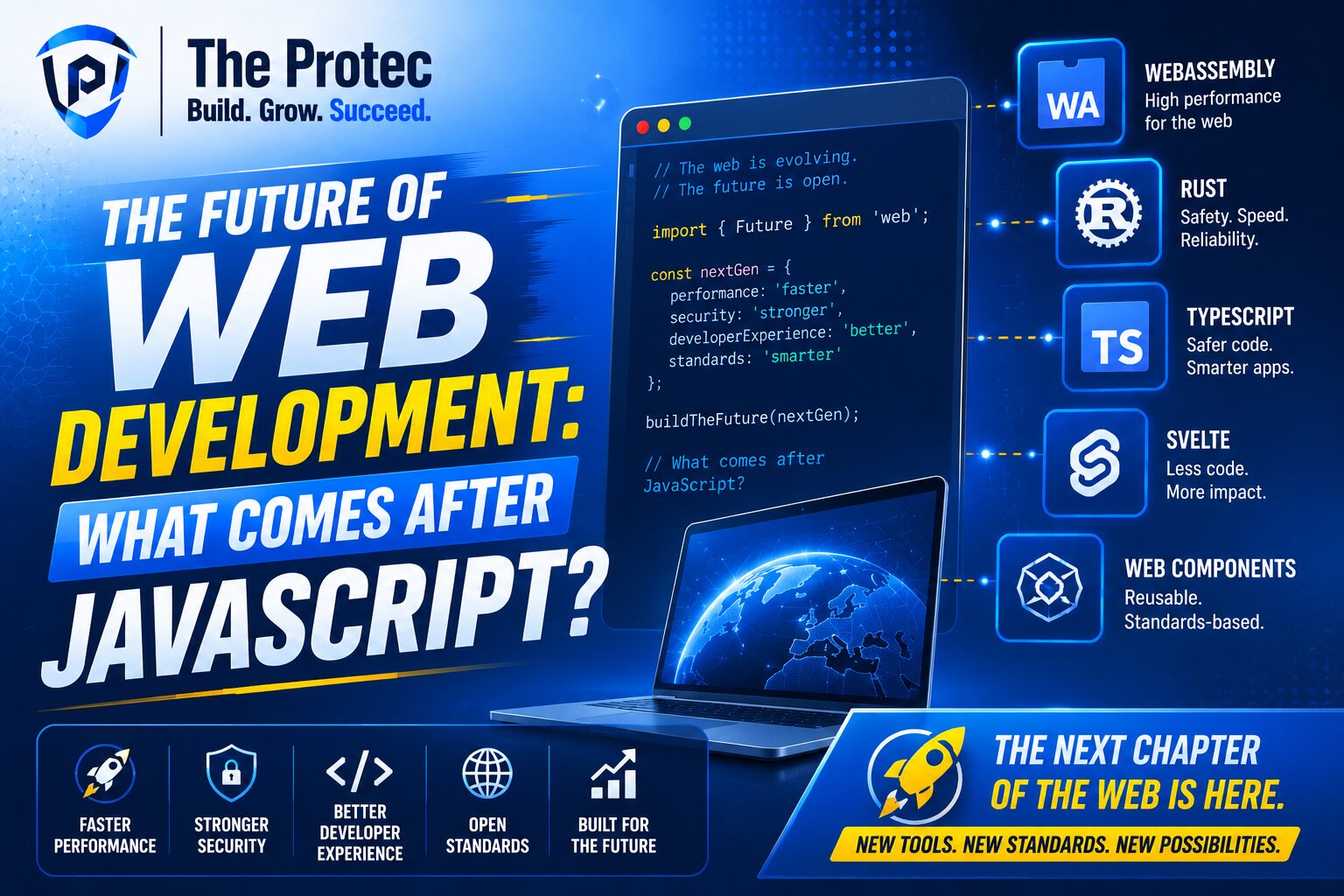
- Rust has become a popular choice: Its safety guarantees and strong performance profile make it a natural fit for browser modules.
- Component-oriented packaging is advancing: The ecosystem is moving toward more modular and reusable WASM components rather than monolithic builds.
- JavaScript interop is improving: Better bindings and wrapper tooling reduce the friction of integrating WASM into existing front-end apps.
- Streaming compilation and faster startup paths: Browsers can increasingly download and begin compiling modules efficiently, improving startup behavior.
- Toolchains are becoming more accessible: Developers can compile from multiple languages with less manual setup than before.
These improvements matter because adoption usually follows developer experience. When the tooling is cumbersome, performance gains are offset by complexity. As WASM development gets easier, it becomes more realistic for mainstream product teams.
WebAssembly and the Rise of Browser-Based Compute
One of the most important trends in modern software is the shift toward browser-based compute. Instead of sending every operation to a backend, products increasingly execute logic directly in the client for speed, privacy, and resilience. WebAssembly sits at the center of that shift.
This is especially visible in applications that combine user interface work with serious computation. Examples include browser IDEs, simulation tools, scientific notebooks, media processors, and local-first collaboration apps. In these products, the browser is no longer just a presentation layer. It is part of the compute stack.
That shift aligns with broader technology trends: edge computing, local inference, offline-first workflows, and privacy-preserving processing. WebAssembly helps connect those trends by giving the browser a fast, safe way to run substantial workloads.
How WebAssembly Supports AI and Machine Learning in the Browser
Browser-based AI has become one of the most visible use cases for WebAssembly. Many teams now want to run inference directly in the browser for privacy, lower latency, and reduced server cost. WASM development makes that practical for a range of models and supporting libraries.
While specialized accelerators and browser APIs can help in some cases, WebAssembly remains valuable for tasks such as preprocessing, tokenization, postprocessing, and model execution on platforms where GPU access is limited or unavailable. It also helps standardize deployment across devices because the same module can run in compatible browsers without installing native software.
For product teams, this unlocks a compelling pattern: do sensitive or latency-sensitive AI work on the client, keep user data local when possible, and reserve server resources for heavier tasks. That combination can improve both user trust and operational efficiency.
Common Challenges in WebAssembly Adoption
WebAssembly is powerful, but it is not frictionless. Teams considering it should understand the trade-offs before they commit.
Integration complexity
WASM modules do not directly manipulate the DOM. They need to communicate with JavaScript, which means developers must design a clean boundary between the high-performance core and the user interface layer. Poorly designed boundaries can reduce the benefits of the technology.
Memory management considerations
WebAssembly has its own linear memory model. That can be efficient, but it also requires careful planning when passing data between JavaScript and WASM. Large or frequent data transfers can become a bottleneck if the architecture is not well designed.
Debugging and profiling
Although tooling has improved, debugging compiled code in the browser can still be more involved than debugging standard JavaScript. Teams need strong observability and profiling practices to get the most out of WASM development.
Not every task benefits
Some workloads do not justify the overhead of compiling and integrating WebAssembly. If the app is mostly UI logic and network requests, the returns may be limited. The best use cases are those where computation is a meaningful part of the user experience.
Best Practices for Using WebAssembly in High-Performance Web Apps
To get real value from WebAssembly, teams should use it selectively and strategically. The goal is not to move everything into WASM, but to apply it where it has the highest impact.
- Profile before you optimize: Identify true bottlenecks first. Use WebAssembly where computation is slowing the app down.
- Keep the UI in JavaScript or TypeScript: Let the browser-native stack handle eventing, rendering, and application structure.
- Minimize data crossing between JS and WASM: Exchange data in larger batches when possible to reduce overhead.
- Use mature languages and toolchains: Rust and C/C++ are common choices for performance-heavy modules.
- Design clear module boundaries: Separate computation from presentation so the architecture stays maintainable.
- Test startup and runtime behavior: A fast algorithm is not enough if load time or memory usage creates a poor experience.
These practices are central to web performance optimization in the WASM era. The strongest applications blend technologies instead of forcing a single stack to do everything.
The Strategic Advantage for Product Teams
WebAssembly is not just a technical optimization. It is becoming a product strategy. When a web app feels faster, handles more work locally, and delivers capabilities once reserved for native software, it creates a stronger user experience and a clearer competitive edge.
For startups, WASM development can unlock product categories that would otherwise be too expensive to build as fully native cross-platform solutions. For enterprises, it can modernize existing code and extend legacy capabilities to the browser without reengineering everything from scratch. For consumer products, it can make rich web experiences feel more immediate and polished.
In other words, WebAssembly helps teams ask a different question: not whether a browser app can compete with native software, but how much of native-class performance can be delivered directly in the browser.
External Resources Worth Reading
For a deeper technical overview, the WebAssembly community maintains excellent documentation at webassembly.org. Browser implementation details and platform guidance are also covered in the MDN WebAssembly documentation at developer.mozilla.org.
FAQ
Is WebAssembly meant to replace JavaScript?
No. WebAssembly is best viewed as a complement to JavaScript. JavaScript is still the right choice for UI logic, DOM manipulation, and most application glue code. WASM is ideal for performance-critical computation.
What kinds of apps benefit most from WASM development?
Apps with heavy computation benefit the most. That includes media editors, simulation tools, analytics platforms, games, browser IDEs, and AI-powered web apps. Any product with demanding client-side processing is a strong candidate.
Does WebAssembly improve web performance optimization automatically?
Not automatically. It improves performance when used in the right place and integrated well. If data transfer between JavaScript and WASM is inefficient, the gains can shrink. Good architecture matters as much as the technology itself.
Can WebAssembly help with security?
WebAssembly runs in the browser sandbox, which supports the web’s security model. It is not a security solution by itself, but it can help reduce reliance on unsafe native plugins or untrusted client-side patterns.
Is WebAssembly practical for mainstream web apps?
Yes, increasingly so. As tooling improves and browser support remains strong, more teams are using WebAssembly for targeted performance gains rather than experimental features. It is becoming a practical part of modern web architecture.
Conclusion
WebAssembly is becoming the future of high-performance web apps because it solves a problem the web has struggled with for years: how to deliver serious compute power without leaving the browser. By enabling near-native execution, supporting multiple languages, and extending what browser-based applications can do, WASM development is reshaping expectations for speed and capability.
For teams focused on web performance optimization, the opportunity is clear. Use JavaScript for the parts of the app that make the web flexible and expressive. Use WebAssembly for the parts that demand speed, precision, and efficiency. That combination is what will define the next generation of browser-based applications.