









Introduction
The landscape of frontend development continues to evolve fast, with new tools and languages shaping how developers build applications. Among these, TypeScript has surged in popularity, often touted as the next-generation language that extends JavaScript’s capabilities. But even with TypeScript’s growing dominance, JavaScript remains a foundational technology with a strong foothold. Is there still a real debate between TypeScript and JavaScript for frontend projects? This article dives deep into the current state of frontend development, highlighting why TypeScript is increasingly becoming the standard while also explaining scenarios where JavaScript remains not just relevant but ideal.
The Rise of TypeScript in Frontend Development
TypeScript is a statically typed superset of JavaScript that compiles down to plain JavaScript. Launched by Microsoft, it adds optional static typing, interfaces, and a richer syntax that helps catch bugs early and improves developer productivity. In recent years, many large-scale frontend applications and frameworks have embraced TypeScript for its robustness and maintainability benefits.
Why Developers Prefer TypeScript
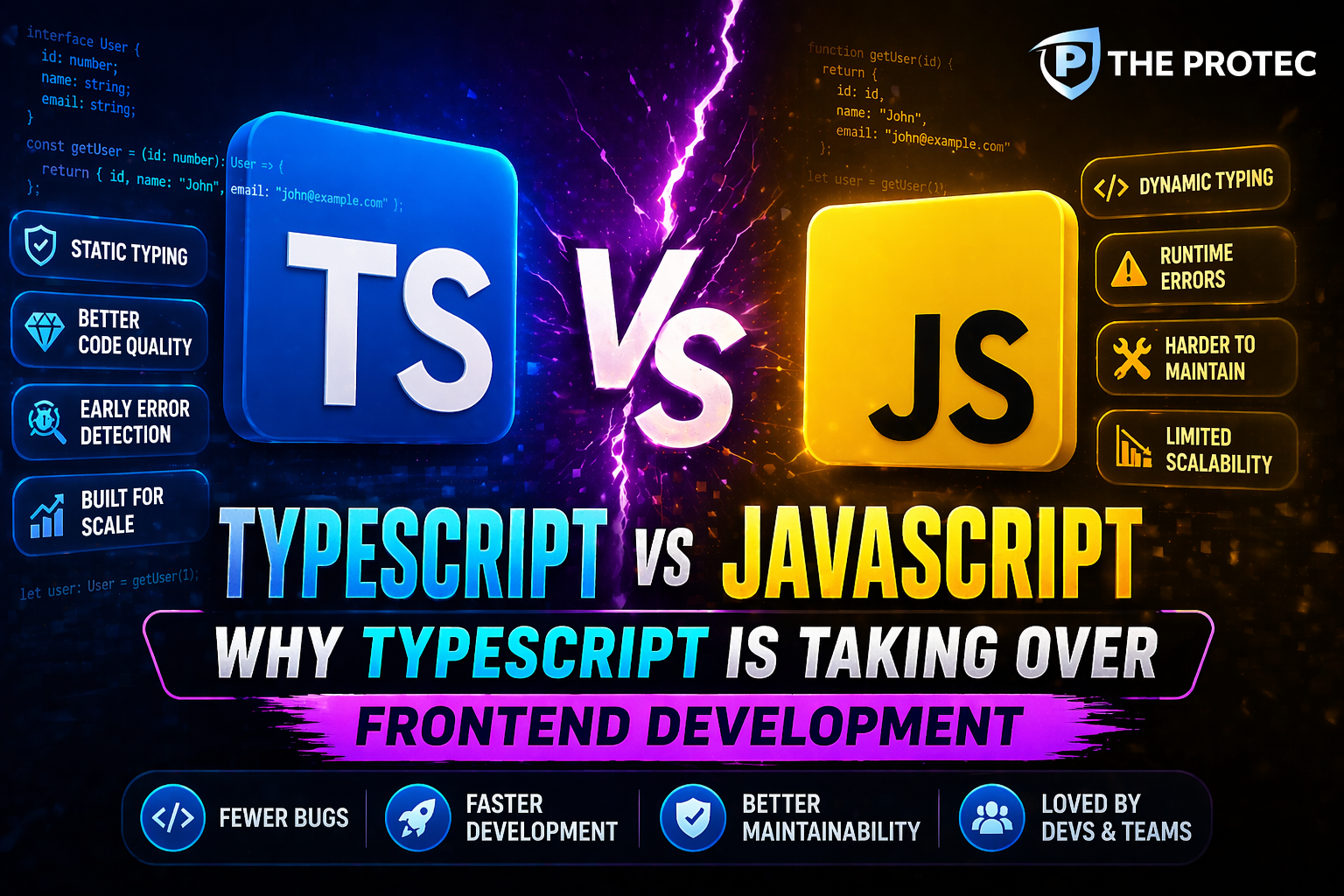
- Type Safety and Early Error Detection: TypeScript’s static type system allows for catching errors during development rather than at runtime. This reduces bugs that could otherwise manifest in production, delivering more reliable codebases.
- Enhanced IDE Support: Modern IDEs like Visual Studio Code provide superior code completion, refactoring tools, and navigation features with TypeScript’s type system, making coding more efficient.
- Better Code Maintainability: As projects grow, maintaining JavaScript code can become challenging. TypeScript enforces structure via interfaces and types, which improves collaboration across teams and supports cleaner, more scalable code.
- Adoption by Major Frameworks: Frameworks such as React, Angular, and Vue officially support or recommend TypeScript, with many new libraries shipping type definitions out of the box.
Recent Developments Boosting TypeScript Adoption
The TypeScript compiler and ecosystem have seen continuous improvements, including faster build times and better integration with JavaScript ecosystems. Notably, TypeScript 5.0 introduced features such as enhanced decorators, performance boosts, and improved type inference, making it even easier to adopt for frontend development.
Additionally, major tech corporations like Airbnb, Slack, and Spotify have expanded their use of TypeScript, signaling confidence in its scalability for complex frontend applications.
When JavaScript Still Works Best
Despite TypeScript’s many advantages, JavaScript remains the lingua franca of the web, powering billions of pages worldwide. There are still clear reasons and scenarios where plain JavaScript remains a practical and even preferable choice:
1. Simplicity and Quick Prototyping
JavaScript’s minimal setup requirement is ideal for rapid prototyping, small scripts, and lightweight frontend projects. It’s easy to jump into JavaScript without the need for compilation or type declarations, which can accelerate experimentation and iteration.
2. Legacy Codebases and Libraries
Many existing frontend projects and libraries are written entirely in JavaScript. Migrating large codebases to TypeScript can be costly and time-consuming, so some teams choose to maintain JavaScript to avoid disruption.
3. Learning Curve and Team Expertise
Some developers, especially beginners or those with backgrounds focused solely on JavaScript, may find TypeScript’s stricter typing system complex initially. In teams where expertise centers around JavaScript, the overhead of TypeScript might slow down development.
4. Runtime Flexibility
JavaScript’s dynamic nature allows for more flexible and dynamic coding patterns that can sometimes be restrictive under TypeScript’s type system. This flexibility is sometimes necessary for creative problem-solving or working with highly dynamic data structures.
Understanding the Frontend Development Ecosystem in 2026
The frontend ecosystem has become increasingly sophisticated, requiring robust tooling to manage complexity. TypeScript complements this evolution by introducing a layer that makes large, collaborative frontend projects manageable without sacrificing JavaScript’s flexibility.
Popular frameworks continue to integrate TypeScript seamlessly:
- React: While React started primarily with JavaScript, TypeScript types for React components and hooks have become standard practice. Create React App and frameworks like Next.js now default to supporting TypeScript.
- Angular: Angular has TypeScript baked in since its inception, making it a natural choice for Angular projects.
- Vue: Vue 3 offers official TypeScript support, and many Vue projects now lean heavily on TypeScript for maintainability.
Moreover, toolchains such as Vite and Webpack have enhanced their support for TypeScript, providing a smooth development experience.
How to Decide Between TypeScript and JavaScript
Choosing between TypeScript and JavaScript ultimately depends on the project’s scope, team makeup, and future maintenance needs.
Consider TypeScript When:
- The project requires long-term maintainability and scalability.
- Multiple developers or teams are collaborating.
- Using complex data structures or APIs where catching type errors early is critical.
- Building enterprise-level applications that need rigorous testing and fewer runtime errors.
Consider JavaScript When:
- The project is a quick prototype, small-scale app, or widget.
- The team has a strong JavaScript background but limited TypeScript experience.
- There’s a need for rapid iteration without overhead from type declarations.
- The codebase is legacy JavaScript that would be difficult or risky to migrate.
Future Outlook: Is the Debate Over?
As TypeScript adoption continues to grow, it’s becoming the de facto standard for modern frontend development. The benefits in terms of robustness, tooling, and developer productivity are too significant to ignore. Many new projects default to TypeScript, and educational resources universally include it in frontend curriculums.
However, JavaScript is not going away anytime soon. Its simplicity and versatility ensure it will remain an essential tool, especially for certain use cases or smaller-scale efforts.
The debate, then, is less about which language is “better,” and more about which is better suited to particular needs. Understanding the strengths and appropriate contexts for both TypeScript and JavaScript allows developers to make informed decisions that optimize productivity and maintainability.
Frequently Asked Questions
Is TypeScript harder to learn than JavaScript?
TypeScript introduces static typing and additional features which have a learning curve, especially for developers new to strongly typed languages. However, the added complexity results in fewer runtime errors and improved tooling support that can accelerate development in the long run.
Can I convert my existing JavaScript project to TypeScript easily?
Yes, TypeScript is designed to be gradually adoptable. You can start by adding type annotations to parts of your codebase and configuring the compiler to accept JavaScript files before fully converting the entire project.
Does using TypeScript impact performance of frontend applications?
No. TypeScript code is transpiled to plain JavaScript before running in the browser, so at runtime, there’s no performance difference. TypeScript’s benefits come during development rather than in execution speed.
Conclusion
The evolution of frontend development has elevated TypeScript from a supplementary tool to the predominant language for many projects. Its ability to catch errors early, ease collaboration, and integrate seamlessly with popular frameworks positions it as the go-to choice for modern web applications. Yet, JavaScript retains its place for simplicity, speed, and flexibility in specific contexts. Recognizing when to choose one over the other is key to successful frontend development in today’s dynamic tech environment.
For a comprehensive guide to TypeScript and best practices, you can explore resources like the official TypeScript Documentation and the React TypeScript guide.