









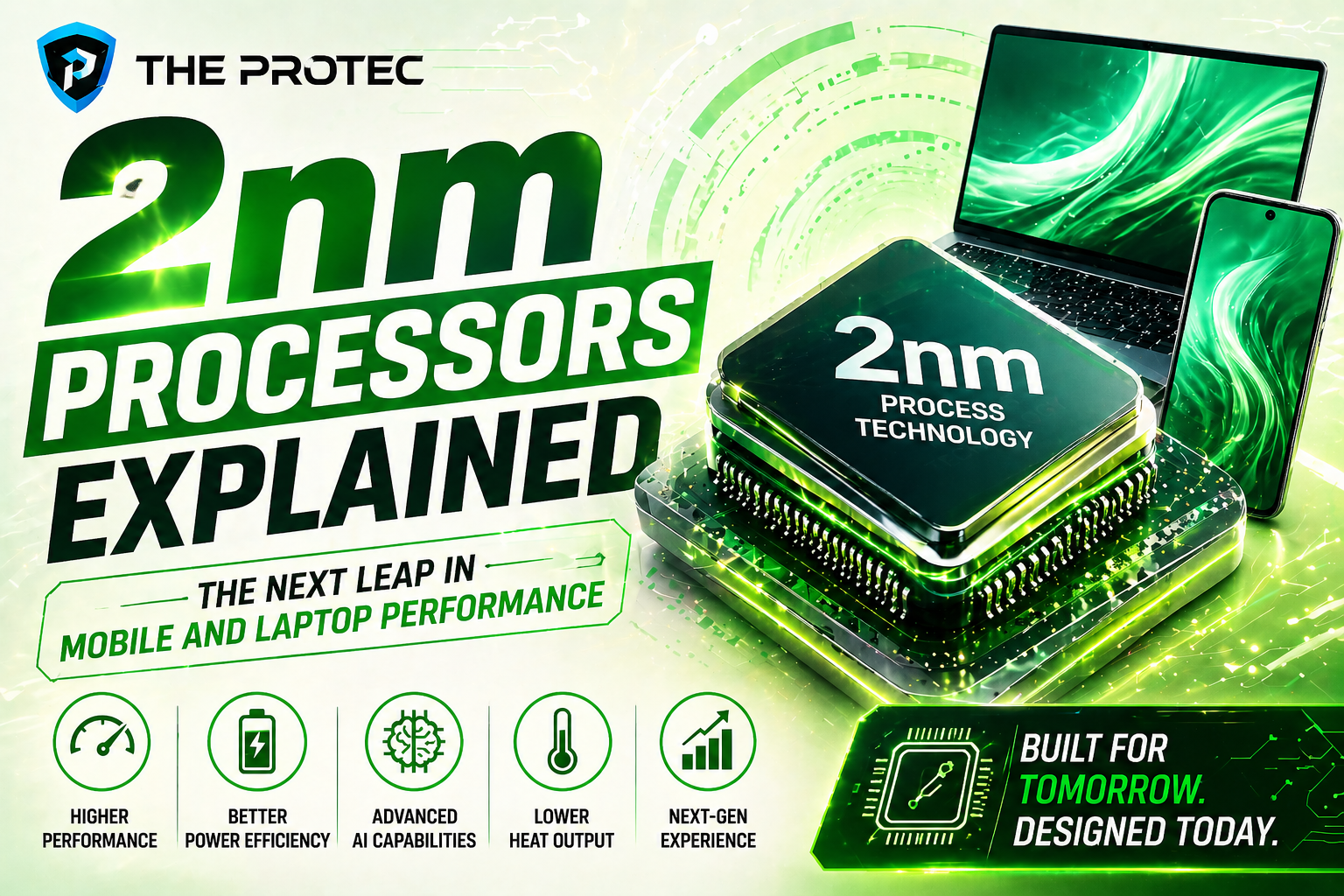
Introduction: Understanding the Shift to 2nm Processors
The evolution of processor technology is the driving force behind the rapid advancements in mobile and laptop performance. As manufacturers push the boundaries of semiconductor fabrication, shrinking transistor sizes allow for remarkable gains in speed, efficiency, and energy consumption. The 2nm chip node is the newest frontier in this journey, representing a critical leap over the prior 3nm and 5nm processes. But what exactly makes 2nm processors so transformative, and how will they impact your everyday devices? This article delves into the science, benefits, and real-world implications of 2nm processors, cementing their role in the future of mobile CPU evolution.
The Science Behind 2nm Chips: What Does the Node Size Mean?
When semiconductor companies discuss process nodes like 2nm, they’re referring to the scale at which transistors the tiny switches that perform computations are manufactured on a chip. A smaller node means more transistors can be packed into a given silicon area, which typically translates to higher performance and better efficiency.
However, the 2nm label is more of an industry-standardized marketing term than a precise measurement of gate length or feature size. Still, it points to a generation of technologies that make substantial improvements over the previous 3nm processes through innovative materials and transistor architectures.
Leading-edge fabrication techniques such as gate-all-around (GAA) nanosheet transistors have enabled this transition. Unlike the FinFET designs used at 3nm and above, GAA transistors improve control over electron flow, minimizing leakage currents a critical factor for power efficiency and heat reduction. The ability to tightly control current flow at such a scale paves the way for chips that are both faster and cooler.
How Smaller Nodes Improve Efficiency in Mobile and Laptop CPUs
The primary advantage of moving to smaller transistor nodes like 2nm lies in dramatically improved energy efficiency. Here’s how:
- Reduced Power Consumption: Smaller transistors require less voltage and experience lower leakage currents, meaning the chip draws less power while performing the same tasks.
- Increased Transistor Density: More transistors per square millimeter allow complex architectures and higher core counts without significant increases in chip size or power demands.
- Enhanced Switching Speeds: Transistors become more responsive, enabling higher clock speeds at lower voltages.
For mobile and laptop users, these gains translate into devices that deliver powerful performance while consuming less battery. The practical impact means longer usage times between charges and smoother handling of intensive applications such as video editing or gaming.
Battery Life Revolutionized by 2nm Processor Technology
Battery life has always been a limiting factor for mobile and portable devices. While battery technology itself has incrementally improved, the biggest gains continue to come from reducing the energy consumed by components like the CPU.
2nm chips will play a pivotal role here by enabling:
- Lower Voltage Operation: Thanks to the improved electrostatics of GAA transistors, 2nm CPUs can operate efficiently at lower voltages. Lower voltage directly means less energy burned during processing tasks.
- Dynamic Power Scaling: Advanced power management units integrated into 2nm processors can dynamically adjust power levels per core or subsystem, optimizing energy use without sacrificing speed.
- Increased Multi-Core Efficiency: With more transistors and cores packed into the silicon, workloads can be distributed more evenly. This reduces thermal throttling and prevents unnecessary power spikes.
Collectively, these advancements enable smartphones and laptops to extend battery life significantly supporting longer streaming, gaming, and work sessions while maintaining consistent performance.
Heat Management: Why Less is More With 2nm Chips
Efficient heat dissipation is crucial for device longevity, user comfort, and system stability. Smaller process nodes like 2nm inherently generate less heat for comparable computing loads because of reduced leakage currents and lower switching voltages.
Key ways 2nm processors improve thermals include:
- Lower Thermal Design Power (TDP): The chip’s maximum heat output can be significantly lower, allowing manufacturers to design slimmer, quieter cooling solutions for laptops and mobiles.
- Reduced Throttling: Fewer heat spikes mean that CPUs can sustain higher clock speeds for longer without automatic slowdowns to prevent damage.
- Improved Reliability: Cooler chips help avoid premature component wear, reducing the risk of device failures over extended use.
These improvements are especially important for ultrathin laptops and compact smartphones, where traditional cooling solutions have limited space and airflow.
Mobile CPU Evolution: The Role of 2nm Chips
The journey from 7nm to 5nm, then 3nm, and now 2nm represents a benchmark in the continuous evolution of mobile CPUs. Each transition brought meaningful improvements, but 2nm processors promise a jump that goes beyond simple performance boosts.
Highlights of the impact include:
- More Sophisticated AI and Machine Learning: Increased transistor density allows for more dedicated AI accelerators and neural processing units on-chip, enabling smarter, faster, and more responsive AI features.
- Advanced Connectivity Support: The power savings at 2nm open doors to integrating faster Wi-Fi, 5G/6G cellular modems, and multimedia codecs without sacrificing battery life.
- Extended Device Lifecycles: The efficiency gains can be leveraged to design devices that remain competitive longer, reducing electronic waste.
Manufacturers like TSMC and Samsung have already begun trialing 2nm chips for flagship mobile chips, signaling a near-future release that promises to redefine what users expect from their handheld devices.
Challenges in Manufacturing 2nm Processors
Despite the allure of 2nm processor technology, fabricating chips at this scale presents formidable technical challenges:
- Extreme Precision Required: Lithography techniques like extreme ultraviolet (EUV) light must be pushed to their limits to produce such tiny features accurately.
- Material Innovations Needed: New materials and transistor architectures must be developed to maintain electrical characteristics and manufacturability.
- Rising Production Costs: The complexity and tooling investments for 2nm result in significantly higher fabrication costs, which may initially limit adoption to premium devices.
Nonetheless, the semiconductor industry’s commitment to continued innovation, alongside governmental support and strategic partnerships, is driving these challenges toward resolution.
Looking Ahead: How 2nm Processors Will Shape User Experience
The arrival of 2nm processors heralds a new wave of possibilities in personal computing. Users can expect:
- Devices that Balance Power and Portability: Ultrabooks and smartphones that deliver desktop-level performance without compromised battery life or overheating concerns.
- Enhanced Mobile Gaming and Content Creation: Hardware acceleration and improved responsiveness make high-fidelity gaming and video editing on mobile platforms more accessible than ever.
- Battery Sustainability: Longer battery life means fewer charges, enhancing convenience and contributing to environmental sustainability.
As the 2nm node becomes mainstream, the line between mobile and traditional computing power continues to blur, ushering in a future where performance, efficiency, and form factor harmonize seamlessly.
FAQ: Common Questions About 2nm Processors
What makes 2nm chips better than the previous 3nm or 5nm processors?
2nm chips incorporate next-generation transistor designs like gate-all-around nanosheets, which provide superior control of electron flow. This leads to lower power consumption, higher transistor density, faster switching speeds, and better heat management compared to 3nm and 5nm processes.
Will 2nm processors significantly improve battery life in smartphones and laptops?
Yes. By operating at lower voltages and reducing leakage currents, 2nm processors use less power to perform the same tasks. This efficiency helps extend battery life in portable devices, allowing users to enjoy longer usage without frequent recharging.
Are there any downsides to 2nm process technology?
The principal challenges include high manufacturing costs, greater technical complexity, and fabrication hurdles associated with extreme miniaturization. However, these are expected to be mitigated as production scales up and technologies mature, leading to wider availability and affordability.
Where can I learn more about the latest 2nm processor developments?
For the most up-to-date technical insights, visiting semiconductor industry leaders’ sites like TSMC or Samsung Semiconductor is highly recommended.
Conclusion
The transition to 2nm processors marks a pivotal moment in the ongoing evolution of mobile CPU technology. Their smaller node size enables remarkable improvements in efficiency, battery longevity, and heat management, ultimately transforming the capabilities and user experience of mobile and laptop devices. Despite manufacturing challenges, the promise of 2nm chips is clear: faster, cooler, and longer-lasting computing power in ever-sleeker form factors. As these chips become mainstream, we stand on the brink of a new era in portable performance.