
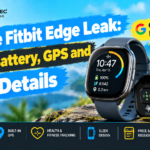







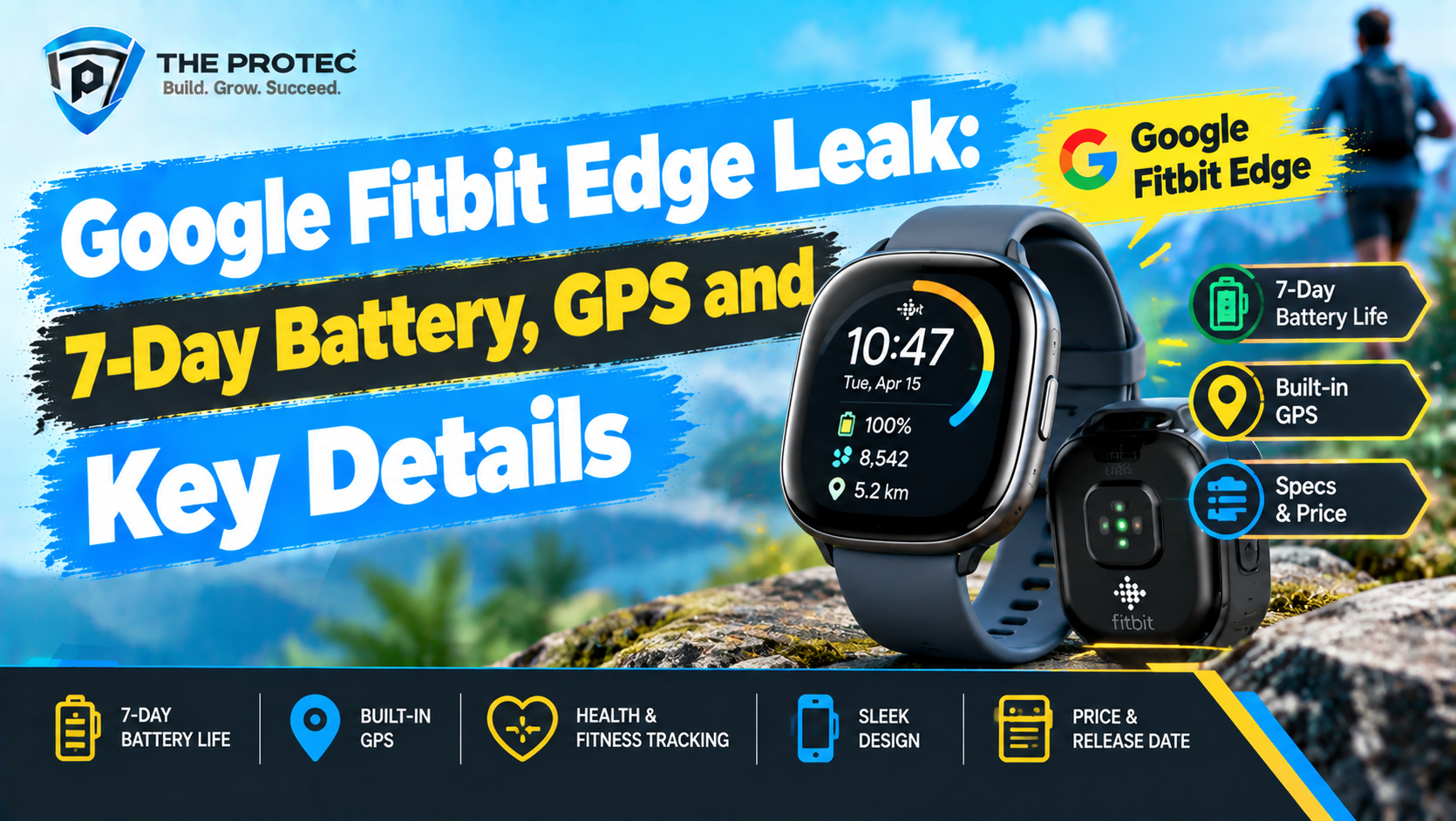
Google may be preparing to fill the widening gap between a minimalist fitness band and a full Wear OS smartwatch. Leaked retail materials describe a device called the Fitbit Edge, a compact tracker reportedly equipped with a color display, built-in GPS, an altimeter, activity recognition and up to seven days of battery life.
If the leak is accurate, the Google Fitbit Edge could become one of the company’s most important wearables in years. It appears more capable than the screenless, $99.99 Fitbit Air, yet simpler and longer-lasting than the Pixel Watch 5. That middle position also raises an obvious question: Is the Fitbit Edge effectively the long-awaited Fitbit Charge 6 successor?
There is an essential caveat. Google has not announced the Fitbit Edge, and the details currently circulating come from leaked retail materials rather than an official product page or launch event. Its name, specifications, price and availability may change—or the product may be delayed—before Google says anything publicly. With that distinction in mind, here is everything the leak appears to reveal and where the device could fit in Google’s increasingly crowded wearable lineup.
What the Fitbit Edge leak reportedly reveals
The Fitbit Edge leak points to a traditional wrist-worn fitness tracker with a small color display. That would give it a familiar band-style design rather than the round watch format used by Google’s Pixel Watch family. The screen should make everyday information easier to check than it is on the display-free Fitbit Air, without requiring the larger body or more demanding software of a smartwatch.
According to the leaked materials, the reported Fitbit Edge specs include:
- A small color display for fitness data, notifications and basic apps
- Built-in GPS for recording outdoor routes without a connected phone
- An altimeter for measuring elevation changes
- Automatic activity recognition
- Phone notifications on the wrist
- Limited app functionality, including Google Maps and YouTube Music
- Compatibility with Android and iOS
- Up to seven days of battery life
None of these details should be treated as final specifications. Retail materials can be incomplete, based on pre-release information or prepared before last-minute product changes. Google has not confirmed the Fitbit Edge battery life, sensor package, dimensions, health features or software limitations.
Why the Google Fitbit Edge could matter
Google’s wearable strategy now covers several different ideas about what a fitness device should be. The Fitbit Air targets people who want passive activity and health tracking without another screen. The Pixel Watch 5 sits at the other end of the range, combining Fitbit services with Wear OS apps, richer communication tools and a full smartwatch interface.
The Fitbit Edge appears designed for shoppers who find both approaches too extreme. A display, notifications and navigation tools make it more interactive than the Air. A narrower feature set and Fitbit Edge 7-day battery claim could make it less distracting and easier to maintain than the Pixel Watch 5.
That middle category was historically where the Fitbit Charge line excelled. It offered enough information and intelligence to reduce phone dependence during exercise, but it did not attempt to replace a conventional smartwatch. The rumored Edge name may represent a branding reset, but its basic concept sounds closely aligned with that established formula.
Could Fitbit Edge be the Fitbit Charge 6 successor?
The Charge series has not received a new generation since the Fitbit Charge 6, leaving users uncertain about the future of Fitbit’s advanced tracker format. The leaked Edge could answer that uncertainty even if Google chooses not to call it the Fitbit Charge 7.
Several rumored features support the comparison. The compact color display, wrist notifications, standalone route tracking and multiple-day endurance are characteristic of a premium fitness band. Built-in GPS and an altimeter would also give the Edge practical advantages for runners, hikers and cyclists who want meaningful workout data without wearing a large smartwatch.
However, calling it a confirmed Charge replacement would be premature. Google could sell the Edge beside the Charge 6, position it as a separate tier or use it to introduce a broader Fitbit design language. The leak also does not clarify whether familiar Fitbit measurements and services will all carry over. Heart-rate hardware, ECG support, sleep features, stress tools, subscription requirements and payment functionality are among the major unanswered questions.
For now, the most accurate description is that Fitbit Edge looks like a possible spiritual successor to the Charge line—not an officially confirmed Fitbit Charge 7.
Fitbit Edge vs Fitbit Air: screen and GPS change the experience
The Fitbit Edge and Fitbit Air appear to address different preferences. At $99.99, the screenless Air is built around discreet tracking. Users rely on a connected phone to review information rather than interacting with a display throughout the day.
The Edge reportedly adds the features that minimalist trackers intentionally omit. Its color screen could show workout progress, alerts, directions and media controls. Fitbit Edge built-in GPS would also allow outdoor activities to be mapped without depending on a phone’s location connection, while the rumored altimeter could improve elevation and stair-related context.
Those additions would likely increase both the purchase price and power consumption. Even so, the reported seven-day battery figure suggests Google is trying to preserve the low-maintenance appeal associated with fitness bands. The choice may ultimately come down to whether a buyer wants invisible tracking or immediate access to information on the wrist.
Fitbit Edge vs Pixel Watch 5: tracker or full smartwatch?
The Fitbit Edge vs Pixel Watch 5 comparison is less about which device has more features and more about which experience a person wants. Pixel Watch 5 is the option for a full Google smartwatch environment, with Wear OS, a broader app ecosystem and deeper wrist-based interactions. Information about Google’s current wearable ecosystem is available through the Google Store watches and trackers page.
The Edge, based on the leak, would avoid that level of complexity. Google Maps and YouTube Music are reportedly supported, but the wording suggests limited apps rather than unrestricted access to the wider Wear OS catalog. Notifications may be designed primarily for viewing, with fewer reply or communication options than a Pixel Watch.
Battery life could be the Edge’s clearest advantage. A claimed maximum of seven days would reduce charging interruptions and make continuous sleep or activity tracking easier. The Pixel Watch 5 offers a richer computing experience, but a full smartwatch generally requires more frequent charging than a focused tracker.
Buyers who need apps, advanced messaging and broad smartwatch flexibility will still be better served by Pixel Watch. Those who prioritize exercise data, route tracking and endurance may find the Edge more practical—assuming the final product matches the leak.
Built-in GPS and an altimeter could define the Edge
Fitbit Edge GPS support is one of the most significant reported details. Connected GPS can be adequate for casual exercise, but it requires a nearby phone. A dedicated receiver lets runners and cyclists leave the phone behind while still recording pace, distance and route data.
The leaked Fitbit Edge altimeter could complement GPS by tracking elevation changes. That matters for hiking, hill running, climbing and workouts where vertical movement provides useful context. Google has not revealed the sensor’s accuracy, sampling behavior or effect on battery life, so performance comparisons must wait for official documentation and independent testing.
Automatic activity recognition would make the device more convenient for everyday movement. Yet the leak does not specify which exercises can be detected, how quickly recording begins or whether automatic sessions capture the same metrics as manually started workouts.
Seven-day battery life sounds strong, but conditions matter
The rumored Fitbit Edge battery life is listed as up to seven days. The words “up to” are important. Display brightness, notification volume, background measurements, GPS workouts and features such as navigation can substantially affect real-world endurance.
Continuous GPS use is particularly demanding. The Edge might last a week under mixed daily use while requiring much more frequent charging during long outdoor sessions. Google has not provided separate estimates for normal use, always-on display behavior or GPS recording.
Even with those qualifications, seven-day rated endurance would help distinguish the Edge from full smartwatches. It could also support more consistent overnight wear, since users would have greater flexibility to recharge while showering or working rather than sacrificing sleep tracking.
Notifications, Google Maps and YouTube Music
The leaked Fitbit Edge notifications feature suggests calls, messages and app alerts will be visible on the color display. It is not known whether Android users will be able to send quick replies, whether iPhone functionality will be more restricted or which notification controls will be available.
References to Fitbit Edge Google Maps and Fitbit Edge YouTube Music are equally intriguing but vague. Maps could provide glanceable turn prompts rather than a complete interactive map. YouTube Music support could mean playback controls, while offline downloads would require more storage and software capability. Until Google explains these features, they should not be interpreted as equivalent to the Wear OS versions.
Reported Fitbit Edge Android and iOS compatibility would be welcome. Fitbit’s cross-platform reach remains an important distinction from some ecosystem-specific wearables. Prospective buyers should still wait for confirmed phone requirements, app support and feature differences between the two platforms. Google’s existing setup and compatibility guidance can be found through the official Fitbit Help Center.
Rumored Fitbit Edge price and release date
The unconfirmed Fitbit Edge price range is $149 to $199. That estimate would place the tracker above the $99.99 Fitbit Air but potentially below premium Pixel Watch configurations. It is a logical position, although no official price has been published.
A price near $149 could make the Edge a compelling mainstream fitness tracker. At $199, buyers may compare it more closely with discounted smartwatches and competing premium bands. The value will depend on its final health sensors, included services, materials and whether features require a Fitbit Premium subscription.
Leaked retail timing reportedly points to a Fitbit Edge October 2026 launch window. Google has not confirmed a presentation date, preorder schedule, shipping date or regional availability. Retail plans can move, so October should be regarded as an estimate rather than a guaranteed Fitbit Edge release date.
What to watch before buying
The Edge could be an appealing new Fitbit tracker, but several critical details remain absent. Before making a decision, shoppers should look for Google’s confirmation of the following:
- Final price, release date and countries of availability
- Complete health-sensor and workout-mode list
- Real-world battery performance with GPS enabled
- Google Maps and YouTube Music limitations
- Android and iOS feature differences
- Fitbit Premium requirements and included trial terms
- Water resistance, charging method and display specifications
If the report proves accurate, this Google fitness tracker could restore a clear premium-band option to the Fitbit portfolio. For now, it is best viewed as a credible but unannounced product whose final identity remains subject to change.
Frequently asked questions
Has Google officially announced the Fitbit Edge?
No. Google has not officially announced the Fitbit Edge. Current information is based on leaked retail materials, so the product name, design, specifications, price and launch timing remain unconfirmed.
What is the expected Fitbit Edge release date?
The leak points to an October 2026 launch window, but Google has not provided a date. An announcement, preorder period or retail release could occur later than the leaked schedule.
How much will the Fitbit Edge cost?
Unconfirmed estimates place the Fitbit Edge between $149 and $199. Final pricing could vary by market and configuration, and Google may choose a figure outside that range.
Does the Fitbit Edge have built-in GPS?
Leaked materials say the tracker includes built-in GPS, which could record outdoor routes without a connected phone. Google has not confirmed GPS performance or battery duration during continuous tracking.
Is the Fitbit Edge the same as the Fitbit Charge 7?
Not officially. Its reported design and features make it look like a potential Fitbit Charge 6 successor, but there is no confirmation that Edge replaces the Charge brand or represents a renamed Fitbit Charge 7.
Will Fitbit Edge work with iPhone?
The leak indicates support for both Android and iOS. Exact compatibility requirements and any iPhone-specific limitations will not be known until Google publishes official details.