






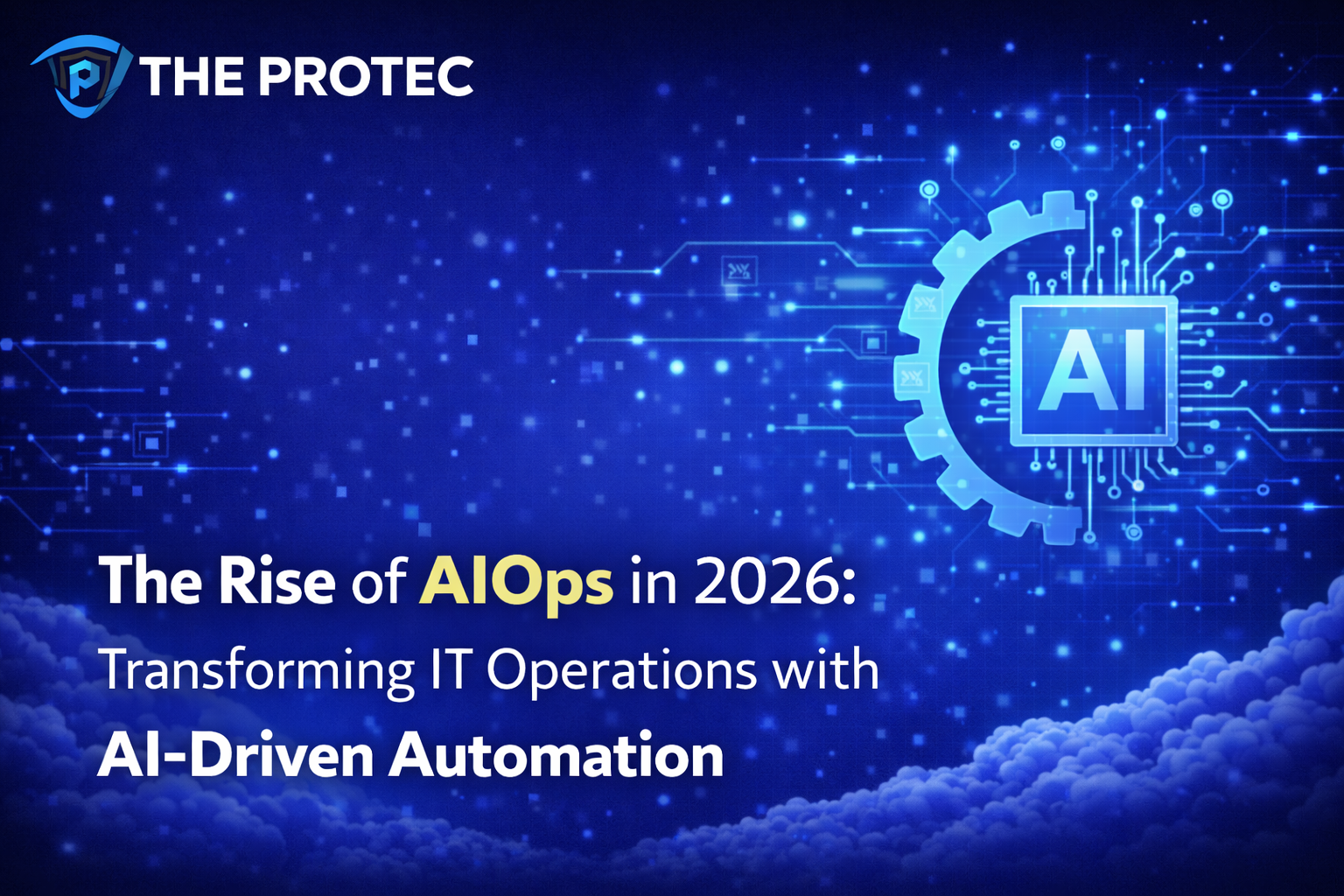
The Rise of AIOps in 2026: Transforming IT Operations with AI-Driven Automation
In 2026, the world of IT operations is experiencing a seismic shift, led by Artificial Intelligence for IT Operations, commonly known as AIOps. As businesses continue to scale their digital infrastructure across cloud platforms and SaaS ecosystems, managing complex IT environments manually is no longer viable. AIOps is emerging as a game-changing solution that leverages advanced AI, machine learning, and automation technologies to revolutionize IT service management and operational efficiency.
This article dives deep into the latest 2026 trends driving AIOps adoption, how it integrates with cloud computing and automation frameworks, and practical real-world examples of how organizations are leveraging AIOps to unlock unprecedented levels of performance and reliability.
What is AIOps and Why Is It Trending in 2026?
AIOps combines big data analytics and artificial intelligence to automate and improve IT operations tasks, including event correlation, anomaly detection, and root cause analysis. While it has been evolving over the past few years, several key developments in 2026 have cemented its status as a must-have technology for modern IT teams:
- Explosion of data from hybrid multi-cloud environments: The proliferation of microservices and containerized workloads generates massive volumes of telemetry data, which AIOps platforms can analyze with superior speed and accuracy.
- Advanced AI models tailored for operations: Breakthroughs in generative AI and foundation models empower AIOps tools to predict outages, auto-resolve incidents, and even suggest capacity planning strategies based on historical patterns.
- Automation maturity: Organizations have integrated sophisticated automation pipelines, making it practical to combine detection, decision, and execution within a single AIOps-driven workflow.
- Growing skill gaps and labor shortages: By automating repetitive tasks, AIOps reduces reliance on scarce skilled IT talent, enabling teams to focus on strategic initiatives.
Core Capabilities Driving AIOps Adoption in 2026
Current AIOps platforms are distinguished by several transformative capabilities that broadly improve IT operational processes:
1. Real-Time Event Correlation and Noise Reduction
IT environments in 2026 generate millions of events daily. Traditional monitoring systems are overwhelmed with alerts, many of which are either false positives or duplicates. AIOps leverages pattern recognition algorithms to correlate related events, drastically reducing noise and consolidating alerts into actionable insights.
2. Predictive Analytics and Proactive Incident Management
Thanks to machine learning models trained on historical incident and performance data, AIOps tools can predict potential system failures or capacity issues hours or days before they occur. This allows IT teams to address problems proactively, significantly minimizing downtime and improving system reliability.
3. Intelligent Automation and Remediation
AIOps supports closed-loop automation where detected anomalies trigger predefined or AI-generated remediation scripts. For example, if a service response time exceeds a threshold, an AIOps platform can automatically restart the service or scale resources without human intervention.
4. Cross-Tool and Cross-Domain Integration
Modern IT stacks are composed of multiple heterogeneous tools covering monitoring, ticketing, configuration management, and cloud orchestration. AIOps platforms unify data from these tools, providing centralized visibility and operational governance.
Key Trends Fueling AIOps Growth in 2026
Increasing SaaS Adoption and AIOps-as-a-Service
The migration towards SaaS-based IT management platforms has accelerated. Vendors now offer AIOps capabilities as cloud-native SaaS products, lowering barriers to entry for businesses of all sizes. This trend ensures faster deployment, seamless updates, and integration with cloud service providers’ native tools.
Integration of Generative AI Models for Enhanced Insights
2026 marks a turning point where generative AI is entrenched within AIOps workflows. These models synthesize and interpret complex system data, generate detailed diagnostic reports, and even provide conversational interfaces for IT operators to query system status in natural language.
Hybrid and Multi-Cloud Visibility
AIOps platforms now support comprehensive observability across distributed cloud environments including public clouds (AWS, Azure, GCP) and private data centers. This unified visibility helps organizations manage cost, compliance, and performance effectively.
Focus on Sustainability and Energy Efficiency
New AIOps solutions in 2026 incorporate sustainability metrics, enabling IT teams to optimize workloads for reduced energy consumption, lower carbon footprint, and greener IT operations.
Practical Use Cases: How Leading Companies are Leveraging AIOps in 2026
Global Financial Institution Streamlining Incident Response
A multinational bank deployed an AIOps platform integrated with its incident management system. By applying predictive analytics and automated remediation, it reduced critical incident resolution time by 60% and eliminated 40% of alert noise, enhancing customer experience during peak transaction periods.
Retailer Optimizing Cloud Resource Utilization
An e-commerce leader used AIOps-powered cloud monitoring to predict traffic surges and dynamically scale cloud instances, preventing outages during major sales events while achieving a 25% reduction in cloud spending.
Tech Startup Accelerating DevOps Deployment Cycles
A software startup integrated AIOps into its CI/CD pipeline to analyze test failures and performance regressions automatically. This reduced manual debugging efforts and accelerated deployment frequency by 30%.
Implementing AIOps: Best Practices for IT Organizations in 2026
- Start small with isolated use cases: Begin with event correlation or anomaly detection before expanding to automated remediation and predictive analytics.
- Ensure data quality and integration: Consolidate data from all monitoring, infrastructure, and application sources to give AI models a broad, accurate context.
- Collaborate with cross-functional teams: Combine IT, development, and business teams’ input to tailor AIOps workflows that align with organizational goals.
- Invest in continuous learning: Regularly update AI models with new incident and performance data to maintain prediction accuracy.
- Maintain human oversight: Use AI recommendations to augment—not replace—human decision-making, especially for critical incidents.
Frequently Asked Questions about AIOps in 2026
Q1: How does AIOps differ from traditional IT monitoring tools?
Traditional tools generate alerts based on predefined thresholds, often causing alert fatigue and missing complex patterns. AIOps uses artificial intelligence and machine learning to analyze massive datasets, identify hidden correlations, predict issues before they happen, and automate remediation processes, delivering smarter, proactive IT operations.
Q2: Can small and medium businesses benefit from AIOps or is it only for large enterprises?
AIOps-as-a-Service models have made these capabilities accessible to SMBs by reducing costs and complexity. Even smaller organizations with cloud infrastructure and modern SaaS stacks can leverage AIOps to improve uptime, optimize costs, and reduce manual operational burdens.
Q3: What challenges should organizations expect when adopting AIOps in 2026?
Common challenges include data silos limiting model accuracy, need for skilled personnel to interpret AI insights, initial implementation complexity, and managing the balance between automation and human control. Addressing these through phased adoption and strong change management is critical for success.
Conclusion
As IT environments become increasingly complex with multi-cloud architectures and distributed applications, AIOps is becoming indispensable for organizations seeking operational excellence in 2026. By harnessing AI-driven automation, predictive capabilities, and enhanced observability, businesses are unlocking faster incident resolution, cost optimization, and improved reliability. The evolution of generative AI, SaaS delivery models, and sustainability integration ensures that AIOps will remain a cornerstone of modern IT infrastructure strategy well beyond 2026.
Investing in AIOps today positions organizations to stay agile, reduce downtime, and deliver exceptional digital experiences in a highly competitive marketplace.