







The Rise of AI Search: Why Search Is Changing Faster Than Ever
Search has always evolved, but the current shift is different. AI search is not just another algorithm update or interface tweak. It is changing how people ask questions, how answers are delivered, and whether users even need to click through to a website. For publishers, marketers, and brands that have relied on search traffic for years, this is one of the most important changes in the history of search engine evolution.
Instead of showing a list of blue links and expecting users to compare sources, modern AI search tools generate direct answers, summarize multiple sources, and often keep users inside the search experience longer. That means fewer organic visits in some cases, but also new opportunities for visibility if your content is structured, trusted, and easy for AI systems to understand.
For businesses watching SEO trends 2026 unfold, the message is clear: traffic is no longer won only by ranking first. It is won by being cited, summarized, and selected as a reliable source by AI-powered systems. This article explores how AI-generated answers are changing SEO, what publishers and marketers should expect next, and how to adapt without losing audience reach.
What AI Search Actually Means
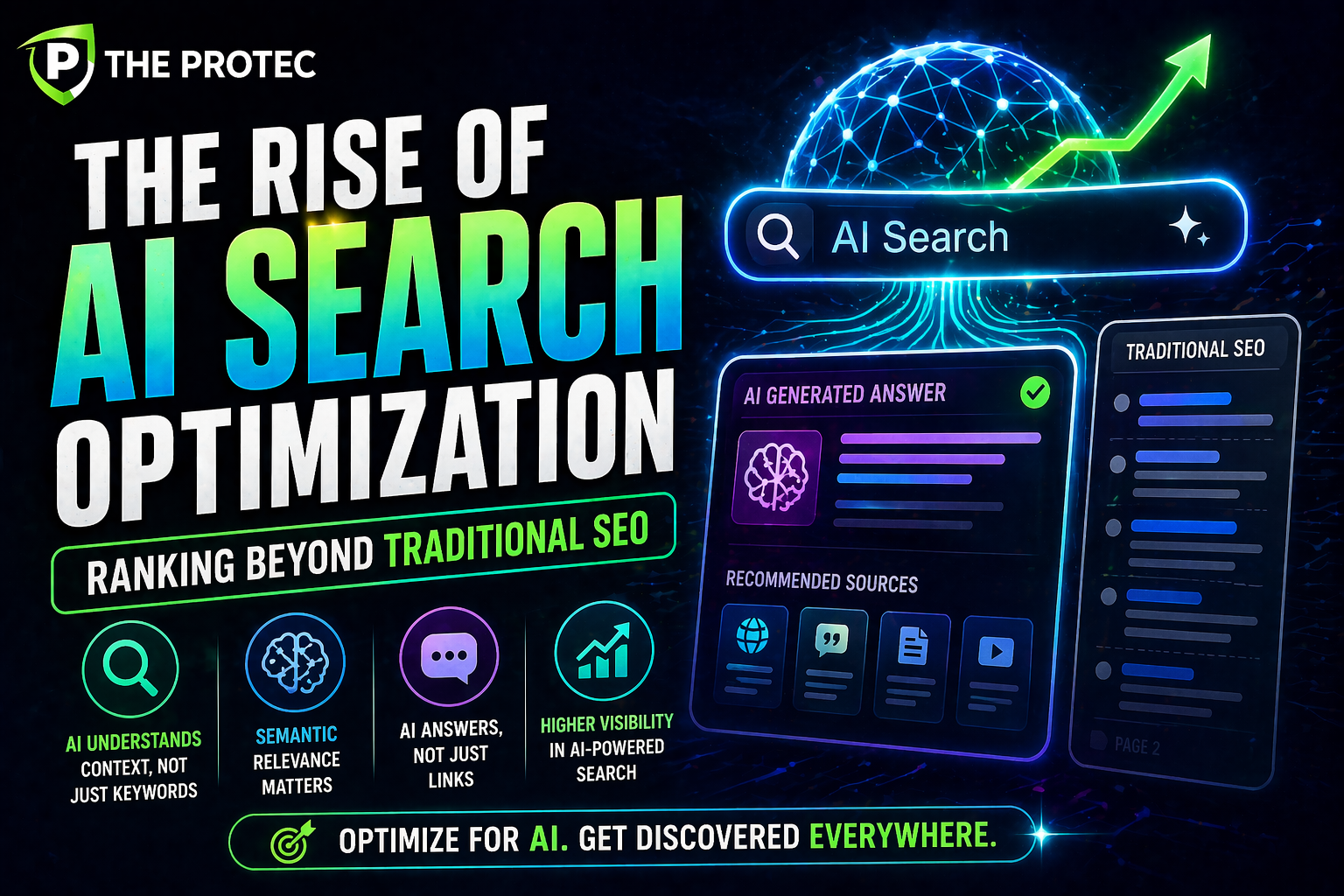
AI search refers to search experiences powered by generative AI and large language models that can interpret a query, synthesize information from multiple sources, and produce a direct answer. These systems may appear in search engines, browser tools, chat interfaces, or dedicated answer engines. The user asks a question in natural language, and the system returns a conversational response rather than a simple list of pages.
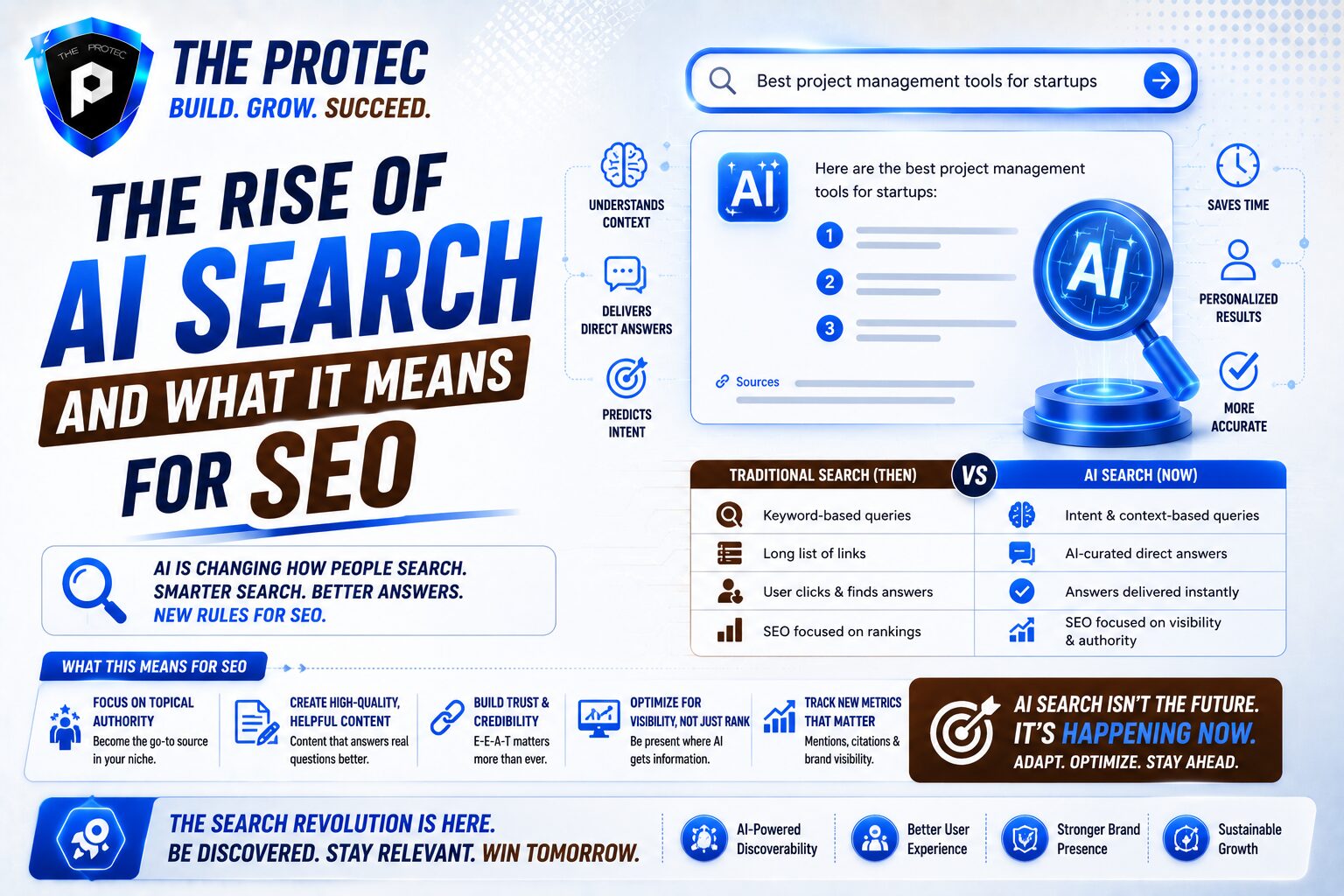
This is a major shift from traditional search. Classic search engines focused on matching keywords, ranking pages, and sending users to websites. AI search focuses on understanding intent and reducing the friction between question and answer. That efficiency is powerful for users, but it changes the value exchange that has historically supported web traffic.
Google’s AI Overviews, Microsoft’s Copilot experiences, and newer answer-first platforms all reflect the same direction: search engine evolution is moving toward synthesis, not just retrieval. For marketers, this means the content competition is no longer only about ranking positions. It is about being part of the answer itself.
Why AI Search Is Transforming Website Traffic
The most immediate impact of AI search is on click behavior. If a user receives a useful answer directly on the results page, the incentive to visit a website drops. This is especially true for informational queries, quick comparisons, definitions, and common how-to questions. Many of these searches previously generated steady traffic for publishers that ranked well for broad topics.
Now, AI-generated answers can reduce clicks even when your page is still being used as a source. In other words, your content may influence the response without producing a visit. This creates a new challenge for content teams: visibility does not always equal traffic.
That said, not all traffic is disappearing. In many cases, AI search is changing which queries generate visits. Users who click through after seeing an AI summary may be further along in the decision process and more qualified. That can mean fewer sessions overall, but stronger intent from the visitors who do arrive.
For publishers, the shift is especially difficult because ad-supported models depend on volume. If answer engines satisfy more queries before a click, the economics of content publishing become more fragile. For brands and service businesses, the issue is different but just as serious: if your expertise is not visible in AI search, you may be absent from the customer journey entirely.
The New SEO Reality: Rankings Alone Are Not Enough
Traditional SEO focused heavily on keywords, backlinks, content depth, and technical performance. Those fundamentals still matter, but they are no longer sufficient on their own. AI search tools use additional signals to decide which sources are trustworthy enough to cite or summarize. They look for clarity, factual consistency, topical authority, entity relationships, and content that can be confidently interpreted.
This means SEO is becoming more holistic. Pages need to be useful for humans and machine-readable for AI systems. Content should answer questions clearly, support claims with evidence, and present information in a format that is easy to extract. Well-structured headings, concise summaries, schema markup, and strong internal topical relationships are becoming more important than ever.
Another change is that many queries are now resolved across multiple interactions. A user may ask one question in a search engine, follow up in a chatbot, then compare products elsewhere. SEO is no longer a single-page competition. It is a multi-touch visibility challenge across AI search surfaces, traditional search results, and brand discovery channels.
How Publishers Are Being Affected
Publishers are among the most exposed to this shift because much of their traffic comes from informational content. News, guides, explainers, and evergreen articles have long benefited from search discovery. AI search can now summarize those same topics instantly, often reducing the need to visit the original source.
There are several consequences:
- Lower click-through rates: Even strong rankings may produce fewer visits when the answer is displayed immediately.
- Faster commoditization: Generic content is easier for AI to summarize, which makes undifferentiated articles less valuable.
- Attribution concerns: Publishers want citations, but citations alone may not offset lost traffic.
- Pressure on monetization: Less traffic can mean fewer ad impressions and lower subscription funnel volume.
This does not mean publishers are powerless. It means the value of original reporting, unique data, expert commentary, and distinct editorial voice is rising. AI systems are better at summarizing commonly known information than reproducing firsthand insight. Publishers that produce proprietary analysis, exclusive interviews, or original research are more likely to remain essential in the AI search era.
For a useful framework on how search is changing, Google’s own Search Central documentation on structured content and page understanding remains a helpful reference: Google Search Central.
What Marketers Need to Rethink
For marketers, AI search changes the definition of a successful SEO strategy. If your dashboard only measures rankings and sessions, you may miss the bigger picture. Visibility now includes citations in AI answers, brand mentions in generated summaries, and placement in AI-assisted recommendation flows.
Content strategy needs to be more intentional. Many teams have spent years creating broad top-of-funnel articles designed to capture search volume. That approach still has value, but it is no longer enough. Content must be more specific, more authoritative, and more differentiated. Pages that merely rephrase what already exists are likely to be absorbed by AI without driving meaningful traffic.
Marketers should also pay close attention to brand signals. AI search systems often rely on patterns of trust and consistency. A recognizable brand, clear authorship, accurate information, and strong mention networks across the web can all strengthen authority. In practice, this means brand-building and SEO are becoming more interconnected than ever before.
SEO Trends 2026: What Is Actually Working
As SEO trends 2026 continue to evolve, a few patterns are becoming especially important. The winners are not necessarily the sites with the most pages. They are the sites that demonstrate expertise, structure, and usefulness in ways both humans and AI can process.
Search systems increasingly favor depth over thin coverage. A site that thoroughly covers a subject cluster is more likely to be understood as authoritative. This is especially true when each article supports the others with strong internal relationships.
2. Original data and first-party insight stand out
AI-generated summaries are strongest when the source material is generic. If your content includes surveys, benchmarks, case studies, or proprietary analysis, it becomes harder to replace and easier to cite.
3. Structured content is more discoverable
Clear headings, concise answers, bullet lists, tables, and schema markup help search engines interpret your content. The easier your page is to parse, the more likely it can be used in AI answers.
4. Brand searches matter more
As users see more synthesized answers, brand recognition becomes a major trust signal. People are more likely to click sources they know. Building demand outside search is now part of SEO resilience.
5. Content freshness still matters, but relevance matters more
Updating content is important, especially in fast-moving industries. But freshness alone will not save weak content. The page must continue to answer the user’s intent better than competing sources.
How to Optimize for AI Search Without Losing Your Identity
Adapting to AI search does not mean writing for machines alone. It means making your content more helpful, more trustworthy, and more clearly organized. The best approach is to create content that serves readers first while making it easy for AI systems to identify what the page is about.
Start with direct answers near the top of the page. If a user asks a question, answer it quickly before expanding with nuance and examples. Use descriptive headings that reflect real search intent. Avoid vague sections that force readers to hunt for the main point.
Next, strengthen your E-E-A-T signals: experience, expertise, authoritativeness, and trust. Include bylines, source references, updated dates where relevant, and subject-matter depth. AI systems are more likely to trust content that looks and reads like it was created by someone who actually understands the topic.
It also helps to create content that cannot be easily replicated by a summary. Add opinion, context, comparisons, frameworks, case-specific guidance, and practical takeaways. These are the kinds of details that make a page worth visiting even when an AI answer already exists.
Finally, think beyond the single article. Build topic clusters, strengthen internal linking, and create supporting assets such as original research, calculators, templates, or downloadable resources. These assets create value that AI search cannot fully replace.
What Website Traffic Will Look Like Next
Website traffic is not ending, but it is becoming more selective. The era of broad, predictable search volume for simple informational queries is under pressure. At the same time, traffic from high-intent, branded, and expert-driven searches may become more valuable.
This shift may force teams to stop judging success only by raw pageviews. A smaller number of visits could still produce better leads, stronger conversions, and more engaged readers. For publishers, the challenge is to preserve the traffic needed to support the business model. For brands, the challenge is to turn visibility into trust before the customer ever reaches the site.
The likely outcome is a more fragmented search landscape. Some users will stay in AI search experiences. Others will still click through when they need depth, proof, or a transaction. The sites that win will be the ones that understand which parts of their content are meant to attract clicks, which parts are meant to build reputation, and which parts are meant to feed the broader ecosystem of search engine evolution.
Practical Steps to Prepare Now
If you want to stay competitive as AI search expands, start with a few practical actions:
- Audit your top traffic pages: Identify which queries are most vulnerable to AI-generated answers.
- Improve answer quality: Make sure your pages provide clear, concise, and complete responses.
- Add original value: Include insights, examples, and data that cannot be easily summarized away.
- Strengthen brand signals: Promote expertise through author pages, citations, and consistent messaging.
- Measure more than clicks: Track assisted conversions, branded search growth, and citation visibility where possible.
These steps will not eliminate the impact of AI search, but they can make your strategy more resilient. The goal is not to fight the shift. It is to position your content so that it remains useful no matter how users choose to search.
FAQ
Will AI search replace traditional SEO?
No. Traditional SEO is still essential, but it is being reshaped. Keywords, backlinks, and technical performance still matter, yet AI search adds new layers such as answer extraction, source trust, and content structure.
Why is AI search reducing website traffic?
Because many users now get the answer directly on the search results page or in a conversational interface. If the answer is complete enough, they may not need to click through to a website.
How can publishers protect traffic in an AI search world?
Publishers should invest in original reporting, expert commentary, proprietary data, and content that adds real context. The more unique and authoritative the content, the harder it is for AI systems to replace.
What type of content performs best with AI search?
Content that is clear, structured, trustworthy, and deeply useful tends to perform best. Pages with direct answers, strong topical coverage, and unique insight are more likely to be cited or summarized accurately.
Should marketers change their SEO strategy now?
Yes. SEO strategy should expand beyond rankings and traffic to include brand visibility, content quality, structured data, and authority-building. AI search rewards brands that can be trusted and understood quickly.
Conclusion: AI Search Is Rewriting the Rules of Discovery
The rise of AI search is not a passing trend. It is a structural change in how information is found, summarized, and consumed. As search engines evolve, the old assumption that a top ranking automatically guarantees traffic is no longer reliable. Publishers and marketers must now think about visibility in a broader way, one that includes citations, trust, brand presence, and content depth.
Those who adapt early will have an advantage. The future of SEO is not about choosing between humans and AI. It is about creating content that serves both: clear enough for machines to understand, and valuable enough for people to click, read, and trust.