Skip to content
Friday, November 20, 2026
  • How distributed blob storage on SQLite reaches high throughput
  • Inside SolidJS 2.0: Async Reactivity and Server Functions Explained
  • One-Copy Console Guide: can you gameshare GTA 6 on PS5 and Xbox?
  • Quad9 France DNS blocking and the Threat to an Open Internet

The Protec Blog

Guarding Your Future, One Byte at a Time.

Contact Us
Latest
  • Home
  • Cybersecurity
  • Artificial Intelligence
    • AI Tools
    • AI Agents
    • AI Automation
    • AI Development
  • Technology
    • Blockchain
    • Green Tech
    • Business Technology
    • Neurotech
    • Internet of Things
    • Technology Trends
    • Quantum Computing
    • Wireless Technology
    • Gaming
  • Development
    • Software
      • Backend Development
      • Frontend Development
      • Mobile Development
    • Website
      • Web Hosting
      • Web Security
      • WordPress
  • Reviews
    • Software Reviews
    • Tech Reviews
    • Buying Guides
Latest
  • How distributed blob storage on SQLite reaches high throughput

    How distributed blob storage on SQLite reaches high throughput

    6 hours ago9 hours ago
  • Inside SolidJS 2.0: Async Reactivity and Server Functions Explained

    Inside SolidJS 2.0: Async Reactivity and Server Functions Explained

    7 hours ago9 hours ago
  • One-Copy Console Guide: can you gameshare GTA 6 on PS5 and Xbox?

    One-Copy Console Guide: can you gameshare GTA 6 on PS5 and Xbox?

    9 hours ago9 hours ago
  • Quad9 France DNS blocking and the Threat to an Open Internet

    Quad9 France DNS blocking and the Threat to an Open Internet

    10 hours ago15 hours ago
  • Why AI agents in auditing asked better questions than humans

    Why AI agents in auditing asked better questions than humans

    12 hours ago1 day ago
  • Why College Students Against AI Mandates Are Demanding a Choice

    Why College Students Against AI Mandates Are Demanding a Choice

    14 hours ago15 hours ago
  • Google Gemini Tasks Can Now Call Businesses and Buy Things for You

    Google Gemini Tasks Can Now Call Businesses and Buy Things for You

    1 day ago1 day ago
  • Offset vs cursor pagination: Why Your API Slows as Data Grows

    Offset vs cursor pagination: Why Your API Slows as Data Grows

    1 day ago1 day ago
  • Prevent race conditions in web applications and costly data loss

    Prevent race conditions in web applications and costly data loss

    1 day ago1 day ago
  • Google AI search traffic: Are AI Overviews Killing the Open Web?

    Google AI search traffic: Are AI Overviews Killing the Open Web?

    1 day ago1 day ago
  • Home
  • Technology
  • Emerging Technology

Emerging Technology

OpenAI Exponential Time Hypothesis Claim: Is Encryption at Risk?
  • Emerging Technology

OpenAI Exponential Time Hypothesis Claim: Is Encryption at Risk?

Aaron Thomas2 weeks ago2 weeks ago010 mins

The OpenAI Exponential Time Hypothesis claim could reshape algorithms—but not crack encryption today. Learn what the proof says and why scrutiny matters.


Read More
AI optimism vs pessimism: Why the West and Asia see it differently
  • Emerging Technology

AI optimism vs pessimism: Why the West and Asia see it differently

Aaron Thomas2 weeks ago2 weeks ago010 mins

Explore AI optimism vs pessimism through global surveys, jobs, policy and adoption—and learn why attitudes differ across Western and Asian economies today.
Read More
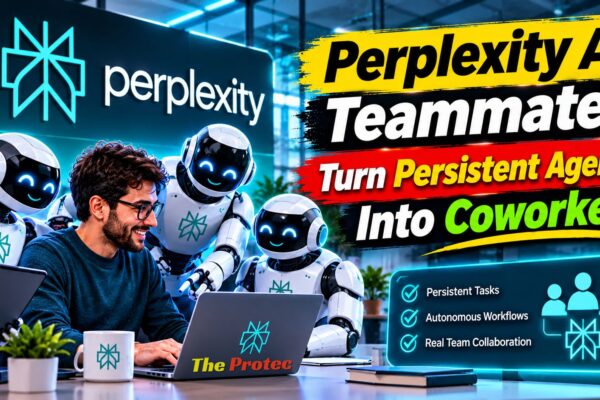
Perplexity AI Teammates Turn Persistent Agents Into Coworkers
  • Emerging Technology

Perplexity AI Teammates Turn Persistent Agents Into Coworkers

Aaron Thomas2 weeks ago2 weeks ago010 mins

Learn how Perplexity AI Teammates coordinate persistent business tasks, use connected tools, seek approvals, and keep people in control around the clock.
Read More
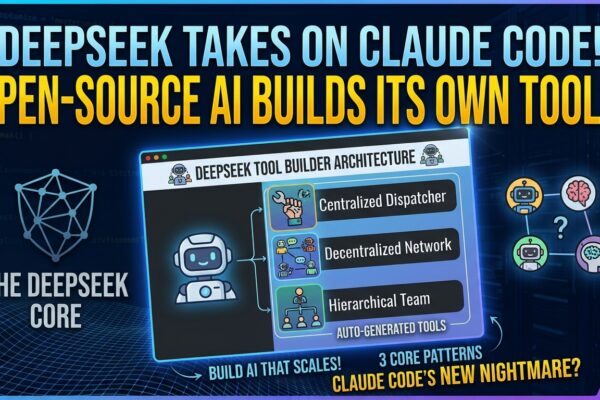
DeepSeek Takes on Claude Code With Open-Source AI That Builds Its Own Tools
  • Emerging Technology

DeepSeek Creator Mode: Open-Source AI That Builds Its Own Tools

Ellie Adam2 weeks ago2 weeks ago010 mins

See how DeepSeek Creator Mode turns plain-language requests into tested plugins, why its open architecture matters, and what security risks remain for developers.

Read More
AI agent mouse brain surgery: What Exin Therapeutics’ Experiment Shows
  • Emerging Technology

AI agent mouse brain surgery: What Exin Therapeutics’ Experiment Shows

Aaron Thomas3 weeks ago3 weeks ago010 mins

Exin says an AI agent chose a gene therapy and guided a robotic injection in a mouse. Learn what AI agent mouse brain surgery did—and did not yet prove.

Read More
Meta Humanoid Robot: What the Fourier Prototype Really Means
  • Emerging Technology

Meta Humanoid Robot: What the Fourier Prototype Really Means

Aaron Thomas3 weeks ago3 weeks ago010 mins

The reported Meta humanoid robot, built with China’s Fourier, is an internal research prototype. Learn what the collaboration means—and what remains unknown.

Read More
Intel Classiq Acquisition: The Logic Behind Its Reported $2.3B Bet
  • Emerging Technology

Intel Classiq Acquisition: The Logic Behind Its Reported $2.3B Bet

Ellie Adam3 weeks ago3 weeks ago09 mins

The Intel Classiq acquisition could unite quantum software, silicon spin qubits and chipmaking scale. Learn why the reported $2.3 billion deal matters.

Read More
AstraZeneca's $40 Million Insitro AI Drug Discovery Deal
  • Emerging Technology

AstraZeneca’s $40 Million Insitro AI Drug Discovery Deal

Ellie Adam1 month ago1 month ago011 mins

Reported AstraZeneca $40 million AI deal with Insitro highlights how machine learning, biological data and computational tools are reshaping early drug research.

Read More
Meta's AI Hardware Push Takes Aim at Apple's Device Ecosystem
  • Emerging Technology

Meta’s AI Hardware Push Takes Aim at Apple’s Device Ecosystem

Aaron Thomas2 months ago2 months ago011 mins

Meta’s AI is building a family of personal Hardware around Muse Charm, smart glasses and hands-free computing, bringing it into closer competition with Apple.
Read More
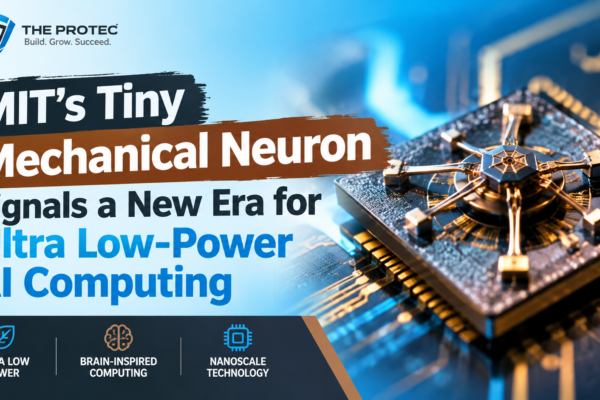
MIT's Tiny Mechanical Neuron Signals a New Era for Ultra Low-Power AI Computing
  • Emerging Technology

MIT’s Tiny Mechanical Neuron Signals a New Era for Ultra Low-Power AI Computing

Aaron Thomas2 months ago2 months ago010 mins

MIT’s nanoscale mechanical neuron combines motion, memory and threshold firing in one tiny device, offering a compelling direction for energy-efficient, brain-inspired AI hardware.
Read More
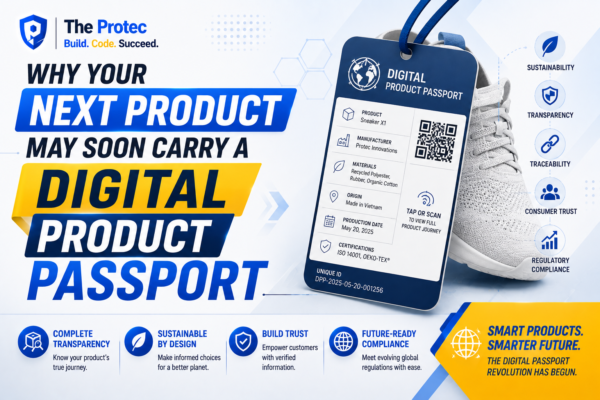
Why Your Next Product May Soon Carry a Digital Product Passport
  • Emerging Technology

Why Your Next Product May Soon Carry a Digital Product Passport

Aaron Thomas3 months ago3 months ago010 mins

Digital Product Passport connect physical goods to accessible digital records, revealing where products came from, how to repair them, and what happens at end of life.

Read More
Quantum Sensing Explained: Why Sensors May Beat Quantum Computers
  • Emerging Technology

Quantum Sensing Explained: Why Sensors May Beat Quantum Computers

Aaron Thomas3 months ago3 months ago09 mins

Quantum sensors are moving from physics laboratories into real-world trials. Here is how they work, why they may mature before quantum computers, and where they could have the greatest impact.

Read More

Watch Our Videos
What happens when the internet disappears? Phones lose their connection. Websites stop loading. Mobile networks may go offline. But thousands of miles away, someone could still receive a message through a radio signal traveling through the sky.

That's the remarkable technology behind *High Frequency (HF) radio communication*.

In this video, we explore how HF radio signals can travel beyond the horizon by interacting with the ionosphere, allowing distant stations to exchange messages without relying on cellular towers, fiber-optic cables or conventional internet infrastructure.

We'll also explore two open-source projects from Rhizomatica:

📡 *HERMES* – A broader communications system designed to bring digital communication to remote and underserved communities.

💻 *Mercury* – An open-source HF software modem that converts computer data into signals that can travel over radio. It supports adaptive data communication and can run on Linux, Windows and Raspberry Pi hardware.

You'll discover:
- How HF radio differs from ordinary FM broadcasting and internet communication.
- How the ionosphere helps radio signals travel beyond the horizon.
- How computers, modems, transceivers and antennas move digital messages through the air.
- Why store-and-forward messaging can work even when a live connection isn't available.
- How open-source radio technology can support remote communities and emergency communication.
- Why HERMES and Mercury matter for independent communication infrastructure.
- The real limitations: bandwidth, interference, atmospheric conditions, antennas, equipment and radio licensing.

HF radio isn't a replacement for broadband internet. It can't deliver the same speed or convenience. But when conventional infrastructure is unavailable, the ability to exchange essential information over long distances can be incredibly valuable.

*Read the full article:*
https://www.theprotec.com/blog/open-source-hf-radio-communications-hermes-mercury/

If the internet disappeared tomorrow, would you know how to communicate?

👍 Like the video if you found it useful, subscribe to The Protec for more technology explainers, and join us as we explore the future of open communication technology.

#HFRadio #OpenSource #EmergencyCommunications #RadioTechnology #OfflineCommunication
How Can Radio Communicate Across the World Without the Internet?
Two people ask an AI the exact same question. One writes in English. The other writes in Hindi.

The AI gives them answers. But behind the scenes, one request could require dramatically more computing power.

University of Michigan researchers tested AI energy consumption across 122 languages and three open-source models. Some tested non-English requests consumed up to *180 times the energy of the English baseline*

Why? The answer may be hidden in something most AI users never see: tokens.

In this animated technology documentary, we investigate the hidden energy divide in multilingual AI.

Here's what you'll discover:

*The 122-language study:* What researchers found when comparing AI inference energy across different languages.

*The tokenization problem:* Why the same meaning can produce very different numbers of tokens depending on the model.

*The 180× energy finding:* What the benchmark actually measured—and why it doesn't mean every Hindi or Bengali request uses 180 times more energy.

*Inside the AI model:* How token streams pass through neural-network layers and influence computational workloads.

*The quality gap:* Why some languages can receive less accurate answers while also requiring more computing resources.

*The hidden cost:* How inefficient tokenization can affect API usage, response times, and businesses serving multilingual customers.

*The environmental impact:* Why unnecessary computation matters as AI usage grows worldwide.

And most importantly, we'll explore what AI developers can do about it: better multilingual tokenizers, representative training data, language-specific testing, optimized models, and transparent energy measurements.

The problem isn't that Hindi, Bengali, or any other language is inherently inefficient. It's how particular AI models tokenize and process different languages.

*Should AI companies be responsible for making every language equally efficient?*

Share your thoughts in the comments.

📰 Read the full article:
https://www.theprotec.com/blog/ai-energy-consumption-by-language-global-divide/

Subscribe to The Protec for more AI investigations, technology documentaries, and emerging-tech explainers.

#ArtificialIntelligence #AI #HindiAI #BengaliAI #MultilingualAI
Does AI Charge Some Languages More Than Others? The Hidden Energy Divide
What happens when your internet suddenly goes down? Do your smart lights stop responding? Do your automations fail? Does your entire smart home become useless?

Not necessarily.

A properly designed local-first smart home can keep essential functions running even when the internet disappears. Lights can respond to motion sensors, local hubs can execute automation rules, and compatible devices can communicate without sending every command to a remote server.

In this animated technology documentary, we explore how to build a smart home that doesn't depend on the cloud for everything.

Here's what you'll discover:

*Cloud vs. Local Control:* Why some smart devices stop working when their manufacturer's servers become unavailable.

*Wi-Fi vs. Internet:* Why losing internet access doesn't necessarily mean losing your local network.

*Home Assistant:* How a local automation hub can coordinate compatible smart devices without cloud access.

*Matter, Zigbee & Thread:* How local communication technologies help devices work together.

*Offline Automations:* How motion sensors, local hubs, and smart lights can continue operating during an internet outage.

*Privacy & Reliability:* Why local-first automation can reduce cloud dependency, while still requiring proper security.

*Building Your Own Offline Smart Home:* The hardware, protocols, physical controls, and practical steps to make your setup more resilient.

But there's an important catch: not every Wi-Fi, Matter, or smart-home device works completely offline. Your hub, devices, integrations, and automation rules must all support local operation.

The goal isn't to eliminate the internet. It's to make sure your home doesn't become less functional when the connection disappears.

*Would you build a smart home that keeps working even when the internet goes down?*

Share your thoughts in the comments!

📰 Read the full guide:
https://www.theprotec.com/blog/smart-home-without-internet-offline-local-automation-guide/

Subscribe to The Protec for more technology explainers, smart-home guides, AI developments, and cybersecurity investigations.

#SmartHome #HomeAssistant #OfflineSmartHome #Matter #InternetOfThings
What If Your Smart Home Worked Without the Internet?
Subscribe

Trending Now

What's New?

Databases
How distributed blob storage on SQLite reaches high throughput 01
6 hours ago9 hours ago
02
Frontend Development
Inside SolidJS 2.0: Async Reactivity and Server Functions Explained
03
Gaming
One-Copy Console Guide: can you gameshare GTA 6 on PS5 and Xbox?
04
DNS Management
Quad9 France DNS blocking and the Threat to an Open Internet
05
AI Agents
Why AI agents in auditing asked better questions than humans
06
Artificial Intelligence
Why College Students Against AI Mandates Are Demanding a Choice

Category Collection

Artificial Intelligence161 News
AWS2 News
Bitcoin3 News
Blockchain5 News
Design Tools10 News
Digital Courses3 News
Digital Currency2 News
E-Commerce3 News
EdTech8 News
Freelancing3 News
Mobile Technology34 News
Project Management3 News
SEO7 News

Popular This Month

Subscription Form

  • Cryptocurrency
  • Software Development
  • Hardware
  • CRM
  • SaaS
  • Design & Media
  • Career & Earning
  • CRM
  • Buying Guides
  • Privacy Policy
  • Contact Us
The Protec Blogs 2026. Flag Counter Powered By Computer Zila.