








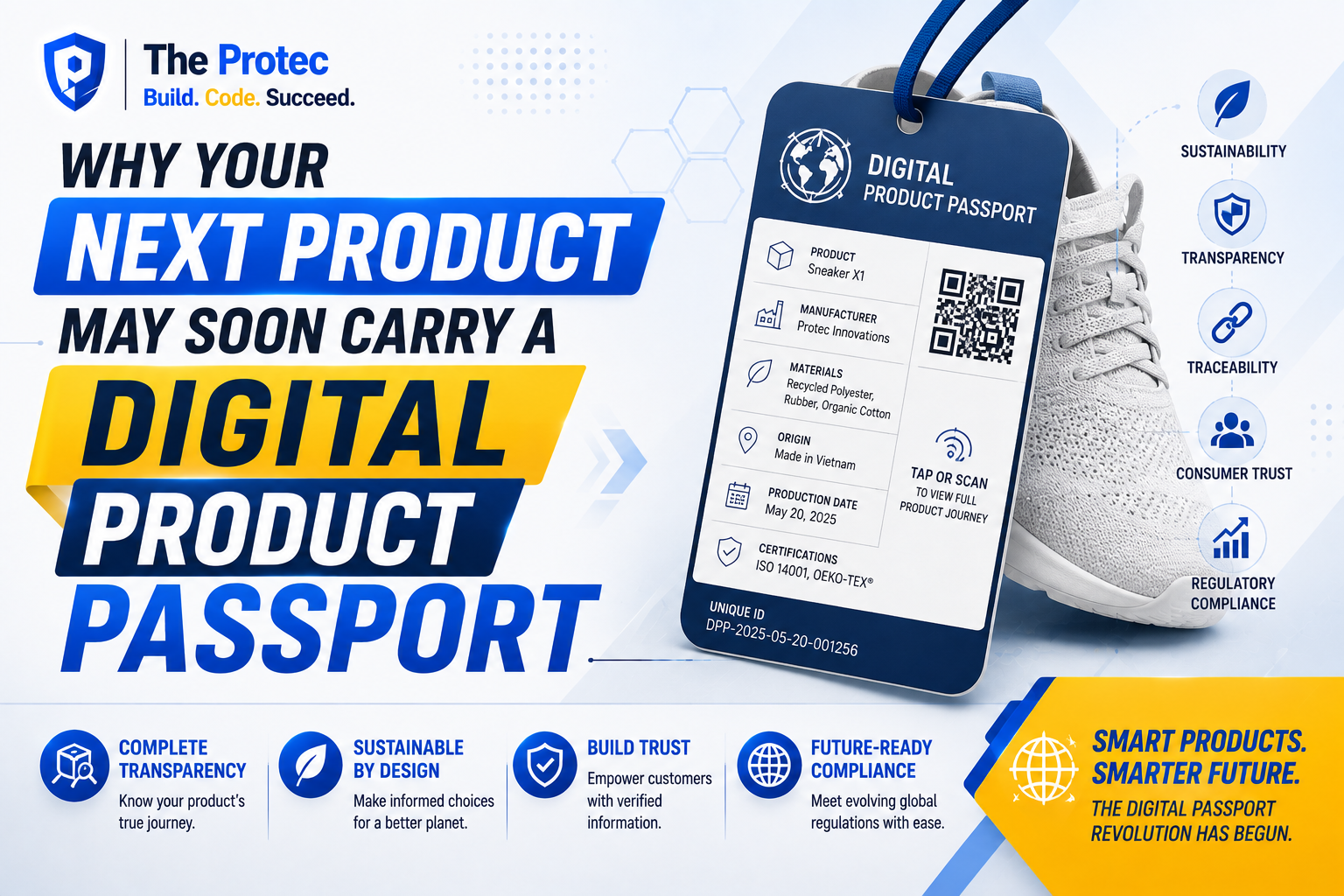
The next jacket, battery, appliance, or piece of furniture you buy may come with more than a label and a serial number. A QR code, NFC tag, or other machine-readable marker could connect it to a living digital record containing details about its materials, origin, environmental performance, repair options, and end-of-life handling.
This record is known as a Digital Product Passport. The idea is moving from pilot projects into real supply chains as regulators, manufacturers, technology providers, and standards organizations develop the infrastructure required to give physical products persistent digital identities.
The European Union is driving much of this momentum, but the implications extend well beyond Europe. Products are manufactured and traded globally, so companies that sell into the EU may need to collect and exchange passport data across international supplier networks. For consumers, repair businesses, manufacturers, and recyclers, DPP technology could fundamentally change how products are evaluated and managed throughout their lives.
What Is a Digital Product Passport?
A Digital Product Passport, commonly shortened to DPP, is a structured digital record associated with a physical product. The record can follow an individual item, a batch, or a product model, depending on the applicable rules and the type of product.
The passport is accessed through a data carrier attached to the product, its packaging, or accompanying documentation. A QR code is the most familiar option, although RFID chips, NFC tags, digital watermarks, and other identifiers may also be used. Scanning the marker directs a phone or industrial system to the correct product record.
A passport is not simply a static web page or electronic instruction manual. It is intended to provide standardized, machine-readable information that authorized systems can exchange. Some information may be public, while commercially sensitive, safety-related, or personal data can be restricted to manufacturers, regulators, customs authorities, repair professionals, or recyclers.
How DPP Technology Connects a Physical Product to Data
A Digital Product Passport generally relies on several connected layers rather than one central database. Together, these layers create a durable link between the physical object and trusted digital information.
- A unique identifier: The product, model, batch, facility, or economic operator receives an identifier that distinguishes it within the relevant system.
- A physical data carrier: A QR code, NFC tag, RFID label, or similar marker stores or references the identifier. It must remain readable for the period specified for that product category.
- A digital resolver: When the identifier is scanned, a resolver directs the request to the appropriate online information or service. This allows the destination to change without replacing the physical code.
- Structured product records: Manufacturers and supply-chain partners provide information in standardized formats so it can be read by people, business software, compliance platforms, and recycling equipment.
- Access controls: The system determines which information a shopper, repairer, regulator, customs officer, or recycling operator is permitted to view.
Consider an electric bicycle battery. Its code could lead a consumer to safety instructions and expected performance information. A repair technician might access diagnostic procedures and replacement-part details. A recycler could retrieve chemistry, disassembly, and hazardous-material information. A regulator could verify compliance data and identify the responsible manufacturer.
The same physical identifier therefore supports multiple users without exposing every data field to everyone.
What Information Can a Digital Product Passport Contain?
The required fields will differ by product category and regulation. A textile passport will not need the same technical data as an industrial battery. However, common DPP information may include:
- Manufacturer, importer, and production-site information
- Product model, batch, serial number, or unique item identifier
- Material composition and the presence of substances of concern
- Country or region of production and selected supply-chain events
- Carbon footprint, energy use, water use, or other environmental indicators
- Recycled content and the origin of certain raw materials
- Durability, performance, warranty, and expected-lifetime information
- Repair manuals, spare-part availability, and software support periods
- Disassembly instructions and component compatibility
- Reuse, refurbishment, collection, and recycling guidance
- Certificates, conformity documents, and compliance declarations
Not every claim can simply be entered by a brand without evidence. Effective passport systems need data validation, clear calculation methods, traceable sources, and rules for updating records. Otherwise, a polished digital profile could become another channel for unsupported environmental marketing.
The EU Digital Product Passport Landscape as of August 2026
The EU Digital Product Passport is a core element of the Ecodesign for Sustainable Products Regulation, or ESPR. The regulation establishes a framework for setting product-specific ecodesign and information requirements. It does not mean that every product sold in Europe already needs a passport.
Instead, detailed obligations are being introduced through product-specific measures. These rules determine which products are covered, what data must be supplied, where the data carrier must appear, how long information must remain available, and which parties receive access.
The European Commission’s 2025–2030 working plan prioritizes product groups with significant environmental impacts and circularity potential. These include textiles and apparel, furniture, tyres, mattresses, iron and steel, and aluminium. Horizontal measures involving repairability and recycled content are also part of the broader policy direction. The European Commission’s ESPR overview provides the official framework and implementation updates.
Batteries are on a separate but closely related track. Under the EU Batteries Regulation, electric-vehicle batteries, light-means-of-transport batteries, and certain industrial batteries are scheduled to require electronic battery passports from February 18, 2027. The official Batteries Regulation sets out the relevant requirements.
The digital product passport 2026 landscape is therefore best understood as an implementation phase. Technical systems, standards, identifiers, registries, data-sharing arrangements, and product rules are being aligned ahead of wider mandatory adoption. Companies should not assume that one generic passport template will satisfy every future product category.
Why Digital Product Passports Matter to Consumers
Consumers often have difficulty comparing sustainability or durability claims because labels use different definitions and disclose limited evidence. A Digital Product Passport can place standardized information behind a code that is available before or after purchase.
A shopper may be able to compare material composition, repairability, expected durability, recycled content, and care instructions. The passport could also help verify authenticity, identify recalled products, locate approved spare parts, or determine whether a secondhand item remains under warranty.
Passports will not automatically make every purchase sustainable. Their value depends on data quality and user-friendly presentation. Still, they can reduce information gaps and make it harder for vague claims such as “eco-friendly” to substitute for measurable product facts.
What DPPs Mean for Manufacturers and Brands
For manufacturers, a DPP is both a compliance obligation and a data-management challenge. Information may need to be collected from mines, material processors, component suppliers, factories, logistics providers, and testing organizations. Many businesses currently store this information in disconnected spreadsheets, certificates, enterprise systems, and supplier portals.
Preparing for DPP technology requires data governance: deciding who owns each field, how evidence is verified, when records are updated, and how supplier data is exchanged. Companies must also maintain passport availability even if a product is discontinued or a technology provider changes.
The benefits can extend beyond compliance. Better component visibility may improve quality control, recall management, inventory accuracy, warranty service, product authentication, and circular product design. Manufacturers could also use passport-enabled services to support resale, leasing, refurbishment, and verified replacement parts.
How Repair Businesses Can Use Product Passports
Independent repairers frequently encounter products without current manuals, diagnostic information, or reliable parts lists. A well-designed passport can provide model-specific disassembly sequences, safety warnings, compatible components, software-support details, and repair history.
This can reduce diagnostic time and prevent unnecessary replacement of entire assemblies. It may also help technicians determine whether a product has been recalled, modified, or exposed to conditions that affect safe repair.
Access remains a crucial issue. If essential repair data is locked behind restrictive permissions or expensive proprietary systems, the practical value will be limited. DPP rules and product-specific measures must balance intellectual property and cybersecurity concerns with meaningful access for qualified repair professionals.
Why Recyclers Need Better Product-Level Data
Recycling facilities often receive products without knowing their exact composition. Workers and machines may have to identify valuable, hazardous, or incompatible materials after collection, when labels are damaged and product documentation is unavailable.
Passport data can reveal where batteries, magnets, circuit boards, adhesives, hazardous substances, and recoverable materials are located. Disassembly instructions can improve worker safety and help recyclers separate higher-value material streams instead of shredding mixed products.
At scale, DPP records could also improve estimates of future secondary-material supplies. Manufacturers may then have more dependable sources of recycled inputs, supporting a more circular relationship between production and end-of-life recovery.
Challenges That Could Determine Whether DPPs Succeed
Attaching a QR code is easy. Maintaining trustworthy, accessible information for years is much harder. Major implementation challenges include:
- Interoperability: Passports must work across countries, industries, software providers, and supply-chain systems.
- Data quality: Companies need reliable evidence, consistent definitions, and processes for correcting inaccurate records.
- Durability: Identifiers must survive normal use, repair, resale, and handling at end of life.
- Cybersecurity: Systems must prevent record tampering, malicious redirection, counterfeit passports, and unauthorized access.
- Commercial confidentiality: Useful transparency must not expose protected formulas, supplier pricing, or sensitive operational details.
- Long-term availability: Product records may need to outlive websites, software contracts, and even the original manufacturer.
Blockchain may be used in some DPP projects, but it is not a universal requirement or a complete solution. Most implementations will combine identifiers, databases, cloud services, standardized interfaces, credentials, and access controls. The priority is trustworthy and interoperable data, not a particular technology label.
What to Look for When You Scan a Product Passport
As passports become more common, users should check who operates the record, when it was updated, whether environmental figures explain their methodology, and whether certifications can be verified. A legitimate code should use a secure destination and clearly identify the responsible economic operator.
Consumers should also remember that a QR code alone does not make a product compliant or sustainable. The quality of the underlying evidence—and the rules governing it—is what gives the passport value.
Frequently Asked Questions
Is a Digital Product Passport the same as a QR code?
No. A QR code is only one type of data carrier used to reach the passport. The Digital Product Passport includes the identifier, structured records, access rules, technical services, and processes used to maintain the information. NFC, RFID, and other technologies may also provide access.
Will every product need an EU Digital Product Passport?
Not immediately. The ESPR creates the legal framework, but requirements are applied through measures covering specific product groups. Each measure can define different data fields, timelines, and access conditions. Separate EU legislation also establishes passport requirements for certain batteries.
Can Digital Product Passport information change after purchase?
Yes. Some fields, such as basic material composition, may remain fixed, while repair history, ownership-related services, safety notices, or refurbishment status can change. Systems must preserve accuracy and traceability when updates occur.
Do Digital Product Passports collect personal data?
A product passport does not inherently require personal information about its owner. Implementations should minimize personal data and separate product information from optional ownership or service accounts. Where personal data is processed, privacy and data-protection rules still apply.
Will Digital Product Passports make products easier to repair and recycle?
They can, provided the passport includes practical information and grants appropriate access. Component lists, disassembly instructions, safety data, and material details can help repairers and recyclers work more efficiently. Results will depend on product-specific rules, data accuracy, and how systems are implemented.
A New Information Layer for Physical Goods
Digital Product Passports are creating an information layer that can remain connected to a product from manufacturing through purchase, repair, resale, and recycling. Their success will depend less on the visibility of the QR code than on the reliability, accessibility, and interoperability of the records behind it.
For businesses, the transition calls for early work on supplier data, product identifiers, evidence management, and long-term system design. For consumers and circular-economy professionals, it promises something that has long been missing: useful product information that remains available after the packaging is gone.