








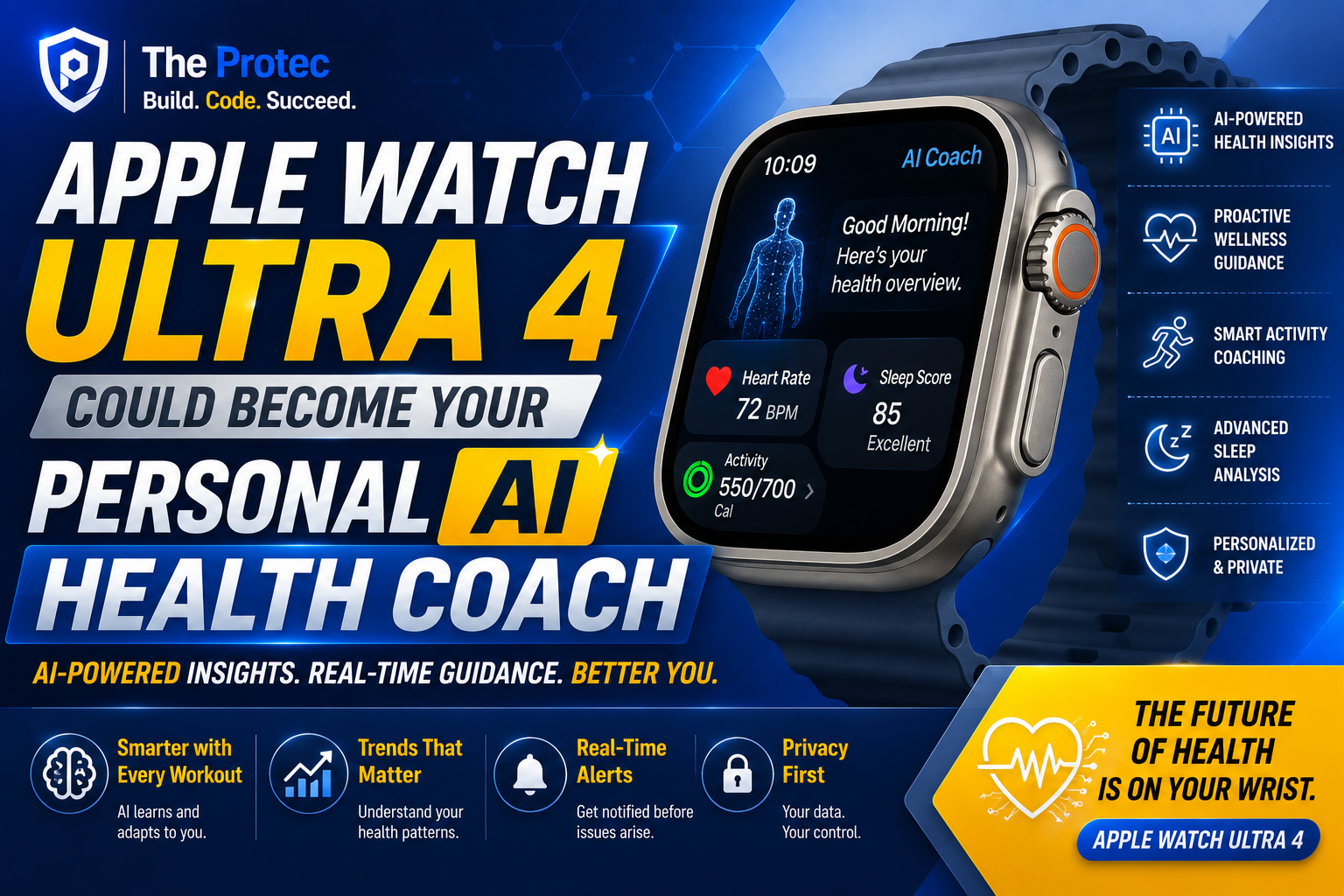
The Apple Watch Ultra has always been positioned as Apple’s most capable wearable, with longer battery life, precision GPS, rugged construction, and tools designed for demanding workouts and outdoor adventures. The rumored Apple Watch Ultra 4, however, could represent a more meaningful shift. Instead of simply recording what you do, it may become better at interpreting your health data, answering questions and recommending what to do next.
That possibility rests on several technologies developing across Apple’s ecosystem: more efficient silicon, Apple Intelligence, a more personal version of Siri, increasingly sophisticated health sensors and machine learning models that can recognize patterns across sleep, activity, heart rate and training data. Together, these advances could turn Apple Watch AI into a practical health and fitness assistant worn throughout the day.
As of August 2026, Apple has not officially announced the Apple Watch Ultra 4, and its final specifications remain unconfirmed. Features involving new sensors, medical claims or regulatory approval are particularly difficult to predict. Still, Apple’s current software direction and recent health initiatives provide a useful picture of what the next Ultra could deliver.
Why Apple Watch Ultra 4 AI Could Be the Biggest Upgrade
Recent Apple Watch generations have focused heavily on display improvements, durability, battery efficiency, and refinements to existing health tools. Those upgrades matter, but AI could change how the watch behaves rather than merely improving individual specifications.
An AI-powered Ultra could connect information that currently appears in separate places. Instead of showing isolated sleep, heart-rate variability, workout and activity readings, it could explain how those signals relate. If a user slept poorly, recorded an elevated resting heart rate and completed a difficult training session the previous evening, the watch might recommend a lower-intensity workout or additional recovery time.
This would not make the device a doctor. It would make it a more useful guide: one capable of identifying relevant trends, presenting them in understandable language and helping users make informed everyday decisions.
A Next-Generation Chip Could Bring More AI to the Wrist
The processor will be central to the Apple Watch Ultra 4 AI experience. A rumored next-generation system-in-package could improve CPU performance, machine learning acceleration and power efficiency. Those gains would allow the watch to process more information locally without sending every request to an iPhone or cloud server.
On-device processing is particularly valuable for a wearable. Health data can be analyzed faster, features can work when cellular coverage is limited, and sensitive information can remain on the device. For hikers, divers, runners and other Ultra users who often operate away from a reliable connection, that independence would be a significant advantage.
Efficiency may be more important than raw speed. Continuous health analysis and local AI models consume energy, so Apple must balance intelligence with the Ultra line’s battery-life expectations. A more efficient chip could support background pattern detection and smarter voice interactions without forcing users to charge more frequently.
Apple Watch Ultra 4 Siri Could Become More Context-Aware
Siri is likely to be one of the most visible parts of the potential upgrade. Apple has been working toward a more personal assistant that can understand context, draw from user-authorized information and take actions across apps. If those capabilities extend effectively to the wrist, Apple Watch Ultra 4 Siri could become far more useful during workouts and daily routines.
A runner might ask, “How does today’s pace compare with my last three long runs?” A user preparing for bed could ask whether recent sleep consistency has improved. After a hike, Siri might summarize distance, elevation, heart-rate zones, and recovery needs without requiring the user to navigate several screens.
The key improvement would be conversational continuity. Siri could understand follow-up questions such as “What caused that?” or “Should I train tomorrow?” by retaining the context of the previous request. Some advanced queries would probably still depend on a compatible iPhone or Apple’s private cloud infrastructure, but routine health and workout requests could increasingly be handled on the watch.
watchOS AI Features Could Connect Your Health Data
The watch’s software may ultimately matter more than any single sensor. Apple already uses machine learning for fall detection, irregular rhythm notifications, workout recognition and other features. The next step is to make those systems feel less like independent alerts and more like one coordinated assistant.
Apple’s introduction of AI-assisted workout experiences established a foundation for spoken encouragement and performance summaries based on workout data. Future watchOS AI features could expand that concept beyond an active session. The watch might generate a morning readiness summary, identify changes in training consistency or explain why a particular health trend deserves attention.
Useful AI summaries could include:
- A daily overview combining sleep duration, recent exertion and resting heart rate.
- Weekly explanations of changes in pace, endurance, recovery or workout frequency.
- Warnings when training load rises unusually quickly compared with a user’s normal pattern.
- Contextual reminders based on schedule, location, weather and established activity habits.
- Plain-language explanations of health measurements and their longer-term trends.
Apple describes its evolving fitness and intelligence capabilities on the official watchOS website. The most important development for Ultra 4 would be deeper coordination among these tools, allowing recommendations to reflect the user’s overall situation rather than one metric.
Expected Apple Watch Ultra 4 Health Features
The current Ultra platform already provides a substantial health foundation, including heart-rate monitoring, ECG capabilities in supported regions, temperature sensing, sleep tracking, blood oxygen functionality where available, and notifications for certain detected conditions. The Apple Watch Ultra 4 health features are likely to refine this foundation while adding more intelligent analysis.
Smarter Heart and Recovery Insights
Rather than presenting heart rate, resting heart rate and heart-rate variability as separate charts, Apple Watch health AI could interpret how they change together. A sustained deviation from an individual baseline may prompt the watch to suggest rest, hydration or closer monitoring. Recommendations would need careful wording because these readings can be influenced by stress, illness, medication, alcohol, travel and many other factors.
Improved Sleep Interpretation
Sleep tracking could become more actionable by connecting bedtime consistency, interruptions, respiratory patterns, wrist temperature and next-day performance. Instead of simply reporting hours slept, the watch might explain that irregular bedtimes appear to correlate with lower energy or slower workout recovery.
Blood Pressure Trend Detection
Blood pressure remains one of the most discussed potential additions to future Apple Watches. Early wearable implementations are more likely to identify possible trends or signs of hypertension than provide a traditional cuff-style systolic and diastolic reading. Any medical-grade feature would depend on validation, regional authorization, and Apple’s final hardware.
What About Blood Glucose Monitoring?
Non-invasive glucose monitoring remains a major long-term objective across the wearable industry, but it is technically challenging. There is not enough reliable evidence to assume it will arrive with Ultra 4. Buyers should be skeptical of confident claims that the upcoming watch will replace a dedicated glucose monitor.
Health alerts should support—not replace—professional medical care. The U.S. Food and Drug Administration’s digital health resources provide helpful context on how software and connected devices fit into healthcare.
Recommended Apple Watch Accessories
A few useful Apple Watch products worth checking out if you’re looking to upgrade, protect, or personalize your watch.

10-Pack Stretchy Bands for Apple Watch
A flexible, water-resistant nylon band set designed for everyday Apple Watch use, with multiple colors for different outfits and occasions.
- 10 colors in one pack
- Stretchy, lightweight nylon design
- Water-resistant for everyday use
- Compatible with multiple Apple Watch sizes

Apple Watch SE 3 GPS — 40mm
Apple’s Apple Watch SE 3 combines fitness and health tracking with an always-on display, GPS connectivity, safety features, and everyday smartwatch functionality.
- 40mm Starlight Aluminum case
- Always-on display
- GPS and heart-rate monitoring
- Up to 18 hours of battery life
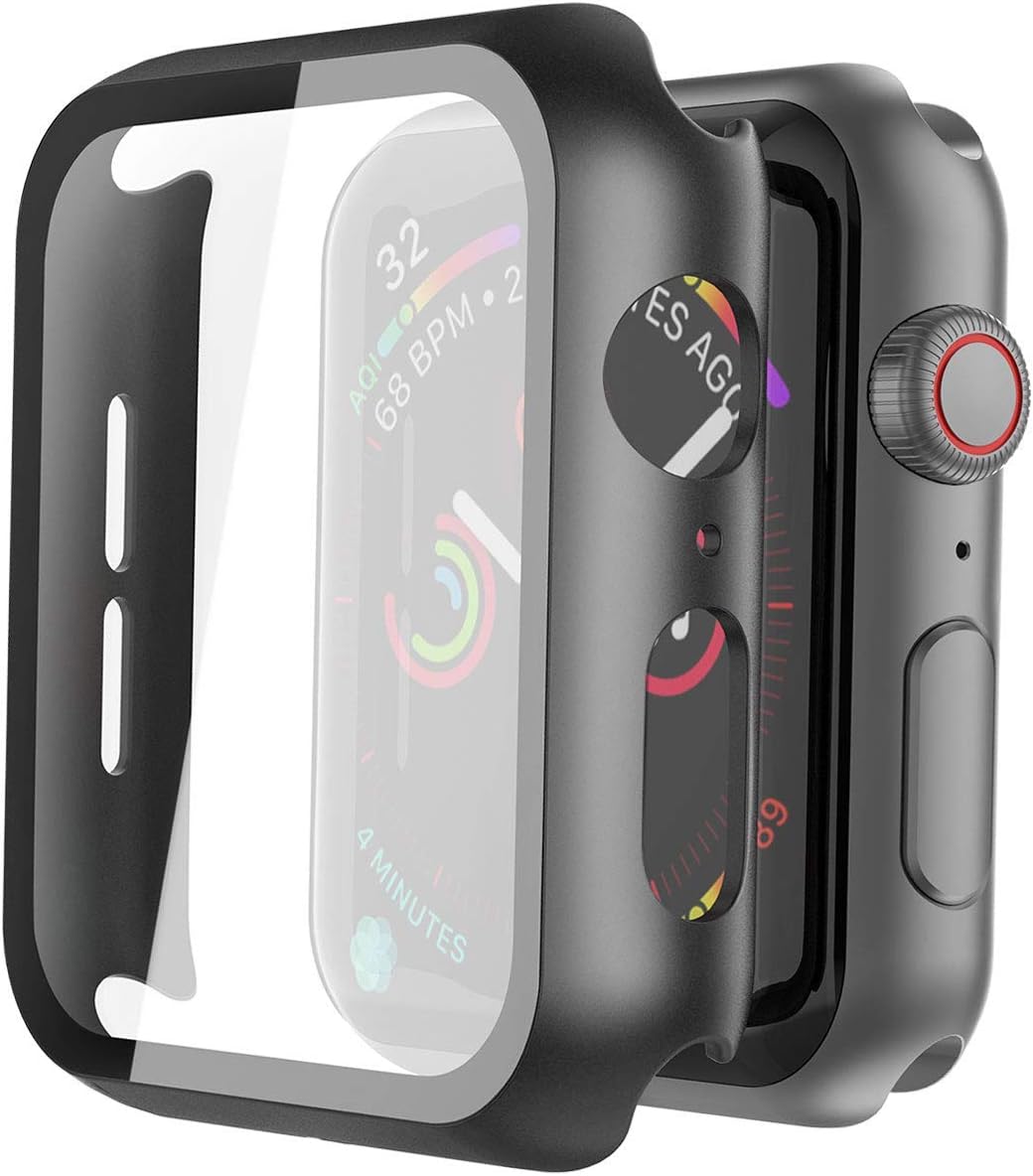
Misxi Apple Watch Screen Protector Case
A two-pack protective case with built-in tempered glass designed to protect the Apple Watch display and outer surface while maintaining touch sensitivity.
- 2 protective cases included
- Built-in tempered glass protection
- Scratch and scuff protection
- Snap-on installation
More Personalized Workout and Training Insights
The Ultra’s audience makes fitness coaching a natural priority. Current training tools can display pace, power, heart-rate zones, elevation, route information and training load. AI could transform these measurements into recommendations tailored to the individual.
For example, Apple Watch Ultra 4 might notice that a runner’s pace declines after repeated high-intensity days, or that performance tends to improve after longer recovery periods. It could recommend adjusting the next session while explaining the data behind the suggestion. A cyclist could receive guidance based on recent distance and intensity, while a hiker might get an estimated effort level based on elevation, temperature and pack-related exertion.
Personalization will be essential. Generic motivational messages are easy to ignore, but guidance based on months of individual history can feel relevant. The watch could learn preferred workout times, typical recovery patterns, and realistic goals, adapting suggestions as fitness changes.
Proactive Recommendations Could Define Apple Watch Health AI
The most compelling AI health coach would not wait for a question. With permission, it could provide timely recommendations when the information is most useful.
Before a scheduled workout, the watch might identify unusually low sleep, a higher-than-normal resting heart rate and heavy recent training. It could suggest replacing intervals with an easy recovery session. During activity, it might notice an unsustainable pace and recommend slowing down. Later, it could suggest hydration, mobility work or an earlier bedtime based on exertion and environmental conditions.
Apple must avoid making the experience intrusive. The best approach would offer adjustable coaching levels, transparent explanations, and easy controls for disabling categories of recommendations. Users should also be able to see which measurements influenced an insight. Trust depends on showing the reasoning rather than delivering unexplained instructions.
Privacy Will Be Crucial for an AI Health Coach
A device capable of interpreting health history, routines, and location carries substantial privacy responsibilities. Apple is likely to emphasize on-device analysis, encrypted Health data and user-controlled permissions. More complex requests may require an iPhone or cloud processing, but users should be told when information leaves the watch and what service is processing it.
AI-generated health guidance also needs boundaries. Models can misunderstand incomplete data, and wearable sensors do not capture every factor affecting health. Apple will need to distinguish wellness suggestions from medical advice, indicate uncertainty and direct users toward professional care when appropriate.
The quality of an AI coach will therefore depend on more than clever answers. Privacy controls, data accuracy, explainability and restrained notifications will determine whether people trust it over the long term.
What to Expect From Apple Watch Ultra 4
The most realistic expectation is an evolutionary hardware update paired with a larger software shift. A faster, more efficient chip could enable quicker Siri responses and more local processing. New watchOS intelligence could provide richer summaries, while established sensors supply the data needed for personalized health and workout guidance.
Some features may require a newer iPhone, specific languages or an internet connection. Medical functions may also vary by country because of regulatory requirements. Apple could announce capabilities that arrive gradually through later software updates rather than being available on launch day.
Even without a breakthrough sensor, better interpretation could make Ultra 4 substantially more helpful. The ability to explain existing measurements and recommend practical next steps may have a greater everyday impact than adding another chart to the Health app.
Frequently Asked Questions
Has Apple officially announced the Apple Watch Ultra 4?
No. As of late August 2026, Apple Watch Ultra 4 remains an anticipated product rather than an officially detailed device. Its name, release timing, specifications, and AI functions should be treated as unconfirmed until Apple makes an announcement.
Will Apple Watch Ultra 4 AI work without an iPhone?
Basic sensor analysis, workout tracking and some Siri tasks may run directly on the watch, particularly if it receives a more capable chip. Advanced generative requests or features requiring personal context may still rely on a compatible iPhone, cellular connection or private cloud processing.
What Apple Watch Ultra 4 health features 2026 reports are most realistic?
The most plausible improvements include smarter health summaries, deeper sleep and recovery analysis, personalized workout recommendations and better detection of changes from a user’s normal baseline. Blood pressure trend notifications are possible but uncertain, while non-invasive glucose monitoring remains less likely in the near term.
Can Apple Watch Ultra 4 replace a doctor or personal trainer?
No. It could help users understand trends, stay consistent, and make better-informed fitness decisions, but wearable readings and AI recommendations have limitations. Concerning symptoms, unusual alerts, and major training or medical decisions should be discussed with qualified professionals.
Will current Apple Watches receive the same AI features?
Some software features may reach older models, but demanding on-device AI functions could require newer hardware. Apple may divide processing among the watch, a paired iPhone, and cloud services, meaning feature availability could depend on the complete device setup rather than the watch alone.
The Bottom Line
Apple Watch Ultra 4 could mark the point where Apple’s premium wearable evolves from an advanced tracker into a more proactive health and fitness companion. A new chip, smarter Siri, connected watchOS intelligence and personalized recommendations could help users understand not only what happened, but why it matters and what they might do next.
The final product may not deliver every rumored sensor or operate as a fully independent AI coach. Yet if Apple combines reliable measurements with clear explanations, responsible guidance, and strong privacy protections, the Ultra 4 could become one of the most practical examples of personal AI—an assistant that learns from daily patterns and helps its wearer make healthier choices.