







A product label can tell a customer what something is. A Digital Product Passport can reveal where it came from, what it contains, how it should be repaired and what should happen when it reaches the end of its useful life. That difference is turning the passport from a compliance concept into a significant new layer of digital infrastructure.
As of August 2026, Digital Product Passports are moving from policy discussions and pilot projects toward operational systems. European Union rules are the main catalyst, but the effects extend well beyond Europe. Manufacturers, retailers, logistics providers, recyclers and software companies are building the identifiers, data models, APIs and governance controls needed to connect physical products with trusted digital records.
Understanding Digital Product Passports means looking past the QR code. The real transformation lies in the product passport technology behind it: interoperable data services that can follow goods through complex supply chains while serving different information to regulators, businesses and consumers.
Digital Product Passports Explained
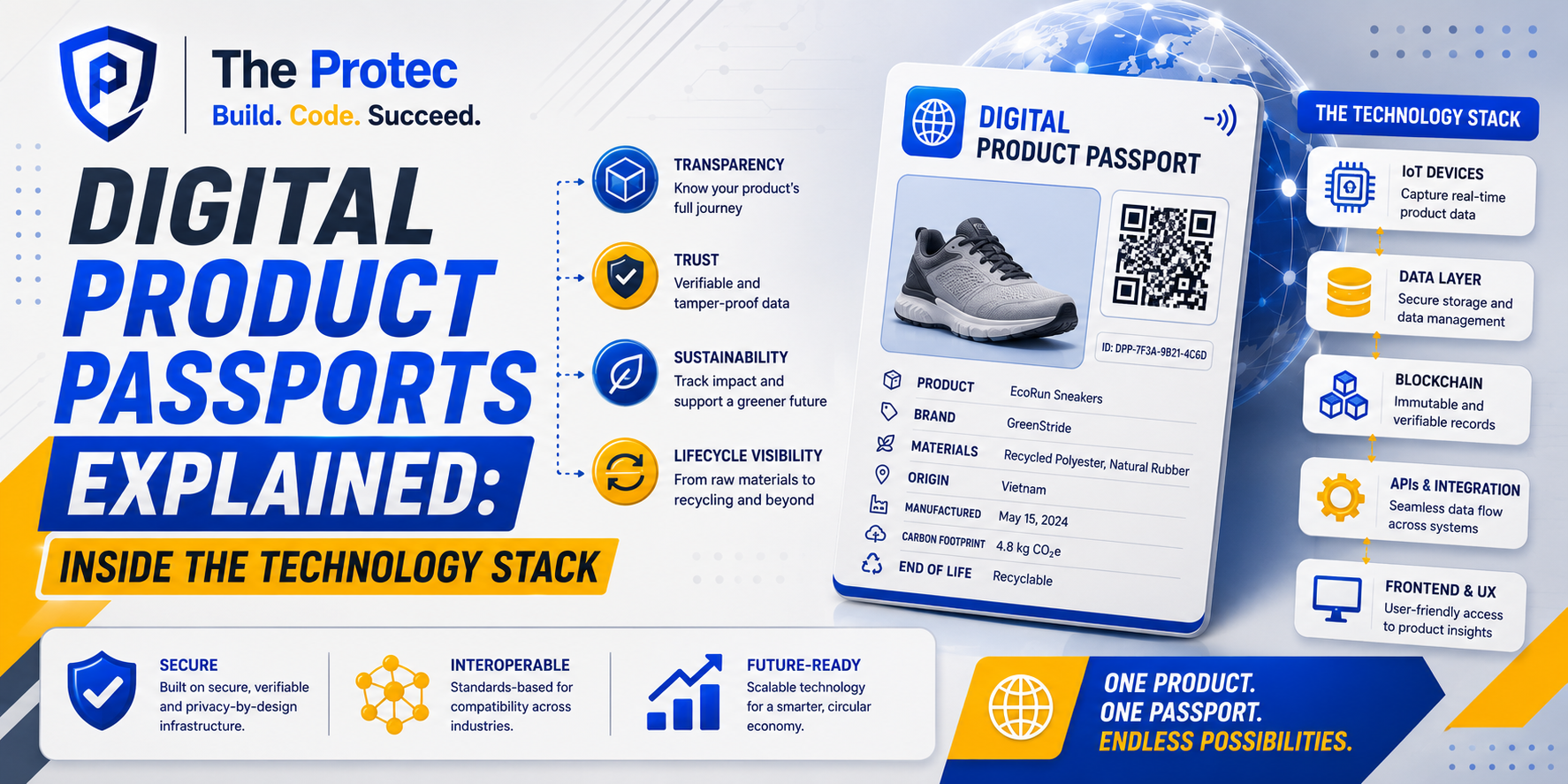
A Digital Product Passport, commonly shortened to DPP, is a structured digital record associated with a physical product, component, batch or model. It can contain information such as material composition, origin, carbon footprint, repair instructions, hazardous substances, spare-part availability, certifications and end-of-life guidance.
A machine-readable data carrier on the product or its packaging provides access to the record. This may be a QR code, NFC tag, RFID tag, barcode or another technology supported by the relevant product rules. The carrier does not need to store the full passport. It usually contains an identifier or web address that directs an authorized user to current information.
Several characteristics distinguish a DPP from a conventional product page:
- Persistence: The record should remain accessible throughout the required product lifetime.
- Structured data: Information must be readable by software, not trapped in a PDF or image.
- Granularity: A passport may apply at model, batch or individual-item level.
- Controlled access: Public sustainability information can coexist with confidential supplier or compliance data.
- Interoperability: Other platforms must be able to identify the product and exchange permitted information.
DPP technology therefore acts as a bridge between the physical and digital worlds. It gives each covered product a durable digital identity and a standardized route to relevant data.
Why the Digital Product Passport EU Framework Matters
The EU Ecodesign for Sustainable Products Regulation, or ESPR, created the broad legal framework for Digital Product Passports. Rather than imposing identical requirements on every product immediately, the regulation allows detailed obligations to be established through product-specific and horizontal rules. These measures determine which products need passports, the required data and the appropriate level of granularity.
The EU working plan prioritizes areas including textiles and apparel, furniture, tyres, mattresses, iron, steel and aluminium, alongside horizontal measures such as repairability and recycled content. Batteries follow a related regulatory path, with battery passport requirements scheduled to apply from February 2027 to specified electric-vehicle, light-means-of-transport and industrial batteries.
The ESPR also called for an EU DPP registry to be established by 19 July 2026. This registry is part of a wider compliance architecture rather than a universal database containing every piece of product information. Passport data may remain distributed across manufacturer and service-provider systems, while identifiers and selected compliance information support discovery, verification and customs processes.
The European Commission overview of the ESPR provides the official regulatory context. For businesses, the important point is that DPP requirements will become more specific as delegated acts are adopted. A flexible data foundation is consequently more valuable than a one-off compliance page.
The Infrastructure Behind DPP Technology
A functioning passport depends on several technical layers working together. Organizations evaluating software should examine the entire architecture rather than treating the data carrier as the finished product.
Product identifiers and data carriers
Every passport starts with a unique or sufficiently specific product identifier. The identifier may represent a model, production batch or serialized item, depending on regulation and business need. It must be globally unique within its intended scope and remain stable even if the underlying software platform changes.
The identifier is encoded in a carrier that can survive the product’s expected use. A printed QR code may suit clothing or packaged goods, while industrial equipment may require a durable engraved code, RFID device or NFC tag. Placement, readability, tamper resistance and replacement procedures all become operational design questions.
Resolvers and discovery services
A resolver connects the product identifier to online resources. Instead of hard-coding one static page, it can direct different systems to a consumer experience, repair manual, compliance endpoint or machine-readable dataset. This separation helps organizations update service locations without replacing the physical identifier.
Standards such as GS1 Digital Link illustrate how familiar product identifiers can connect to web resources. Open resolution patterns also reduce dependence on a single DPP vendor.
Data models and semantic meaning
Exchanging data requires agreement about what each field means. A material name, percentage of recycled content or carbon-footprint value is not useful if every supplier defines it differently. DPP implementations therefore need shared vocabularies, units, classification systems and validation rules.
This semantic layer is one of the hardest parts of product passport technology. Mapping product lifecycle management, enterprise resource planning and supplier data into a common model requires more than an export script. Businesses must preserve context, including methodology, geographic scope, measurement date and assurance status.
APIs, storage and access control
Application programming interfaces allow passport platforms to receive updates and deliver data to other systems. Modern implementations commonly use web APIs and structured formats such as JSON, supported by event streams or batch integrations where appropriate. APIs may connect product lifecycle management, ERP, manufacturing execution, warehouse, ecommerce and sustainability platforms.
Not every user should see every field. A consumer may receive care and recycling guidance, while a market-surveillance authority can access evidence of conformity. A repair provider might need technical documentation that should not be publicly indexed. Role-based permissions, authentication, consent rules and auditable access logs are therefore central components, not optional security additions.
How Product Traceability Changes Supply Chains
A DPP is only as reliable as its source data. In a multi-tier supply chain, the final manufacturer may not directly control information about a mine, chemical processor, fabric mill or component producer. Passport programs must establish how suppliers submit data, how claims are validated and how corrections move downstream.
Traceability platforms can associate events with products as materials are transformed, assembled, shipped, repaired and recovered. Standards-based event records make it possible to answer questions about what happened, when, where and under whose authority. Serialization can provide item-level histories, while batch-level tracking may be more practical for commodities or high-volume production.
This infrastructure also creates business value beyond compliance. Companies can identify affected products during recalls, verify provenance, reduce counterfeit risk and improve warranty decisions. Recyclers can discover material composition before disassembly, and repair networks can locate compatible parts. The passport becomes a shared reference point across the product lifecycle.
APIs and Interoperability Will Determine DPP Success
No single platform controls an international product journey. Suppliers, brands, marketplaces, regulators and waste operators use different software, so interoperability is essential. A DPP that works only inside one vendor’s portal may satisfy a demonstration but creates long-term integration and continuity risks.
Technical interoperability includes identifiers, API specifications, authentication methods and data formats. Semantic interoperability ensures receiving systems interpret the information correctly. Organizational interoperability covers contracts, responsibilities, update processes and data-quality rules. All three are necessary.
Businesses should also plan for portability. Passport records may need to outlive a software contract or even the original manufacturer. Exportable data, documented APIs, persistent identifiers and clear migration procedures protect continuity. This is particularly important for durable products expected to remain in service for decades.
Leading architectures are increasingly modular. An organization may use one provider for product identity, another for lifecycle assessment and existing enterprise systems as authoritative data sources. An orchestration layer can assemble the required passport response without forcing every record into a single central database.
Sustainability Data Must Be Verifiable
DPPs can make environmental information more visible, but visibility does not guarantee accuracy. Carbon footprints, recycled-content percentages and sourcing claims need methodologies, evidence and version histories. Otherwise, a passport may simply digitize inconsistent claims.
Strong systems record data provenance: who supplied a value, when it was calculated, which methodology was used and whether an independent party verified it. Cryptographic signatures and verifiable credentials can help establish authenticity, although blockchain is not a requirement for a DPP. Conventional databases may be more suitable when they provide adequate security, governance and auditability.
The objective is trustworthy information with proportionate controls. Highly sensitive supplier data may stay confidential while an approved credential confirms that a requirement was met.
The Emerging Digital Product Passport Software Ecosystem
The DPP market is developing into an ecosystem rather than a single software category. Product identity providers generate and manage identifiers. DPP platforms assemble passport experiences and compliance datasets. Traceability vendors capture supply-chain events. Lifecycle assessment tools calculate environmental indicators, while integration platforms connect enterprise applications and supplier portals.
Testing, conformity assessment, cybersecurity and assurance providers are becoming equally important. As requirements mature, buyers will look for evidence that a passport is complete, accessible, interoperable and based on defensible claims.
Businesses should avoid selecting software solely from a polished QR-code demonstration. Evaluation should cover data ownership, API limits, standards support, multilingual delivery, uptime, access controls, migration options and the provider’s plan for changing delegated acts.
How Businesses Should Prepare
The first step is to identify affected product families and map their markets, expected regulatory timelines and available data. Teams should then define authoritative sources for each likely passport field. Missing supplier information, inconsistent identifiers and undocumented calculations should be treated as data-governance problems rather than postponed until implementation.
- Create a cross-functional DPP team spanning product, compliance, sustainability, IT, procurement and operations.
- Establish durable product identifiers and decide whether model, batch or item-level granularity is required.
- Inventory existing systems and test how data can be accessed through APIs.
- Run a pilot on one product line with real suppliers and lifecycle events.
- Separate public, partner-only and regulator-accessible information.
- Measure completeness, accuracy, update speed and passport availability.
- Include portability and regulatory-change clauses in vendor contracts.
The most successful programs will treat the DPP as reusable digital infrastructure. Once reliable product data can move across the organization, the same foundation can support customer transparency, repairs, resale, recalls, circular services and supply-chain analytics.
Frequently Asked Questions
Is a Digital Product Passport just a QR code?
No. A QR code is one possible data carrier. The passport includes the identifier, structured product information, storage services, resolver, APIs, permissions and governance processes behind the code.
Does every product sold in the EU already need a DPP?
No. The ESPR provides a framework, but detailed obligations are introduced for specific product groups through delegated measures and related legislation. Companies should monitor the rules applying to their product categories and supply-chain roles.
Do Digital Product Passports require blockchain?
No. Blockchain may support particular provenance or multi-party trust scenarios, but it is not inherently required. Database, cloud and credential technologies can meet many DPP needs when supported by appropriate security and audit controls.
Who owns and updates passport data?
Responsibility depends on the product rules and commercial relationships. Manufacturers or other responsible economic operators generally coordinate the passport, while suppliers, repairers and recyclers may contribute lifecycle data. Contracts and governance policies should define ownership, validation and correction procedures.
What is the main business benefit of DPP technology?
Compliance is the immediate driver, but the larger benefit is a reliable digital identity and data layer for products. That foundation can improve traceability, recalls, service, resale, recycling, customer trust and supply-chain decision-making.