






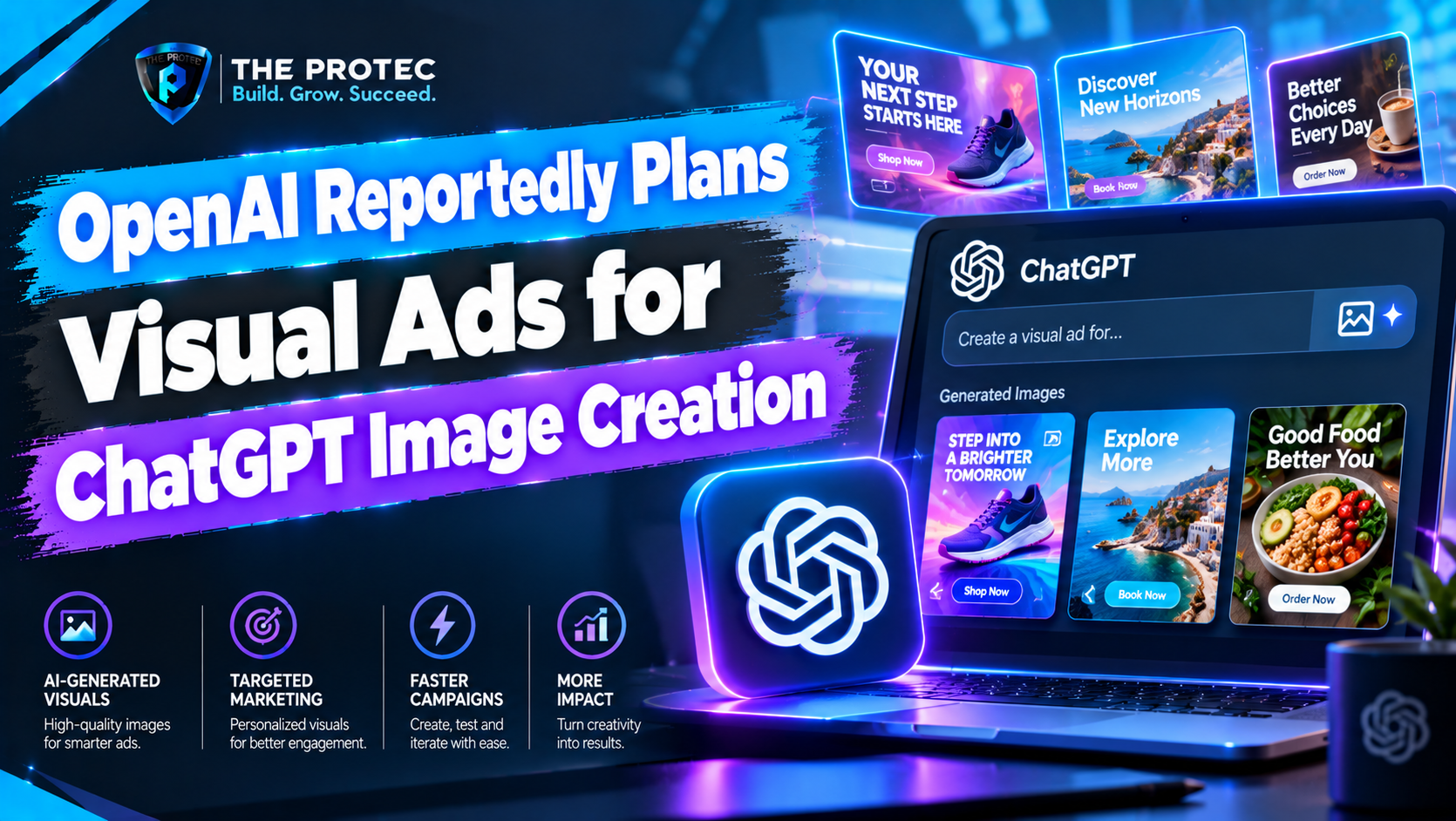
Image generation has become one of ChatGPT’s most visible and commercially useful capabilities. People use it to create product concepts, social graphics, advertisements, illustrations, memes, interior designs, and branded content. OpenAI is now reportedly preparing to test visual ads within ChatGPT while some users generate images, potentially turning that creative workflow into a new advertising surface.
The idea is significant because visual ads would arrive at a moment when a user is already thinking in pictures and may have commercial intent. Someone designing a living room, for example, could be shown a sponsored furniture image. A person creating packaging concepts might encounter an advertisement for a design platform or printing service.
However, a reported ChatGPT ads test is not the same as a platform-wide advertising launch. Publicly available details remain limited, including who would participate, where the test would run, and how ads would be selected. There is no reason to assume that every ChatGPT user will immediately see advertising or that ads will appear throughout every conversation.
What the OpenAI ChatGPT Visual Ads Test Could Involve
The reported experiment centers on ads shown while users interact with the ChatGPT image generator. That wording leaves room for several possible formats. An advertisement could appear beside a generated image, beneath the result, within the generation interface, or during the brief period when an image is being processed.
The ad itself could be a conventional display creative, a product card, a sponsored visual recommendation, or an interactive format related to the user’s task. OpenAI has not publicly established that any one of these approaches will become the final model. A limited experiment would likely be designed to compare formats, relevance, engagement, and user reactions before any broader decision is made.
That distinction matters. Testing OpenAI ads in ChatGPT does not prove that the company has settled on an ad-supported future for the entire service. Technology companies routinely test features with small user groups and abandon or substantially redesign experiments when the results do not support a wider rollout.
Why Image Generation Is an Attractive Advertising Surface
Visual creation often reveals more immediate context than a general chatbot question. A prompt asking for a Scandinavian kitchen, a trail-running poster, or a luxury skincare campaign can indicate a clear interest, project, or potential purchase. That makes ads while generating images in ChatGPT potentially valuable to advertisers seeking contextually relevant placements.
The activity is also inherently visual. An image advertisement can sit beside generated artwork without requiring users to leave the visual environment. Compared with inserting a promotional paragraph into a written answer, a clearly separated visual placement may be easier to identify and less likely to alter the substance of the assistant’s response.
Image creation can also require considerable computing capacity. Generating and editing high-quality images is typically more resource-intensive than returning a short text response. Advertising could help subsidize access for free users while supporting the infrastructure behind AI-generated images in ChatGPT.
How Advertising Fits OpenAI’s Monetization Strategy
OpenAI already has several sources of income, including consumer subscriptions, business plans, enterprise products, and developer services. Its ChatGPT pricing options illustrate a model built around free access alongside paid tiers with additional capacity and features.
Advertising could become another part of the OpenAI business model rather than replacing subscriptions. Consumer AI products are expensive to operate, especially as they add advanced reasoning, voice, video, research, and image-generation tools. At the same time, keeping a useful free tier helps ChatGPT reach a broad audience and remain part of users’ everyday routines.
An OpenAI ad-supported ChatGPT experience could theoretically create a three-part revenue structure: paid subscriptions for users who value higher limits or an ad-free environment, enterprise and developer revenue for professional use, and advertising that helps finance free consumer access.
The challenge for the ChatGPT revenue strategy is that users treat an AI assistant differently from a social feed or search results page. They may share work documents, brainstorm personal decisions, or ask sensitive questions. Any advertising system must therefore meet a higher standard for discretion, transparency, and trust.
Visual Ads in AI Assistants Are Not Traditional Search Ads
Search advertising generally responds to a query and directs users to a website. Social advertising is often selected using audience profiles and displayed between pieces of content. Visual ads in AI assistants could combine aspects of both while operating inside a conversational, generative interface.
A ChatGPT image prompt may evolve over several turns. The user can request a concept, revise colors, remove objects, and adapt the result for a particular audience. That ongoing context could make advertising more relevant, but it also raises questions about how much of the conversation is used to choose an ad.
There is another important difference: users may view an AI assistant as an adviser. If commercial placements are blended into recommendations or generated outputs, people could struggle to tell where assistance ends and promotion begins. Strong visual labels and separation between sponsored material and generated content would be essential.
Potential Benefits of ChatGPT Visual Advertisements
If implemented carefully, ChatGPT visual advertisements could offer practical benefits for users, advertisers, and OpenAI.
- Broader free access: Advertising revenue could offset some image-generation costs and help maintain useful tools for people who do not subscribe.
- Relevant discovery: A contextual ad could introduce a product or service directly related to a creative project, such as editing software, stock media, printing, or design resources.
- New creative formats: Advertisers could build interactive visual experiences suited to AI-assisted workflows rather than reusing static display banners.
- Less dependence on subscriptions: A diversified model could reduce pressure to place every advanced capability behind a paid plan.
These advantages depend on restraint. Relevance can be helpful, but excessive personalization or poorly timed promotions can quickly feel intrusive.
Risks to the ChatGPT User Experience
Distraction during a creative task
Image generation requires attention. Users often compare details, refine prompts, and wait for revisions. A bright advertisement beside the result could compete with the image they are trying to evaluate. If ads shift the layout, slow the interface, or appear too frequently, the ChatGPT user experience could deteriorate.
Confusion between generated and sponsored content
Advertisements should never be presented as if they were neutral outputs from the model. Labels such as sponsored or advertisement must be prominent, persistent, and understandable. Users should also know whether a brand paid merely for placement or influenced any accompanying recommendation.
Privacy and targeting concerns
Image prompts can reveal information about hobbies, business plans, events, relationships, locations, and intended purchases. Users will want to know whether their prompts, uploaded images, conversation history, or inferred interests affect ad selection.
OpenAI would need to explain its controls in plain language and align any ad system with its published privacy policy. Sensitive prompts deserve particular protection. An ad system should avoid exploiting conversations involving health, finances, children, legal problems, or other vulnerable contexts.
Commercial influence on outputs
The largest trust risk would arise if advertising affected generated answers without clear disclosure. Users need confidence that the assistant is not favoring a product because a company paid for exposure. Sponsored placements should remain separate from organic responses, and paid relationships should not secretly influence rankings, recommendations, or image results.
How Ads Could Change Image-Generation Behavior
ChatGPT image generation ads could subtly change how people use the tool. Some users may write more product-oriented prompts if relevant promotions help them discover supplies or services. Others may avoid detailed descriptions because they do not want personal creative work interpreted as advertising signals.
Users could also become more skeptical of commercial suggestions. If someone asks ChatGPT to design a home office and then receives a desk advertisement, they may wonder whether future recommendations are based on quality or sponsorship. Even when the generated content remains independent, poor presentation can create the perception of bias.
OpenAI may therefore need controls that allow people to understand why an ad appeared, hide irrelevant promotions, manage personalization, or choose an ad-free paid tier. Feedback tools would help the company identify placements that are repetitive, inappropriate, or disconnected from the task.
AI Assistants Are Becoming Consumer Platforms
The experiment reflects wider AI advertising trends. Assistants are evolving from occasional question-answering tools into platforms for research, shopping, planning, coding, media creation, and productivity. As user attention shifts toward these interfaces, advertisers will naturally look for ways to participate.
Yet attention alone does not justify copying the business models of search engines or social networks. AI assistants receive unusually rich context and can influence decisions through direct, personalized responses. Their advertising standards may need to be stricter than those of earlier consumer platforms.
For OpenAI, the central task is balancing three goals: keeping ChatGPT accessible, generating enough revenue to support costly services, and preserving confidence in the assistant’s independence. Advertising can support the first two goals only if it does not undermine the third.
What to Watch as the ChatGPT Ads Test Develops
Important details will include which users are included, whether paid subscribers see ads, where placements appear, and whether targeting relies only on the current prompt or broader account activity. Disclosure language, privacy controls, ad frequency, and separation from generated images will be equally important.
Observers should also distinguish test results from permanent policy. A small experiment could lead to a narrow image-related ad product, a redesigned format, or no rollout at all. Future OpenAI ChatGPT updates will determine whether visual advertising becomes a meaningful part of the platform or remains an exploratory idea.
Frequently Asked Questions
Is OpenAI adding advertisements to all ChatGPT accounts?
No broad rollout should be assumed. The reported plan concerns a limited test involving visual ads around image generation. Availability, markets, account types, and timing have not been established for every user.
Will ads be inserted into AI-generated images?
There is no confirmed indication that sponsored products or logos will automatically be embedded inside generated images. Visual ads could instead appear beside, below, or near the generation interface. Clear separation would be critical to prevent confusion.
Why would OpenAI test advertising if ChatGPT has subscriptions?
Subscriptions are only one part of OpenAI monetization. Advertising could help fund free access, cover expensive computing workloads, and diversify revenue. It may also allow OpenAI to offer different experiences for free, paid, and business users.
Could ChatGPT prompts be used to target advertisements?
Contextual relevance is one possible reason image-generation advertising may appeal to marketers, but the exact targeting method has not been publicly defined. OpenAI would need transparent rules explaining what data is used, how sensitive topics are protected, and which controls users receive.
What would make ChatGPT advertising trustworthy?
Trust would require obvious labels, strict separation between ads and organic answers, limited use of personal data, safeguards for sensitive conversations, frequency controls, and honest explanations of why promotions appear. Advertising should never covertly shape an assistant’s recommendations or generated content.
The Bottom Line
The reported visual advertising experiment represents a potentially important step in ChatGPT advertising, but it remains a test rather than proof of a universal ad rollout. Image generation offers OpenAI a commercially valuable environment where visual promotions may feel more natural than ads inserted into ordinary text conversations.
Whether the approach succeeds will depend less on novelty than execution. Useful, clearly marked placements could support free access and relevant discovery. Intrusive targeting, ambiguous sponsorship, or interference with generated content could damage the trust that makes an AI assistant valuable. OpenAI’s challenge is not simply to introduce ads, but to prove that advertising and reliable assistance can coexist.