








Contents
Introduction
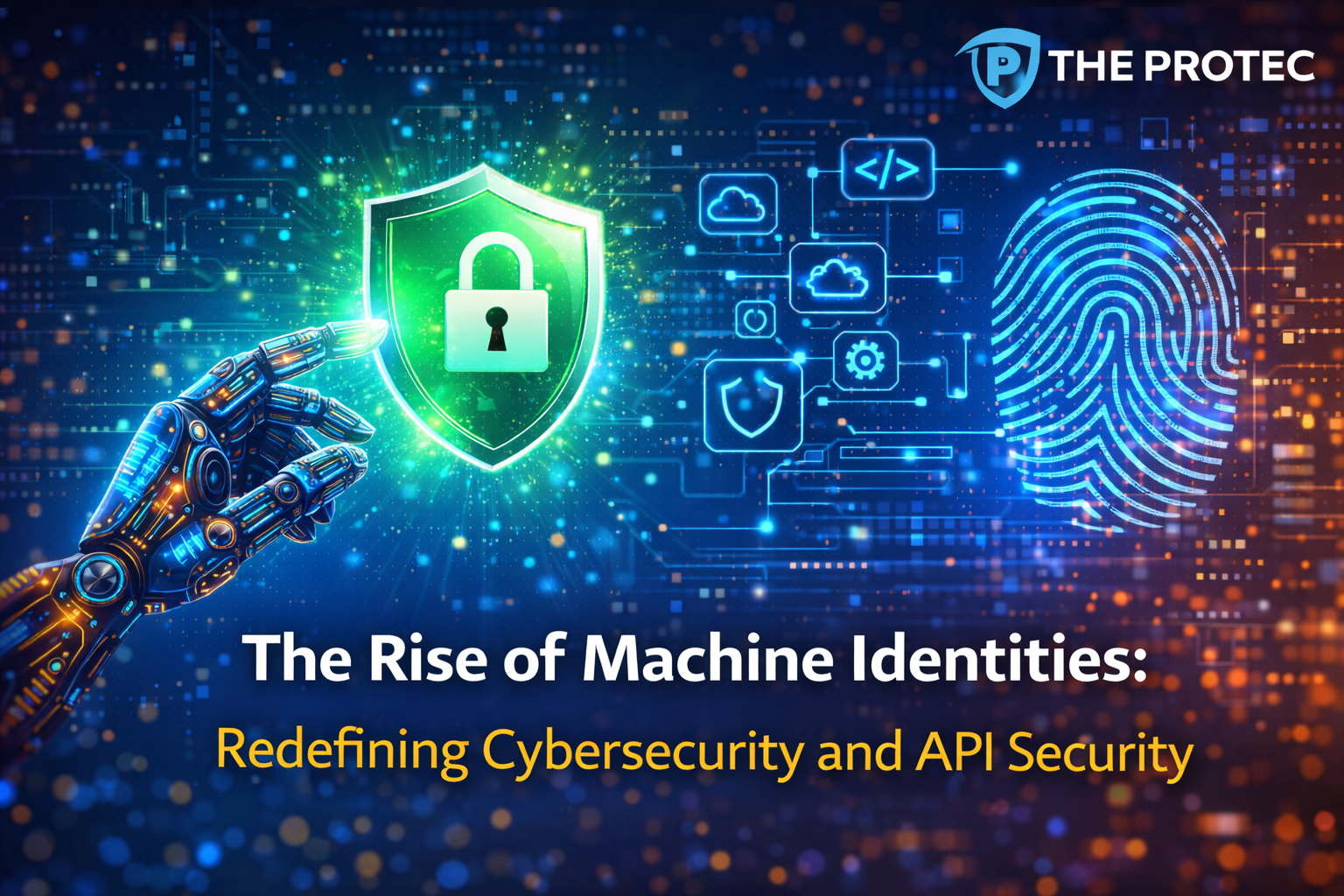
As the digital landscape evolves, cyber security faces new and complex challenges beyond traditional human user protection. Among these, the rapid growth of machine identities stands out as a critical frontier. These non-human digital identities, encompassing devices, applications, microservices, and APIs, are increasingly responsible for authenticating and authorizing interactions in modern IT environments. This shift demands a fundamental rethinking of cyber security strategies, especially in the realm of API security, where machine-to-machine communications dominate.
In this article, we explore the rise of machine identities, their implications for security, and how organizations can adapt their defenses to this evolving threat landscape. Understanding these dynamics is essential for safeguarding today’s complex infrastructure and preventing emerging cyber risks.
What Are Machine Identities?
Machine identities refer to the digital credentials and certificates that devices, applications, services, and automated systems use to authenticate themselves within networks. Unlike human identities tied to usernames and passwords, machine identities enable secure machine-to-machine communication, forming the backbone of automated, scalable infrastructures such as cloud platforms, DevOps pipelines, and IoT ecosystems.
Examples of machine identities include:
- Digital certificates (e.g., TLS/SSL certificates)
- Cryptographic keys
- API keys
- OAuth tokens and JWTs (JSON Web Tokens)
- Service accounts and embedded credentials in software components
These identities allow machines to identify themselves confidently and securely with other machines and services, facilitating encrypted communication, data exchange, and automated operations that underpin modern business functionality.
The Growing Importance of Machine Identities in Cyber security
Machine identities have ballooned in volume and significance due to several technological trends:
- Cloud adoption: Organizations rely heavily on cloud services where countless automated processes and services interact continuously.
- Microservices architectures: Applications are increasingly decomposed into smaller services, interacting via APIs and requiring stringent identity proofing.
- IoT expansion: Billions of connected devices generate massive numbers of identities that must be securely managed.
- DevOps automation: Automated deployment and CI/CD pipelines depend on secure machine identities to orchestrate infrastructure changes safely.
This evolution presents a substantial cyber security challenge. Unlike human credentials, which typically follow well-established management protocols, machine identities often proliferate unchecked. They can expire unnoticed, be duplicated unintentionally, or be misused by attackers who compromise an automated workflow or an unattended service.
Consequently, many breaches arise from vulnerabilities in how machine identities are created, stored, or revoked. The traditional perimeter defense mindset fails to address risks emerging from unmanaged and unmonitored machine credentials, necessitating specialized security approaches.
The Intersection of Machine Identities and API Security
Modern digital environments heavily rely on APIs to enable integrations and data sharing between services. APIs serve as primary communication channels for machine identities, making them a pivotal point in cyber security strategies.
API security involves safeguarding these interfaces from misuse, data leakage, and exposure to malicious actors. Since APIs authenticate requests using machine identities like tokens, keys, or certificates, vulnerabilities in identity management directly impact API security.
Key Challenges at This Intersection
- Credential sprawl: API keys and tokens may be hard-coded, duplicated across services, or shared insecurely, increasing the attack surface.
- Expiration and rotation: Machine identities often remain valid longer than necessary, and failure to rotate credentials regularly can lead to exploitation.
- Lack of visibility: Organizations frequently lack insight into what machine identities exist, who uses them, and their scope of access.
- Privilege escalation: Inadequate identity governance can allow compromised machines to access sensitive APIs, leading to lateral movement across systems.
Effective API security requires integrating automated solutions to track, validate, and limit machine identities, enforcing the principle of least privilege and improving detection of anomalous activity.
Emerging Strategies to Address Machine Identity Challenges
Organizations are adopting a range of innovative approaches to secure machine identities and, by extension, strengthen API security.
1. Machine Identity Lifecycle Management
Just as human credentials are managed, machine identities must be governed comprehensively—from issuance and usage to revocation. Automated certificate management platforms provide centralized control to:
- Discover and inventory all machine identities across environments.
- Automate certificate issuance and renewal to avoid expiry-related failures.
- Implement policy-driven access controls and segmentation.
This proactive management reduces risks associated with forgotten or rogue credentials.
2. Zero Trust Architecture (ZTA)
Zero Trust principles apply effectively to machine identities. This approach assumes no inherent trust inside or outside the network and requires continuous verification of every request based on identity and context.
For machines, this means enforcing strict authentication and authorization for API calls and service communications, limiting credentials to minimal privileges, and monitoring for anomalous behavior. Machine identities must be dynamically evaluated, not trusted indefinitely once granted.
3. API Gateway and Identity-Aware Proxies
Deploying API gateways with built-in authentication mechanisms ensures that machine identities are validated before executing backend processes. These gateways can enforce token verification, rate limits, and encryption, mitigating potential abuse vectors.
Identity-aware proxies further enhance visibility by controlling and logging machine identity usage, enabling rapid detection of suspicious activity.
4. Integration with DevSecOps
Embedding machine identity security into DevSecOps pipelines helps catch risks early. Automated scans can detect hard-coded keys or certificates, enforce compliance checks, and ensure secrets are stored securely using vault solutions.
By shifting security left, organizations reduce the likelihood of accidental credential exposure and accelerate the remediation of vulnerabilities.
5. Leveraging Artificial Intelligence and Analytics
Advanced AI-driven analytics platforms analyze machine identity usage patterns, flag anomalies, and predict potential risks before they escalate. This proactive threat intelligence empowers security teams to respond more quickly to emerging machine identity threats.
Key Risks if Machine Identities Are Ignored
Neglecting secure management of machine identities can lead to severe consequences:
- Data breaches: Compromised machine identities expose sensitive data and internal systems to attackers.
- Service disruption: Exploited credentials can cause denial of service or unauthorized changes affecting business continuity.
- Regulatory non-compliance: Failure to secure machine identities can violate data protection regulations and incur hefty fines.
- Reputational damage: Breaches linked to poor identity management erode customer trust and brand value.
Addressing the cyber security implications of machine identities is no longer optional but essential for organizational resilience.
Conclusion
The rise of machine identities marks a profound transformation in the cyber security landscape. As organizations increasingly rely on automated systems, microservices, and APIs, securing non-human digital entities becomes paramount. Machine identities demand the same rigor and strategic oversight as human credentials, if not more, to prevent emerging cyber risks.
By embracing comprehensive machine identity lifecycle management, zero trust architecture, robust API security, and integrating innovative technologies like AI analytics, businesses can effectively manage this new frontier. Doing so safeguards not only their digital assets but also the trust and continuity essential to thriving in today’s interconnected world.
FAQs
What distinguishes machine identities from traditional user identities?
Machine identities represent non-human digital credentials used by devices, applications, and services to authenticate and communicate securely, unlike traditional user identities that involve human users with usernames and passwords.
Why is API security critical when managing machine identities?
Because APIs are the primary communication channels for machine identities, their security ensures that only authorized machines can access services, preventing data breaches and unauthorized access from compromised or malicious machine identities.
How can organizations effectively manage the proliferation of machine identities?
Organizations can implement automated machine identity lifecycle management systems, adopt zero trust principles, use API gateways with identity verification, embed security in DevOps workflows, and leverage AI analytics for continuous monitoring and anomaly detection.