







Introduction
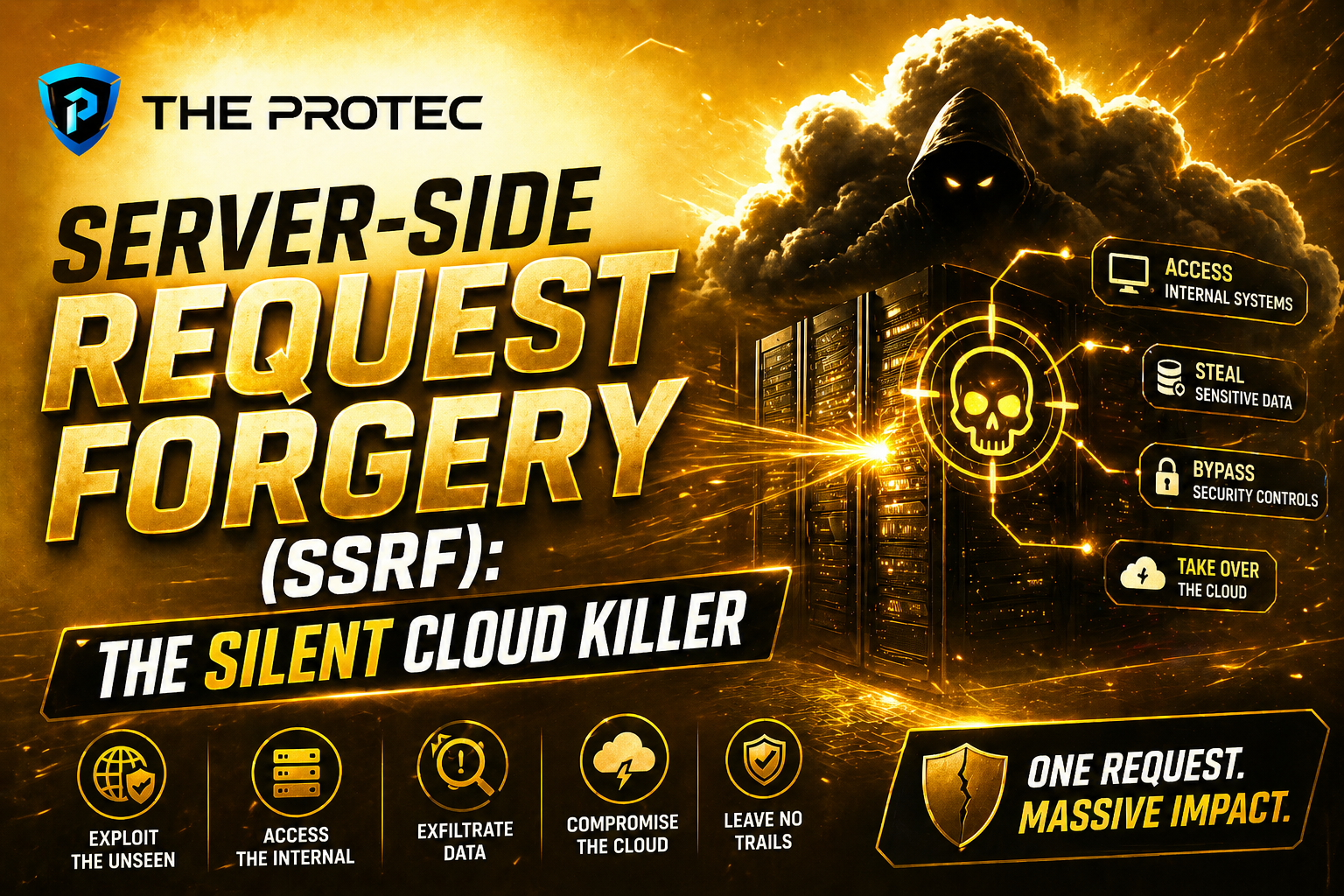
In today’s rapidly evolving cloud landscape, security challenges are constantly shifting, presenting new risks for organizations migrating critical workloads to the cloud. One stealthy and increasingly prevalent threat is Server-Side Request Forgery (SSRF). Often dubbed the “silent cloud killer,” SSRF exploits web security flaws to infiltrate cloud metadata services creating a covert pathway for attackers to gain access to sensitive internal resources and configuration data.
This article dives deep into how SSRF attacks specifically target cloud metadata endpoints, highlighting the underlying cloud vulnerabilities that make these attacks so potent. We will also unpack practical, up-to-date mitigation techniques that organizations must implement to safeguard their cloud infrastructure from these sophisticated exploits.
Understanding SSRF Attacks and Their Impact on Cloud Security
Server-Side Request Forgery is a web security flaw where an attacker tricks a server into making unintended HTTP requests to domains or IP addresses of the attacker’s choosing. Unlike traditional client-side attacks that target users, SSRF exploits the trust relationship between the vulnerable server and internal or external services. This attack vector becomes especially dangerous in cloud environments due to the presence of metadata services trusted endpoints containing sensitive instance-specific information.
How SSRF Exploits Cloud Metadata Services
Cloud providers such as AWS, Azure, and Google Cloud Platform expose metadata endpoints to their virtual machines. These endpoints supply crucial details like instance identity, credentials, network configurations, and tokens for accessing other cloud services. For example, the AWS metadata service is accessible at http://169.254.169.254 and returns temporary AWS credentials when queried from an instance.
When an SSRF vulnerability is present in a cloud-hosted web application, attackers can forcibly redirect vulnerable server-side HTTP requests to this metadata service endpoint. Because the request originates from within the cloud environment, the metadata service returns privileged information, including ephemeral keys with broad access to the cloud account.
This indirect access allows attackers to:
- Obtain temporary API credentials to pivot and escalate within the cloud infrastructure.
- Discover internal IPs and services that are otherwise hidden from the public internet.
- Launch further attacks leveraging sensitive cloud resources.
The Severity of SSRF in Cloud Environments
SSRF is often called the “silent cloud killer” due to how it bypasses conventional network defenses. Since SSRF exploits originate from legitimate servers inside the trusted network perimeter, they often evade firewall restrictions and intrusion detection systems that monitor external traffic.
The consequences include data exfiltration, persistent backdoors, and complete cloud tenant compromise jeopardizing confidentiality, integrity, and availability. Cloud metadata services become the Achilles’ heel, and without appropriate defenses, organizations expose themselves to devastating, stealthy attacks.
Common Web Security Flaws Leading to SSRF Vulnerabilities
Identifying the root causes of SSRF vulnerabilities is instrumental to prevention. Several common web security misconfigurations and flaws can pave the way for SSRF:
- Unvalidated Input Parameters: Web applications that fail to rigorously sanitize and validate URLs or request destinations passed as user input.
- Open Redirects and Unsafe URL Fetching: Mechanisms fetching remote resources without whitelist filtering allow attackers to manipulate target URIs.
- Excessive Trust in Internal Networks: Assuming internal IP ranges and localhost are inherently safe, neglecting to enforce strict access controls.
- Lack of Proper Network Segmentation: Flat network topologies where web servers can reach sensitive API or metadata endpoints directly.
- Insufficient Outbound Request Restrictions: Absence of egress filtering to prevent server requests reaching forbidden destinations like metadata services.
Mitigating SSRF Attacks Targeting Cloud Metadata Services
To neutralize SSRF threats, security teams must adopt a multi-layered strategy incorporating robust coding practices, cloud-specific controls, and network defenses. Here are practical measures to mitigate SSRF attacks:
1. Strong Input Validation and URL Whitelisting
Enforce strict validation on all user-supplied URLs or hostnames used in server-side requests. Use allowlists that limit outbound requests strictly to known legitimate domains. Reject URLs containing IP addresses, localhost, or internal ranges unless absolutely necessary and verified.
2. Enforce Application-Level Network Segmentation
Architect web applications to separate public-facing servers from sensitive internal services. To prevent SSRF from reaching metadata endpoints, the web layer should not have direct ability to access internal IP ranges or cloud metadata IPs.
3. Metadata Service Protection
- Use IMDSv2 (Instance Metadata Service Version 2): Providers like AWS have introduced IMDSv2, which requires a session-oriented token for metadata access. Make sure all instances and applications enforce IMDSv2 instead of legacy IMDSv1 to significantly reduce SSRF abuse.
- Limit Metadata Permissions: Assign least privilege policies to cloud instances. Avoid attaching overly permissive roles that can expose sensitive cloud resources if compromised.
4. Implement Outbound Egress Filtering
Enforce strict egress firewall rules at the network or cloud security group level, preventing web servers from making HTTP calls to IPs like 169.254.169.254 or other sensitive internal ranges. This adds an additional control layer, stopping SSRF exploits from reaching metadata endpoints.
5. Logging, Monitoring, and Threat Detection
Deploy comprehensive logging for outgoing HTTP requests made by your applications. Monitoring unusual outbound patterns and integrating with modern cloud security tools can enable rapid detection of SSRF attempts.
6. Security Testing and Automation
Regularly perform security assessments, including penetration testing and automated vulnerability scanning targeting SSRF flaws. Stay current with emerging SSRF attack vectors and incorporate dynamic analysis tools into your CI/CD pipeline.
The Future of Defending Against SSRF Attacks
As cloud environments grow more complex, SSRF will remain a challenging attack vector due to inherent trust models in internal network communications. Developers and security architects must embrace zero-trust principles, eliminating implicit trust in internal endpoints and metadata services.
Emerging technologies such as AI-based anomaly detection, enhanced cloud-native firewalls, and sidecar proxies for granular request validation promise to augment traditional defenses. Keeping pace with evolving SSRF tactics means staying informed and proactively hardening cloud metadata access.
FAQs About SSRF and Cloud Metadata Security
1. What exactly is server-side request forgery (SSRF)?
SSRF is a vulnerability that tricks a server into making HTTP requests to unintended locations, often internal resources the server can reach but users cannot. This can lead to unauthorized access or data leaks, especially when metadata services are targeted.
2. Why are cloud metadata services so critical in SSRF attacks?
Metadata services provide cloud instances with configuration data and temporary credentials. SSRF attacks exploit this by making the server query these endpoints, revealing sensitive information that attackers can use to move laterally within the cloud environment.
3. How does IMDSv2 improve security against SSRF attacks compared to IMDSv1?
IMDSv2 requires session-oriented tokens to access metadata, adding an authentication layer that prevents unauthorized requests. This makes it much harder for SSRF to succeed compared to IMDSv1, which allowed unauthenticated access.
4. Can SSRF be completely prevented?
While no security control is entirely foolproof, a combination of strict input validation, network segmentation, metadata protections like IMDSv2, and egress filtering can drastically reduce the attack surface and risk of SSRF-related breaches.
External Resources
- OWASP Server-Side Request Forgery (SSRF) – Comprehensive resource detailing SSRF risks and defenses.
- AWS Security Blog: Instance Metadata Service Version 2 – Insights on how to secure cloud instances from SSRF via IMDSv2.
Conclusion
Server-Side Request Forgery remains one of the stealthiest and most dangerous cloud vulnerabilities due to its ability to leverage trusted internal services like cloud metadata endpoints. As organizations increasingly rely on cloud infrastructure, robust SSRF defenses are essential to preserving the confidentiality and integrity of sensitive cloud workloads.
By prioritizing strict input validation, enforcing access controls to metadata, adopting advanced instance metadata protections, and implementing strong network egress policies, security teams can effectively dismantle the silent killer lurking within cloud ecosystems. Staying vigilant, informed, and prepared is the key to safeguarding modern cloud architectures from SSRF’s insidious threat.