





For years, Siri AI was treated as a single Apple product: users asked a question, Apple Siri processed it, and an answer appeared. The new generation of artificial intelligence makes that description far too simple. Modern assistants are layered systems combining a voice interface, personal context, device controls, cloud services, safety rules, and one or more large language models.
That distinction is crucial to understanding recent code-level clues surrounding Apple Siri AI. The evidence indicates that Apple has built, tested, or prepared architectural components capable of selecting different AI model providers. In practical terms, Siri could route certain requests through Claude AI, ChatGPT AI, or another model while remaining Siri on the screen—and while continuing to rely on Apple software for permissions, device actions, and privacy controls.
This does not mean Apple has published the Siri source code. It also does not prove that iPhone owners will receive a setting labeled Replace Siri with Claude. What the available code artifacts and Apple’s existing ChatGPT integration support is a narrower but still important conclusion: the intelligence behind Siri can be more modular than the Siri interface itself.
What the Apple Siri Code Evidence Actually Reveals
First, an important clarification: there is no complete, publicly available Apple Siri code repository that allows outsiders to inspect every part of the assistant. References to Siri code generally concern framework symbols, configuration files, system strings, interfaces, entitlement data, and behavior discovered in released or test versions of Apple software. These clues reveal architecture, but not Apple’s full roadmap.
The significant pattern is a separation between Siri’s orchestration layer and the model used to generate an answer. Reported code artifacts and observable Apple Intelligence behavior point to several modular components:
- A provider-selection layer that can identify which AI service should handle a request.
- Capability descriptors that distinguish tasks such as writing, summarization, visual understanding, general knowledge, and device actions.
- Routing and fallback logic that can move a request from on-device processing to an Apple server or an approved third-party model.
- Consent and disclosure mechanisms for requests that leave Apple’s own AI environment.
- Response adapters that convert an external model’s output into a format Siri can present or act upon.
These elements matter more than a simple Claude or ChatGPT string discovered inside a build. Provider names can appear for internal testing, unfinished features, or compatibility work. The architectural interfaces around those names are stronger evidence because they show how Siri AI could communicate with interchangeable systems.
Replacing Siri Is Not the Same as Replacing Siri’s AI Model
The phrase replace Siri with ChatGPT can describe two very different scenarios. The first is replacing the entire assistant: its activation phrase, interface, voice, system permissions, app integrations, and identity. The second is keeping Siri as the assistant while replacing or supplementing the model that answers a particular request.
The code clues primarily support the second scenario. Siri would remain the user-facing layer responsible for listening, determining intent, accessing approved personal information, and carrying out actions. Claude or ChatGPT could operate behind that layer as a reasoning or response engine.
Consider a request such as asking Siri to find an upcoming flight, compare it with a calendar event, and draft a message about a possible delay. Apple’s software could retrieve the relevant data after checking permissions. A third-party model could then reason over a carefully limited package of information and produce a draft. Siri would display the result and request approval before sending anything.
Under this arrangement, ChatGPT Siri or Claude Siri would not necessarily become independent assistants with unrestricted iPhone access. They would be model services working inside boundaries defined by Apple. Siri’s voice, animation, app control, and privacy prompts could remain unchanged.
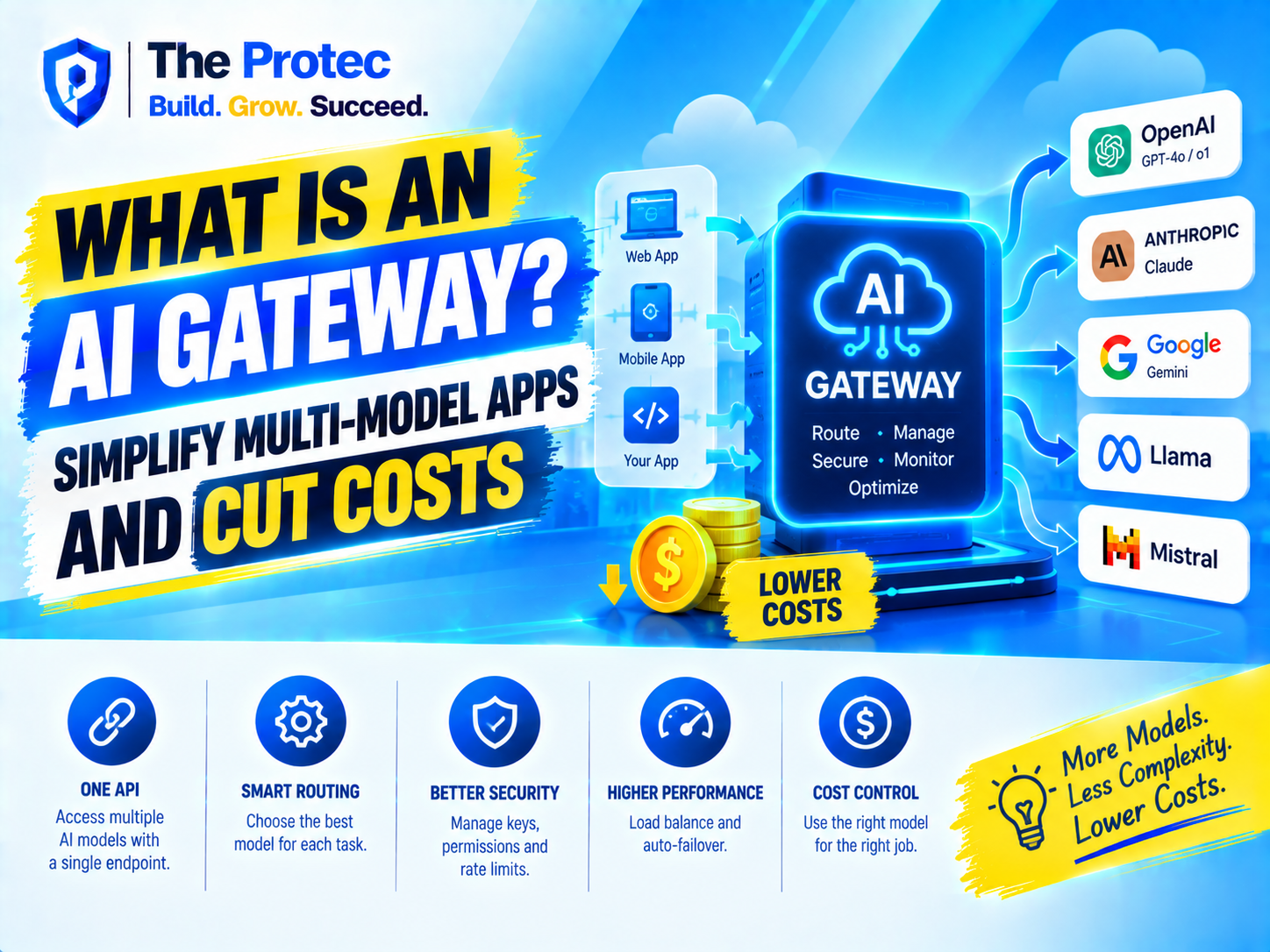
How Siri Could Route Requests to Claude or ChatGPT
A model-routing system evaluates a request before choosing where it should run. Straightforward commands—starting a timer, enabling a setting, or playing downloaded music—do not need a large cloud model. Other tasks may be handled by an on-device Apple model. Complex questions requiring broad knowledge or advanced reasoning can be escalated to a larger server-based system.
Apple already established a public precedent by integrating ChatGPT with Siri and Apple Intelligence. Apple’s official ChatGPT guidance explains that Siri can ask before sending certain requests to the external service. That shipping workflow demonstrates that Siri can preserve its own interface while another company’s model supplies the response.
A more advanced version could make the provider layer flexible. Siri might choose between an Apple model, ChatGPT AI, and Claude AI based on task type, availability, language support, latency, enterprise policy, or user preference. The technical flow could look like this:
- Siri captures the spoken or typed request.
- Apple software identifies the intent and required capabilities.
- Private data is gathered only when authorized and relevant.
- A router selects on-device processing, Apple’s cloud, Claude, or ChatGPT.
- The selected model receives a constrained prompt and approved context.
- Apple validates and formats the response before Siri presents it.
- Any consequential action requires the appropriate system permission or confirmation.
This layered design would let Apple change AI suppliers without rebuilding every part of Siri. It could also support different providers in different regions or use cases.
Why Claude Is a Plausible Siri Alternative AI
Claude is frequently associated with a possible Siri AI replacement because Anthropic’s models are known for strong instruction following, coding, document analysis, and long-context reasoning. Those strengths could be useful for a more capable Apple AI assistant that needs to understand information across messages, email, files, web content, and app data.
Claude could also appeal to Apple as a private cloud deployment candidate. Rather than sending every request to a standard public chatbot endpoint, Apple could potentially run a customized or isolated version on controlled infrastructure. That arrangement would give Apple greater influence over retention, logging, model behavior, and software updates.
However, references to Claude Apple Siri testing do not confirm a public Claude Siri product. Large technology companies routinely benchmark multiple models. Apple may test Claude to negotiate pricing, compare performance, validate its routing architecture, or improve its own models. Internal compatibility is not the same as a launch commitment.
Why ChatGPT Is the Most Concrete Siri AI Partner
ChatGPT has one advantage over every hypothetical Siri alternative AI: Apple has already made it available through Apple Intelligence. Users can direct suitable questions to ChatGPT, and Apple provides disclosure and permission controls around that transfer.
This existing integration proves several architectural points. Siri can identify a task that may benefit from external intelligence, present a consent flow, send the request to another provider, and return the answer inside Apple’s experience. It also shows that Apple does not need to surrender control of iOS to offer a more powerful model.
A deeper Siri ChatGPT relationship could make routing less visible and more capable, particularly if Apple negotiates specialized infrastructure or model behavior. Even then, ChatGPT would probably remain one component in a larger Apple Intelligence Siri stack. Device control, authentication, personal context, and app permissions are areas where Apple’s operating-system layer remains essential.
What Is Confirmed and What Remains Speculation
Confirmed by public software and documentation
- Siri and Apple Intelligence can hand eligible requests to ChatGPT.
- Apple uses a layered approach combining on-device models, cloud processing, and external services.
- Users are shown disclosures or permission controls when requests involve ChatGPT.
- Siri’s interface and system capabilities remain separate from the external model producing an answer.
- Apple has designed privacy infrastructure for more complex cloud AI workloads.
Supported by code clues but not guaranteed as a feature
- The AI provider behind some Siri responses can be configured or exchanged.
- Claude can be evaluated as a backend without replacing Siri’s complete interface.
- Apple could route different categories of requests to different models.
- Provider-neutral components may reduce the engineering work required to add future AI partners.
Still speculative
- A consumer setting allowing everyone to choose Claude instead of ChatGPT.
- Claude becoming Siri’s default model across all supported devices.
- Apple abandoning its own foundation models.
- Third-party models receiving unrestricted access to personal iPhone data.
- The Siri name, interface, or voice being replaced by a third-party assistant.
As of September 2026, the safest interpretation is that Apple has been developing flexibility at the model layer. The evidence should not be stretched into a claim that Apple has confirmed a universal Claude or ChatGPT replacement switch.
Privacy Could Decide Which Siri AI Model Wins
Model quality is only one part of Apple’s decision. An Apple AI assistant can encounter messages, photos, contacts, locations, health-related information, and documents. A model that generates excellent answers but requires broad data collection would conflict with Apple’s privacy positioning.
Apple’s answer to complex cloud processing is Private Cloud Compute, a system designed to limit data retention and make server software verifiable. Apple describes its security model in the Private Cloud Compute security overview. A third-party Siri AI model could be more attractive if it ran within similarly controlled infrastructure instead of a conventional chatbot service.
This is another reason the code’s routing and consent layers matter. They allow Apple to minimize what is shared, remove unnecessary identifiers, disclose the selected provider, and require approval before external processing. Enterprise and regulated users may also need policies that disable outside models or restrict which provider can receive work data.
What This Means for iPhone Users and Apple’s AI Strategy
For users, a modular Siri AI assistant could improve faster than a system tied to one model. Apple could select the strongest model for a task, switch providers when reliability declines, and add new capabilities without changing how people invoke Siri. Competition between Claude and ChatGPT could also improve performance and reduce Apple’s dependence on a single partner.
The trade-off is complexity. People need to know when information is processed on the device, by Apple, or by another company. Answers may also vary depending on provider availability, account status, region, or language. Apple will need clear controls rather than an invisible routing system that leaves users uncertain about where their data went.
Strategically, model flexibility buys Apple time. The company can continue developing its own Siri artificial intelligence while using leading external models where they are stronger. That hybrid approach lets Apple compete with ChatGPT and Claude without treating the entire contest as a winner-take-all race.
Frequently Asked Questions
Can users replace Siri with ChatGPT?
Not completely through Apple’s standard system settings. ChatGPT can handle eligible requests through Siri and Apple Intelligence, but Siri remains the interface and controls access to iPhone functions. Third-party apps and shortcuts can make ChatGPT easier to launch, yet they do not fully replace Siri at the operating-system level.
Can users replace Siri with Claude?
There is no broadly confirmed consumer option that makes Claude the native Siri backend for every request. Code-level flexibility and reported testing make a Claude integration technically plausible, but testing should not be confused with an announced feature.
Does the discovered code prove Apple is abandoning its own AI?
No. A provider abstraction is evidence of optionality, not surrender. Apple can use its own models for private, fast, and device-specific tasks while relying on external models for selected requests that require greater scale or specialized reasoning.
Would Claude or ChatGPT gain access to everything on an iPhone?
Not automatically. Apple’s orchestration layer can limit the information included with each request and require permission for sensitive actions. The exact privacy impact would depend on the provider, deployment method, account settings, and Apple’s implementation.
What is the biggest takeaway from the Siri code clues?
The most credible takeaway is that Siri and its underlying language model are separable. Apple can preserve Siri as the trusted system assistant while changing, combining, or routing among AI engines behind it. That flexibility may prove more important than whichever provider appears first.