








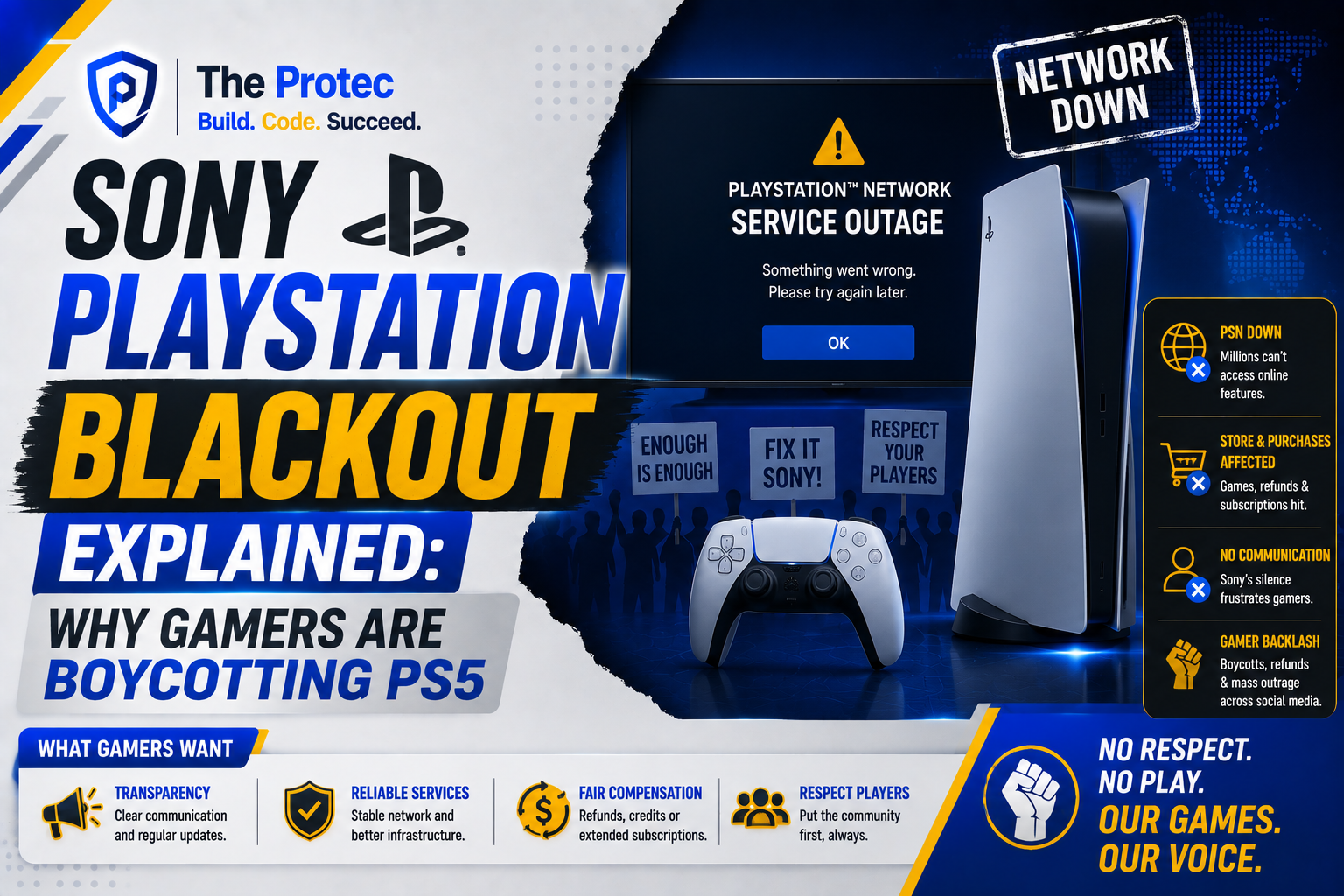
A growing number of PlayStation customers are trying to send Sony a message in one of the clearest ways a platform holder understands: by withholding their time and money. Known online as the Sony PlayStation Blackout 2026, or simply #PSBlackout, the campaign calls on players to temporarily disengage from the PlayStation ecosystem. Depending on the participant, that can mean staying offline, avoiding the PlayStation Store, canceling an automatic subscription renewal, or refusing to buy new PS5 games and accessories.
The movement is not one conventional boycott with a single leader, fixed timetable, or universally accepted list of demands. It is a decentralized consumer protest bringing together several long-running complaints about PlayStation. Rising costs, uncertainty over digital ownership, subscription value, account restrictions, hardware decisions, and Sony’s wider gaming strategy all feature prominently.
That loose structure helps explain both the campaign’s reach and the confusion surrounding it. Some posts describe a short blackout designed to produce a visible decline in engagement. Others advocate a longer PS5 boycott lasting until Sony changes specific policies. Here is what #PSBlackout means, why it is gaining attention, what gamers want, and how it could affect PlayStation.
What Is the Sony PlayStation Blackout?
The Sony PlayStation Blackout is a community-driven effort encouraging PlayStation users to reduce or stop activity across Sony’s gaming ecosystem for a defined period. The aim is to create a measurable signal through lower spending, fewer active users, reduced store traffic, canceled renewals, and less social engagement around PlayStation products.
It is important to distinguish the campaign from a PlayStation Network outage. A PSN outage is an involuntary service interruption caused by technical problems, maintenance, or another operational issue. #PSBlackout is a voluntary protest organized and amplified by players. The two may look similar in online discussions because both involve users being unable or unwilling to play through PSN, but their causes are entirely different.
Common actions promoted under the hashtag include:
- Avoiding PS5 and PS4 online services during a proposed blackout window.
- Not purchasing games, virtual currency, downloadable content, or hardware.
- Turning off automatic renewal for PlayStation Plus.
- Postponing preorders and waiting for clearer reviews, discounts, or policy changes.
- Sharing complaints through official feedback and support channels.
- Using #PSBlackout to document individual reasons for joining the PlayStation boycott.
Participation varies because no central organization controls the hashtag. Players should therefore verify dates and demands rather than assuming every viral graphic represents the entire movement.
Why Is #PSBlackout Gaining Attention?
#PSBlackout is resonating because it combines several separate grievances under one recognizable label. A complaint about a subscription price may not become a major campaign by itself. Neither might frustration over a disc drive, a delisted game, an account requirement, or an unsuccessful support case. When those experiences are grouped together, however, they create a broader argument that the relationship between PlayStation and its customers has become less balanced.
The campaign also reflects a change in how gaming boycotts are organized. Players no longer need a formal consumer group to coordinate action. A short video, widely shared post, or community thread can encourage thousands of people to discuss the same spending pause. Recommendation algorithms then expose the hashtag to users who may have unrelated complaints but recognize the underlying concern.
That visibility does not automatically prove that most PS5 owners support the movement. Hashtag activity can exaggerate the size of a campaign, and people may discuss a boycott without participating. Its importance lies in the concentration of consumer sentiment: #PSBlackout gives scattered dissatisfaction a shared identity and a potentially measurable form.
Why Are Gamers Boycotting PS5?
There is no single answer to why gamers are boycotting PS5. The campaign is driven by overlapping concerns about cost, control, ownership, service quality, and the direction of the PlayStation brand.
Higher Costs and Questions About Value
Affordability is one of the strongest themes behind the PS5 boycott. Players are looking at the combined cost of consoles, premium hardware, controllers, storage, accessories, full-price games, downloadable content, and recurring subscriptions. Even when an individual price increase has a business explanation, the cumulative expense can make the ecosystem feel less accessible.
PlayStation Plus is central to this debate because online multiplayer and game catalogs are recurring services rather than one-time purchases. Customers expect subscription prices to correspond with reliable infrastructure, useful monthly games, clear benefits, and a catalog they consider valuable. When that perceived value declines, canceling or downgrading a membership becomes an obvious form of protest.
Digital Ownership and Game Preservation
Many participants are also concerned about what it means to buy a digital game. A digital purchase usually provides a license governed by platform terms rather than unrestricted ownership of the underlying software. Games can depend on account access, authentication systems, downloadable files, or publisher-operated servers.
This creates anxiety when a title is delisted, an online service closes, or a license changes. Even if Sony is not responsible for every shutdown, PlayStation controls a major storefront and account ecosystem. Campaign supporters want stronger guarantees that purchased games will remain downloadable and functional wherever technically possible. Sony’s official PlayStation Network terms provide the legal framework, but many players argue that technically lawful policies can still fall short of consumer expectations.
Account Requirements and Platform Control
Mandatory account connections, regional availability, enforcement decisions, and appeal procedures are another source of frustration. Players increasingly expect transparent explanations when access is restricted and practical ways to challenge an error. They also object when account requirements appear to be introduced after a purchase or when a service is unavailable in a customer’s region.
These concerns extend beyond PS5 hardware. Sony now distributes more games on PC, making PlayStation account policies relevant to a wider audience. Decisions that once affected only console owners can trigger criticism across several gaming communities at once.
Hardware, Repairability, and Optional Features
Some boycott supporters point to hardware decisions such as premium pricing, separately sold components, controller durability, storage expenses, and limited repair options. The debate is not simply about whether a premium console should exist. It is about whether core features are being removed from standard packages, whether repairs are economical, and whether customers receive enough long-term value from expensive devices.
Physical media is especially important to players who view discs as protection against delisting and account dependency. Any move that makes disc-based gaming less convenient can therefore reinforce wider fears about a digital-only future.
Concerns About Sony’s Gaming Strategy
The PlayStation boycott also reflects disagreement over investment priorities. Some players want Sony to emphasize complete single-player releases, creative risk, smaller experimental projects, and the franchises that established the platform. They worry that live-service ambitions, aggressive monetization, studio restructuring, or short-term financial targets may reduce variety.
Not every customer shares that view, and successful multiplayer games clearly have an audience. The underlying demand is for balance: players do not want trend chasing to come at the expense of polished games with a clear identity.
What Are #PSBlackout Supporters Demanding?
Because the campaign is decentralized, its demands differ across communities. However, the most frequently repeated goals can be summarized as follows:
- More transparent pricing and stronger value across PlayStation Plus tiers.
- Better notice before material changes to subscriptions, accounts, or purchased content.
- Clearer digital ownership protections and practical preservation plans for discontinued games.
- Fair, accessible account enforcement and appeal processes.
- Improved hardware durability, repairability, and availability of replacement parts.
- Continued support for physical games and optional disc-based hardware.
- Greater investment in varied, complete games rather than excessive monetization.
- More direct communication when widespread consumer complaints emerge.
Some of these requests are specific enough for Sony to address through policy changes. Others involve subjective questions about value or creative direction. That difference matters because a boycott is more likely to produce a clear result when participants define measurable outcomes rather than expressing general dissatisfaction.
How Has Sony Responded to the PlayStation Boycott?
As of August 2026, Sony has not issued a prominent, dedicated public statement that comprehensively addresses #PSBlackout as one unified campaign. That does not necessarily mean the company is ignoring consumer sentiment. Large platform holders typically assess sales, subscription churn, active-user trends, support contacts, surveys, and social-media analysis rather than responding to every hashtag directly.
Sony’s broader public communication continues through PlayStation announcements, support pages, policy updates, financial briefings, and corporate presentations. Its investor relations materials are particularly useful for understanding the performance indicators and strategic priorities the company reports publicly.
The absence of a specific #PSBlackout statement should not be presented as evidence that Sony has accepted or rejected the campaign’s demands. It is more accurate to say that the response remains indirect. Policy revisions, pricing decisions, preservation measures, subscription changes, or shifts in product strategy would provide stronger evidence of an impact than a corporate social post alone.
Could a PS5 Boycott Actually Work?
A boycott can influence a company when it is sustained, measurable, and connected to realistic demands. A one-day decline in activity may attract attention, but it may be difficult to separate from ordinary fluctuations. Reduced purchases, lower renewal rates, weaker preorder numbers, and repeated negative feedback over several reporting periods are harder to dismiss.
Scale is equally important. PlayStation has a large global user base, and many customers may continue playing even if they sympathize with parts of the campaign. Major releases can also offset a temporary spending pause. For #PSBlackout to create lasting pressure, supporters would need consistency and a clear explanation of what would cause them to resume spending.
The campaign could still matter without producing an immediate reversal. It may influence how Sony communicates future changes, encourage stronger consumer protections, or make executives more cautious about policies likely to generate backlash. It can also shape competition: if dissatisfied players spend more on PC, Xbox, Nintendo, or independent storefronts, rival platforms gain an opportunity to promote different approaches.
What #PSBlackout Could Mean for PlayStation
The most significant consequence may be reputational rather than financial. PlayStation has built enormous loyalty through its hardware, studios, characters, and exclusive games. That loyalty is valuable, but it is not unconditional. A blackout campaign suggests that some highly engaged customers now see participation itself as leverage.
Sony has an opportunity to treat the movement as a consumer research signal. Clearer explanations, predictable pricing, meaningful preservation commitments, better support, and visible investment in diverse games could rebuild trust even without accepting every demand. Conversely, dismissing all criticism as social-media noise could allow dissatisfaction to accumulate until a future pricing or policy decision triggers a larger backlash.
For gamers, the challenge is separating verified information from viral claims. A productive boycott should be voluntary, lawful, specific, and based on accurate policies. Harassment of developers, support employees, or other players does not strengthen the campaign. Carefully documented feedback and consistent purchasing choices are more credible forms of pressure.
Frequently Asked Questions About #PSBlackout
What does #PSBlackout mean?
#PSBlackout refers to a decentralized consumer protest in which gamers reduce PlayStation activity or spending to express dissatisfaction with Sony’s pricing, subscriptions, platform policies, digital ownership rules, hardware choices, or gaming strategy.
Is the Sony PlayStation Blackout a PSN outage?
No. An outage is an unplanned or scheduled interruption to PlayStation Network services. The blackout campaign is voluntary: participating users choose not to log in, play, subscribe, or purchase products for a specified period.
Why are gamers boycotting PS5?
Reasons include the total cost of the PlayStation ecosystem, concerns about PlayStation Plus value, uncertainty around digital licenses, account and regional restrictions, hardware repairability, physical media, customer support, and Sony’s investment priorities.
Do players have to stop using their PS5 permanently?
No. Many supporters view #PSBlackout as a temporary spending or engagement strike rather than a permanent rejection of PlayStation. Each participant decides what action is appropriate, from skipping one purchase to canceling a subscription renewal.
Has Sony officially responded to #PSBlackout?
Sony has not provided a comprehensive public response specifically addressing the campaign as a unified movement as of August 2026. Its response is better judged through future pricing, policy, support, preservation, and product decisions.
The Bottom Line
The Sony PlayStation Blackout 2026 is less a single organized event than a shared banner for growing consumer frustration. #PSBlackout turns complaints about cost, control, ownership, hardware, and strategy into a call for coordinated action. Its long-term impact will depend on participation, measurable spending changes, and whether supporters can unite around achievable demands.
For Sony, the campaign is a warning that brand loyalty does not eliminate expectations of value and transparency. For players, it is a test of whether collective purchasing decisions can influence one of gaming’s most powerful platform holders. Whether the PS5 boycott fades or develops into a lasting pressure movement, it has already made one issue difficult to ignore: gamers increasingly want a stronger voice in the future of the ecosystems they fund.