








Contents
- 1 Why Cloud-Native Databases Are Becoming the Default Choice
- 2 How Scalable Applications Are Changing Database Requirements
- 3 What Makes Cloud-Native Databases Different
- 4 Why Distributed Databases Matter for Modern Products
- 5 The Business Case Behind the Technical Shift
- 6 How Cloud-Native Databases Support Real-Time and AI-Driven Workloads
- 7 Key Benefits Developers Look For
- 8 Trade-Offs Developers Still Need to Consider
- 9 What the Latest Database Trends Reveal
- 10 How to Evaluate a Cloud-Native Database
- 11 The Future of Database Architecture Is Cloud-Native
- 12 FAQ
Why Cloud-Native Databases Are Becoming the Default Choice
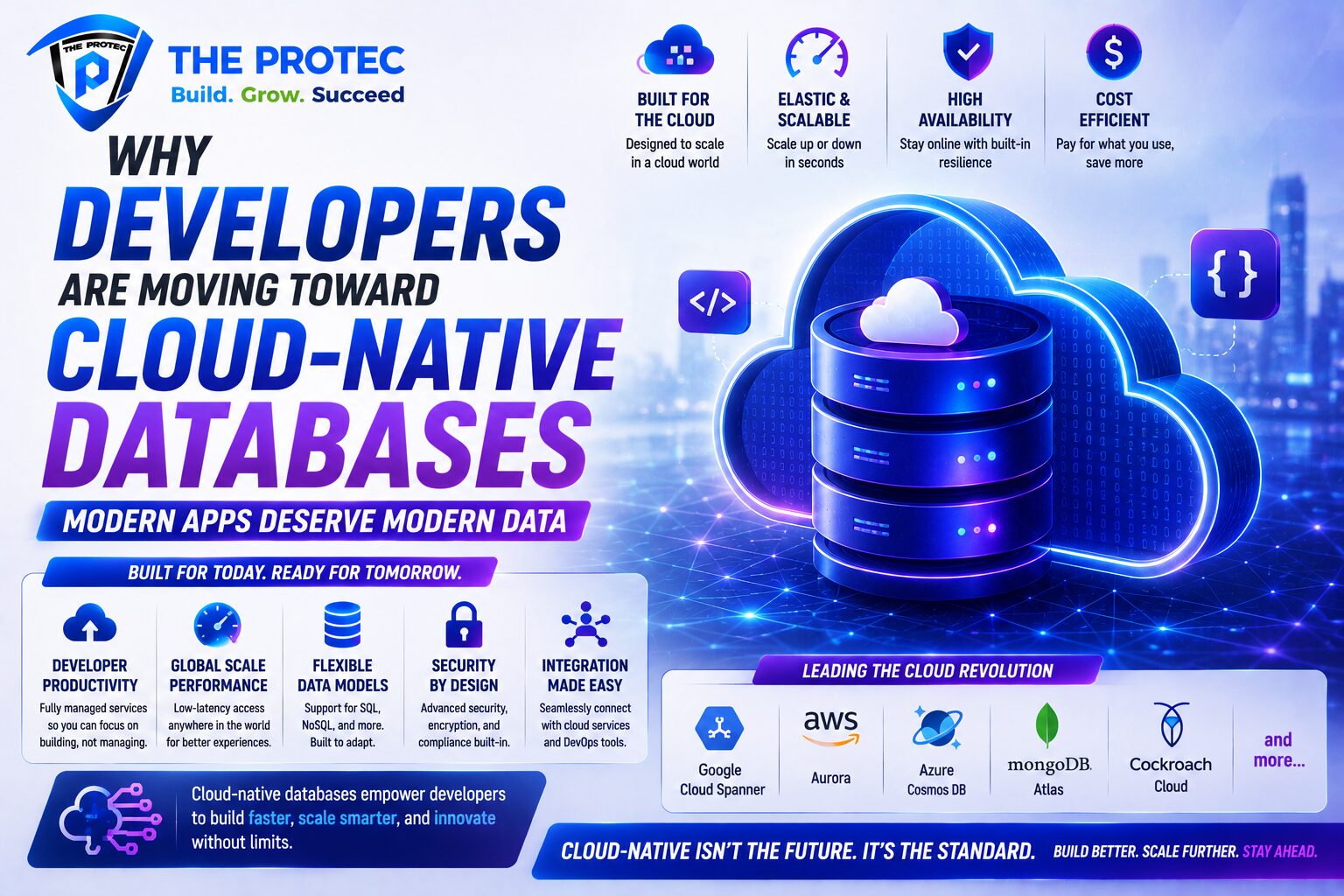
Application architecture has changed faster than database architecture. Teams are shipping globally distributed products, real-time collaboration features, AI-powered experiences, and always-on services that must handle unpredictable spikes in traffic without slowing down. In that environment, traditional database setups often become a bottleneck. That is why more developers are moving toward cloud native databases built for elasticity, resilience, and distributed execution.
The shift is not simply about running a database in the cloud. It is about adopting modern database technology that matches how applications are built today: microservices, event-driven systems, containerized workloads, and multi-region deployments. These systems need more than a single primary server and a manual failover plan. They need databases that can scale horizontally, recover automatically, and keep performance predictable even when demand changes minute by minute.
As product teams build for growth from day one, the database is no longer an afterthought. It is a strategic layer that determines whether a platform can expand, adapt, and remain available under pressure. That is the core reason cloud-native and distributed databases are gaining momentum across startups and enterprise teams alike.
How Scalable Applications Are Changing Database Requirements
Scalable applications place very different demands on databases than traditional monolithic systems. In the past, many applications served a single region, handled a relatively stable workload, and could tolerate maintenance windows. Today’s applications often serve users across continents, integrate with dozens of services, and experience sudden traffic bursts caused by product launches, seasonal demand, or viral growth.
This new reality changes what developers expect from a database. Availability is no longer a bonus feature; it is a requirement. Low latency is no longer limited to local users; it must be consistent across regions. Backup and recovery are not enough on their own; systems must keep running while nodes fail, replicas rebalance, and workloads shift automatically.
Scalable applications also produce more complex data patterns. User activity streams, personalization signals, telemetry, transactions, and search indexes all move at different speeds and volumes. A database must support these varied workloads without forcing teams into constant trade-offs between performance, consistency, and operational simplicity. Cloud-native databases are designed around these realities, which is why they are becoming the preferred foundation for modern products.
What Makes Cloud-Native Databases Different
Cloud-native databases are not just databases hosted on cloud infrastructure. They are built to take advantage of cloud-native principles such as distributed execution, automated failover, elastic scaling, managed operations, and separation of compute and storage where appropriate. This design enables them to respond to workload changes more intelligently than legacy database architectures.
One of the biggest differences is elasticity. Instead of provisioning a large server upfront and hoping it is enough, teams can scale resources as usage grows. Some platforms can auto-scale query capacity or storage independently, reducing waste and improving cost control. This matters for businesses with uneven traffic patterns, where overprovisioning can be expensive and underprovisioning can hurt customer experience.
Another major difference is resilience. Cloud-native systems are usually distributed across multiple nodes or zones so that a single failure does not bring down the service. They are designed to continue operating through hardware issues, network disruptions, or regional incidents. In practice, this means less manual intervention and fewer emergency migrations when something goes wrong.
Operational simplicity is also a defining feature. Many modern cloud-native databases reduce the burden of patching, replication management, failover configuration, and routine maintenance. For development teams trying to move fast, that reduction in operational overhead can be just as valuable as raw performance.
Why Distributed Databases Matter for Modern Products
As applications grow, data access becomes geographically and logically distributed. Users want fast responses no matter where they are, and services often need to read and write data from multiple places at once. That is where distributed databases become essential.
Distributed databases partition and replicate data across several nodes or regions, allowing workloads to scale beyond the limits of a single machine. This architecture improves throughput, fault tolerance, and geographic reach. It also supports application designs that need local reads, resilient writes, or data residency controls.
For developers, the appeal is straightforward: distributed systems can handle growth without a complete re-architecture. Instead of hitting a vertical scaling ceiling, teams can add capacity horizontally. That makes it easier to support large customer bases, high transaction volume, and real-time interactions.
Distributed databases also align well with modern software delivery practices. When applications are broken into services, each service can interact with data in a way that fits its own performance and consistency needs. Some workloads need strong transactional guarantees. Others need high-speed ingestion or globally replicated reads. A distributed model gives teams more flexibility to design for the workload rather than forcing every use case into one pattern.
The Business Case Behind the Technical Shift
Technical advantages alone do not explain the move to cloud-native databases. There is also a strong business case. Faster product iteration, lower downtime risk, and reduced operations work all translate into measurable value. When database management becomes easier, engineering teams can spend more time building features that matter to customers.
Cost efficiency is another major driver. Traditional environments often require large upfront investments in hardware or long-term capacity planning. Cloud-native databases can shift spending toward usage-based models, which helps teams match cost with demand. This is especially useful for companies with seasonal traffic, fast-changing workloads, or global expansion plans.
Reliability also affects revenue and reputation. If a database outage interrupts checkout, login, analytics, or collaboration features, the impact can be immediate. Cloud-native architectures reduce single points of failure and improve recovery options, which lowers the risk of expensive downtime.
Finally, modern teams need speed. Product cycles are shorter, releases are more frequent, and infrastructure teams are expected to support rapid experimentation. Cloud-native databases fit that culture better because they are designed to be provisioned, scaled, and maintained with less friction.
How Cloud-Native Databases Support Real-Time and AI-Driven Workloads
One of the biggest trends shaping database requirements is the rise of real-time and AI-driven applications. Users now expect instant search suggestions, live dashboards, collaborative editing, intelligent recommendations, and conversational interfaces that respond without delay. These experiences depend on databases that can ingest, query, and serve data quickly at scale.
Cloud-native databases are well suited to this environment because they can adapt to bursty and unpredictable workloads. When a recommendation engine or analytics pipeline suddenly needs more throughput, the database layer can scale more gracefully. When a product launches a new interactive feature, the system can absorb the additional load without requiring a full redesign.
AI workloads also increase pressure on data systems in a different way. Applications may need to store structured transactional data alongside embeddings, event streams, and feature data. This creates demand for flexible storage models and fast access paths. Modern database technology increasingly includes capabilities such as vector indexing, hybrid transactional and analytical processing, and richer replication strategies that fit AI-adjacent use cases.
For developers building intelligent applications, the database is becoming a central part of the product experience rather than a silent backend utility. That is another reason cloud-native approaches are gaining traction so quickly.
Key Benefits Developers Look For
Developers are not adopting cloud-native databases because they are fashionable. They are adopting them because they solve concrete engineering problems. The most important benefits include:
- Horizontal scalability: Add capacity across nodes instead of relying only on larger machines.
- High availability: Keep services running through failures, maintenance, or regional disruptions.
- Global performance: Serve users faster with distributed reads and geographically aware architecture.
- Operational automation: Reduce the time spent on backups, patching, failover, and routine tuning.
- Flexible workload support: Handle transactional, analytical, and event-driven patterns more effectively.
- Improved developer productivity: Let teams focus on application logic instead of infrastructure firefighting.
These benefits matter most when applications are growing quickly or handling complex traffic patterns. For small internal tools, a traditional database may still be enough. But for customer-facing platforms with scale ambitions, cloud-native design offers a much stronger long-term foundation.
Trade-Offs Developers Still Need to Consider
Cloud-native databases are powerful, but they are not automatically the right answer for every application. Developers still need to understand the trade-offs. Distributed systems can introduce complexity around consistency, latency, and query design. In some cases, a highly distributed architecture may be harder to reason about than a simpler single-node deployment.
Data modeling also matters more in cloud-native environments. Poorly designed partitions or indexes can create hot spots, uneven load, or unexpected performance issues. Teams need to think carefully about access patterns, replication needs, and failure scenarios from the start.
Cost is another consideration. While cloud-native databases can improve efficiency, poorly tuned systems can also become expensive if scaling is left uncontrolled. Monitoring usage, query behavior, and storage growth is essential to keeping costs aligned with value.
For many teams, the answer is not to avoid cloud-native databases but to choose them deliberately. The right approach depends on workload characteristics, team maturity, compliance requirements, and the level of operational control the organization wants to retain.
What the Latest Database Trends Reveal
The latest trends in modern database technology point in the same direction: more distribution, more automation, and more workload specialization. Developers are increasingly choosing databases that separate storage from compute, support multi-region deployment, and integrate more naturally with cloud infrastructure and container platforms.
At the same time, there is growing interest in databases that can support multiple access patterns without forcing data duplication across too many systems. Teams want fewer moving parts and better integration between transactional data, analytics, and search-like experiences. Vendors are responding with richer managed offerings, stronger replication features, and better support for hybrid workloads.
Security and governance are also part of the trend. Cloud-native databases increasingly include encryption, access controls, audit logging, and policy features that help teams meet stricter operational and compliance requirements. In a world where applications must scale globally and still satisfy regulatory expectations, these capabilities are becoming essential.
For a useful overview of cloud architecture concepts, the Microsoft cloud-native architecture guide offers a solid reference. For distributed systems principles, the Patterns of Distributed Systems collection is also worth exploring.
How to Evaluate a Cloud-Native Database
Choosing a database for a scalable application should start with workload analysis, not feature checklists. Teams should understand how the application reads and writes data, where users are located, and which failures would have the biggest impact.
Important questions include whether the application needs strong consistency for all operations or only for specific transactions, whether reads must be served globally, and whether the workload is write-heavy, read-heavy, or mixed. It is also important to determine how much operational responsibility the team wants to keep in-house versus handing off to a managed platform.
Evaluation should include latency under load, failover behavior, backup recovery, index design, and observability. A database that looks good in a demo may still struggle under real production traffic if its architecture does not fit the application’s shape.
Teams should also consider ecosystem fit. Integration with Kubernetes, CI/CD pipelines, monitoring tools, security frameworks, and cloud providers can significantly affect the actual developer experience. The best database is not only powerful; it is also practical to run.
The Future of Database Architecture Is Cloud-Native
The movement toward cloud-native databases reflects a larger shift in software development. Applications are no longer built for a single server, a single region, or a stable workload. They are built for global reach, continuous delivery, unpredictable demand, and rich user experiences that depend on data being available instantly.
That is why cloud native databases are becoming the preferred choice for developers who need flexibility without sacrificing reliability. They offer the scalability required by modern applications, the resilience demanded by always-on services, and the automation needed to keep teams moving quickly. Distributed databases extend those benefits by making global performance and fault tolerance more achievable.
As modern database technology continues to evolve, the gap between application requirements and legacy database assumptions will keep widening. Teams that embrace cloud-native design now will be better positioned to support growth, launch faster, and build systems that can adapt as product demands change.
In short, the move is not just toward the cloud. It is toward databases that are designed for the cloud era from the ground up.
FAQ
What is a cloud-native database?
A cloud-native database is designed to take advantage of cloud infrastructure from the start. It typically supports elastic scaling, distributed deployment, automated resilience, and managed operations that reduce manual overhead.
Why are developers choosing distributed databases?
Developers choose distributed databases because they help applications scale horizontally, improve availability, and serve users across multiple regions with lower latency. They are especially useful for fast-growing or globally used products.
Are cloud-native databases better than traditional databases?
They are better for many modern workloads, especially scalable applications, but not every use case needs them. Simple or small applications may still do well with a traditional database. The right choice depends on performance, availability, and operational needs.
Do cloud-native databases replace database administrators?
No. They reduce routine operational work, but teams still need people who understand data modeling, performance tuning, security, and architecture. The role often shifts from maintenance to higher-level optimization and governance.