









Introduction
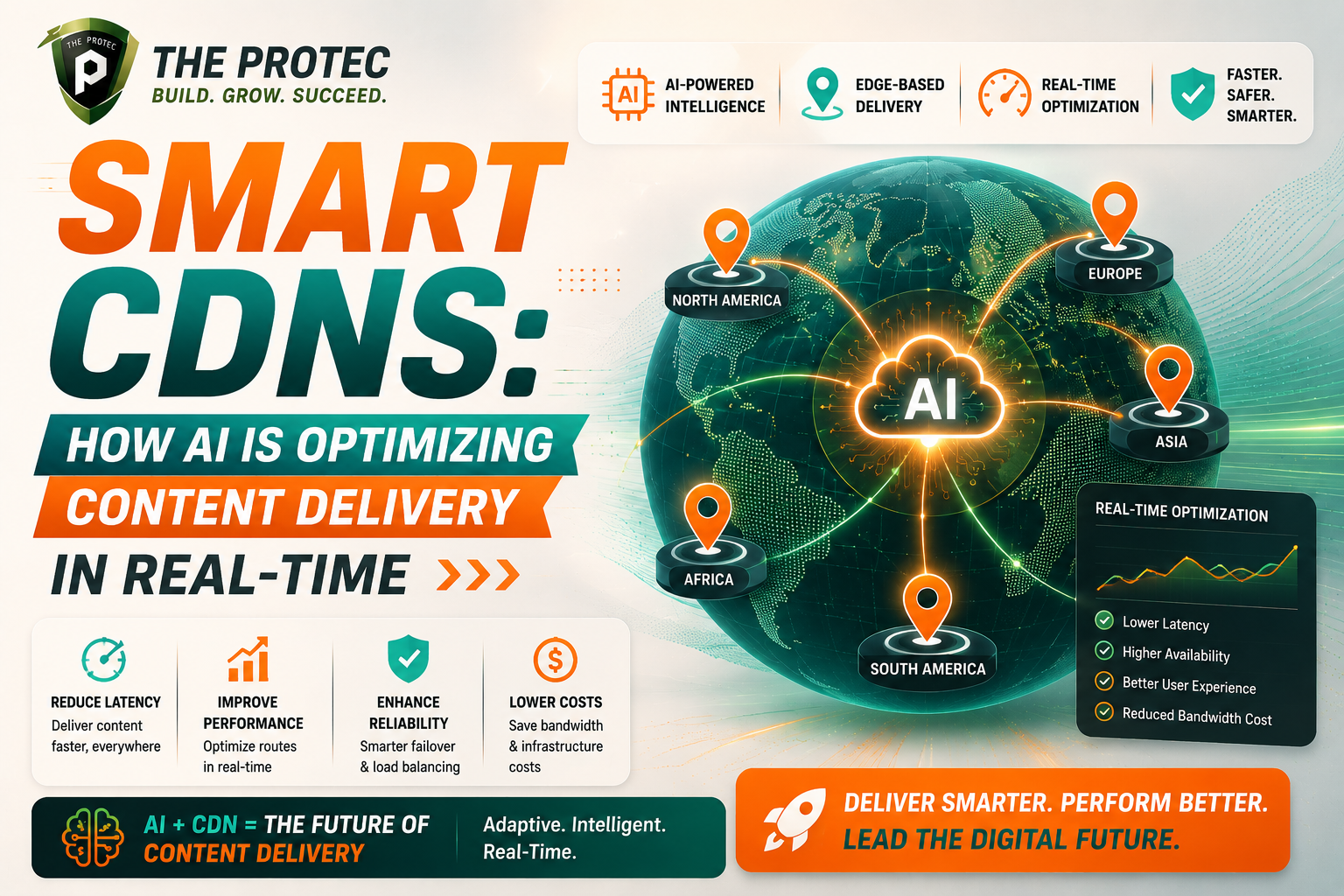
In the digital age, content delivery networks (CDNs) have become essential infrastructure for delivering web content, videos, software updates, and more to global users rapidly and reliably. However, as online expectations escalate and traffic patterns become more complex, traditional CDN architectures face growing challenges in maintaining optimal performance at scale. Enter smart CDNs the next evolution in content delivery powered by artificial intelligence (AI) to optimize routing and caching dynamically in real-time.
This article delves into how AI is transforming CDN operations, enabling unprecedented levels of content delivery optimization. We’ll explore the underlying principles of smart CDNs, how AI-driven routing and caching work together, and the impact these advances have on latency reduction, bandwidth efficiency, and user experience enhancement.
Understanding the Evolution from Traditional to Smart CDNs
Traditional CDNs operate by geographically distributing cache servers to reduce the distance content must travel to end-users. While this layered distribution aggressively reduces latency and improves availability, the routing and caching decisions generally rely on static algorithms or manually configured rules. This approach struggles to adapt perfectly to real-time network congestion, sudden traffic spikes, or regional usage changes.
Smart CDNs harness artificial intelligence and machine learning models to continuously analyze vast amounts of network telemetry, user behavior, and server performance metrics. This enables automated, granular optimization without human intervention. By adapting dynamically to network conditions, smart CDNs can choose the best content source and caching strategy, minimizing delays and maximizing efficiency.
AI-Based Routing: The Backbone of Real-Time Optimization
One of the core innovations of smart CDNs lies in AI-based routing. Instead of a fixed or round-robin approach, machine learning algorithms ingest real-time data such as:
- Network latency and packet loss statistics
- Bandwidth availability across different paths
- Server load and response times
- Geolocation and device-specific constraints
- Historical traffic patterns and predicted demand surges
Using these inputs, neural networks and reinforcement learning models evaluate the optimal path to deliver content from the origin or edge cache to the end-user. This capability enables CDNs to:
- Reduce latency: By routing traffic away from congested routes or overloaded servers, AI minimizes delays that users experience.
- Improve reliability: AI algorithms detect degraded network segments quickly and reroute to avoid packet loss or outages.
- Adapt instantly: In the event of unexpected traffic spikes due to viral content or flash sales, AI routing recalibrates on the fly, distributing loads efficiently.
An example of this technology in action is the use of deep reinforcement learning to simulate millions of routing scenarios continuously, enabling smart CDNs to fine-tune their strategies beyond human-scale analysis.
AI-Enhanced Caching Strategies for Intelligent Content Placement
Caching is fundamental to CDN success, but the static caching policies of traditional systems fail to react to fluctuating demand or content popularity. AI-powered caching in smart CDNs revolutionizes this by predicting content request patterns and adjusting cache storage accordingly.
Key features of AI-enhanced caching include:
- Predictive content prefetching: Machine learning models forecast which content is likely to become popular in specific regions or among user demographics and proactively cache it closer to those users.
- Dynamic cache expiration: Instead of a fixed time-to-live (TTL) for content, AI optimizes caching durations based on real-time usage trends and content update patterns, preventing stale data yet reducing unnecessary origin fetches.
- Edge cache optimization: AI determines the best placement of items within multi-tier caching hierarchies local edge, regional edge, or origin servers maximizing hit rates while minimizing storage overhead.
By implementing these intelligent caching methods, smart CDNs reduce the load on origin servers, decrease bandwidth consumption, and significantly boost user-perceived performance.
Real-World Impacts of AI in Content Delivery Optimization
The integration of AI into CDNs yields multiple benefits that directly enhance digital experiences and operational efficiencies:
- Lower latency and jitter: Smart CDNs can cut round-trip times, essential for streaming platforms, gaming, and real-time applications.
- Bandwidth cost reduction: By efficiently routing and caching content, AI reduces redundant data transfers.
- Improved scalability: The CDN can seamlessly adjust to variable loads, maintaining quality even during traffic surges.
- Enhanced security: Some AI-based CDNs integrate anomaly detection to identify and mitigate emerging distributed denial-of-service (DDoS) attacks or malicious traffic in real-time.
- Better personalization: AI enables context-aware content delivery, adapting formats or versions based on device capabilities and user preferences.
Major online enterprises and streaming providers have already reported significant performance gains by adopting AI-powered CDNs, emphasizing this technology’s critical role in future digital infrastructure.
Challenges and Considerations When Implementing Smart CDNs
While promising, the move toward AI-driven smart CDNs comes with challenges that organizations should consider carefully:
- Data privacy and compliance: AI systems require access to user data and network metrics, making compliance with regulations like GDPR and CCPA essential.
- Complexity and transparency: Machine learning models can behave like black boxes, making troubleshooting and auditing difficult. Providers need clear governance and monitoring tools.
- Integration with existing architectures: Migrating to smart CDNs requires compatibility with legacy systems to avoid disruptions.
- Cost implications: Deploying advanced AI capabilities increases operational costs, though these are often offset by long-term efficiencies.
Future Trends in AI-Driven Content Delivery Networks
The evolution of smart CDNs is far from complete. Emerging trends that will drive further innovation include:
- Federated learning: Enabling AI models to train across distributed CDN nodes without centralizing sensitive data.
- Edge AI processing: Implementing real-time AI inference directly on CDN edge nodes for ultra-low latency decisions.
- Integration with 5G and IoT: Leveraging AI-optimized CDNs to support huge volumes of IoT devices and ultra-fast 5G applications.
- Energy-efficient AI: Reducing the carbon footprint of AI-powered content delivery while maintaining performance.
These advancements will further empower smart CDNs to deliver highly personalized, resilient, and sustainable digital experiences for users worldwide.
Frequently Asked Questions (FAQ)
What distinguishes a smart CDN from a traditional CDN?
A smart CDN uses artificial intelligence and machine learning to dynamically optimize routing and caching decisions in real-time, adapting continuously to network conditions and user behavior. Traditional CDNs typically rely on static rules and manual configuration, which limits flexibility and responsiveness.
How does AI improve content delivery performance?
AI analyzes real-time data such as network latency, server load, and user demand to select optimal paths and cache placements. This reduces latency, prevents congestion, improves cache hit rates, and enhances overall content delivery speed and reliability.
Are there security benefits to using AI-powered CDNs?
Yes, some smart CDNs incorporate AI-driven anomaly detection to identify unusual traffic patterns and mitigate security threats like DDoS attacks proactively. The AI can respond faster than traditional rule-based systems, improving protection.
Conclusion
The integration of AI into CDNs marks a transformative shift in content delivery optimization. Smart CDNs with AI-based routing and caching provide dynamic, data-driven mechanisms that adapt instantly to network realities and user demands, delivering superior performance, scalability, and reliability. As the volume and complexity of digital content continue to escalate, embracing AI-powered smart CDNs will be critical for organizations looking to maintain competitive, resilient, and efficient web and media delivery infrastructures.
For businesses aiming to enhance their digital presence and user satisfaction, investing in AI-driven content delivery networks offers a strategic advantage that aligns with the future trajectory of internet technologies.
To learn more about cutting-edge CDN technologies, visit Cloudflare’s CDN Guide.