




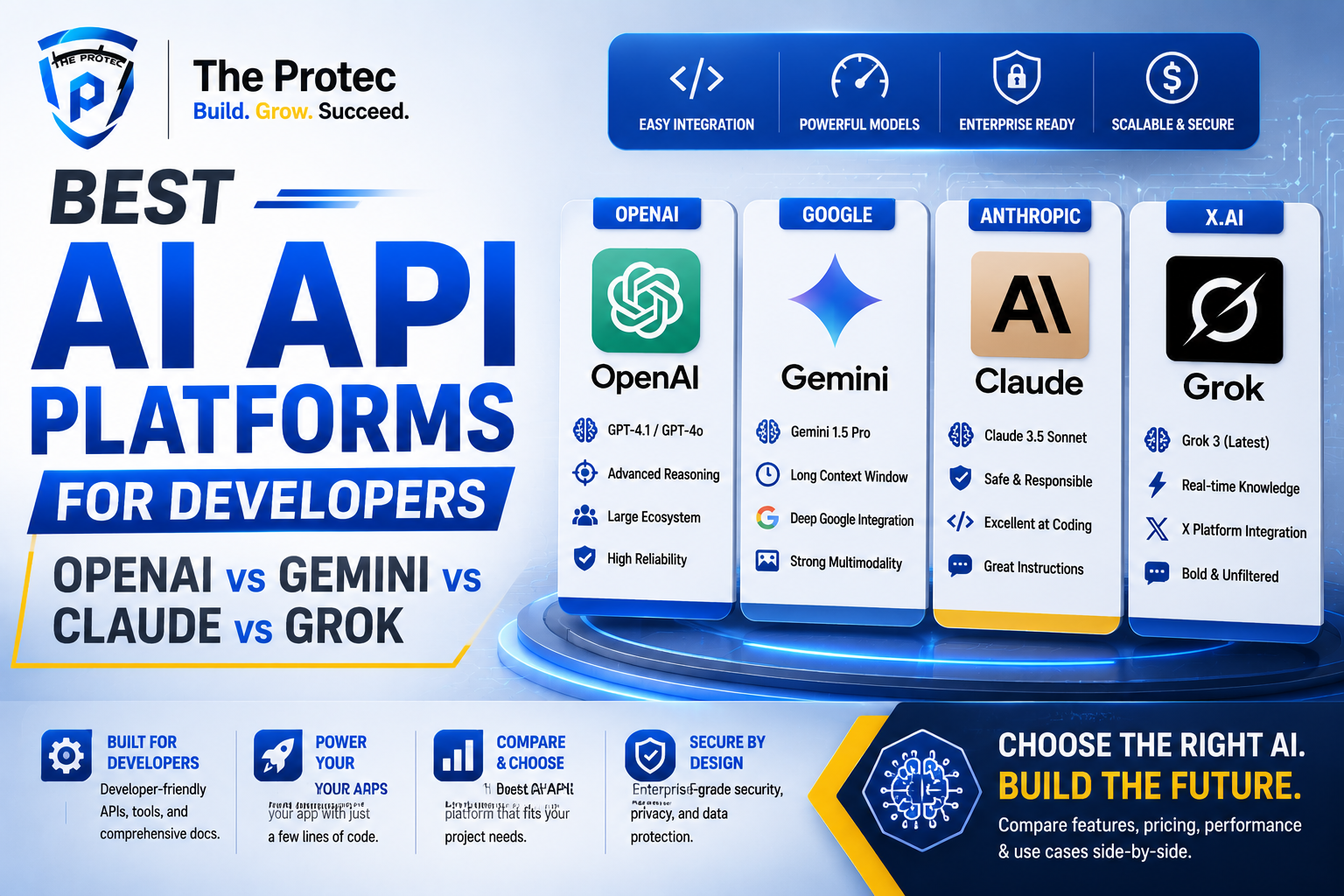
Best AI API Platforms for Developers: OpenAI vs Gemini vs Claude vs Grok
Choosing the best AI API has become one of the most important product decisions for modern developers. The market has matured fast: model quality is stronger, context windows are much larger, multimodal capabilities are now expected, and pricing has become more competitive. But the right platform still depends on what you are building. A coding assistant, document analyzer, customer support bot, research tool, or real-time social intelligence app will not have the same needs.
As of August 2026, the big four platforms most developers compare are OpenAI, Google Gemini, Anthropic Claude, and xAI Grok. Each has a distinct personality and technical advantage. OpenAI remains the most balanced ecosystem for general-purpose development. Gemini stands out for long-context, multimodal, and Google-native workflows. Claude is often the favorite for clean reasoning, writing, and code review. Grok has become compelling for real-time, conversational, and X-connected use cases. If you are trying to decide between OpenAI API vs Gemini API or Claude API vs Grok API, this guide breaks down the practical differences that matter most.
What matters most when choosing the best AI API
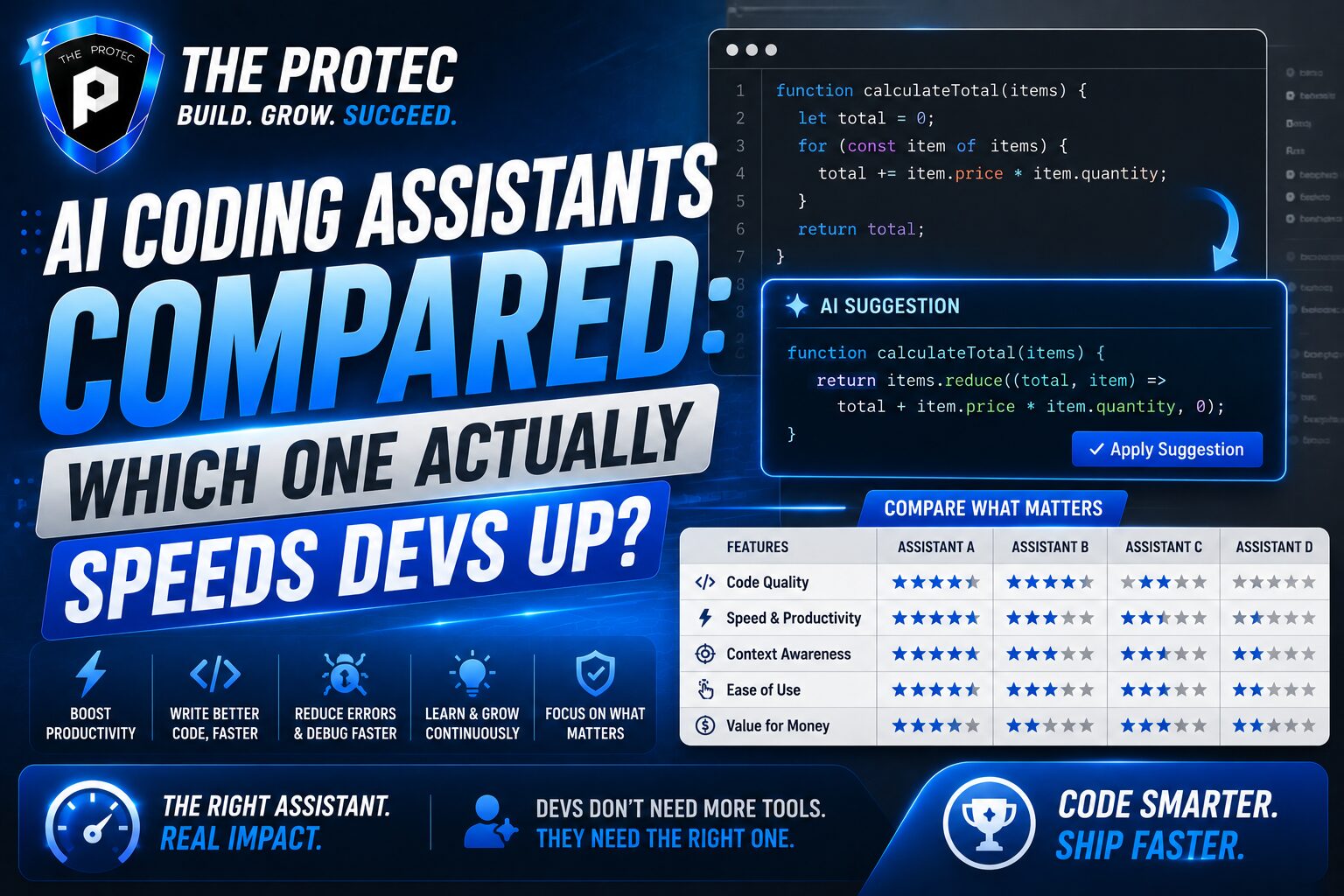
Before comparing providers, it helps to define the evaluation criteria. Developers often focus on raw benchmark scores, but production decisions usually come down to a mix of cost, reliability, and integration fit.
- Pricing: Input and output token costs, batch discounts, cached pricing, and tool-use overhead.
- Context window: How much text, code, or multimodal content the model can handle in one request.
- Coding quality: Accuracy, debugging ability, refactoring quality, and adherence to instructions.
- Multimodal support: Image, audio, video, and document understanding.
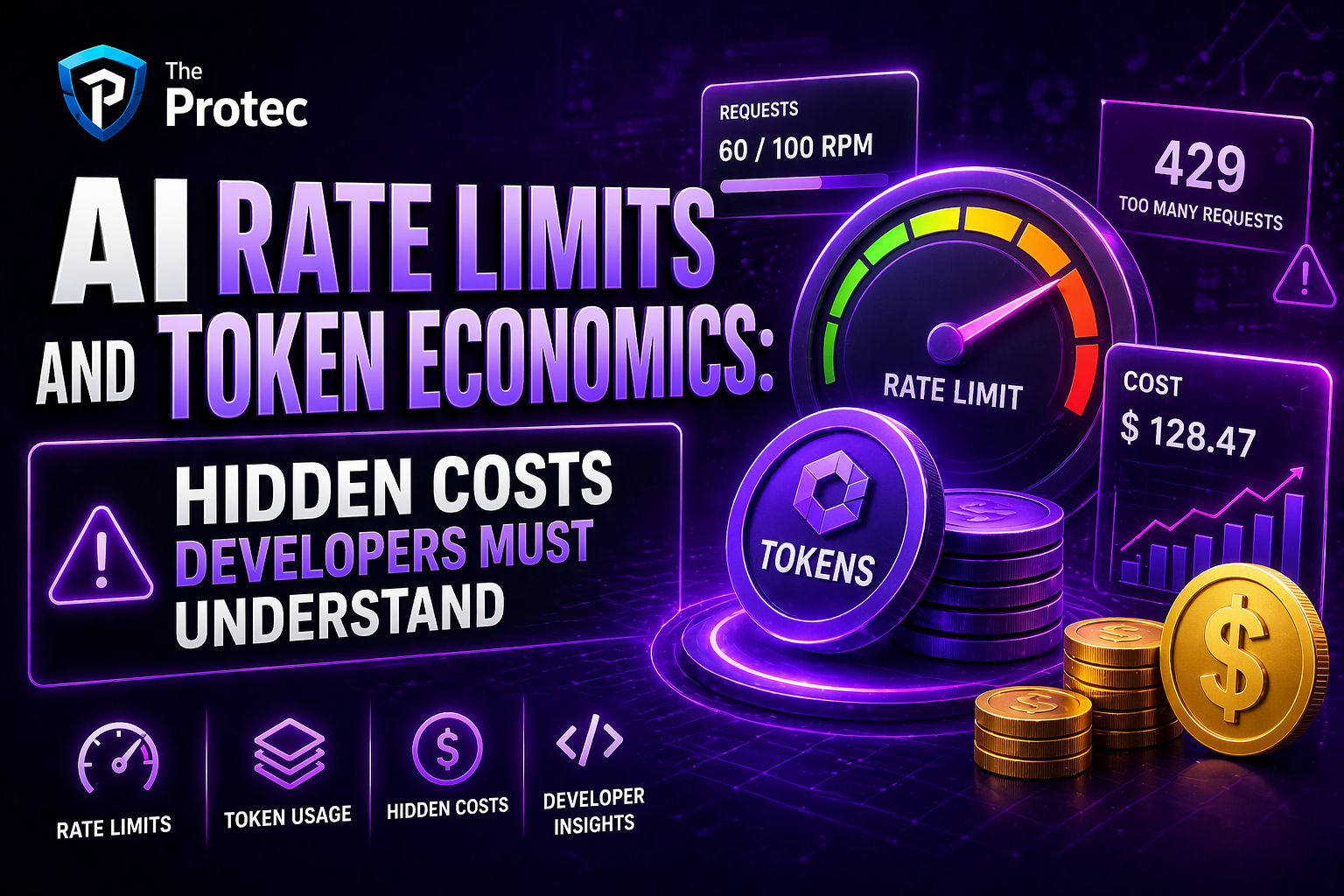
- Rate limits and throughput: Requests per minute, tokens per minute, burst behavior, and enterprise scaling.
- Tooling ecosystem: SDK maturity, function calling, structured outputs, evals, and deployment options.
The best AI API is rarely the one with the single highest benchmark. It is the one that fits your latency budget, payload size, UX needs, and cost structure.
OpenAI API: the most balanced platform for broad product development
OpenAI remains the default choice for many teams because it offers a mature platform with strong general performance, broad model availability, and a polished developer experience. Its biggest advantage is balance. OpenAI is not always the cheapest, and it is not always the absolute winner in long-context tasks, but it is consistently strong across coding, reasoning, tool use, and multimodal workflows.
Pricing and efficiency
OpenAI’s pricing structure is typically competitive for mainstream application development, especially when you combine model quality with output consistency. For many teams, the real cost benefit comes from fewer retries, fewer prompt hacks, and better first-pass output. In practice, that can matter more than a small difference in token price. OpenAI also offers useful caching and enterprise-friendly usage patterns that can reduce costs for repeated prompts and structured workflows.
Context window and multimodal strengths
OpenAI’s current models support large context windows suitable for codebases, long conversations, and document analysis. The platform is especially strong when you need a model that can handle text plus images, with robust multimodal reasoning and strong tool integration. For apps that combine UI screenshots, support docs, and live actions, OpenAI is often one of the most reliable choices.
Coding quality
For software development tasks, OpenAI is still one of the safest picks. It performs well on code generation, unit test creation, bug fixing, and API integration. It also tends to follow instructions closely, which is crucial when the model is embedded in a developer tool. If your product needs predictable output formatting, structured JSON, or function-call workflows, OpenAI is hard to beat.
Rate limits and platform maturity
OpenAI’s rate limits vary by account type and usage tier, but the platform is generally stable and production-ready. The SDKs are mature, documentation is extensive, and the ecosystem supports a wide range of developer tools. If your team wants a lower-risk choice with broad community support, OpenAI is often the benchmark by which the others are compared.
Gemini API: the strongest choice for long context and Google-native workflows
Gemini has evolved into a serious contender for teams that need massive context windows, strong multimodal understanding, and tight integration with Google Cloud tooling. In many projects, Gemini is the best option for handling huge documents, long transcripts, code repositories, and mixed media inputs.
Pricing and value
Gemini’s pricing is often attractive for high-volume applications, particularly when the workload is dominated by long context or multimodal ingestion. That said, pricing should be evaluated alongside output quality and latency. Gemini can be a cost-effective choice when your app processes large files, because larger context often means fewer API calls and less preprocessing.
Context window leadership
This is where Gemini stands out. For developers working with long enterprise documents, knowledge bases, legal archives, product catalogs, or codebases, Gemini’s context capacity can be a game changer. It reduces the need for chunking, retrieval complexity, and complicated orchestration. If your application lives or dies by how much information the model can digest at once, Gemini is one of the strongest candidates in the best AI API conversation.
Multimodal and data-heavy applications
Gemini is particularly strong in multimodal and document-centric workflows. It handles images, diagrams, and text in a way that makes it useful for knowledge extraction, data analysis, and enterprise search. For teams already using Google Cloud, Vertex AI, or Google Workspace ecosystems, Gemini can fit naturally into existing infrastructure.
Coding quality
Gemini’s coding ability is strong and improving, especially for structured programming tasks and large-scale code understanding. It is particularly useful when you need to analyze long repositories or review code in the context of large technical documentation. In pure coding style and instruction adherence, some developers still prefer OpenAI or Claude, but Gemini is highly competitive for code comprehension and long-context refactoring.
Rate limits and operational fit
Gemini tends to be appealing for teams that value scale, enterprise integration, and broad context handling. Rate limits and quotas depend on account setup and platform tier, but the overall story is that Gemini can be a great fit for production apps with large inputs and predictable traffic patterns.
Claude API: best for reasoning, writing, and code review quality
Claude has carved out a distinct reputation for thoughtful reasoning, strong writing, and clean code assistance. Many developers prefer Claude when the task requires careful instruction following, nuanced analysis, or polished output. It is especially strong in workflows where the model must act like a senior reviewer rather than just a fast generator.
Pricing and practical cost
Claude is often priced competitively for high-quality output, particularly when you factor in how often it gets the answer right on the first attempt. While pricing may not always be the lowest on paper, the effective cost can be favorable because Claude often reduces downstream editing and prompt iteration. For teams building internal tools, content workflows, or software copilots, that can translate into real savings.
Context window and long-form reasoning
Claude’s large context window makes it attractive for document-heavy work, long technical threads, and deep code analysis. It is especially valuable when the application depends on preserving details across a long conversation or a multi-file code review. Claude is a strong fit for tasks like contract analysis, policy review, architecture critique, and incident postmortem summarization.
Coding quality
Among developers, Claude is often praised for readable code, sensible architecture suggestions, and careful refactoring. It tends to produce elegant outputs with fewer hallucinated abstractions than some alternatives. If your use case is a coding assistant, code review agent, or internal engineering copilot, Claude is often one of the best AI API choices because it balances correctness and clarity.
Multimodal features
Claude supports multimodal workflows, though many teams still think of it primarily as a text-first reasoning model. Its strength is less about flashy media generation and more about interpreting complex inputs with discipline. If you need a model that can analyze screenshots, diagrams, or long documents while maintaining careful reasoning, Claude is a strong option.
Rate limits and reliability
Claude’s rate limits are generally good for production use, though teams with very high throughput should verify quotas carefully. Anthropic’s platform has built a reputation for safety-minded design, strong prompt discipline, and enterprise usability. That makes Claude especially appealing for products where output quality and reliability matter more than novelty.
Grok is the most distinctive of the four because of its real-time orientation and connection to the X ecosystem. It is not always the most conservative choice, but it can be a powerful one for apps that need current events, fast conversational responses, or social data awareness. For the right product, Grok offers a unique advantage.
Pricing and positioning
Grok’s pricing has been evolving rapidly as the platform expands. Developers should check current tier structures carefully, because the most interesting value often comes from the combination of model access and the surrounding ecosystem rather than token price alone. Grok can be attractive for teams experimenting with fast-moving consumer apps, trend analysis, or social listening tools.
Context window and conversational style
Grok offers a solid context window for interactive applications, though its biggest draw is often not raw context size but the style of responses and the freshness of information access. For apps that need a lively, direct, sometimes opinionated tone, Grok can feel more engaging than more formal alternatives. That said, developers building business-critical workflows should test carefully for consistency and correctness.
Coding quality
Grok’s coding performance is improving and can be useful for prototyping, quick scripts, and interactive developer experiences. However, in strict code quality, architecture, and long-form debugging, many teams still place OpenAI and Claude ahead. Grok is best viewed as a strong option for product experiences where personality and recency matter, rather than as the universal coding leader.
Multimodal and real-time use cases
Grok’s most compelling use cases often involve live information, social context, and interactive assistants. If your application needs to summarize what is trending, help users interpret current discussions, or respond in a more conversational style, Grok can be highly differentiated. Its value is strongest when paired with product features that take advantage of timeliness and engagement.
Rate limits and practical considerations
Because Grok is still expanding its API footprint and enterprise posture, developers should pay special attention to throughput, availability, and account-level limits. For startup prototyping, it can be exciting. For mission-critical production systems, thorough load testing and fallback architecture are essential.
OpenAI API vs Gemini API
The OpenAI API vs Gemini API decision usually comes down to one question: do you need the most balanced platform, or do you need the largest context and strongest Google ecosystem alignment?
- Choose OpenAI if you want consistently strong coding, excellent tool calling, broad developer adoption, and a polished production experience.
- Choose Gemini if your app handles huge documents, mixed media, or Google-native data flows and you want long-context efficiency.
OpenAI is often the safer default for product teams shipping general-purpose AI features. Gemini becomes the better fit when scale and context depth are the main constraints.
Claude API vs Grok API
The Claude API vs Grok API comparison is more interesting than it first appears because these platforms optimize for different outcomes.
- Choose Claude if you need clean reasoning, strong code review, careful summarization, and reliable long-form work.
- Choose Grok if you want real-time relevance, social context, and a more dynamic conversational experience.
Claude is better for precision. Grok is better for immediacy. If your product is a developer tool, enterprise assistant, or research workflow, Claude is usually the stronger bet. If your product is consumer-facing and thrives on live trends and personality, Grok may be more compelling.
Best AI API by project type
Different projects demand different strengths. Here is a practical way to choose the best AI API platform for your use case.
1. Coding assistants and IDE copilots
Best choice: OpenAI or Claude
OpenAI is excellent for broad coding assistance, structured outputs, and tool integration. Claude often wins for code review, refactoring quality, and thoughtful explanations. If your copilot needs to write code and explain decisions clearly, Claude is a standout. If it needs to integrate deeply with actions, OpenAI is often easier to operationalize.
2. Document analysis and enterprise search
Best choice: Gemini or Claude
Gemini is especially strong when the documents are huge or multimodal. Claude is excellent when you want high-quality reasoning over long text. For legal, compliance, policy, and knowledge management tools, these two are usually the front-runners.
3. Customer support automation
Best choice: OpenAI or Claude
OpenAI offers a robust balance of instruction following, tool use, and production readiness. Claude often provides more polished and empathetic language. If your support experience is highly structured and action-oriented, OpenAI is a strong default. If tone and careful response quality matter most, Claude can be better.
4. Multimodal product experiences
Best choice: Gemini or OpenAI
For apps involving screenshots, images, documents, and mixed content, both platforms are excellent. Gemini tends to shine with very large inputs and document-heavy workflows. OpenAI is often preferred for all-around multimodal product development and smoother tool orchestration.
5. Social intelligence, trend tracking, and live assistants
Best choice: Grok
Grok is the most differentiated option for products tied to social feeds, current conversations, and live context. If your app needs to feel plugged into what is happening now, Grok is worth serious testing.
How rate limits and latency affect real products
Rate limits are often overlooked during vendor selection, but they can determine whether your app feels fast or frustrating. A model with great output quality but strict throughput caps may be fine for internal tools and prototypes, but not for a consumer app with spikes in traffic.
When evaluating platforms, test three things:
- Peak request behavior: How the platform handles bursts.
- Streaming latency: How quickly the first tokens arrive.
- Retry and fallback patterns: What happens when a request times out or gets throttled.
For production, many teams build multi-provider systems. For example, they may use Claude for deep analysis, Gemini for long document ingestion, and OpenAI for orchestration or action-heavy tasks. This hybrid approach is increasingly common because no single API is perfect for every workload.
Final verdict: which platform is best?
If you want one answer, the most balanced best AI API for developers is still often OpenAI. It offers the strongest combination of coding quality, multimodal support, ecosystem maturity, and production readiness. But the best choice changes by use case.
- Best overall balanced platform: OpenAI
- Best for long context and Google workflows: Gemini
- Best for reasoning and code review: Claude
- Best for real-time, social, and trend-driven apps: Grok
The smartest teams do not ask which model is best in the abstract. They ask which model is best for the job, the budget, and the user experience they want to create. In 2026, the winning strategy is often to benchmark two or three providers against your own prompts and production constraints before committing.
If you are building a serious AI product, the right API choice can save months of engineering time and thousands in operational cost. The landscape is finally mature enough to compare platforms on practical grounds rather than hype. That is good news for developers, because it means better tools, better competition, and better products.
FAQ
Which is the best AI API for coding?
For most coding workflows, OpenAI and Claude are the strongest options. OpenAI is better for broad integration and tool use, while Claude is often better for code review, refactoring, and readable output.
Is Gemini better than OpenAI for long documents?
Usually yes, especially when the task involves very large inputs, multimodal documents, or Google Cloud workflows. Gemini’s long-context advantage is one of its biggest strengths.
Is Grok a good API for developers?
Yes, but mainly for specific use cases. Grok is best for real-time, social, and conversational applications. It is less often the first choice for strict enterprise coding or deep reasoning tasks.
Which platform has the best pricing?
It depends on your workload. Gemini can be cost-effective for large-context processing, OpenAI is often efficient for balanced production use, Claude can reduce iteration costs, and Grok’s value depends on the product fit and current pricing tiers.
Should developers use more than one AI API?
Yes, many teams do. A multi-provider strategy can improve reliability, reduce cost, and let you choose the best model for each task. This is especially useful for products with mixed workloads like support, search, coding, and summarization.
For more information on model capabilities and developer tooling, see the official platform documentation from OpenAI and Google AI.