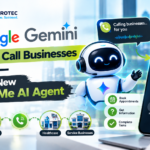







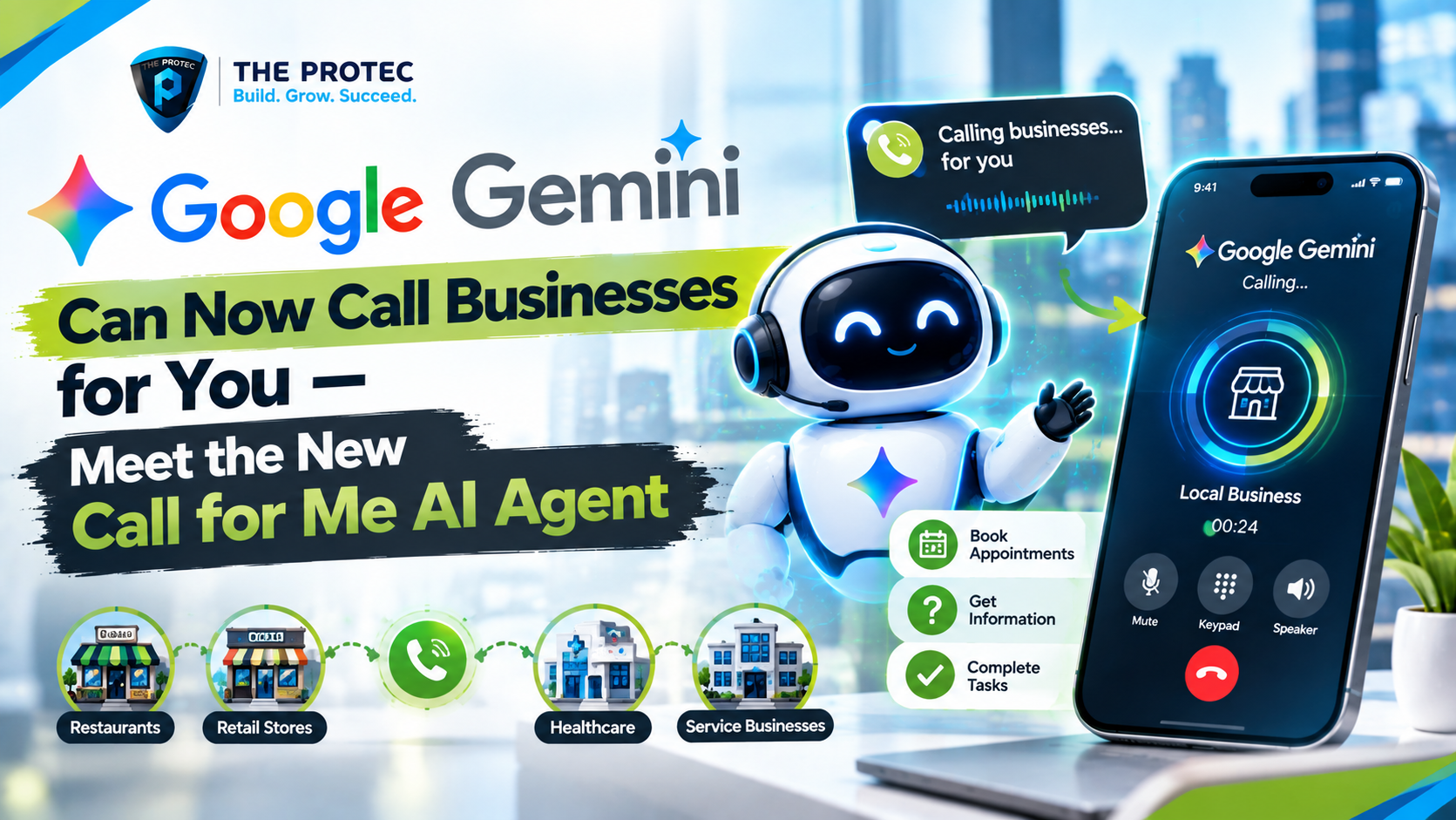
Calling a business can turn a simple question into a frustrating sequence of automated menus, hold music and repeated explanations. Google wants Gemini to handle that work for you. Its experimental Google Gemini Call for Me capability can place business calls on a user’s behalf, move through phone trees, wait on hold, speak with employees and report back with the result.
This is not merely a smarter dialer or another call-screening feature. Call for Me marks a significant shift from AI that answers questions to AI that performs real-world tasks. Depending on the request, the Gemini AI phone agent can check whether a product is in stock, make or manage a reservation, arrange an appointment or gather information that is not readily available online. A live transcript keeps the user informed, while an option to take over preserves human control.
As of September 2026, the feature is an experimental, gradual U.S. rollout with strict eligibility requirements. It should not be confused with broader Gemini features or treated as a globally available calling service. Even at this limited stage, however, Gemini agentic calling offers a revealing look at where personal AI assistants are heading.
What Is Google Gemini Call for Me?
Google Call for Me is an agentic calling capability that allows Gemini to call a business and pursue a user-defined objective. Instead of giving the user a phone number or suggesting what to say, Gemini can initiate the call through the user’s mobile connection and conduct the interaction.
A request might be as straightforward as asking, “Call this store and find out whether it has this item in stock.” More involved Gemini business calls could require the system to select options in an automated menu, wait for an employee, answer follow-up questions and confirm the details of an appointment.
Google says the AI identifies itself at the beginning of the call. That disclosure is important because the person answering should understand that they are speaking with an automated assistant acting for a customer. Gemini uses the user’s phone number and mobile network rather than operating as an unrelated cloud caller, making the interaction more closely connected to the user’s device and identity.
Who Can Use Gemini Call for Me?
The initial release is deliberately narrow. Google is gradually making Call for Me available in the United States to eligible Pixel 11 users who meet the rollout requirements. Those requirements include:
- An eligible Pixel 11 device
- A qualifying Google AI subscription
- A U.S. SIM and supported mobile service
- The beta version of the Phone by Google app
- The latest available Gemini app
- Access through Google’s staged experimental rollout
Meeting every requirement may not produce immediate access because availability is being enabled gradually. Account type, device configuration, language and other restrictions may also apply. Users should consult the official Google Gemini Help center for current eligibility and setup information.
Most importantly, Gemini Call for Me Pixel 11 access in the U.S. does not mean Gemini can autonomously call businesses for every user worldwide. Other Gemini phone integrations may exist, but this particular agentic experience has a distinct rollout, interface and set of safeguards.
What the Gemini AI Calling Agent Can Do
The practical value of an AI calling assistant comes from handling the parts of a call that consume time and attention. The experimental system is designed to support several common business interactions.
Gemini can listen to interactive voice response prompts, interpret choices and select the route most likely to reach the right department. That requires more than transcribing speech: the agent must connect each menu option to the user’s original goal and react when the menu changes.
Wait on Hold and Speak With Employees
Like Google’s earlier Hold for Me feature, the agent can absorb the inconvenience of a queue. Call for Me goes further by continuing the task after a person answers. It can explain why it is calling, ask relevant questions and process the employee’s response in real time.
Check Product Availability
Gemini product availability calls can obtain local inventory information that may be missing or outdated on a website. If an employee asks about size, color, model or quantity, the agent can use details approved by the user or request clarification when needed.
Manage Reservations and Appointments
Gemini reservation calls and Gemini appointment calls can involve multiple constraints, including dates, times, party size, service type and contact information. The system can negotiate among available options, although consequential details should remain subject to user review or confirmation.
How Gemini Agentic Calling Works
Behind one apparently simple command is a coordinated pipeline of speech, reasoning and telephony technologies. Although Google does not expose every implementation detail, the user experience illustrates the main components of an AI calling agent.
1. The User Defines the Goal
The process begins with an objective, such as checking store inventory or moving an appointment. Gemini may collect necessary constraints before dialing. This planning step helps prevent the call from becoming open-ended.
2. Approved Information Is Prepared
A business may need the user’s name, phone number, reservation details or preferred schedule. Call for Me is intended to use personal information the user has approved for the task. Sensitive or unnecessary information should not be supplied simply because an employee requests it.
3. Gemini Places the Call
The Google AI agent uses the user’s phone number and mobile network. Once connected, it identifies itself as an AI assistant and explains the purpose of the call. Clear identification is essential for transparency and may help businesses decide how to handle automated callers.
4. Speech Recognition Creates Real-Time Context
Automatic speech recognition converts menus and human responses into text. The system must cope with accents, background noise, interruptions, industry terminology and poor call quality. A transcription error can change the meaning of a price, date or confirmation number, so context and verification matter.
5. Gemini Reasons and Takes the Next Action
The agent interprets what it heard, compares it with the user’s objective and decides what to say or do next. Tool use may include selecting keypad options, maintaining task details, tracking available times and determining when user approval is required. This continual observe-reason-act cycle is what makes the feature agentic rather than a fixed voice script.
6. The User Monitors or Takes Over
A live transcript gives the user visibility into the Gemini phone call. If the conversation becomes sensitive, confusing or unusually complex, the user can take over. That handoff is a critical safety mechanism: autonomy does not eliminate the need for human judgment.
How Call for Me Differs From Duplex, Hold for Me and Ask for Me
Google has spent years experimenting with AI-mediated business communication, but its earlier products addressed narrower pieces of the problem.
Google Duplex demonstrated that an AI could hold a natural telephone conversation for structured tasks such as restaurant reservations and business-hour checks. Duplex was impressive, but its supported interactions were generally constrained to specific scenarios and Google-managed experiences.
Hold for Me focused on waiting. It monitored a call while the user was on hold and alerted the user when a representative became available. It reduced idle time but did not independently carry the user’s broader request through the conversation.
Google Ask for Me explored having AI contact local businesses to collect information such as pricing and availability. It was closely tied to search-based inquiries and supported categories rather than functioning as a general assistant operating directly from the user’s phone.
Gemini Call for Me combines elements of all three while expanding the agent’s autonomy. It can initiate a user-requested business call, endure the queue, navigate menus, converse with staff and work toward an outcome. The live transcript and human takeover option add supervision without requiring the user to conduct every step.
Why This Is a More Autonomous Google AI Agent
Most phone AI features assist with one isolated action: screening an incoming call, transcribing speech or holding a place in a queue. An autonomous AI phone assistant must maintain a goal across changing circumstances.
During a business call, the ideal time may be unavailable, a requested product may have a substitute, or the employee may need information that was not anticipated. Gemini must determine whether it can respond from approved context, choose among acceptable alternatives or pause for the user. That ability to plan, act and adapt makes Gemini business phone calls an important example of agentic AI calling.
It also moves AI into a higher-stakes environment. A weak chatbot response can be ignored. A mistaken phone agent could create a reservation, disclose personal data or agree to an unwanted charge. Effective autonomy therefore depends on clear boundaries, confirmations and an accessible human override.
Security, Privacy and Trust Questions
AI agent phone calls create privacy issues for both sides of the conversation. The user may share contact details, schedules, health-related appointment information or purchase preferences. The employee may reveal inventory, pricing or account information. How transcripts, audio and task data are stored, processed and retained deserves careful attention.
Users should review Gemini activity controls, app permissions and relevant Google policies before enabling experimental calling features. They should also limit the agent to the information required for a particular task. The privacy principle is simple: authorization to make a call should not become unlimited permission to access or disclose personal data.
Disclosure is equally important. Google’s statement that Gemini identifies itself at the start of the call helps prevent impersonation and gives the business an opportunity to decline automated interaction. Businesses may establish their own policies for AI callers, recording, identity verification and transactions.
Authentication presents another challenge. A phone number can be useful context, but it should not automatically prove that an AI is authorized to make account changes. High-risk actions may need a passcode, direct user participation or confirmation through another channel. The broader principles in the NIST Privacy Framework offer a useful lens for evaluating data collection, risk and accountability.
Users should be especially cautious with financial transactions, medical decisions, legal matters and account security. Call for Me is best understood as a delegated assistant, not an unrestricted substitute for the person it represents.
What Gemini Automated Phone Calls Mean for Businesses
Businesses may soon receive more calls from software acting for customers. That could improve efficiency when an AI clearly states its purpose and asks concise questions. It could also strain staff if automated agents make duplicate calls, fail to understand policies or attempt unsupported transactions.
Companies may need to update call-center scripts and automated menus for AI callers while preserving access for humans. Clear pricing, accurate online inventory and reliable booking systems could reduce unnecessary calls altogether. Businesses should also train employees not to disclose protected information merely because an agent knows a customer’s phone number or basic details.
Current Limits of Pixel 11 Call for Me
The feature remains experimental, so users should expect limitations. No speech system is immune to noisy lines, ambiguous answers or unexpected conversational turns. Some businesses may refuse to engage with an AI calling agent, and certain automated systems may not respond predictably.
Availability is also a major limitation. The current U.S. rollout applies to eligible Pixel 11 users with the required subscription, SIM, beta Phone by Google app and updated Gemini app. Google may adjust eligibility, supported tasks and safeguards as it evaluates real-world use. A successful demonstration should not be mistaken for universal reliability or global availability.
Frequently Asked Questions
Can Gemini make phone calls for me?
Eligible users in Google’s experimental U.S. rollout can ask Gemini Call for Me to call supported businesses on their behalf. The agent can navigate menus, wait on hold, speak with employees and work toward a defined task. Access is not available to every Gemini user.
Does Google Gemini Call for Me use my phone number?
Yes. Google says the capability uses the user’s phone number and mobile network. This differs from a generic cloud service placing an unrelated call, but users should still check their mobile plan and feature settings.
Does Gemini tell the business that it is an AI?
Google says Gemini identifies itself as an AI at the beginning of the call. This disclosure supports transparency and allows the business to decide whether to continue the interaction.
Can I listen to or take over a Gemini business call?
The experience provides a live transcript so the user can follow the interaction. The user can take over when human input is needed or when they prefer to finish the conversation personally.
Is Google Gemini Call for Me available outside the United States?
The experimental Call for Me rollout described here is limited to eligible U.S. Pixel 11 users and has additional app, subscription and SIM requirements. Broader Gemini availability does not mean this autonomous calling capability is available internationally.
From Answers to Action
Google Gemini Call for Me shows how quickly AI assistants are evolving. Gemini is no longer limited to explaining how to contact a business or drafting a script for the user. It can attempt the call, manage the friction and pursue a real-world result.
The experiment also raises the standard for safety. Reliable transcripts, explicit disclosure, limited data access, clear confirmations and immediate human takeover are not optional extras when AI can act on someone’s behalf. If Google gets those controls right, Gemini AI calling could turn one of the most tedious everyday chores into a supervised task delegated with a sentence.