





A phishing attack doesn’t need sophisticated malware to cause widespread damage. A convincing login page, a familiar brand logo, and a carefully crafted email or text can trick victims into revealing passwords, payment details, or authentication codes. When criminal services automate these tactics at scale, the threat can reach billions of phishing messages, turning simple deception into a global cybersecurity problem.
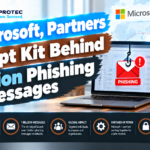
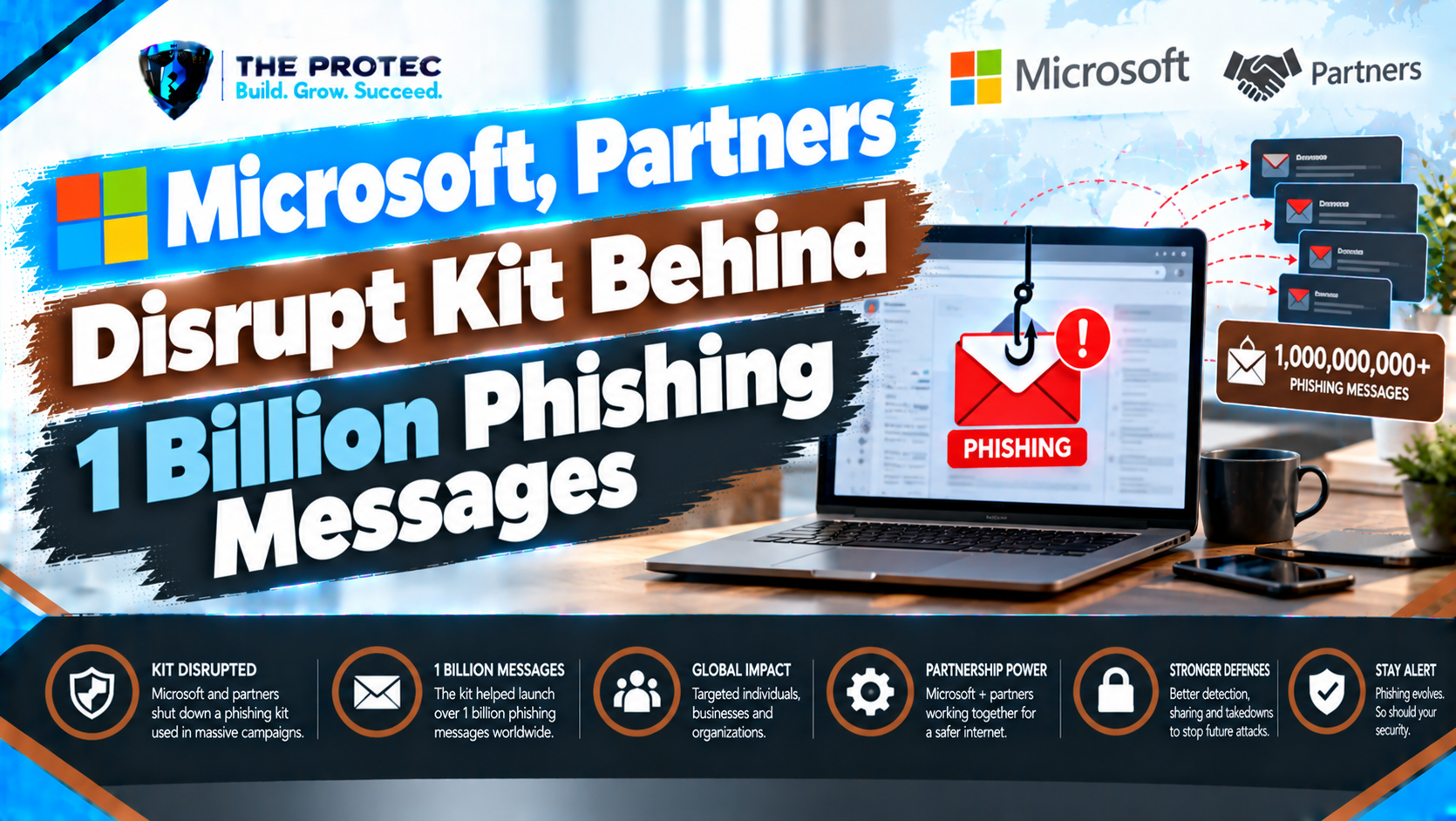
Microsoft and international partners have reportedly disrupted infrastructure connected to a Chinese-language phishing kit associated with approximately one billion messages. The Microsoft phishing kit disruption is notable both for its reported scale and for the way it exposes the industrial structure of modern online fraud. Instead of building every component themselves, criminals can subscribe to a phishing-as-a-service platform that supplies deceptive templates, hosting tools, message delivery features and systems for collecting stolen information.
The operation is an important development in the fight against email phishing attacks, but the headline figure requires context. One billion associated messages does not mean one billion people lost credentials, nor does it necessarily mean every message reached an inbox. It is a measure of campaign activity attributed by investigators to the kit or its supporting infrastructure, based on the telemetry and methodology available to them.
What Microsoft and Its Global Partners Disrupted
The reported Microsoft cybersecurity operation targeted cybercriminal infrastructure used to operate or support a Chinese-language phishing kit. Such infrastructure can include domains hosting counterfeit websites, servers that manage phishing campaigns, administrative panels, databases, redirect services and accounts used to communicate with customers of the criminal service.
Rather than describing a single attacker sending a single batch of fraudulent emails, the investigation points to a broader service model. Operators allegedly provided ready-made capabilities to affiliates or customers, who could then launch their own campaigns against consumers and organizations. This separation between platform operators and campaign users is common in the cybercrime economy: one group develops and maintains the tools while numerous customers choose targets, distribute messages and monetize stolen information.
Public reporting characterizes the kit as Chinese-language because its interfaces, instructions, sales channels or operator communications were primarily designed for Chinese-speaking users. That label describes the tool’s ecosystem, not necessarily the location, nationality or identity of every customer. A global phishing campaign can be managed from one region, hosted across several others and used to target victims almost anywhere.
What the One-Billion-Message Figure Actually Means
The claim that the kit was used in approximately one billion phishing messages is the most striking part of the latest cybersecurity news, but it should not be interpreted as a confirmed victim count. Cybersecurity measurements often combine information from email systems, malicious URLs, hosting providers, threat intelligence feeds, customer reports and observed campaign infrastructure.
Unless investigators define the measurement as completed inbox deliveries, the figure is best understood as messages observed, detected or otherwise associated with campaigns using the kit. It may include attempted deliveries that were rejected by email providers, quarantined as spam, blocked by security gateways or never opened. Duplicate messages, repeated attempts against the same recipient and automated campaign traffic may also contribute to the total.
Several distinct measurements should therefore remain separate:
Messages sent or attempted: The volume generated by criminal campaigns, whether or not the messages were delivered.
Messages detected: Activity visible to investigators or security providers through their own telemetry.
Messages delivered: Phishing content that reached a mailbox, phone or messaging account.
Victims who interacted: Recipients who clicked a link, opened a counterfeit page or provided information.
Confirmed compromises: Cases in which investigators verified credential theft, financial loss or account access.
The reported one-billion figure demonstrates extraordinary reach, but it remains an estimate of attributed campaign activity rather than proof of one billion successful credential theft attacks. Clear distinctions matter because inflated interpretations can obscure the difference between exposure, engagement and confirmed harm.
How a Chinese-Language Phishing Kit Enables Large Campaigns
A phishing kit is a collection of files, templates and management tools used to imitate legitimate websites and capture information entered by victims. Basic kits reproduce a familiar sign-in page and forward submitted credentials to an attacker. More advanced services can automate domain setup, customize branding, filter unwanted visitors and display different pages according to a target’s location or device.
Phishing-as-a-service platforms go further by turning those tools into subscription products. Customers may receive an online dashboard, technical support, frequently updated templates and infrastructure that is ready to use. Some services also offer message templates that imitate banks, delivery companies, cloud platforms, tax agencies, telecommunications providers or workplace collaboration tools.
This model lowers the technical barrier to cybercrime. A customer may not know how to develop a website, configure a server or bypass basic security checks. The platform handles much of that work, allowing the customer to concentrate on acquiring recipient lists and distributing deceptive messages. At scale, dozens or hundreds of affiliates can use the same underlying technology while creating campaigns that appear unrelated.
Modern kits may also incorporate adversary-in-the-middle techniques. These systems place a malicious site between the victim and a legitimate service, capturing usernames, passwords and session information during a real authentication process. Some attempt to collect one-time passcodes or authentication cookies, which can make weaker forms of multifactor authentication less effective. This is why phishing-resistant authentication has become an important part of online fraud prevention.
How Investigators Identify Malicious Infrastructure
A global cybercrime investigation rarely depends on one data source. Investigators can connect campaigns by examining repeated code, page designs, server configurations, domain registration patterns, encryption certificates, redirect chains and administrative interfaces. Even when domains change frequently, shared technical characteristics may reveal that they belong to the same service.
Microsoft’s visibility across email, identity, cloud and endpoint systems can help its researchers identify clusters of related activity. Hosting companies, domain registries, email providers, financial institutions and national authorities can add information that Microsoft cannot obtain independently. Victim reports may provide original messages, payment records or counterfeit pages that help analysts reconstruct the chain of events.
Cybersecurity threat intelligence teams must also distinguish the platform’s core infrastructure from websites operated by individual customers. That distinction affects both attribution and disruption. Taking down a handful of visible phishing pages may protect current targets, but disabling administrative systems, shared domains or backend services can interfere with many campaigns simultaneously.
Readers seeking primary updates on Microsoft security news can consult the Microsoft Security Blog, where the company publishes technical findings and details about selected Digital Crimes Unit actions.
What the Phishing Kit Takedown Involved
Reported actions by Microsoft and participating partners focused on making the service harder to operate and use. Depending on the jurisdiction and the evidence available, a phishing kit takedown can involve suspending hosting accounts, disabling domains, redirecting malicious traffic to controlled systems, preserving records for investigators or obtaining court orders that authorize control of identified infrastructure.
Service providers may also block technical indicators linked to the campaign. Email platforms can update filters to detect characteristic URLs, message patterns or sender behavior. Browser and endpoint security products can warn users before they reach a known counterfeit site. Financial institutions may monitor transactions or accounts connected to the stolen data.
These actions create costs for operators and customers. Criminals may lose access to management panels, victim data, domains and established delivery channels. Affiliates must find replacement tools, rebuild campaigns and regain trust within illicit markets. Even a temporary phishing campaign disruption can prevent active links from collecting more information while defenders identify additional infrastructure.
However, the publicly confirmed elements of an operation should not be confused with assumptions about arrests or the permanent disappearance of the software. Infrastructure disruption is not automatically the same as identifying every developer, affiliate or financial beneficiary.
Why International Cybersecurity Cooperation Matters
Cybercrime services deliberately spread their operations across borders. A domain can be registered through one company, hosted in another country, paid for through an intermediary and used against victims on several continents. No single technology provider or law enforcement agency has complete authority or visibility across that chain.
An international cybersecurity operation combines complementary capabilities. Technology companies contribute telemetry and engineering expertise. Registrars and hosting providers can act against abusive services. Banks can trace suspicious payments, while government agencies can use investigative and legal powers. Industry groups can distribute indicators quickly so that organizations outside the original investigation can protect their networks.
This collaboration is particularly valuable against Chinese-language cybercrime tools that may be marketed in closed forums but used against an international audience. Language expertise, regional knowledge and technical evidence all help investigators understand how a service is sold and operated without assuming that every participant belongs to one country or organization.
What the Disruption Means for Businesses and Email Providers
The immediate benefit for businesses is reduced exposure to infrastructure identified during the Microsoft cybercrime investigation. Domains and servers that are disabled can no longer support campaigns in the same way, while newly shared indicators can improve filtering across participating networks.
Organizations should nevertheless treat the operation as a warning rather than an all-clear. The reported scale shows how cheaply criminals can distribute convincing messages and how rapidly malicious infrastructure can be replaced. Businesses should use the disruption to review defenses in several areas:
Deploy phishing-resistant multifactor authentication: Passkeys and hardware security keys are generally more resistant to counterfeit login pages than texted or app-generated codes.
Strengthen email filtering: Layer sender authentication, reputation analysis, URL inspection, attachment scanning and behavior-based detection rather than relying on one control.
Protect privileged accounts: Administrators, finance personnel and executives require stricter access policies and additional monitoring.
Monitor unusual sessions: New devices, impossible travel, unfamiliar forwarding rules and abnormal downloads can indicate a stolen account.
Make reporting simple: A prominent phishing-report button helps security teams investigate suspicious messages before colleagues interact with them.
Prepare response procedures: Teams should be able to revoke sessions, reset credentials, preserve evidence and notify affected partners quickly.
Email providers can use newly discovered indicators to improve detection, but static blocklists are not enough. Criminals routinely rotate domains, alter wording and use legitimate services as redirects. Effective defenses increasingly combine infrastructure intelligence with identity signals and analysis of how messages behave.
How Ordinary Users Can Reduce Phishing Risk
Individuals should approach unexpected requests for passwords, payments or urgent account verification cautiously. Instead of following a link in a message, open the organization’s official app or type its known address directly into the browser. Check the complete sender address and destination domain, not just a familiar display name or logo.
Enable multifactor authentication wherever possible, preferably with a passkey or security key. Use a password manager to create a unique password for every account; password managers can also help because they generally will not fill credentials on an unrelated domain. Keep devices and browsers updated, and report suspicious messages to the impersonated organization or service provider.
The U.S. Cybersecurity and Infrastructure Security Agency offers additional guidance through its phishing recognition and reporting resource.
Disruption Is Valuable, but It Is Not Eradication
The operation can substantially degrade a service without eliminating the underlying threat. Developers may retain copies of source code, customers may have downloaded templates, and unaffected servers may remain online. Criminals can also rebrand, move to new providers or adopt a competing phishing-as-a-service platform.
That limitation does not make takedowns ineffective. Disruption removes trusted infrastructure, exposes operating methods, creates uncertainty among criminal customers and gives defenders valuable intelligence. Repeated operations can make abuse more expensive and less reliable. The strongest long-term results come from combining infrastructure action with arrests where possible, financial investigations, stronger authentication and continuing public awareness.
Frequently Asked Questions
Did the phishing kit compromise one billion people?
No. The one-billion figure reportedly refers to messages associated with campaigns using the kit, not one billion confirmed victims. Some messages may have been blocked, rejected, duplicated or ignored. The number of successful compromises is expected to be much smaller and should be reported separately.
What information can phishing kits steal?
Depending on the template and campaign, a kit may collect usernames, passwords, payment card details, bank information, identity data and one-time authentication codes. Advanced kits may also attempt to capture session tokens that can provide access after a victim completes authentication.
Does the disruption mean the phishing service is permanently offline?
Not necessarily. Identified domains, accounts and servers may be disabled, but operators or customers could retain copies of the tools. They may rebuild elsewhere or migrate to another service. Continued monitoring is essential.
Why are phishing-as-a-service platforms so dangerous?
They allow less technically skilled criminals to launch credible, large-scale campaigns with ready-made infrastructure. This increases the number of potential attackers and helps campaigns adapt quickly to popular brands, current events and regional targets.
What is the most effective protection against credential phishing?
No single measure is sufficient. The strongest approach combines cautious link handling, unique passwords, effective email filtering, rapid reporting and phishing-resistant multifactor authentication such as passkeys or hardware security keys.