








Post-Quantum Security Explained: Why Businesses Are Preparing Now
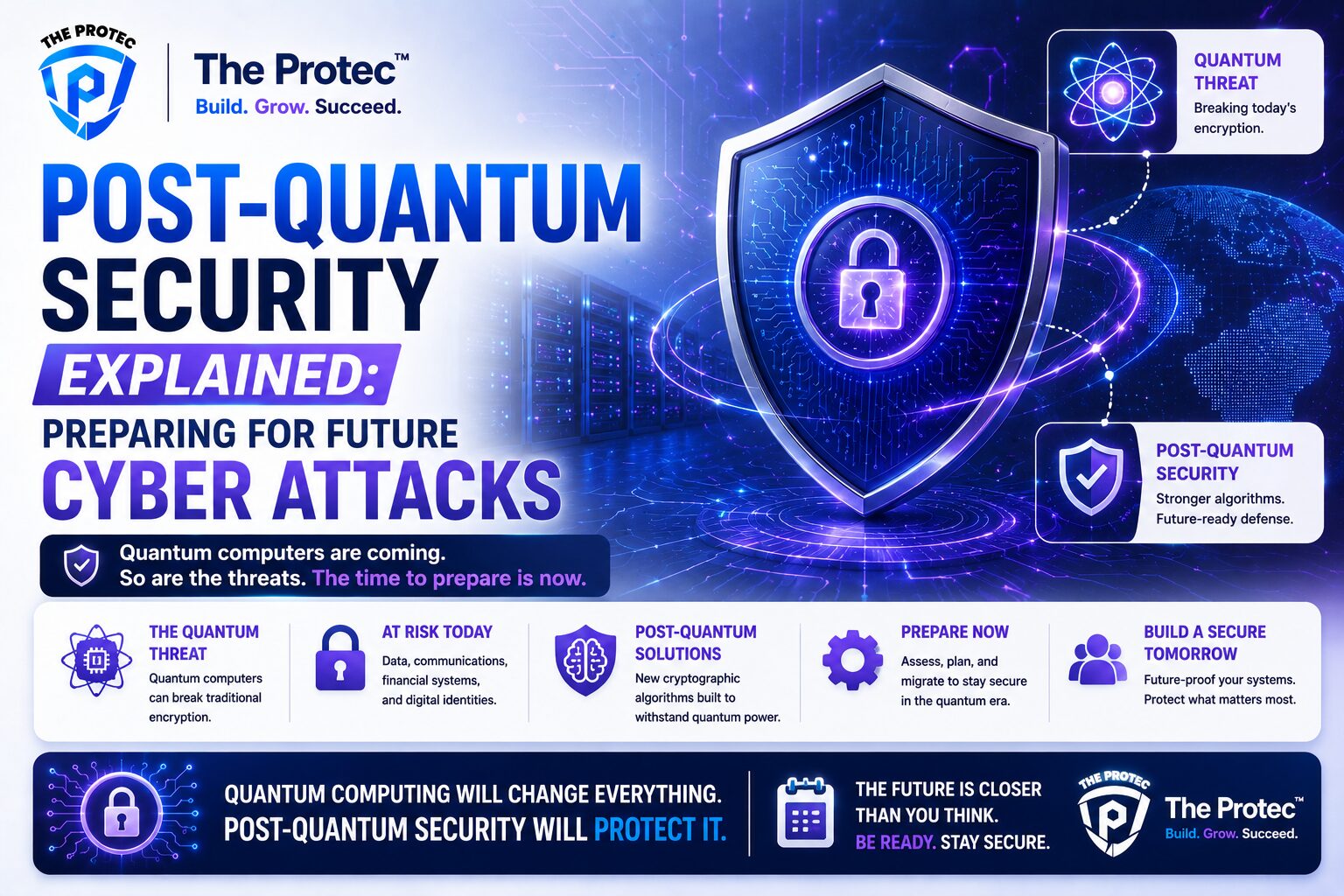
For years, quantum computing felt like a problem for the distant future. That assumption is no longer safe. As quantum hardware improves, security teams are being forced to confront a new reality: many of today’s encryption systems may not survive the next major leap in computing power. That is why post quantum security has become one of the most important priorities in future cybersecurity planning.
The concern is not that quantum computers will suddenly break every system overnight. The real risk is more strategic. Sensitive data stolen today can be stored and decrypted later when quantum capabilities mature. This is often called “harvest now, decrypt later,” and it is already influencing how companies think about long-term data protection, regulatory readiness, and digital trust. Organizations that manage financial records, health data, intellectual property, identity systems, or government-adjacent information cannot afford to wait until the threat becomes obvious.
Preparing for quantum-era attacks is not simply about replacing one algorithm with another. It requires a broader shift in cryptographic strategy, asset visibility, and upgrade planning. Businesses need to know where encryption is used, which systems depend on vulnerable public-key methods, and how to transition without breaking operations. The companies acting early are not reacting to hype; they are reducing future risk before attackers gain a decisive advantage.
One of the clearest signs that this shift is real is the steady movement from theory to standards and implementation guidance. The U.S. National Institute of Standards and Technology (NIST) has been driving the standardization of post-quantum cryptography, giving enterprises a practical path forward: NIST Post-Quantum Cryptography Project. At the same time, major cloud, telecom, and security vendors are testing hybrid approaches that combine classical algorithms with quantum-resistant ones, helping organizations transition with less operational risk.
What Is Post-Quantum Security?
Post-quantum security refers to the collection of technologies, policies, and cryptographic methods designed to protect systems from attacks by future quantum computers. In practice, it usually means adopting cryptographic algorithms that are believed to be resistant to quantum attacks, especially attacks that would break widely used public-key systems such as RSA and elliptic-curve cryptography.
Today’s internet depends heavily on public-key cryptography for secure web browsing, digital signatures, software updates, VPN authentication, email protection, identity management, and more. Those systems are extremely effective against classical computers. However, a sufficiently powerful quantum computer running Shor’s algorithm could render many of them insecure. That possibility is the reason post quantum security is now moving from a niche research topic into a mainstream enterprise planning issue.
Quantum encryption is often used loosely in conversations about this topic, but it is important to separate concepts. In many business contexts, people use the term to mean quantum-resistant cryptography rather than true quantum communication methods. Quantum key distribution, for example, is one form of quantum-based security, but most enterprises are preparing with post-quantum algorithms that can be deployed in existing infrastructure. That distinction matters because practical adoption depends on compatibility, scalability, and operational cost.
Why Quantum Threats Matter to Future Cybersecurity
Future cybersecurity is no longer just about better detection tools or faster response times. It is about choosing security foundations that will still work when computing capabilities change. The quantum threat matters because encryption is not a feature layered on top of business systems; it is the trust layer that protects identities, transactions, software integrity, and private communication.
The main danger comes from the long lifespan of sensitive data. Some information loses value quickly, but other data remains sensitive for decades. That includes medical records, defense-related data, trade secrets, signed documents, and authentication credentials. If attackers capture encrypted data now and decrypt it later with quantum tools, the damage can arrive long after the original breach.
There is also a second-order risk: trust collapse. Many digital systems rely on signatures to prove that software, devices, certificates, and updates are legitimate. If those signature systems become vulnerable, the impact could extend beyond confidentiality into authenticity and integrity. In other words, quantum risk is not just about reading data. It is also about undermining confidence in digital systems themselves.
How Companies Are Preparing for Quantum-Ready Security
Organizations are not waiting for a “quantum day” to start preparing. Instead, they are building phased roadmaps that combine assessment, prioritization, testing, and controlled migration. The most effective programs share a few core practices.
1. Cryptographic Discovery and Inventory
The first step is understanding where encryption exists across the environment. This sounds simple, but in large enterprises it is one of the hardest parts of the transition. Encryption can be embedded in web apps, APIs, certificates, databases, backup systems, embedded devices, mobile apps, third-party integrations, and legacy platforms. Many organizations do not have a complete inventory of which algorithms are in use, where keys are stored, or which business processes depend on them.
Without cryptographic discovery, migration planning becomes guesswork. Companies are using asset management tools, code scanning, certificate inventories, and dependency mapping to find vulnerable cryptography and rank systems by business criticality. The goal is to identify the systems that would be hardest to replace and the data that must remain protected the longest.
2. Risk-Based Prioritization
Not every system needs the same level of urgency. A payment portal, identity platform, or long-term records repository may need faster attention than a low-sensitivity internal tool. Companies are building risk models that weigh data lifespan, regulatory exposure, business impact, and exposure to external attackers.
This approach helps security teams avoid a common mistake: trying to replace everything at once. Quantum preparedness works better as a managed migration than as a one-time overhaul. By focusing first on high-value assets, companies can reduce exposure while keeping budgets and operational disruption under control.
3. Hybrid Cryptography During Transition
One of the most practical trends in post quantum security is the use of hybrid cryptographic approaches. These combine classical algorithms with post-quantum algorithms so that a system remains secure even if one side of the pair is later found to be weaker than expected. Hybrid deployment is especially useful during the transition period because it allows organizations to test quantum-resistant methods without abandoning proven technologies too early.
Hybrid models are showing up in TLS experimentation, secure messaging, certificate strategies, and enterprise VPN modernization. They are not a permanent answer, but they are an important bridge. They let security teams gain operational experience, benchmark performance, and reduce migration risk while standards and vendor support continue to mature.
4. Updating Identity and Certificate Infrastructure
Identity is one of the most sensitive areas in future cybersecurity planning. Many enterprises depend on certificate authorities, authentication systems, and signed software supply chains that were designed around today’s public-key assumptions. Preparing for quantum threats means reviewing certificate lifecycles, trust stores, hardware security modules, and signing workflows.
This is also why many companies are taking a closer look at machine identity. Devices, workloads, and services increasingly authenticate to one another without human involvement. If those trust mechanisms are not quantum-ready, attackers could exploit them at scale. A modern post-quantum strategy therefore includes identity architecture, not just data encryption.
5. Testing Performance and Compatibility
New cryptographic methods can introduce larger keys, different performance characteristics, and implementation complexity. Security leaders are now testing how post-quantum algorithms affect latency, bandwidth, certificate size, handshake time, and device compatibility. This matters in environments where milliseconds count or where constrained devices have limited memory and processing power.
Compatibility testing is especially important for SaaS platforms, mobile ecosystems, and IoT fleets. If a new algorithm breaks old clients or increases network overhead too much, adoption will stall. Companies that test early can design migration paths that balance security, usability, and operational cost.
Quantum Encryption vs. Post-Quantum Cryptography
These terms are often mixed together, but they describe different ideas. Quantum encryption usually refers to security methods that use quantum mechanics directly, such as quantum key distribution. Post-quantum cryptography refers to classical algorithms designed to resist attacks from quantum computers. For most businesses, post-quantum cryptography is the more immediate and practical option.
Why? Because it fits into existing digital systems more easily. Enterprises already have massive investments in cloud infrastructure, software stacks, certificates, and network architecture. Replacing those systems with quantum communication networks would be unrealistic for most use cases. Post-quantum cryptography offers a path to stronger future cybersecurity without requiring a complete infrastructure rebuild.
That does not make quantum communication irrelevant. In some high-security environments, quantum key distribution and related technologies may eventually play a role. But for mainstream enterprise planning, the focus remains on algorithm migration, lifecycle management, and secure implementation of quantum-resistant standards.
The Business Case for Acting Before the Threat Arrives
Security spending is always under pressure, so executives want a clear reason to invest early in post quantum security. The business case is stronger than it may appear at first glance. Early action reduces emergency migration costs, protects long-lived data, supports compliance readiness, and lowers the chance of rushed decisions later.
It also improves resilience. Organizations that inventory their cryptography now gain better visibility into their security architecture overall. They often discover outdated certificates, weak key handling practices, or hidden dependencies that would have caused problems even without the quantum threat. In that sense, quantum preparedness strengthens today’s cyber posture as well as tomorrow’s.
There is also a competitive angle. Customers, partners, and regulators are beginning to ask harder questions about long-term data protection. Vendors that can demonstrate a credible migration plan may gain trust faster than those that cannot. In industries built on confidence, cryptographic readiness can become a differentiator.
Current Trends Shaping Post-Quantum Security
Several trends are shaping how organizations approach quantum-era protection. First, standards are becoming more concrete, which makes planning less speculative. Second, cloud providers and network vendors are offering pilot support for quantum-resistant options, making it easier to test in live environments. Third, security teams are treating cryptographic agility as a core design principle rather than an afterthought.
Cryptographic agility means systems can swap algorithms without major redesign. This is one of the most important capabilities for future cybersecurity because it reduces lock-in. If a standard changes or a vulnerability emerges, organizations can adapt faster. Companies building new systems today are increasingly asking whether their architecture can support algorithm updates over time, not just whether it is secure now.
Another major trend is board-level awareness. Quantum risk used to sit mainly with cryptographers and specialized security architects. Now it is entering enterprise risk management, audit conversations, and digital transformation planning. That broader visibility is pushing organizations to assign ownership, define milestones, and create measurable transition plans.
Best Practices for Building a Quantum-Ready Security Roadmap
Companies that want to prepare effectively should focus on a realistic, staged roadmap. A practical plan usually includes the following steps:
- Inventory all cryptographic assets, including certificates, libraries, keys, protocols, and embedded dependencies.
- Classify data by sensitivity and retention period to identify what must remain protected the longest.
- Prioritize external-facing and high-trust systems, especially identity, signing, and secure communications.
- Test hybrid cryptography in controlled environments before broader rollout.
- Work with vendors to confirm post-quantum support in hardware, software, and managed services.
- Build cryptographic agility into new projects so future transitions are easier.
- Document migration milestones and align them with risk, compliance, and procurement planning.
It is also wise to involve multiple teams. Security, infrastructure, application development, procurement, legal, and compliance all have a stake in the outcome. Quantum readiness is not just a cryptography problem; it is an enterprise change program.
The Role of Standards and Industry Collaboration
No company can solve post-quantum migration alone. Standards bodies, vendors, cloud providers, and open-source communities all play a role in making the transition workable. Public standards help reduce fragmentation, while vendor support helps organizations deploy new methods without redesigning every system from scratch.
Industry collaboration is also essential because attackers do not wait for convenience. If one sector moves slowly, it may become a weak link in broader supply chains. Shared testing, interoperability work, and clear transition guidance help the entire ecosystem move forward more safely.
For readers who want to follow the evolution of the broader security landscape, the CISA cybersecurity best practices resource is a useful reference point for how organizations can align strategic security planning with emerging risks.
FAQ: Post-Quantum Security and Future Cybersecurity
What is post quantum security in simple terms?
Post quantum security is the practice of protecting systems with cryptographic methods designed to resist attacks from future quantum computers. It focuses on keeping encryption, signatures, and identity systems secure as computing capabilities advance.
Should businesses replace all encryption now?
Not all at once. Most organizations should start with discovery, risk assessment, and testing. The best approach is a phased migration that prioritizes high-value systems and long-lived data, then expands as standards and vendor support mature.
Is quantum encryption the same as post-quantum cryptography?
No. Quantum encryption often refers to security methods that use quantum physics directly, such as quantum key distribution. Post-quantum cryptography refers to classical algorithms built to withstand quantum attacks, and that is the more practical path for most businesses today.
How urgent is the quantum threat?
The threat is urgent from a planning perspective, even if large-scale quantum attacks are not here yet. Because some data must remain confidential for many years, organizations need to begin migration work now to avoid future exposure and rushed implementation later.
Conclusion: Preparing Today for the Next Cybersecurity Shift
Post quantum security is not a speculative trend reserved for research labs. It is becoming a practical enterprise issue because the systems that support trust, privacy, and authentication are at risk of obsolescence in a quantum-powered future. Businesses that treat this as a long-term planning problem rather than a last-minute crisis will be better positioned to protect sensitive data, maintain customer trust, and modernize their security architecture on their own terms.
The companies moving first are doing more than adopting a new set of algorithms. They are building cryptographic agility, improving asset visibility, and creating a foundation for future cybersecurity that can adapt as the threat landscape changes. In a world where attackers are always looking for the weakest link, preparation is not optional. It is the difference between a controlled transition and a costly scramble.